Ski Gear ›
Best Hydration Packs for Skiing and Snowboarding: Reviews, Buying Guide, and FAQs 2026
by Frank V. Persall
Which hydration pack should you bring on the slopes in 2026 — and does it even matter as long as your water stays unfrozen? It absolutely matters. After testing and researching dozens of options, the CamelBak Powderhound 12 earns the top spot for most skiers and snowboarders who want dedicated hydration without sacrificing mobility. But depending on your riding style, one of the other packs on this list might suit you even better.
Staying hydrated on the mountain is more important than most riders realize. Dehydration at altitude hits harder and faster than at sea level — cold air is dry, you're sweating under your layers, and most people don't feel as thirsty as they actually are. A good hydration pack solves this, but a bad one freezes your tube solid before the first run is done. That's why the pack you choose needs to be specifically built for snow sports, not just a hiking bladder you grabbed from the garage.
Whether you're lapping resort groomers, hunting powder stashes in the trees, or heading into the backcountry for a full day of ski touring, there's a pack on this list built for your mission. From 12-liter day packs to full 32-liter backcountry haulers, we've covered the full range. If you're gearing up for a serious backcountry season, also check out our guide on ski touring for beginners — knowing what to carry starts with knowing how to ride.
Contents
- Top Rated Picks of 2026
- Detailed Product Reviews
- CamelBak Powderhound 12 — Best Overall Hydration Pack
- Osprey Kamber 20L — Best for Backcountry Safety
- Dakine Heli Backpack 12L — Best Minimalist Day Pack
- Dakine Heli Pro 20L — Best Mid-Size All-Rounder
- Deuter Freerider 24L — Best for Ski Touring
- Dawn Patrol 32 Backpack — Best Large-Capacity Option
- Gregory Targhee 32L — Best Eco-Friendly Pick
- How to Pick the Best Hydration Pack for Skiing
- FAQs
- Final Thoughts
Top Rated Picks of 2026
- #PreviewProductRating
- Bestseller No. 1
 Rating:

- Bestseller No. 2
 Rating:
 - Bestseller No. 3
 Rating:
 - Bestseller No. 4
 Rating:
 - Bestseller No. 5
 Rating:
 - Bestseller No. 6
 Rating:
 - Bestseller No. 7
 Rating:
Detailed Product Reviews
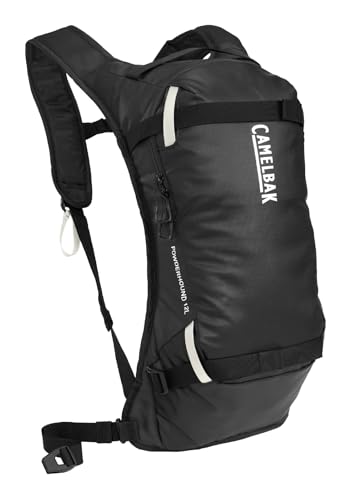
1. CamelBak Powderhound 12 Snow Hydration Pack — Best Overall Hydration Pack
If staying hydrated on the mountain is your primary goal, the CamelBak Powderhound 12 is the pack built specifically for that job. CamelBak essentially invented the hydration bladder category, and the Powderhound shows that decades of experience. The Therminator Harness system routes your drinking tube through an insulated sleeve sewn directly into the shoulder strap — which means your water stays liquid even when it's well below freezing outside. No more arriving at the lift with a frozen tube and an empty stomach.
The 12-liter capacity is right-sized for a resort day or a moderate sidecountry outing. You get enough room for a layer, snacks, goggles, and the 70oz (roughly 2L) hydration reservoir — which is plenty for a full day of riding. The Snowshed material on the outer shell actively repels snow rather than letting it accumulate and soak through. A-frame and diagonal ski carry straps are included on the outside if you want to transition to boot-pack mode. This pack does one thing extremely well: it keeps you drinking when other packs fail you.
The tradeoff is capacity — 12 liters won't cut it for multi-day trips or serious backcountry missions. But for resort skiers and riders who want a purpose-built snow hydration solution, nothing beats the Powderhound in this category. It fits snugly under a jacket if needed and doesn't bounce around on aggressive terrain.
Pros:
- Therminator insulated hose sleeve keeps water from freezing in cold temps
- Snowshed exterior material repels snow and moisture buildup
- A-frame and diagonal ski carry straps included
- Clean, low-profile fit — doesn't snag on lifts or trees
- 70oz reservoir is more than enough for a full day on the mountain
Cons:
- 12L capacity is limiting if you need more gear storage
- No dedicated avalanche safety gear compartment
2. Osprey Kamber 20L Men's Backcountry Ski and Snowboard Backpack — Best for Backcountry Safety
When you're heading into the backcountry, safety storage isn't optional — it's the whole point of the pack. The Osprey Kamber 20L is the best-organized backcountry pack in this roundup, with a dedicated avalanche safety kit compartment that has separate sleeves for your shovel handle and probe. This isn't just a big pocket with stuff thrown in — Osprey designed this so you can grab your avy gear fast, which is exactly what you need in an emergency.
The 20-liter main compartment hits the sweet spot for a full backcountry day — enough room for a puffy layer, food, first aid, and extra gear without feeling like you're hauling a suitcase up a skin track. The J-zip front panel access gives you quick entry to the small gear and food pocket even with the pack on. The internal hydration reservoir pocket includes a zippered insulated hose sleeve, so you're covered on the hydration front too. Osprey builds these packs to last — the stitching, zippers, and buckles are all top-tier.
The fit is men's-specific (there's a women's Kamber Aria version), so if you're buying for a woman, size accordingly. But for male backcountry riders, this pack offers a combination of safety organization, capacity, and build quality that's hard to beat at this price point.
Pros:
- Dedicated avy safety kit storage with separate shovel handle and probe sleeves
- Insulated hydration hose sleeve included
- J-zip front panel for quick access to food and small gear
- 20L hits the sweet spot for a full backcountry day
- Osprey build quality is best-in-class
Cons:
- Men's-specific fit — women should look at the Kamber Aria instead
- Reservoir not included (sold separately)

3. Dakine Heli Backpack 12L — Best Minimalist Day Pack
The Dakine Heli 12L is built for the rider who wants to keep it light and move fast. It's the ideal resort day pack for skiers and snowboarders who hate carrying extra weight but still want a place to stash goggles, a snack, and some water. At 12 liters and dimensions of 21 x 11 x 4 inches, it sits flat against your back and stays out of your way whether you're carving groomers or hitting park features.
What separates it from a basic daypack is the purpose-built snow tool organization. There are snow tool sleeves and external shovel blade carry built in — so it works for light sidecountry outings, not just resort laps. The fleece-lined goggle pocket is a genuinely great detail that stops your lenses from getting scratched. The hydration sleeve also doubles as laptop storage when you're off the mountain, which adds real everyday utility. This pack wears two hats well.
The 12L capacity does mean you need to pack smart — there's no room for over-packing here. But for the mountain minimalist who values speed and simplicity over hauling half their house on their back, the Heli 12L delivers exactly what it promises.
Pros:
- Low-profile 12L design sits flat and doesn't restrict movement
- Fleece-lined goggle pocket protects lenses from scratches
- Snow tool sleeves and shovel blade carry for light backcountry use
- Hydration sleeve doubles as laptop storage off the mountain
- Exterior quick-stash pocket for easy access items
Cons:
- 12L is limiting for anything beyond a half-day resort outing
- No dedicated insulated hose routing for hydration in extreme cold
4. Dakine Heli Pro Backpack 20L — Best Mid-Size All-Rounder
The Dakine Heli Pro 20L is the bigger sibling of the Heli 12L, and it brings serious versatility to the table. If you ride both skis and a snowboard depending on the day, this pack handles both carry modes without compromise. You get vertical snowboard carry, horizontal snowboard carry, diagonal ski carry, A-frame ski carry, and splitboard carry options — that's about as complete as it gets. Whether you're switching quivers or sharing gear with a partner, you're covered.
At 20 liters, this is a proper all-day pack. There's room for a real lunch, an extra layer, safety gear, and a hydration reservoir. The quick-dry mesh padded back panel is a smart detail — it lets airflow circulate between the pack and your back during high-output skinning sessions, which keeps you significantly more comfortable. The Heli Pro is built for riders who push into the sidecountry or do laps on both resort and backcountry terrain in the same day.
The vibrant Spice colorway is a personal taste thing — if you want something more subdued, check other colorways. But functionally, this pack is one of the most flexible options in the mid-size category and represents strong value for how much it does.
Pros:
- Supports vertical, horizontal, diagonal, A-frame, and splitboard carry modes
- Quick-dry mesh back panel improves ventilation during high-output activities
- 20L is enough capacity for a full day with layers and food
- Internal hydration reservoir compatible
- Solid all-around option for mixed resort/sidecountry days
Cons:
- No dedicated insulated hose sleeve for cold-weather hydration
- Limited colorway choices compared to competitors
5. Deuter Freerider 24L — Best for Ski Touring
Deuter has been making technical mountain packs for over a century, and the Freerider 24L is proof they haven't lost a step. This is the best pack on the list for serious ski tourers who need dry comfort and fast gear access during a full-day climb and descent. The LiteSnow back system — built with snow-shedding EVA foam and Spandex fabric — stops your back panel from soaking up moisture during sweaty skin tracks. That matters a lot when you're stopping for a transition and don't want a cold, wet back panel against your spine.
The U-shaped clamshell rear zipper is one of the Freerider's best features: you can open the main compartment from the back without removing your skis or snowboard from the carry straps. This is a genuinely underrated convenience when you need to grab something quickly at the top of a climb. The dedicated avalanche gear pocket keeps your safety tools separate and instantly accessible. On the carry side, you get diagonal and side ski options, plus snowboard, snowshoe, and ice axe attachments — plus a detachable helmet holder for the descent.
At 24 liters, it's a true full-day backcountry pack. Deuter's fit system is unisex and works well across a range of torso lengths. If you take your ski touring seriously — especially at resorts like those in these top ski mountaineering destinations — the Freerider 24L is worth every penny.
Pros:
- LiteSnow back system keeps the back panel dry during high-output touring
- U-shaped rear zipper allows main compartment access without removing ski/board carry
- Dedicated avy pocket for rapid emergency access
- Comprehensive carry options: diagonal, side ski, snowboard, snowshoe, ice axe, helmet
- 24L is perfect for a serious full-day backcountry outing
Cons:
- Hydration reservoir sold separately
- Pricier than some comparable 24L options
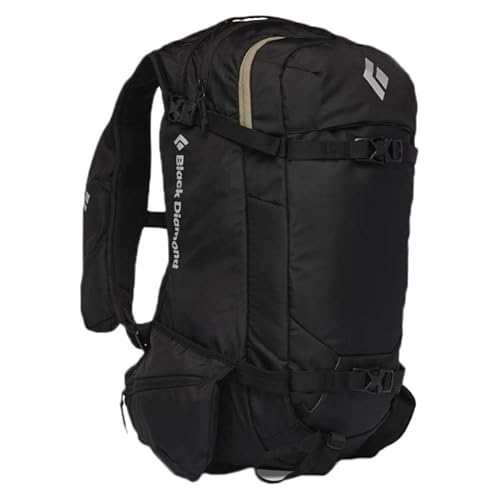
6. Dawn Patrol 32 Backpack — Best Large-Capacity Option
When a full day in the backcountry means serious mileage, extra layers, emergency supplies, and enough food to fuel a long climb, you need a 32-liter pack. The Dawn Patrol 32 is the go-to choice if you need real capacity without sacrificing eco-credentials. The main body fabric is made from 100% post-consumer recycled material — so you're not just carrying your gear sustainably, you're carrying the pack sustainably too. This is increasingly important to backcountry riders who care about the mountains they're riding in.
The easy-access snow safety pocket is separate from the main compartment, which means you can reach your shovel and probe without digging through layers of clothing and snacks. At 32 liters, there's enough room for extra layers, significant food and water, overnight emergency supplies, and snow safety gear — all at once. This is the pack for full-day epic adventures, not quick resort laps. If you're exploring different types of skiing that push you into longer backcountry missions, the extra volume is invaluable.
The 32L size is genuinely large, which means it's not the right choice for resort skiing or lighter outings where it'll feel oversized and cumbersome. But when you need the capacity, nothing on this list matches it.
Pros:
- 32L capacity handles everything for a serious full-day backcountry adventure
- 100% post-consumer recycled main body fabric — genuinely eco-friendly
- Separate, easy-access snow safety pocket for avy gear
- Room for extra layers, significant food/water, and emergency supplies
Cons:
- Too large for resort day trips or short outings
- Fewer documented features compared to some competitors at this size
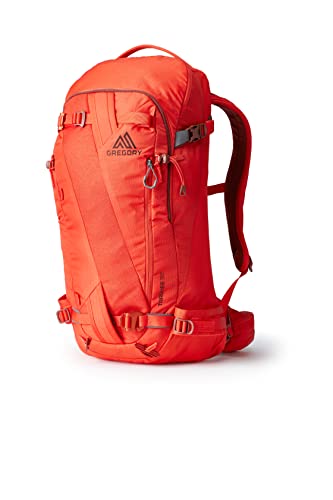
7. Gregory Targhee 32L — Best Eco-Friendly Technical Pack
The Gregory Targhee 32L is a technical backcountry pack that takes sustainability seriously without compromising on durability or organization. The recycled fabric construction delivers a 40% reduction in carbon footprint compared to conventional nylon — a meaningful number, not just a marketing claim. Gregory backs that up with 1000D Cordura (a tightly woven, highly abrasion-resistant fabric) on the front diagonal edge guard panel, which protects the pack from metal ski edges that would shred less durable materials.
The anodized aluminum hardware is a smart choice for cold-weather use — aluminum doesn't get brittle in freezing temps the way some plastics do, so your buckles and attachment points stay reliable when temperatures drop hard. Internal organization includes a hydration sleeve for your reservoir (not included) and a full suite of carry options including helmet carry and ski/snowboard hooks. At 32L, this pack handles a full backcountry day or multi-pitch ski mountaineering objectives with room to spare.
The one honest drawback is that the reservoir isn't included — you're buying the pack, not the full hydration system. But if you pair the Targhee with a quality hydration bladder, you've got one of the most technically capable and environmentally responsible packs in this category. If you're also hunting the right goggles to pair with your new pack, check out our picks for the best goggles for night snowboarding and skiing.
Pros:
- Recycled fabrics achieve 40% lower carbon footprint vs. conventional nylon
- 1000D Cordura front panel protects against metal ski edge damage
- Anodized aluminum hardware stays reliable in extreme cold
- Helmet carry and ski/snowboard attachment included
- 32L is excellent for full backcountry days or ski mountaineering
Cons:
- Hydration reservoir not included — additional purchase required
- Heavier than more minimalist 32L options
How to Pick the Best Hydration Pack for Skiing and Snowboarding
Before you hand over your credit card, there are a few things you need to nail down. The wrong pack size or the wrong features will leave you frustrated on the mountain. Here's what actually matters when you're shopping in 2026.
Capacity: Match the Pack to Your Ride
Capacity is measured in liters, and bigger isn't always better. Here's a simple way to think about it:
- 10–14L — Resort day packs. Enough for water, goggles, a layer, and snacks. Doesn't bounce around on moguls or park features.
- 18–24L — All-day resort or sidecountry. Room for real food, safety gear, extra layers, and a full hydration setup. This is the most versatile range.
- 28–34L — Full backcountry or ski touring days. Carry everything you need for a serious mountain objective. Heavy when full — choose only if you actually need the volume.
Don't buy a 32L pack for resort laps. You'll spend all day fighting a pack that's too big and too loose. Match the capacity to your actual use case.
Insulated Hydration: Non-Negotiable in Cold Weather
A regular hydration reservoir will freeze in cold temperatures — sometimes within minutes in sub-zero conditions. Any hydration pack you buy for skiing or snowboarding needs either an insulated tube sleeve (built into the shoulder strap or chest harness) or an insulated reservoir compartment. The CamelBak Powderhound's Therminator system is the gold standard here. If the pack you're considering doesn't mention insulation for the hose, assume it doesn't have it — and budget for a solution.
Avalanche Safety Gear Storage
If you're going anywhere near the backcountry or avalanche terrain, your pack needs dedicated avy gear storage. That means a separate, quick-access pocket with sleeves specifically sized for a shovel handle, shovel blade, and avalanche probe. This pocket should be accessible even when you're wearing the pack and without digging through your main compartment. Don't compromise on this. The Osprey Kamber and Deuter Freerider both nail this. Browse our full ski gear reviews for more safety-focused gear recommendations.
Ski and Snowboard Carry Compatibility
Not all packs carry skis and boards in the same way, and some only support one mode. Before you buy, check which carry options are included:
- A-frame — Classic ski carry, both tips up. Works well for resort laps.
- Diagonal — Single ski or board angled across the pack. More stable for skinning.
- Vertical snowboard carry — Board stands vertically on the back of the pack. Frees your hands for technical terrain.
- Splitboard carry — Required if you're splitting. Look for dedicated splitboard strap systems.
If you ride both skis and a board depending on conditions, the Dakine Heli Pro 20L is the only pack on this list that handles every single carry mode.
FAQs
Do I really need a hydration pack specifically made for skiing?
Yes — a standard hiking hydration pack won't cut it on the slopes. Skiing-specific packs have insulated tube sleeves to prevent freezing, snow-resistant materials that repel moisture and powder buildup, streamlined profiles that don't snag on lifts, and carry straps designed for skis and snowboards. Using a generic pack in cold conditions risks frozen water, soaked gear, and a pack that flops around dangerously on aggressive terrain.
How do I keep my hydration tube from freezing?
The best solution is a pack with an insulated shoulder strap tube sleeve, like the CamelBak Powderhound's Therminator system. You can also blow air back into the tube after each sip (to clear water out of the exposed section), use an insulated tube wrap (sold separately), or carry a soft flask in an inner jacket pocket as a backup. In truly extreme cold, an insulated reservoir bag helps slow the freezing process in the bladder itself.
What size hydration pack should I get for resort skiing?
For a standard resort ski day, a 10–14 liter pack is ideal. It gives you enough room for a 2-liter hydration reservoir, a packable jacket, goggles, a snack or two, and a phone. Anything bigger gets awkward and bouncy. Save the 20L+ packs for backcountry outings where you genuinely need the extra storage for safety gear and supplies.
Do I need an avalanche safety pack even for resort skiing?
For inbounds resort skiing on marked runs, a dedicated avy pack isn't necessary. But the moment you're riding in sidecountry, backcountry, or out-of-bounds terrain — even for a quick powder lap near the resort boundary — you should carry a beacon, probe, and shovel, and your pack should have organized storage for them. Avalanche terrain doesn't care how close to the resort you are.
Are hydration packs worth it for snowboarders specifically?
Absolutely. Snowboarding is a high-output activity, especially in the park, on steep terrain, or during long resort days. You'll sweat more than you expect under your layers, and dehydration at altitude accelerates fatigue and impairs judgment. Carrying water in a hydration pack makes it easy to sip on the lift without stopping to pull out a bottle. For snowboarders who also care about completing their look on the mountain, a pack pairs well with gear like the right goggles for different light conditions.
How much water should I carry when skiing or snowboarding?
A general guideline is to drink about half a liter (roughly 16 oz) of water per hour of activity at altitude. For a full ski day of 5–7 hours, that means carrying 2.5–3.5 liters. Most packs on this list accommodate a 2–3 liter reservoir, which is sufficient for most riders. If you're doing a high-output backcountry tour in warm spring conditions, go with a 3-liter bladder and supplement with water from a filter at streams if your route allows it.
Buy on Walmart
- CamelBak Powderhound 12 Snow Hydration Pack Black/White, 70o — Walmart Link
- Osprey Kamber 20L Men's Backcountry Ski and Snowboard Backpa — Walmart Link
- Dakine Heli Backpack 12L - Black, One Size — Walmart Link
- Dakine HELI PRO BACKPACK 20L - SPICE — Walmart Link
- Deuter Unisex Freerider 24L, Lightweight Ski Touring Backpac — Walmart Link
- Dawn Patrol 32 Backpack — Walmart Link
- Gregory Targhee 32L Skiing & Snowboarding Backpack, Helmet C — Walmart Link
Buy on eBay
- CamelBak Powderhound 12 Snow Hydration Pack Black/White, 70o — eBay Link
- Osprey Kamber 20L Men's Backcountry Ski and Snowboard Backpa — eBay Link
- Dakine Heli Backpack 12L - Black, One Size — eBay Link
- Dakine HELI PRO BACKPACK 20L - SPICE — eBay Link
- Deuter Unisex Freerider 24L, Lightweight Ski Touring Backpac — eBay Link
- Dawn Patrol 32 Backpack — eBay Link
- Gregory Targhee 32L Skiing & Snowboarding Backpack, Helmet C — eBay Link
Final Thoughts
The right hydration pack makes a real difference on the mountain — it keeps you fueled, organized, and safe whether you're ripping groomers all day or venturing deep into the backcountry. Pick the CamelBak Powderhound if hydration is your priority, the Osprey Kamber or Deuter Freerider if you're heading into avalanche terrain, or the Dakine Heli Pro if you want a flexible all-rounder that handles both skis and boards. Hit the Amazon button on your top pick, lock in your 2026 season gear, and get out there.
 |
 |
 |
 |

About Frank V. Persall
Frank Persall is a lifelong skier originally from the United Kingdom who has spent years pursuing the sport across premier resorts in Europe, North America, and beyond. His passion for skiing has taken him from the Alps to the Rocky Mountains, giving him a broad perspective on resort terrain, snow conditions, gear performance across price points, and the practical realities of ski travel with a family. At SnowGaper, he covers ski resort guides, gear reviews, and skiing technique and travel resources for enthusiasts of every level.
You can get FREE Gifts. Or latest free skiing books here.
Disable Ad block to reveal all the info. Once done, hit a button below
|
|
|
|