If you want to know how to start ski touring, the answer is simpler than most beginners expect: acquire a properly fitted touring setup, learn to use climbing skins efficiently, and choose moderate terrain with an experienced partner for your first outings. As our guide on what ski touring involves and what to look for in gear explains, this discipline carries you far beyond the groomed runs of any resort and into open mountain terrain, powered entirely by your own effort and judgment.
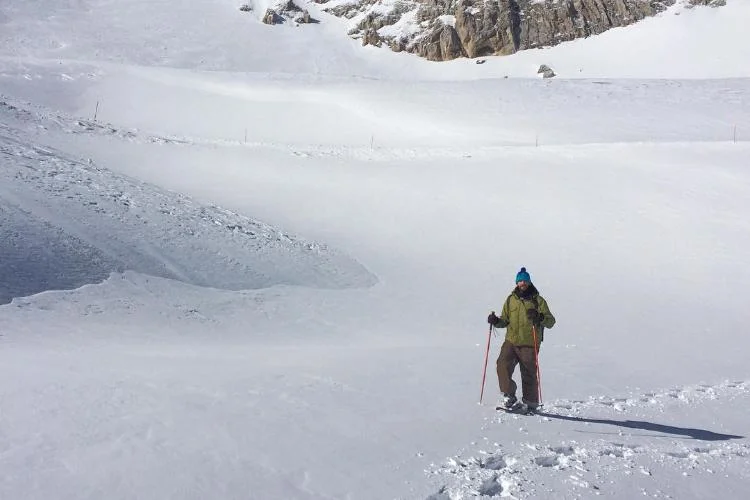
Ski touring demands physical conditioning, sound mountain awareness, and a meaningful investment in specialized equipment. The rewards, however, are considerable: untracked powder, high-altitude solitude, and a form of self-reliance that resort skiing simply cannot replicate. Many skiers who begin touring find it transforms their entire relationship with the mountain — it becomes less a venue for performance and more a landscape to be explored at a deliberate, personal pace.
This guide addresses the full arc of what a beginner needs to understand, from your first gear selection to long-term skill development. The sections ahead cover quick entry points, ideal conditions, common errors, troubleshooting, equipment care, and a structured progression strategy. Work through each section with care, and your first tour will be a confident, well-prepared experience rather than an improvised one.
Contents
- How to Start Ski Touring: Quick Wins for Beginners
- Choosing the Right Conditions — and Knowing When to Stay Home
- Ski Touring Destinations That Suit Every Level
- Common Mistakes to Avoid When Learning Ski Touring
- Solving Common Ski Touring Challenges
- Caring for Your Ski Touring Equipment
- Building a Long-Term Ski Touring Practice
How to Start Ski Touring: Quick Wins for Beginners
Essential Gear to Acquire First
The single most effective action you can take right now is to assemble a functional, correctly fitted touring setup. You do not need the lightest or most expensive equipment on the market — you need gear that fits properly and performs reliably under beginner conditions. A touring setup consists of four core components: alpine touring (AT) skis, tech or frame bindings, touring boots, and climbing skins. Each element must be compatible with the others, and compatibility in touring systems is non-negotiable; poor fits create mechanical failures in the field at the worst possible moments.
Ski width is an important early decision. For a beginner primarily touring in consolidated snow, a waist width between 85mm and 100mm offers a sensible balance of flotation and edge control. Narrower skis feel more manageable on hard pack; wider planks excel in deeper snow. Consult a specialist retailer rather than purchasing online without guidance — the nuances of boot-binding compatibility require hands-on assessment.
Climbing skins attach to the base of your skis and provide the friction necessary for uphill travel. Most beginners find nylon-blend skins reliable across varying snow temperatures. Ensure your skins are cut precisely to match your ski's shape, as gaps or overlapping edges reduce both grip and glide efficiency. Before your first tour, spend equal attention on your clothing system. Our guide on what to wear to a ski resort provides a sound baseline, though touring demands even greater emphasis on moisture management — you will perspire heavily on the climb and cool rapidly the moment you stop.
Planning Your First Outing
Your first tour should be modest in ambition. Choose a route with a vertical gain no greater than 500 meters, a clear skin track, and terrain that avoids steep convex rolls or known avalanche paths. Go with an experienced partner — ideally someone who has completed a formal avalanche safety course and carries a beacon, probe, and shovel. Do not wait until you feel completely ready. Controlled exposure to real terrain teaches you more than any amount of research or indoor preparation can.
Pro tip: Before your first backcountry tour, practice transitioning between climb mode and ski mode — switching bindings, removing skins, and stowing them — at home until the sequence feels automatic. Cold fingers and fading daylight are poor teachers.
Choosing the Right Conditions — and Knowing When to Stay Home
Ideal Conditions for Beginners
Stable snowpack, low avalanche danger (rated Low or Moderate on regional forecasts), and clear visibility define ideal conditions for learning how to start ski touring with confidence. A settled high-pressure system typically delivers these conditions: firm morning snow that supports efficient skinning, manageable wind, and reliable daylight. Start your tours early. Mountain weather deteriorates quickly in the afternoon, and descending in deteriorating visibility compounds every beginner challenge.
Consolidated settled snow is preferable to fresh powder for your earliest tours. It is easier to skin on, provides better edge grip during the descent, and gives you clearer visual feedback on terrain angle. Once your technique is established, powder descents will feel natural. Learning the fundamentals on forgiving snow removes one variable from an already complex equation and allows you to focus on the mechanics of the activity rather than managing an unfamiliar surface.
When to Postpone Your Tour
Certain conditions make touring inadvisable regardless of preparation level. Considerable or High avalanche danger ratings should halt any beginner tour without exception. Even experienced tourers with advanced rescue skills avoid consequential terrain in these conditions. As a beginner, you lack both the assessment skills and the reaction speed to manage a rapidly evolving snowpack.
Other conditions that warrant postponement include rapidly rising temperatures indicating unstable wet avalanche conditions, forecast winds exceeding 50 km/h at ridge height, persistent fog reducing visibility below 100 meters, and any significant precipitation that fell within the preceding 24 hours. Checking the local avalanche bulletin — and understanding the underlying science covered in the comprehensive Wikipedia overview of avalanche mechanics — should become a non-negotiable component of every pre-tour routine.
Ski Touring Destinations That Suit Every Level
Beginner-Friendly Terrain
The ideal beginner touring environment combines accessible trailheads, well-documented routes, and gentle to moderate pitch. Many regions in North America, Europe, and Asia offer designated touring corridors that provide exactly this framework. In North America, areas within the Sierra Nevada, the Rockies, and the Cascade Range contain numerous mellow touring routes that reward a half-day effort with meaningful summit views and clean, open descent lines.
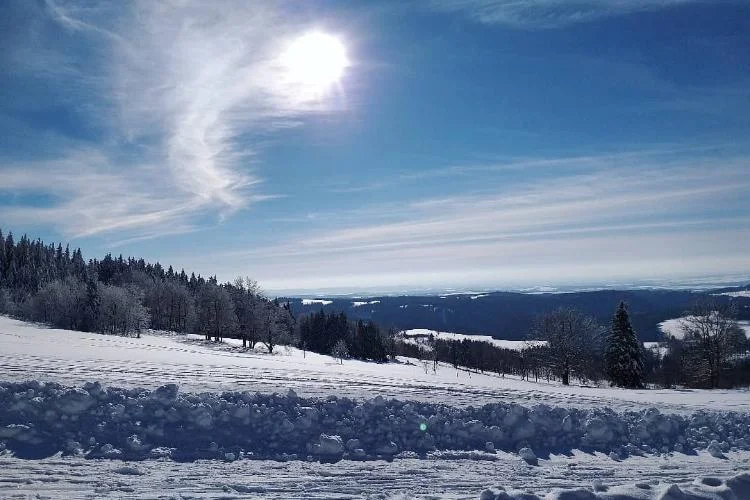
Italy's Campo Imperatore plateau, pictured at the top of this post, exemplifies the open, low-angle terrain that works perfectly for first tours. The wide bowl provides ample space to practice skinning technique, read the snow surface, and build confidence before committing to steeper objectives. Similarly, Scandinavian touring routes offer long, gradual gradients ideal for building aerobic capacity without overwhelming technical demands. The underlying principle is the same in every geography: begin where the terrain allows you to focus on skill development rather than survival.
Resort-Adjacent Touring
Many established ski resorts now facilitate sidecountry or resort-adjacent touring, where you exit the resort boundary — with full awareness of the responsibilities this entails — and skin to nearby peaks before skiing back through a marked entry gate. This arrangement allows beginners to tour in a semi-familiar environment with partial infrastructure support and the psychological reassurance of a resort within reach.
If you are evaluating options in the western United States or elsewhere, understanding which resort areas offer the strongest backcountry access and local guiding infrastructure is valuable early-stage research. Our directory of ski resorts offers a useful starting point for identifying mountain communities where touring culture is well established and where guided beginner outings are readily available.
Common Mistakes to Avoid When Learning Ski Touring
Gear and Preparation Errors
The most prevalent gear mistake among beginners is attempting to use standard resort equipment in the backcountry. Alpine bindings do not incorporate a walk mode, meaning your heel remains locked and the natural heel-lift required for efficient skinning is impossible. Beyond the discomfort, this creates genuine injury risk to the knee and Achilles tendon. A dedicated touring setup is not a luxury — it is a prerequisite for the activity.
Insufficient layering is another frequent error. Touring generates substantial body heat on the ascent but exposes you to alpine cold and wind the moment you stop or begin your descent. Many beginners arrive overdressed for the climb and under-equipped for the summit. The correct approach is a three-layer system: a moisture-wicking base layer, a packable insulating mid-layer, and a waterproof-breathable shell. Carry more than you believe you need throughout your first season.
Neglecting avalanche safety equipment is the most consequential oversight of all. A beacon, probe, and shovel are the minimum standard for any backcountry travel. They are, however, useless without training in their application. Enroll in a Level 1 avalanche course before you tour — not after your first close call.
Technique Mistakes on the Ascent and Descent
On the ascent, beginners routinely push too hard in the opening section of a tour, depleting their energy reserves before reaching the halfway point. The correct skinning pace is one at which you can sustain a conversation without laboring. If you are breathing too hard to speak, you are traveling too fast. Slow down deliberately and settle into a rhythm — the mountain will still be there when you arrive at a sustainable pace.
On the descent, the instinct to ski exactly as you would on a groomed resort run leads to consistent difficulty. Untracked terrain is unpredictable: variable crust, hidden debris, and shifting pitch demand a more centered, adaptive stance. Keep your weight slightly forward, knees flexed, and hands carried wide and in front of your body. Do not force aggressive edge angles on uncertain snow. Float and adapt first; carve as your confidence and terrain-reading skills develop over multiple seasons.
Solving Common Ski Touring Challenges
Skin Adhesion Problems
Skin adhesion failure is among the most frustrating field challenges in touring, and it occurs most reliably at temperature extremes. When temperatures drop below -15°C, standard glue becomes brittle and loses tack. When temperatures rise above 0°C, wet snow saturates the skin fabric and defeats grip. Both scenarios require different interventions, and knowing which applies to your conditions before you leave the trailhead prevents a miserable mid-tour problem.
In cold conditions, warm your skins against your body before application — store them glue-to-glue inside your jacket during the approach. In wet conditions, apply a skin wax or anti-icing treatment to the plush surface before each outing. Carry a small tube of skin glue refresher as emergency insurance. Never fold wet skins glue-to-glue — adhesive will transfer to the plush and destroy the skin's function permanently within a single outing.
Navigation and Route-Finding Issues
Ski touring takes place in terrain where visibility can change within minutes and electronic navigation devices occasionally fail at the worst moments. Learning to navigate by map and compass is not an optional enhancement — it is a foundational safety skill. Practice reading 1:25,000 topographic maps in clear conditions before you need that ability in a genuine whiteout.
Route-finding errors often arise from following skin tracks left by previous parties without evaluating whether those decisions are appropriate for your abilities and current conditions. A track through a steep, wind-loaded slope that a more experienced team assessed and accepted may represent an unacceptable risk for a beginner group. Learn to read terrain independently rather than assuming that a visible track represents the optimal or safest line for your situation.
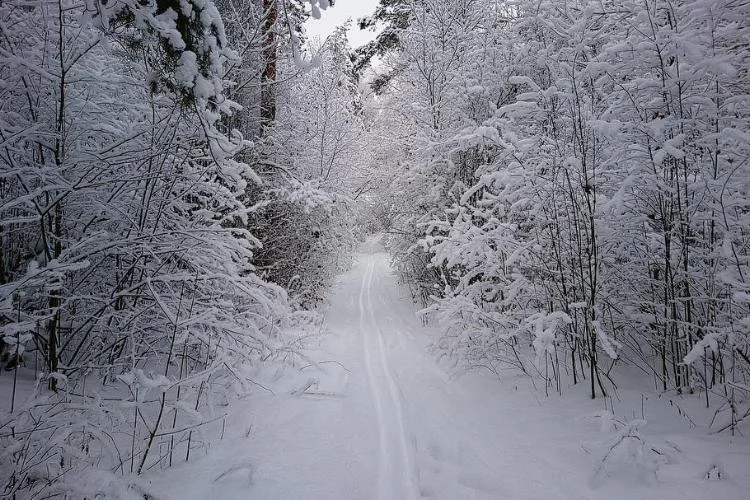
Touring with partners, as illustrated above, substantially reduces navigation and safety risk. A group of three provides redundancy in decision-making, greater combined experience in route assessment, and the practical safety net of two people available to assist if one member is injured or incapacitated. The broader mountain touring community considers solo backcountry travel inadvisable for beginners, and that consensus reflects sound collective experience accumulated over generations of mountain travel.
Caring for Your Ski Touring Equipment
Skin Care and Storage
Climbing skins represent a significant portion of your gear investment and deserve deliberate maintenance. After each tour, allow wet skins to dry completely at room temperature before folding or storing them — never use direct heat sources such as radiators, as elevated heat degrades adhesive rapidly and permanently. Once dry, fold the skins glue-to-glue using the cheat sheet provided with most sets, and store them in a cool, dry location away from direct sunlight and compression.
Season-end storage requires additional attention. Apply a light coat of skin wax to the plush surface and ensure the glue layer is clean and free of debris. Some tourers store skins in a refrigerator during summer months, which preserves glue tack reliably. At minimum, store them flat in a breathable bag — sustained compression can permanently deform the glue layer and reduce adhesion in subsequent seasons.
Binding and Boot Maintenance
Touring bindings cycle through considerably more mechanical movement than alpine bindings — the walking hinge, toe pivot, and heel riser all require periodic attention throughout the season. After every five to ten touring days, inspect all pivot points and ratchet mechanisms for debris accumulation. Clean with a dry brush, apply a minimal amount of dry lubricant to the pivot pin, and confirm that all mounting screws remain properly seated. Avoid wet lubricants, which attract and retain snow and ice in cold field conditions.
Touring boots experience significant flex-fatigue stress during the walking phase. Inspect the sole for delamination at the season's midpoint, particularly around the toe and heel interfaces where tech binding pins make contact. A sole separation that goes unnoticed can cause a binding to release unexpectedly during descent — a preventable hazard that a five-minute visual inspection eliminates entirely.
| Equipment | After Each Tour | Every 5–10 Days | End of Season |
|---|---|---|---|
| Climbing Skins | Dry completely at room temperature; fold glue-to-glue | Inspect glue adhesion; apply anti-ice treatment if needed | Wax plush surface; store flat in cool, dry location |
| AT Bindings | Clear snow and ice from pivot points and heel risers | Inspect pivots; apply dry lubricant; check mounting screws | Full mechanical inspection; store with bindings in walk mode |
| Touring Boots | Remove and dry liner; air out shell overnight | Inspect buckle tension and sole adhesion at toe/heel | Remove liners; clean shell interior; inspect tech pin fittings |
| Skis | Dry bases; visually inspect edges for burrs | Edge touch-up with file or diamond stone; base wax if needed | Full tune, hot wax, and protective storage wax application |
Building a Long-Term Ski Touring Practice
Progression Milestones
Understanding how to start ski touring is the opening chapter of a longer story. The arc involves deliberate progression through increasingly demanding objectives, each one consolidating skills acquired at the previous level. A reasonable first-season goal is to complete five to eight tours on routes below 1,000 meters of vertical gain, with experienced partners and in Low to Moderate avalanche conditions. By the end of your first season, you should be comfortable with gear transitions, pacing strategy, basic route reading, and the pre-tour planning process as a coherent whole.
In your second season, expand vertical gain gradually, seek terrain with varied aspect and angle, and complete a formal avalanche education course if you have not already done so. The Level 1 avalanche course offered by national mountain safety organizations provides the conceptual and practical framework necessary for independent backcountry decision-making. Without this foundation, your risk exposure grows faster than your skill level — an imbalance that eventually produces poor outcomes.
Multi-day hut-to-hut touring — carrying overnight gear and skiing between mountain huts over two or more days — becomes a realistic ambition in your third or fourth season. This format is deeply embedded in Alpine and Scandinavian mountain culture and is increasingly available in North America. It demands greater fitness, route-planning competence, and gear management discipline, but it represents ski touring at its most immersive and rewarding.
Joining the Touring Community
Progress accelerates meaningfully when you are embedded in a community of more experienced practitioners. Most mountain towns with significant backcountry access have active ski mountaineering clubs that organize guided beginner tours, avalanche skills clinics, and social outings. These clubs connect you with mentors whose accumulated experience accelerates your learning in ways that no guide, course, or written resource can fully replicate.
Online communities — regional forums, backcountry-specific apps, and local Facebook groups — also provide route beta, current conditions reports, and gear discussions. Treat digital information critically: conditions change rapidly, and a trip report from a week prior may not reflect the snowpack you will encounter. Direct communication with someone who toured the route within the last 48 hours is always more reliable than archived beta, regardless of how detailed it appears.
As your skills develop, you will find that ski touring connects naturally to other demanding mountain disciplines. If you are drawn toward more exposed, consequential terrain, the progression from backcountry touring toward big mountain freeride skiing follows a direct trajectory — many freeride skiers arrived at that discipline through years of touring that sharpened their terrain assessment, snow-reading ability, and off-piste technique. The two disciplines share a common vocabulary of risk management and snow science that transfers without friction.
Frequently Asked Questions
How fit do you need to be to begin ski touring?
A baseline of cardiovascular fitness comparable to regular hiking or cycling is sufficient for beginner touring on gentle terrain. You do not need to be an elite athlete. However, your fitness level directly determines how enjoyable the experience is — the more aerobically prepared you are, the more you can focus on technique and terrain reading rather than simply enduring the climb. A consistent program of hiking, cycling, or running in the months before your first season will make a tangible difference from your very first outing.
Can you use standard resort ski gear for touring?
Standard alpine gear is not suitable for ski touring. Resort ski boots are too rigid to permit the heel-lift required for walking uphill, and alpine bindings do not include a walk mode. At minimum, you need touring-specific bindings and boots designed for uphill travel. Attempting to tour in resort equipment risks mechanical failure and injury, particularly to the knee and Achilles tendon, and fundamentally undermines the efficiency and safety of the activity.
Is an avalanche course necessary before your first ski tour?
Yes. Any time you travel in uncontrolled mountain terrain during winter, avalanche awareness is a core safety requirement rather than an optional enhancement. A formal Level 1 avalanche course teaches you to assess snowpack stability, identify terrain traps, read regional bulletins accurately, and conduct a companion rescue using beacon, probe, and shovel. This knowledge is not optional — it is the minimum standard for responsible backcountry travel, regardless of how experienced your partners may be or how benign the terrain appears.
The mountain does not reward those who rush to it unprepared — it rewards those who took the time to learn, practice, and begin at the beginning.
 |
 |
 |
 |

About Frank V. Persall
Frank Persall is a lifelong skier originally from the United Kingdom who has spent years pursuing the sport across premier resorts in Europe, North America, and beyond. His passion for skiing has taken him from the Alps to the Rocky Mountains, giving him a broad perspective on resort terrain, snow conditions, gear performance across price points, and the practical realities of ski travel with a family. At SnowGaper, he covers ski resort guides, gear reviews, and skiing technique and travel resources for enthusiasts of every level.
You can get FREE Gifts. Or latest free skiing books here.
Disable Ad block to reveal all the info. Once done, hit a button below
|
|
|
|