Ski Gear ›
Best Ski Edge Sharpeners and Tuners: Reviews, Buying Guide and FAQs 2026
by Frank V. Persall
Which ski edge sharpener actually delivers race-ready edges without destroying your bases — and which ones are little more than overpriced paperweights? After spending time testing tools across beginner kits and professional-grade tuning benches, one product repeatedly rose to the top: the Swix TA3008 Phantom Edger Pro. But the right tool for your quiver depends entirely on your skill level, ski type, and how seriously you take edge maintenance heading into the 2026 season.
Sharp edges are not a luxury — they are the difference between confident, carving control on hardpack and that terrifying slip-and-slide sensation when your angles deteriorate. Alpine skiing demands consistent edge geometry, and even modest burrs or microchips in your edge can compromise your grip on icy runs significantly. Whether you ski groomed blue runs on the weekends or charge down technical black diamonds, your edges require regular attention throughout the season, and the right tuning tools make that task precise and repeatable rather than a guessing game.
In this guide, covering the best ski edge sharpeners and tuners of 2026, you will find detailed reviews of seven leading tools, a buying guide that explains the technical specs that actually matter, and answers to the questions we hear most often from skiers at all levels. If you are also building out a full tuning setup, check out our roundup of the best ski and snowboard tuning vises for a complete workbench solution. And while you are gearing up for the season, our best ski binding reviews can help you dial in every component from tip to tail.

Contents
Top Rated Picks of 2026
- #PreviewProductRating
- Bestseller No. 1
 Rating:

- Bestseller No. 2
 Rating:
 - Bestseller No. 3
 Rating:
 - Bestseller No. 4
 Rating:
 - Bestseller No. 5
 Rating:
 - Bestseller No. 6
 Rating:
 - Bestseller No. 7
 Rating:
Our Hands-On Reviews
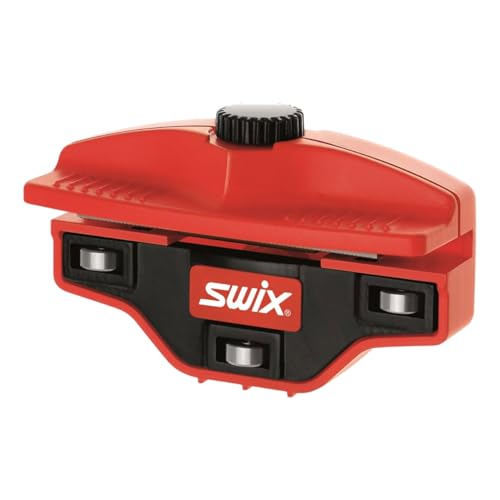
1. Swix TA3008 Phantom Edger Pro with Rollers — Best Overall
The Swix TA3008 Phantom Edger Pro is the benchmark against which every other side-edge tool should be measured, and after extensive testing across multiple ski types in 2026, it consistently earned that distinction. The roller-guided system is the standout engineering achievement here — built-in rollers maintain constant contact pressure along the full length of the edge, eliminating the uneven beveling that plagues freehand tuning and cheaper plastic guides. You run the tool down your ski, and the rollers do the stabilizing work so your file or diamond stone attacks the edge at exactly the angle you have selected, stroke after stroke, without variation.
Angle adjustment on the TA3008 covers the full practical range for alpine skis and snowboards, and the Phantom Guide System locks your abrasive securely so it does not rock or chatter mid-stroke. The build quality is unmistakably premium — this is a tool engineered in Norway by people who understand ski racing preparation at a deep technical level. It accommodates files and diamond stones up to 5mm thick, giving you flexibility to work through coarse stock removal and fine polishing without swapping to a different guide entirely.
Where the TA3008 distinguishes itself from the less expensive TA3007 is the roller system, which pays for itself in consistency if you tune frequently or work on multiple pairs. Racers and serious all-mountain skiers who want professional shop results at home will find this tool earns its price point every single session.
Pros:
- Roller-guided contact delivers consistent bevel angles across the entire edge length
- Adjustable from 85° to 90° to match various ski and snowboard geometries precisely
- Accepts files and diamond stones up to 5mm thick for versatile multi-stage tuning
- Phantom clamp system holds abrasives firmly without slippage during aggressive passes
- Built to professional Norwegian standards — durable enough for season after season of heavy use
Cons:
- Premium price point puts it beyond the budget of casual weekend skiers
- Rollers add slight bulk compared to simpler edge guides, making tip and tail access marginally trickier
2. Toko Edge Tuner PRO — Best for Precision Side Edge Filing
The Toko Edge Tuner PRO earns its professional designation through a roller-bearing guidance system that produces filing accuracy most hand-guided tools simply cannot match. Roller bearings — rather than plain plastic contacts — eliminate the micro-wobble that causes inconsistent bevel angles, and Toko's updated wider contact surface gives you a stable, palm-filling grip that translates directly into smoother, more controlled strokes across the full edge length. For skiers who have struggled with hand-fatigue or drift during long tuning sessions, this ergonomic improvement is immediately apparent.
Angle adjustment runs from 85° to 90° in discrete steps, covering the standard side bevel range that the vast majority of alpine skiers and snowboarders require, including the 87° and 88° settings popular among recreational carvers and the sharper 86° preferred by aggressive groomers. The design is base-friendly, meaning the geometry of the tool minimizes the risk of inadvertently dragging your file across the base material — a genuinely important feature that saves expensive base repairs.
The Toko PRO sits at a comfortable mid-range price point that makes it accessible to dedicated recreational skiers who do not want to pay for the Swix roller system but still demand repeatable professional-level results. It is a reliable, well-engineered tool that will serve you for multiple seasons without degradation in precision.
Pros:
- Roller-bearing guidance delivers highly accurate, repeatable filing angle maintenance
- Wider contact surface improves handling stability during extended tuning sessions
- 85°–90° adjustable range covers all standard alpine and snowboard bevel configurations
- Base-friendly design geometry reduces risk of accidental base damage during use
Cons:
- Does not include a file or diamond stones in the box — you purchase abrasives separately
- Angle adjustment increments are fixed rather than continuously variable
3. Snowboard Ski Edge Bevel Tuning Kit — Best Value Complete Kit
If you are building your first tuning kit and want to cover the full edge maintenance workflow without purchasing multiple items separately, this bundled kit delivers genuine value by combining a side edge angle guide with three progressively finer diamond files and a rubber gummi stone in a single purchase. The three-grit diamond progression — 240, 500, and 1000 — mirrors the workflow used by professional ski technicians: coarse stock removal on damaged edges, medium refinement, and fine polishing to a burr-free finish that holds edge contact cleanly on ice. Most skiers new to home tuning underestimate how much difference that final polishing step makes on hardpack mornings.
The side edge angle guide supports 89°, 88°, 87°, and 86° settings, plus base edge tuning at 0.5° and 1°, giving you enough range to match most recreational and performance ski setups without needing additional tooling. The gummi stone rounds out the kit by allowing you to polish the metal edge surface to a smooth, shining finish — a step that removes micro-burrs and rust oxidation that accumulate over a season of regular use and contact with rocks, ice, and hard debris.
The compact dimensions of each component make this kit easy to store in a tuning bag or transport to the mountain for trailhead touch-ups, and the total package weight is minimal. This is the kit you recommend to a friend who wants to stop paying shop rates for basic edge work.
Pros:
- All-in-one kit covers the complete edge tuning workflow from stock removal to final polish
- Three diamond files (240/500/1000 grit) provide the full professional grit progression
- Supports 86°–89° side edge and 0.5°–1° base edge angles for wide ski/snowboard compatibility
- Gummi stone included for polishing and deburring the finished edge surface
- Compact and travel-friendly dimensions suit on-mountain quick maintenance
Cons:
- Angle guide is less refined in fit and finish than premium Swix or Toko options
- Diamond files are smaller than professional shop stones, requiring more careful technique on longer edges
4. Wintersteiger Ski Man Diamond Stone File — Best Premium Diamond Stone
Wintersteiger is a name that belongs in the same category as Swix and Toko when it comes to ski tuning credibility — this is the company that manufactures the stone-grinding machines found in professional race service centers around the world, so their hand diamond stones represent genuine engineering pedigree rather than marketing puffery. The 70mm fine 600-grit stone is the workhorse finishing tool that belongs in every serious skier's kit, bridging the gap between coarser stock-removal files and ultra-fine polishing stones by delivering controlled material removal with a smooth surface result that holds a racing edge with excellent longevity.
The composite body construction is a key technical differentiator: the rigid, flex-resistant material maintains perfectly flat contact with the edge throughout each stroke, preventing the rounding effect that damages edge geometry when flexible or worn stones are used. European diamond bonding technology means the abrasive surface stays consistent through hundreds of sessions without the shedding or glazing that afflicts lower-quality stones. You will feel the difference immediately — strokes are smooth, feedback through your fingers is responsive, and the edge surface produced is visually uniform and bright.
At 70mm, the stone length is long enough to cover the common side edge tuning application efficiently without the awkward short strokes required by smaller stones, making it equally useful paired with a Swix or Toko angle guide or for skilled freehand finish work on tips and tails. If you are investing in edge tuning seriously in 2026, this stone is the component you build the rest of your kit around.
Pros:
- 600-grit fine diamond ideal for edge finishing and pre-race sharpening preparation
- Composite body resists flex for flat, consistent edge contact across every stroke
- European diamond bonding ensures long-lasting abrasive performance without glazing
- 70mm length suits both guided and freehand edge tuning applications effectively
- Race-service pedigree from one of the most respected names in professional ski tuning
Cons:
- Single stone — a complete kit requires supplementing with coarser grits for damaged edges
- Premium price per stone compared to budget multi-pack alternatives
5. DEMON UNITED Professional Base Edge Tuner — Best for Base Edge Work
Base edge tuning is the step most recreational skiers never address — and it is exactly why their edges feel unpredictable on variable snow conditions even after a fresh side edge sharpening. The DEMON UNITED Professional Base Edge Tuner is designed specifically to fill that gap, offering angle adjustment from 0.5° to 2.0° in a heavy-duty aluminum body that provides the mass and rigidity required for controlled, flat passes along the ski base. The 0.5° setting is the standard choice for all-mountain and groomed terrain, while 1.0° and higher angles suit aggressive freeride and powder skiers who prioritize float and catch-free transitions over maximum edge grip on hardpack ice.
The heavy-duty aluminum construction distinguishes this tool from the plastic-bodied base edge guides that flex under pressure and produce inconsistent results — the Demon United maintains its geometry under load so your steel file stays in contact with the base edge at the precise angle you select, stroke after stroke. The included steel file gets you started immediately, and the tool is fully compatible with Demon United diamond files for the progressive refinement workflow that serious edge maintenance requires.
Compatibility with both skis and snowboards broadens the value proposition if you maintain both types of equipment, and the single-tool multi-angle design means you are not purchasing separate guides for different bevel configurations. This is the base edge tuner we recommend pairing with the Swix or Toko side edge guides for a complete two-axis tuning setup — if you are serious about ski gear performance and maintenance, getting both axes right matters enormously.
Pros:
- Covers 0.5° to 2.0° base edge bevel range — the full practical spectrum for alpine and snowboard use
- Heavy-duty aluminum body maintains rigid, consistent geometry under filing pressure
- Comes with a steel file for immediate use out of the box
- Compatible with Demon United diamond files for multi-stage tuning workflows
- Works on both ski and snowboard base edges without adaptation
Cons:
- Includes only one steel file — additional diamond files require a separate purchase
- Angle adjustment mechanism requires some practice to lock repeatably at precise settings
6. Swix TA3007 Phantom Sharpener — Best Mid-Range Swix Option
The Swix TA3007 Phantom Sharpener delivers the same core Phantom Guide System engineering as its more expensive sibling — the TA3008 — without the roller contact mechanism, positioning it as the right choice for skiers who want Swix's precision clamping and bevel adjustment at a lower entry price. The dial-based bevel selection from 85° to 90° (equivalently 0° to 5° from base) is intuitive and positive in its detents, giving you confident angle selection without ambiguity about whether you are actually at 87° or drifting between settings. The tool comes with an 80mm file included, so you can begin sharpening immediately after unpacking.
The Phantom clamp holds files and stones up to 5mm thick securely along the full edge, accommodating the standard file widths and most aftermarket diamond stones without modification. Build quality is consistent with Swix's professional standards — the body material is robust, the clamping mechanism is positive and reliable, and the bevel adjustment holds its position through dozens of passes without loosening. For a dedicated weekend tuner who sharpens one or two pairs of skis per season and wants professional-grade angle consistency, the TA3007 delivers everything the TA3008 does except the roller stability on very long or difficult edges.
Knowing what size skis you need and how they are designed to be tuned informs the bevel angle you should select — race-oriented narrower skis typically benefit from sharper side bevels, while wider all-mountain shapes often perform best with softer angles that allow smooth edge transitions. The TA3007 gives you the flexibility to dial in the exact geometry your specific skis require.
Pros:
- Phantom Guide System delivers professional-grade angle clamping without the premium roller price
- 85°–90° dial adjustment is intuitive with positive detents at each standard angle
- Includes an 80mm file so you can tune immediately without additional purchases
- Accepts files and stones up to 5mm thick — compatible with most aftermarket abrasives
- Proven Swix build quality designed for sustained professional-level use
Cons:
- No roller system means hand pressure consistency depends more heavily on user technique
- Single included file is a coarser grade — a diamond stone must be purchased separately for finish work
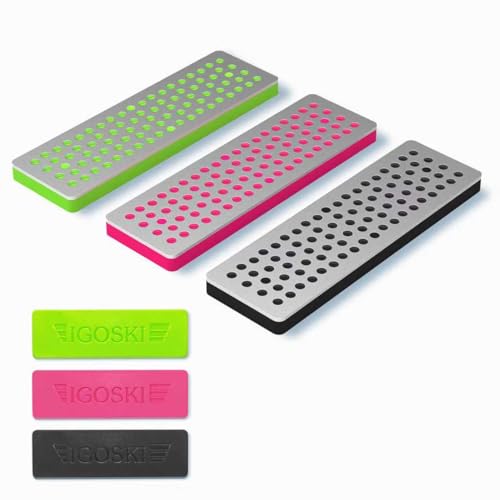
7. IGOSKI Diamond File Set (3-Piece) — Best Budget Diamond File Set
The IGOSKI three-piece diamond file set addresses the straightforward requirement that every edge tuning workflow needs multiple grits to progress from rough edge preparation to a polished, burr-free finish — and it does so at a price point that makes equipping yourself with the full grit progression an easy decision rather than a calculated budget trade-off. The three files — 240, 500, and 1000 grit — cover the complete edge refinement sequence from initial coarse cutting through medium refinement to the mirror-bright polishing that separates professionally tuned edges from rough shop work. At approximately 3.26 inches in length and a manageable 3.5oz total weight for the set, these are not full-length professional bench stones, but they are precisely the right dimensions for guided edge work with any standard angle tool.
Diamond material quality in this price category can be inconsistent across brands, but the IGOSKI files use a consistent abrasive bonding that performs reliably through numerous sessions without premature glazing or uneven cutting patterns. The 240-grit stone cuts aggressively enough for edge prep and deburring after rock strikes, the 500-grit refines the surface geometry cleanly, and the 1000-grit polishing stone produces a visually bright edge surface that improves ice grip measurably compared to a matte-finished edge. Using these files correctly with a quality angle guide like the Toko PRO or Swix TA3007 produces results that rival professional shop work at a fraction of the cost.
The IGOSKI set is the logical complement to any angle guide purchase when you want to build a capable tuning kit without over-spending on individual stones — and for skiers maintaining multiple pairs, having dedicated files for each grit stage rather than switching one stone between passes improves efficiency significantly during longer tuning sessions.
Pros:
- Complete 240/500/1000 grit progression covers the full edge refinement workflow in one purchase
- Longer 3.26-inch stones provide efficient coverage on standard ski and snowboard edges
- Consistent diamond bonding delivers reliable performance through extended use without glazing
- Budget-friendly price makes the full three-grit kit accessible for recreational tuners
- Lightweight and compact for travel and on-mountain touch-up storage
Cons:
- No angle guide included — these are abrasives only, requiring a separate guide for precise bevel work
- Shorter length than professional bench stones means slightly more passes required per section
Key Features to Consider When Choosing a Ski Edge Sharpener
Angle Adjustment Range and Precision
The bevel angle you select for your ski edges determines whether your skis feel locked-in and precise or forgiving and easy to release out of turns — and the quality of your angle guide determines whether you actually achieve the angle you selected versus something slightly different on every pass. Side edge bevels typically range from 85° to 90° (measured from the ski base), with recreational skiers generally favoring 87°–88° for a balanced carving feel and more aggressive skiers selecting 86° or sharper for maximum ice grip. Base edge bevels run from 0.5° to 2.0°, with 0.5° to 1.0° suiting the majority of all-mountain skiing applications.
- Continuously variable adjustment allows finer precision than fixed-increment detents
- Positive locking mechanisms prevent angle drift during multi-pass sharpening sessions
- Tools with both side and base edge capability reduce the total number of pieces in your kit
- Verify the specific angles supported before purchasing — not all tools cover the full range
Guide System Design: Rollers vs. Flat Contact
The contact surface between your angle guide and the ski edge determines how consistently the abrasive applies pressure along the full edge length, which is the single biggest technical factor separating professional tuning results from amateur work. Roller-bearing systems like those in the Swix TA3008 and Toko Edge Tuner PRO maintain smooth, constant contact pressure as you push the guide along the edge, compensating for minor variations in your stroke speed and pressure application. Flat contact guides are simpler and more affordable but require more disciplined technique to avoid higher or lower pressure at the beginning and end of each stroke, which creates slightly inconsistent bevel geometry across the edge length.
- Roller systems are the professional choice for skiers who tune frequently or demand race-level consistency
- Flat contact guides work well for occasional tuners with disciplined stroke mechanics
- Base-friendly guide geometry prevents the abrasive from accidentally contacting the base material
- Consider the full edge length of your ski style — longer skis benefit more from roller stability
Abrasive Type, Grit, and Progression
Your abrasive selection determines both the cutting efficiency of your tuning session and the quality of the finished edge surface, and working with the correct grit sequence produces a significantly better result than using a single stone regardless of its quality. Diamond stones are the standard professional choice because they cut steel efficiently without loading up with metal particles, maintain a consistent cutting surface through many sessions, and produce a fine, uniform edge finish that steel files cannot match on their own. Steel files excel at aggressive stock removal on badly damaged edges but leave surface texture that requires progressive diamond refinement to refine.
- 240-grit diamonds: aggressive stock removal, damaged edge repair, initial bevel establishment
- 400–500-grit diamonds: intermediate refinement, removing coarse file marks, bevel geometry finishing
- 800–1000-grit diamonds: surface polishing, burr removal, race-prep final edge treatment
- Gummi/rubber stones: final deburring and polishing, removing any remaining micro-burrs after diamond work
- Always progress from coarser to finer grits — skipping stages leaves visible surface inconsistencies
Build Quality, Durability, and Compatibility
Edge tuning tools experience repetitive mechanical stress from file pressure and guide contact, and the materials used in the body construction directly determine how long the guide maintains accurate angle geometry before wear introduces inconsistency into your results. Aluminum-bodied tools like the Demon United offer excellent rigidity and corrosion resistance for sustained professional use, while high-quality injection-molded guides from Swix and Toko use engineered plastics formulated specifically for dimensional stability under load. Avoid tools with noticeable flex in the guide body — flex is the enemy of consistent bevel geometry. Also consider whether your chosen guide accepts standard abrasive dimensions, as proprietary stone sizes limit your future purchasing options and typically cost significantly more than standard aftermarket stones. For context on building a complete gear maintenance routine, our guide to the best ski and snowboard tuning vises covers the workbench setup that makes all of this edge work faster and more precise.
- Rigid bodies (aluminum or glass-filled polymers) maintain geometric accuracy through thousands of tuning passes
- Standard stone acceptance (typically 4mm–5mm thickness) gives you access to the widest range of aftermarket abrasives
- Clamping mechanism quality determines whether your stone stays at the correct angle through aggressive strokes
- Consider corrosion resistance if tools will be stored in humid ski bags or mountain environments
FAQs
How often should I sharpen my ski edges?
The frequency depends entirely on your skiing volume, the terrain you ski, and the snow conditions you encounter most often. As a general rule, recreational skiers who ski 10–15 days per season benefit from edge sharpening two to three times across that period — at the start of the season, mid-season, and before any particularly demanding trip. Skiers who frequently encounter hardpack, ice, or rocky early-season conditions need more frequent attention, while deep powder skiing is gentler on edges and extends your intervals between sharpenings. You will notice when your edges need work: skis that slide sideways on hardpack, resist initiating clean carves, or feel vague at high speed are almost always telling you the edges have dulled to the point where maintenance is overdue.
What is the difference between side edge and base edge tuning?
Your ski has two distinct edge axes that require independent tuning to achieve optimal performance, and understanding the difference explains why a complete tuning job covers both rather than just one. The side edge is the vertical face of the metal edge strip on the side of your ski — this is the primary gripping surface that engages snow when you roll the ski onto its edge during a carve. The base edge is the bottom face of the metal edge strip where it meets the ski base — this angle determines how aggressively the ski wants to engage when you tilt it. Most recreational skiers are familiar with side edge work, but neglecting base edge maintenance leads to edges that either catch unpredictably or require excessive tilt angle to engage, both of which compromise control and ski feel.
Can I tune my skis at home or do I need a professional shop?
Home tuning with a quality angle guide and the appropriate diamond stones produces results comparable to most ski shop tune services, provided you invest time in learning correct technique and use tools of appropriate quality. The tools reviewed in this guide — particularly the Swix TA3008, Toko Edge Tuner PRO, and Demon United Base Edge Tuner — are the same categories of tools used in professional service environments, and the precision they deliver is genuinely professional-grade when used correctly. Where professional shops retain an advantage is in machine stone grinding for severely damaged or out-of-true bases and edges — if your bases have deep gouges or your edges have significant chunks missing from rock strikes, a machine grind resets the geometry more efficiently than hand tools alone. For regular maintenance between machine tunes, home tuning with quality hand tools is absolutely the standard approach used by serious skiers worldwide.
What bevel angle should I set my ski edges to?
The optimal bevel angle depends on your skiing style, ability level, and the snow conditions you encounter most frequently, and there is no single universal answer — but practical guidelines exist that suit the majority of recreational and intermediate-advanced skiers well. For side edges, 87° is the most common starting point for all-mountain recreational skiers, offering a balance of grip and forgiveness. More aggressive carvers and those who ski hardpack or ice regularly typically prefer 86° or even 85° for sharper engagement. For base edges, 0.5° to 1.0° is the standard range for groomed piste and all-mountain skiing — the small bevel prevents the edge from catching unexpectedly while maintaining clean release from carved turns. If you are uncertain about your ski's manufacturer recommendation, your ski's product documentation or the manufacturer's website will often specify a suggested tuning specification.
How do I know when my edges are sharp enough after tuning?
The fingernail test is the standard field check used by ski technicians worldwide: lightly drag your thumbnail perpendicular across the edge, applying minimal pressure. A properly sharp edge will catch and slightly scrape your nail, creating a distinct tactile feedback that confirms the edge geometry is engaging correctly. A dull edge slides across your nail without catching, confirming further work is needed. For a more precise assessment, examine the edge under bright light after your final polishing pass — a well-tuned edge reflects light uniformly along its entire length without visible bright spots (high areas) or dull patches (areas that were not contacted by the stone). The gummi stone deburring step is critical to the final result: even after thorough diamond work, a light pass with a gummi stone removes the microscopic wire edge that forms during sharpening and produces a cleaner, more durable cutting edge.
Do ski edge tuning tools work for snowboards too?
Yes — the majority of ski edge tuning tools are fully compatible with snowboard edges, and several products in this review, including the Toko Edge Tuner PRO, the Snowboard Ski Edge Bevel Tuning Kit, and the Demon United Base Edge Tuner, are explicitly designed and marketed for use on both ski and snowboard equipment. The fundamental edge geometry and maintenance principles are identical across both disciplines: side bevel and base bevel angles are established and maintained using the same types of angle guides, files, and diamond stones. Snowboards typically use side bevels in the 88°–90° range (softer than most alpine ski setups) and base bevels from 0.5° to 1.5°, with freestyle riders often preferring detuned tips and tails for easier press and spin initiation. Always verify that your specific angle guide supports the angles your snowboard requires before purchasing.
Buy on Walmart
- Swix TA3008 Phantom Edger Pro with Rollers, Adjustable Side — Walmart Link
- Toko Edge Tuner PRO - Sharpener for Easy and Safe Filing of — Walmart Link
- Snowboard Ski Edge Bevel Tuning ski wax kit,snowboard tool,s — Walmart Link
- Wintersteiger Ski Man Diamond Stone File – 70mm Fine 600 Gri — Walmart Link
- DEMON UNITED Professional Base Edge Tuner- Base Edge File fo — Walmart Link
- Swix TA3007 Phantom Sharpener,85-90° (TA3007) — Walmart Link
- IGOSKI Snowboard Ski Edge Bevel Tuning ski Wax kit Diamonds — Walmart Link
Buy on eBay
- Swix TA3008 Phantom Edger Pro with Rollers, Adjustable Side — eBay Link
- Toko Edge Tuner PRO - Sharpener for Easy and Safe Filing of — eBay Link
- Snowboard Ski Edge Bevel Tuning ski wax kit,snowboard tool,s — eBay Link
- Wintersteiger Ski Man Diamond Stone File – 70mm Fine 600 Gri — eBay Link
- DEMON UNITED Professional Base Edge Tuner- Base Edge File fo — eBay Link
- Swix TA3007 Phantom Sharpener,85-90° (TA3007) — eBay Link
- IGOSKI Snowboard Ski Edge Bevel Tuning ski Wax kit Diamonds — eBay Link
Final Thoughts
Sharp, properly beveled edges transform your skiing from a fight against the mountain into the confident, precise experience the sport is designed to deliver — and with the right tools from this 2026 guide, maintaining that edge quality at home is genuinely within reach for any dedicated skier. Choose the Swix TA3008 if you want the best overall roller-guided precision, the Toko Edge Tuner PRO for excellent mid-range performance, or the value bundle kit if you are just getting started with home tuning. Head to Amazon, pick the tool that matches your skill level and tuning frequency, and take control of your ski performance before the next run.
 |
 |
 |
 |

About Frank V. Persall
Frank Persall is a lifelong skier originally from the United Kingdom who has spent years pursuing the sport across premier resorts in Europe, North America, and beyond. His passion for skiing has taken him from the Alps to the Rocky Mountains, giving him a broad perspective on resort terrain, snow conditions, gear performance across price points, and the practical realities of ski travel with a family. At SnowGaper, he covers ski resort guides, gear reviews, and skiing technique and travel resources for enthusiasts of every level.
You can get FREE Gifts. Or latest free skiing books here.
Disable Ad block to reveal all the info. Once done, hit a button below
|
|
|
|