Are you tired of watching your snowmobile's engine temperature creep into the danger zone on hard-packed trails? If you ride on groomed runs, frozen lakes, or icy backcountry terrain where your track barely kicks up any loose snow, ice scratchers are one of the most important and most overlooked accessories you can buy. Before you head out on your next ride, it's worth knowing which set will actually protect your engine — and which ones will leave you stranded.
Ice scratchers work by dragging along the snow surface and flicking cold snow and ice up into the tunnel area, lubricating the heat exchangers and keeping your cooling system running efficiently. According to Wikipedia's overview of snowmobiles, modern sleds rely heavily on track-contact cooling, which means conditions with minimal loose snow — like groomed trails, glare ice, or frozen lake surfaces — can starve the cooling system fast. That's exactly where scratchers earn their keep. Whether you ride a Ski-Doo, Polaris, Arctic Cat, or Yamaha, there's a set of scratchers on this list designed for your machine and your riding style. You'll also find our picks for ski and snow sports gear reviews if you're outfitting yourself for a full season on the snow.
We researched and evaluated seven of the top-selling ice scratcher options available in 2026, weighing build quality, fitment, cooling performance, and long-term durability. Below you'll find a complete breakdown to help you match the right product to your sled. And if you're building out your full snowmobile setup, don't miss our guide to the best snowmobile dollies — a must-have for moving your machine around the garage or trailer.
Contents
- Our Top Picks for 2026
- Our Hands-On Reviews
- Ice Scratchers Kit (Universal) — Best Universal Cable Design
- SLP Ice Scratcher Brackets — Best for Ski-Doo Summit Riders
- Polaris Premium Reversible — Best OEM Option for Polaris
- Stainless Steel Carbide Tips — Best for Glare Ice
- Ice Scratchers Kit One-Bolt — Best Budget Universal Pick
- Ski-Doo OEM Ice Scratcher — Best OEM Fit for Ski-Doo
- Jetuplusllc Ice Scratchers — Best for Multi-Brand Households
- How to Pick the Best Snowmobile Ice Scratcher
- What People Ask
- Final Thoughts
Our Top Picks for 2026
- #PreviewProductRating
- Bestseller No. 1
 Rating:

- Bestseller No. 2
 Rating:
 - Bestseller No. 3
 Rating:
 - Bestseller No. 4
 Rating:
 - Bestseller No. 5
 Rating:
 - Bestseller No. 6
 Rating:
 - Bestseller No. 7
 Rating:
Our Hands-On Reviews

1. Ice Scratchers Kit Fit for All Reverse and Non-Reverse Gear Equipped Snowmobiles — Best Universal Cable Design
If you're looking for a straightforward, no-nonsense pair of ice scratchers that will fit just about any sled in your garage, this kit deserves serious consideration. Designed for both reverse and non-reverse gear equipped snowmobiles, it uses a simple one-bolt mounting system that makes installation quick and painless — no drilling, no adapter brackets, no hunting through a parts catalog. The cable design is the real standout here. Rather than a rigid arm that can snap on impact, the braided cable construction flexes with the terrain and bounces back, which means you get consistent snow contact across uneven ice surfaces without risking a broken scratcher on your first hard ride.
In terms of cooling performance, the concept is proven: by dragging against the surface and throwing cold snow into the tunnel, these scratchers help regulate engine temperature on groomed runs where loose snow is scarce. Riders who spend most of their time on lakes or hard-packed trails report a noticeable difference in how their sled runs over a long day. The included set of two covers both rails, and the overall build feels solid for the price point. That said, the cable design — while flexible — may show wear faster than stainless alternatives in heavily abrasive conditions like pure glare ice. For mixed-condition riding, though, it's a genuinely effective and versatile pick.
The value proposition here is strong. You're getting a universal fit, an easy install, and a design that prioritizes durability in typical snowy conditions. If you're new to scratchers or just want a reliable set for everyday trail riding, this kit is a smart starting point.
Pros:
- Universal fitment for reverse and non-reverse snowmobiles
- One-bolt mounting makes installation fast and simple
- Flexible cable design reduces risk of breakage on impact
- Effective at improving engine cooling on hard-packed and icy surfaces
Cons:
- Cable may wear faster than stainless steel options on pure glare ice
- Replacement parts can be harder to source than OEM alternatives
2. SLP Ice Scratcher Brackets for Ski-Doo Summit and Lynx Boondocker — Best for Ski-Doo Summit Riders
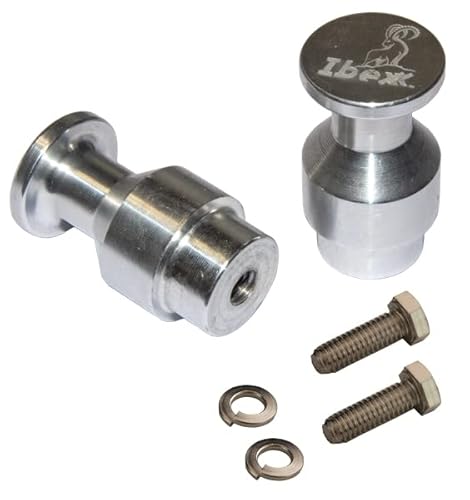
This one is a bit different from the other products on this list. The SLP brackets aren't scratchers themselves — they're replacement mounting brackets designed to hold your existing OEM ice scratchers securely when you're not using them. If you've ever had your Ski-Doo's stock plastic brackets crack in the cold or break when you flip the scratchers up into storage position, you know exactly how frustrating this problem is. SLP solves it with a stronger, more durable pair of brackets engineered specifically for the Summit and Lynx Boondocker platform. They replace OEM part numbers 503194143 and 503195087, so the fitment is precise.
For 2019–2024 Summit 600, 2015–2017 800, and 2017–2024 850 models with rail-mounted OEM ice scratchers, these brackets are a direct drop-in upgrade. The build quality is noticeably better than the plastic originals — less prone to cracking in extreme cold, and more reliable when you're repeatedly deploying and stowing your scratchers over a full season. If you've been dealing with scratchers that flop around or storage brackets that won't hold, SLP's metal construction is exactly what you need. Keep in mind, though, that these are sold per pair and are strictly for Ski-Doo Summit and Lynx Boondocker applications — don't expect them to work on a Polaris or Yamaha.
If you own one of the compatible Ski-Doo models and you're tired of replacing flimsy OEM plastic brackets every season, this is an investment that will pay for itself quickly. It's a niche product, but for the right rider it's genuinely the best solution available.
Pros:
- Stronger and more durable than stock plastic OEM brackets
- Precise fitment for Ski-Doo Summit and Lynx Boondocker
- Direct OEM replacement — no modification required
- Improves storage reliability for rail-mounted scratchers
Cons:
- Brackets only — does not include the scratchers themselves
- Limited to specific Ski-Doo Summit and Lynx Boondocker models
3. Polaris Premium Reversible Ice Scratchers — Best OEM Option for Polaris
When you're running a Polaris RMK or a Patriot Boost model, using genuine OEM parts just makes sense — and these Polaris ice scratchers (OEM part #2890644) deliver exactly what you'd expect from a factory-engineered component. The fully reversible single coil design is the headline feature here. When one side of the contact tip wears down, you simply flip the scratcher over and keep riding on a fresh surface. That doubles your effective service life before you need to replace anything, which adds up to real value over the course of a season or two. For riders who spend a lot of time on groomed trails or icy lake surfaces, that kind of longevity matters.
The fit and finish are excellent, as you'd expect from a genuine Polaris part. These scratchers are engineered specifically for select RMK and Patriot Boost models, so the mounting geometry and contact angle are dialed in for optimal ice engagement. The single coil design also contributes to smooth, consistent track engagement at high speed — no chattering or jumping that can happen with less precisely engineered aftermarket options. If your Polaris sled is your primary machine and you want scratchers that are built to spec, this is the cleanest option on the list.
The one thing to be aware of is compatibility. These are genuine OEM components designed for specific Polaris platforms, so they won't fit a Ski-Doo or Arctic Cat. Before you order, double-check the compatibility list to confirm your model is supported. That said, if you're in the right fitment window, there's no better set of scratchers for your Polaris than these.
Pros:
- Genuine OEM Polaris part — perfect factory fit
- Reversible design doubles service life
- Engineered for optimal track engagement and engine cooling
- Durable single coil construction for trail and lake use
Cons:
- Only fits select Polaris RMK and Patriot Boost models
- OEM pricing is higher than aftermarket alternatives
4. Snowmobile Ice Scratchers — Stainless Steel with Carbide Tips — Best for Glare Ice
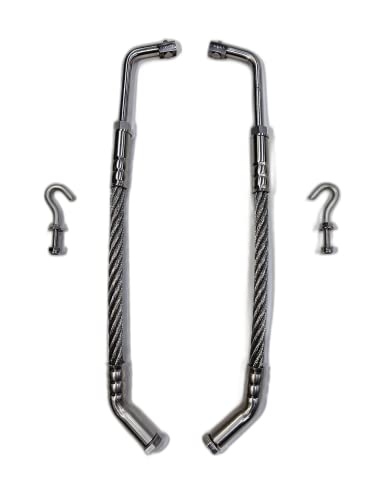
If you ride on pure glare ice — think frozen lakes with zero loose snow — you need scratchers that can actually bite into a hard surface and create the ice chips necessary to cool your engine. This is where the stainless steel construction with pressed and welded carbide tips earns its place on this list. Carbide steel tips are significantly harder than standard steel, which means they cut into glare ice instead of just sliding over it. The pressed-and-welded tip design adds an extra layer of security — the tips are mechanically secured so they're not going to spin off even under heavy use. The manufacturer is transparent that the welds aren't cosmetically perfect, and they explain clearly that the press-fit is the primary retention mechanism. That kind of honesty is actually reassuring.
The stainless steel braided rope construction is a major upgrade over standard cable designs in terms of rust resistance and longevity. You're not going to see this material corrode or chip after a season of heavy use. The kit also comes with rail saver mounts, which protect your rail from abrasion during operation — a thoughtful inclusion that adds genuine value. Fitment is universal for forward and reverse equipped snowmobiles, so it works across most major brands without requiring a machine-specific bracket set.
The trade-off is that this is a more aggressive scratcher, and it's priced accordingly. If you mainly ride groomed powder trails where loose snow is plentiful, you probably don't need carbide tips — the added expense isn't justified. But if glare ice is a regular part of your riding environment, this set will outperform the standard cable and coil options consistently. It's worth pairing your snowmobile maintenance habits with equipment-level thinking — just as riders choose the right ski wax iron for different snow conditions, the right scratcher tip material matters just as much for your sled.
Pros:
- Carbide tips cut through glare ice effectively
- Stainless steel construction resists rust and corrosion
- Universal fitment for forward and reverse equipped sleds
- Rail saver mounts included to protect your tunnel
Cons:
- Higher price point than standard cable scratchers
- Weld quality is functional but not cosmetically refined (manufacturer acknowledged)
5. Ice Scratchers Kit Fit for All Reverse and Non-Reverse — Best Budget Universal Pick
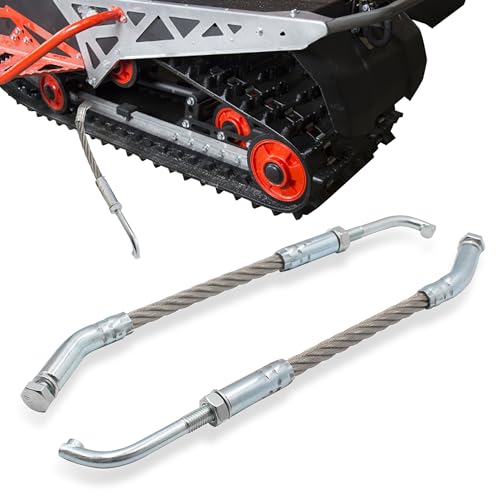
This is the sibling product to the first kit on our list, sharing the same core design philosophy — universal one-bolt fitment, cable construction, and reliable cooling performance for everyday riding. If you're outfitting a second sled, replacing a worn-out set, or simply want a dependable pair of scratchers without spending a lot of money, this kit delivers exactly what it promises. The one-bolt mounting system is genuinely as simple as advertised — you don't need special tools or mechanical expertise to get these installed. Both reverse and non-reverse gear equipped snowmobiles are covered, which makes this a practical choice for mixed fleets or riders who haven't yet committed to a single platform.
The cable design provides the same flexibility benefits as its counterpart — it absorbs impacts and bounces back rather than snapping clean, which is a real advantage on uneven icy terrain. Cooling effectiveness is solid for groomed trails, hardpack, and moderately icy conditions. You're pulling cold surface material into the tunnel area and keeping heat exchangers working efficiently, which is exactly the job scratchers are supposed to do. The build quality is appropriate for the price and the intended use case.
Where this product falls short is in the same area as the first kit — it's not engineered for pure glare ice, and the cable will eventually show wear in highly abrasive conditions. But for most recreational riders and trail enthusiasts who want an affordable, easy-to-install solution that will last multiple seasons with normal use, this kit is a very reasonable buy.
Pros:
- Affordable price point makes it accessible for most budgets
- One-bolt mounting — no tools or expertise required
- Universal fit for reverse and non-reverse snowmobiles
- Flexible cable design handles impacts without breaking
Cons:
- Not suited for pure glare ice riding conditions
- Cable wear may accelerate on heavily abrasive surfaces
6. Ski-Doo OEM Ice Scratcher, 860201728-2 — Best OEM Fit for Ski-Doo
Ski-Doo's OEM ice scratcher (part number 860201728-2) is the factory solution engineered specifically for BRP's platform, and it shows in every design detail. The rail-mounted profile is intentionally small and light, keeping unsprung weight down and minimizing interference with your sled's handling characteristics — something that generic universal designs often sacrifice. If you're a Ski-Doo owner who values keeping your machine as close to factory spec as possible, this is the cleanest option available. No jury-rigged fitment, no guessing about whether the mounting angle is right — it's engineered for your sled.
The coil-based design expands on earlier scratcher concepts with a key functional improvement: it allows your sled to reverse without damaging the scratcher. That's a practical necessity for backcountry riders and anyone who parks in tight spaces. When you don't need the scratchers, they store easily out of the way, keeping your tunnel clear and your machine clean. Build quality is exactly what you'd expect from a genuine Ski-Doo part — consistent materials, proper tolerances, and confident durability through a full season of use.
The limitation, as with any OEM-specific product, is fitment. This part is designed for Ski-Doo machines, and it won't be a plug-and-play solution on any other brand. If you're running a multi-brand fleet or haven't confirmed compatibility with your specific model year, take a moment to verify before purchasing. But for Ski-Doo riders who want the genuine article, this is the straightforward, no-compromise choice.
Pros:
- Genuine OEM Ski-Doo part with perfect factory fitment
- Small and lightweight design preserves handling characteristics
- Coil design allows safe reversing without scratcher damage
- Easy to store when conditions don't require scratcher use
Cons:
- Ski-Doo specific — not compatible with other brands
- OEM pricing can be higher than aftermarket alternatives
7. Jetuplusllc Snowmobile Ice Snow Scratchers Kit — Best for Multi-Brand Households
If your garage has a mix of brands — say a Polaris next to a Ski-Doo, or an Arctic Cat sitting beside a Yamaha — the Jetuplusllc scratchers are worth a hard look. The universal fitment covers all four major snowmobile brands in a single kit, which simplifies inventory, reduces the number of spare parts you need to carry, and makes swapping between sleds straightforward. The spring-hook mounting system is the defining functional feature here: the scratchers hook onto the rails when you need them deployed, and unhooking the spring when conditions improve is fast and intuitive. You're not wrestling with tools or hardware mid-ride.
Performance-wise, these scratchers do their job well in the conditions they're designed for — hard-packed snow, groomed trails, and moderately icy surfaces where your track isn't kicking up enough loose material to keep the hifax and heat exchangers lubricated. The cooling benefit is real, and riders who've made the switch from riding without scratchers on hard-packed conditions consistently report improved thermal management over a full day of riding. The build quality is solid for the aftermarket price point, with materials that hold up well through a normal riding season.
Where you'll want to think carefully is if your primary riding environment includes pure glare ice or heavy ice scraping — in those conditions, a carbide-tipped option will outperform this kit. But for the everyday rider with multiple machines and varied trail conditions, the Jetuplusllc kit offers a practical, cost-effective solution that works across your whole fleet. If you're someone who also skis or snowboards on your winter trips, you might appreciate how the same multi-tool mindset applies to gear choices — much like how one good ski and snowboard tuning vise can handle maintenance across multiple boards.
Pros:
- Universal fit for Polaris, Arctic Cat, Ski-Doo, and Yamaha
- Spring-hook mounting deploys and stows quickly without tools
- Effective cooling performance on groomed and hard-packed surfaces
- Good value for multi-machine households
Cons:
- Not the best choice for pure glare ice — carbide tips will perform better
- Spring-hook design may loosen over time with heavy use cycles
How to Pick the Best Snowmobile Ice Scratcher
With seven solid options on the table, narrowing down the right choice comes down to a few key factors. Here's what to think about before you buy in 2026.
Riding Conditions and Surface Type
This is the single most important factor in your decision. Your typical riding surface determines the tip material and construction you need. If you ride groomed trails, hardpack, and mixed snow conditions, a standard cable or coil scratcher will work well — the universal kits and OEM options on this list are all engineered for exactly these conditions. However, if your season regularly includes pure glare ice — frozen lake crossings with zero loose snow, for example — you need a scratcher with carbide tips that can physically bite into hard ice and generate the ice chips needed for cooling. The stainless steel carbide-tip option on this list is the right answer for that scenario. Using a standard cable scratcher on glare ice is better than nothing, but the cooling yield is meaningfully lower.
Fitment: OEM vs. Universal
This is a genuine trade-off, not a clear-cut answer. OEM scratchers — the Polaris, Ski-Doo, and SLP bracket options on this list — offer precise fitment, manufacturer-engineered contact geometry, and confidence that everything will bolt up correctly without modification. They're the right choice if you own one machine from one brand and want the cleanest possible installation. Universal scratchers sacrifice some precision in exchange for broad compatibility. They're the better pick if you own multiple machines across different brands, if OEM parts for your model are backordered, or if you simply want a more affordable solution that works reliably across platforms. Neither approach is wrong — it depends on your situation.
Mounting System and Ease of Deployment
Think about how often you'll actually be deploying and stowing your scratchers during a typical ride. If you're a backcountry rider who transitions frequently between deep powder and icy hardpack, a fast and intuitive deployment system matters a lot. Spring-hook designs like the Jetuplusllc kit are quick to engage and release. Rail-mounted OEM designs like the Ski-Doo and Polaris options offer reliable storage positions that keep the scratchers out of the way when conditions are good. One-bolt cable designs are simple and secure but may require slightly more deliberate action to adjust. Consider how often you'll actually be reaching for the scratchers and choose a mounting system that matches your riding rhythm.
Durability and Long-Term Cost
Scratchers are wear items — they contact the surface directly and will eventually need replacement. The reversible Polaris design extends service life by letting you flip the contact surface before replacing. Carbide-tipped options last significantly longer on icy surfaces because the tip material resists wear far better than standard steel. Stainless steel construction eliminates the rust and corrosion risk that can affect untreated cable designs over multiple seasons. When evaluating price, factor in the full lifecycle cost — a slightly more expensive scratcher that lasts three seasons is often a better value than a budget option that needs replacing annually. Also consider whether replacement tips or components are available for the option you're considering, particularly for aftermarket designs.
What People Ask
Do I really need ice scratchers on my snowmobile?
If you ride on hard-packed trails, groomed runs, or frozen lake surfaces where your track doesn't throw much loose snow, then yes — ice scratchers are a genuinely important piece of equipment. Modern snowmobiles rely on track-contact cooling, and when there's no loose snow entering the tunnel area, engine temperatures can climb quickly. Scratchers continuously feed cold snow and ice into the tunnel while you're moving, keeping your heat exchangers working properly and protecting your engine from heat stress. They're especially critical on warm winter days when snow is firm, or during long sustained trail rides at speed.
Are ice scratchers universal, or do I need brand-specific ones?
Both options exist, and each has advantages. Universal scratchers — like the cable-design kits and the Jetuplusllc option on this list — are engineered to mount on most major snowmobile platforms using a common one-bolt or spring-hook attachment. They're a practical choice if you have multiple machines from different brands or if OEM parts aren't available for your model. Brand-specific scratchers from Polaris, Ski-Doo, and SLP offer more precise fitment, engineered contact geometry, and guaranteed compatibility with your specific machine. If you own a single sled and want the cleanest possible installation, go OEM. If you have a mixed fleet, universal scratchers are the more cost-effective route.
When should I deploy my ice scratchers?
Deploy your scratchers any time your track isn't naturally kicking up loose snow into the tunnel. The most common situations include riding on groomed trails, crossing frozen lakes, riding on hardpack or icy surfaces, and any time your engine temperature gauge starts to climb above normal operating range. You can safely ride with scratchers deployed at any time — many riders simply leave them down whenever conditions are less than deep powder. In truly deep loose snow, scratchers are less necessary since the track naturally pulls snow into the cooling system, but leaving them deployed in powder won't cause any harm.
How do I install snowmobile ice scratchers?
Installation varies by design, but most aftermarket scratchers are straightforward. One-bolt designs require you to locate the mounting point on the rail, position the scratcher bracket, insert and tighten a single bolt, and adjust the tip length for proper ground contact. Spring-hook designs are even simpler — the scratcher clips onto the rail with no hardware required. OEM designs follow the specific mounting instructions for your sled's platform. In most cases, installation takes less than 30 minutes and requires only basic hand tools. Always check the manufacturer's instructions for your specific product, and verify that the scratcher tips just barely contact the surface when deployed — too much contact angle creates drag, too little reduces effectiveness.
How long do snowmobile ice scratchers last?
Service life depends heavily on tip material and riding conditions. Standard steel cable scratchers used on groomed trails and mixed snow conditions typically last one to three seasons before the contact tips wear down. Carbide-tipped scratchers can last significantly longer because carbide resists abrasion far better than standard steel — expect two to four seasons or more under similar conditions. On pure glare ice, all scratchers wear faster because they're working harder against a more abrasive surface. Reversible designs like the Polaris OEM scratcher effectively double their service life by letting you flip the tip before replacing. Inspect your scratchers at the start of each season and any time you notice reduced cooling performance.
Can I use ice scratchers if my snowmobile has reverse gear?
Yes — most modern ice scratchers are specifically designed to work with both forward and reverse gear equipped snowmobiles. This is a key feature called out explicitly in several products on this list. The coil and cable designs flex or retract when the sled moves in reverse, preventing damage to the scratcher mechanism. The Ski-Doo OEM design specifically highlights that its coil concept allows reversing without damage. If you're shopping for scratchers and your sled has reverse, confirm that the product you're considering is rated for reverse use — most modern options are, but it's worth verifying before you buy, particularly with older aftermarket designs.
Buy on Walmart
- Ice Scratchers Kit Fit for All Reverse and Non-Reverse Gear — Walmart Link
- SLP Ice Scratcher Brackets for Ski-Doo Summit and Lynx Boond — Walmart Link
- Polaris Premium Reversible Ice Scratchers for Snowmobiles – — Walmart Link
- Snowmobile Ice Scratchers - Stainless Steel with Pressed and — Walmart Link
- Ice Scratchers Kit Fit for All Reverse and Non-Reverse Gear — Walmart Link
- Ski-Doo OEM Ice Scratcher, 860201728-2 — Walmart Link
- Jetuplusllc Snowmobile Ice Snow Scratchers Kit Fit for Polar — Walmart Link
Buy on eBay
- Ice Scratchers Kit Fit for All Reverse and Non-Reverse Gear — eBay Link
- SLP Ice Scratcher Brackets for Ski-Doo Summit and Lynx Boond — eBay Link
- Polaris Premium Reversible Ice Scratchers for Snowmobiles – — eBay Link
- Snowmobile Ice Scratchers - Stainless Steel with Pressed and — eBay Link
- Ice Scratchers Kit Fit for All Reverse and Non-Reverse Gear — eBay Link
- Ski-Doo OEM Ice Scratcher, 860201728-2 — eBay Link
- Jetuplusllc Snowmobile Ice Snow Scratchers Kit Fit for Polar — eBay Link
Final Thoughts
Protecting your engine from heat damage is one of the easiest and most cost-effective investments you can make in your snowmobile's long-term health — and the right set of ice scratchers is the tool for the job. Take a few minutes to match the options above to your sled, your typical riding surface, and your budget, then pick the one that fits your situation best. Your engine will thank you on the next long trail day.
 |
 |
 |
 |

About Frank V. Persall
Frank Persall is a lifelong skier originally from the United Kingdom who has spent years pursuing the sport across premier resorts in Europe, North America, and beyond. His passion for skiing has taken him from the Alps to the Rocky Mountains, giving him a broad perspective on resort terrain, snow conditions, gear performance across price points, and the practical realities of ski travel with a family. At SnowGaper, he covers ski resort guides, gear reviews, and skiing technique and travel resources for enthusiasts of every level.
You can get FREE Gifts. Or latest free skiing books here.
Disable Ad block to reveal all the info. Once done, hit a button below
|
|
|
|