Which ski wax iron actually delivers consistent heat, glides smoothly across your base, and holds its temperature when it matters most on the mountain? If you've been wasting time with an underpowered household iron or an entry-level tool that scorches your base instead of penetrating the structure, you already know the frustration. After testing and evaluating the field for 2026, the TOKO T14 1200W Digital Iron stands out as the top professional pick — but it's not the right tool for every waxer, and the other six options on this list each earn their place for specific riders and budgets.
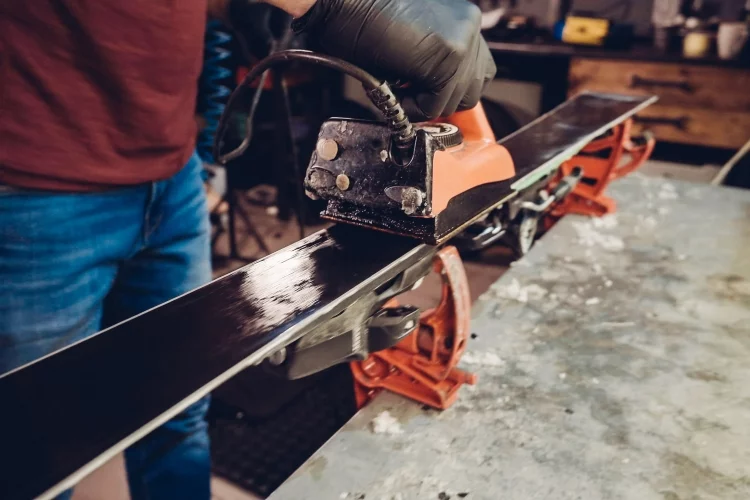
A quality ski wax iron is one of the most consequential pieces of tuning equipment you can own. According to Wikipedia's overview of ski wax, proper wax application requires precise temperature control — too cool and the wax doesn't penetrate the base structure, too hot and you risk delaminating the base material entirely. Whether you're a weekend warrior maintaining your all-mountain skis or a dedicated Nordic racer chasing milliseconds, the right iron changes everything about how your skis perform on snow. If you're building out a complete tuning setup, pair your iron with a good ski and snowboard tuning kit and a reliable tuning vise to create a professional-grade home workshop.
This guide covers seven of the best ski wax irons available in 2026 across every price point and use case, from economy models designed for beginners to commercial-grade digital tools that professional ski technicians use daily. Each review focuses on real-world performance, build quality, and the specific scenarios where each iron earns its recommendation. Browse through the full ski gear reviews section for complementary equipment that rounds out your winter sports kit.
Contents
- Editor's Recommendation: Top Picks of 2026
- Product Reviews
- Swix Universal Waxing Iron — Best for Wide Skis
- TOKO T14 1200W Digital Iron — Best Professional Pick
- Dakine Adjustable Tuning Iron — Best Entry-Level Option
- Demon United Commercial Grade Digital Iron — Best Commercial Grade
- Swix North Waxing Iron — Best Heat Retention
- SWIX T77 Economy Waxing Iron — Best Budget Pick
- Toko T8 Hot Wax Iron — Best for Beginners
- Buying Guide
- What People Ask
- Final Thoughts
Editor's Recommendation: Top Picks of 2026
- #PreviewProductRating
- Bestseller No. 1
 Rating:

- Bestseller No. 2
 Rating:
 - Bestseller No. 3
 Rating:
 - Bestseller No. 4
 Rating:
 - Bestseller No. 5
 Rating:
 - Bestseller No. 6
 Rating:
 - Bestseller No. 7
 Rating:
Product Reviews
1. Swix Universal Waxing Iron — Best for Wide Skis
The Swix Universal Waxing Iron has been a trusted name in the tuning room for years, and the 2026 version continues to justify that reputation with a design built around efficiency and reliability. The large base plate is the defining feature here — it covers significantly more ski base per pass compared to standard-width irons, which means you spend less time working the wax in and get more consistent coverage across fat powder skis, wide all-mountain setups, and snowboards alike. The dial-style temperature control might lack the precision of a digital readout, but it covers the full range needed for both universal and temperature-specific waxes without any difficulty.
Standard 110V compatibility means you plug it into any North American outlet and get to work immediately, with no adapters or voltage converters cluttering your wax bench. Heat distribution across the large plate is even and predictable, which is critical when you're trying to maintain a smooth, steady iron speed across the full width of a wide ski. This is the iron you reach for when efficiency matters — particularly if you're waxing multiple pairs of wide boards in a single session and don't want to make three passes where one should suffice.
Pros:
- Wide base plate reduces the number of passes required on wide skis and snowboards
- Dial temperature control covers the full wax range without overcomplicated settings
- Standard 110V plug works with all North American household outlets
- Trusted Swix engineering with a track record of durability
Cons:
- Analog dial lacks the precision of a digital temperature display
- Less ideal for narrow Nordic skis where a smaller plate offers better control
2. TOKO T14 1200W Digital Ski and Snowboard Wax Iron — Best Professional Pick
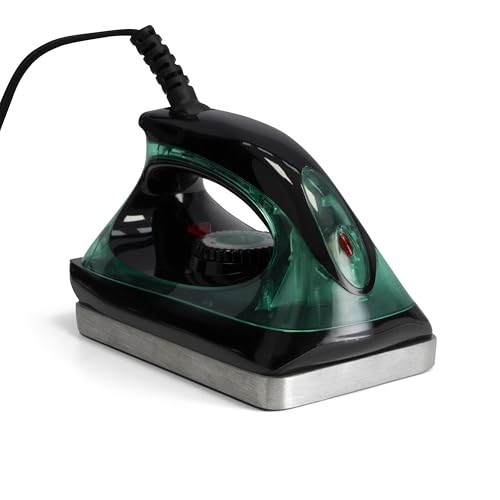
When professional ski technicians and serious hobbyists talk about what they actually use in their tuning rooms, the TOKO T14 comes up consistently, and the reason is straightforward: 1200 watts of power combined with a digital temperature readout gives you the precision and speed that analog irons simply cannot match. The digital display eliminates the guesswork entirely — you set an exact temperature in degrees Fahrenheit anywhere from 212°F to 320°F, and the iron holds it with the consistency required for race-level wax application. That range covers every glide wax and grip wax scenario you'll encounter across Alpine, Nordic, and snowboard disciplines.
The ergonomic design is built for sustained sessions, so if you're working through a full tune on multiple pairs, your hand and wrist don't fatigue the way they do with heavier, awkwardly balanced irons. TOKO has engineered the heat plate to distribute warmth evenly from edge to edge, which prevents hot spots that can scorch your base and cold zones that leave wax poorly absorbed. For 2026, this remains the benchmark that other irons are measured against when the conversation turns to professional-grade performance at a price that serious home waxers can justify.
Pros:
- Digital readout delivers exact temperature control across the full wax spectrum
- 1200W power output heats quickly and recovers fast between passes
- Infinite adjustment between 212°F and 320°F covers every wax type
- Ergonomic design reduces hand fatigue during long tuning sessions
- Suitable for Alpine, Nordic, and snowboard applications
Cons:
- Higher price point compared to entry-level and economy irons
- Digital electronics add complexity that purely mechanical irons avoid
3. Dakine Adjustable Tuning Iron — Best Entry-Level Option
The Dakine Adjustable Tuning Iron in Castlerock delivers a clean, no-frills waxing experience that works reliably for riders who are getting started with home tuning or who don't need the complexity and cost of a professional digital iron. The beveled edges are a genuinely useful design detail — they allow you to keep the iron moving at a consistent pace without catching on the ski's edges or tip and tail geometry, which is a common frustration with flat-bottomed irons that don't account for the natural contours of a ski base. The adjustable temperature control works with all Dakine hot waxes and handles standard universal waxes from other brands without issue.
This iron is honest about what it is: a solid, dependable tool for recreational riders who want to maintain their gear without investing in a full professional setup. If you ride a few times per season and want to keep your bases gliding well, the Dakine iron handles that task effectively and stores easily when not in use. It's not built for high-volume waxing sessions or precision race preparation, but it doesn't need to be — it's built for the rider who wants good results with minimal fuss and a straightforward learning curve.
Pros:
- Beveled edges prevent catching on ski edges and contoured base geometry
- Adjustable temperature control compatible with all Dakine hot waxes
- Compact and easy to store between tuning sessions
- Straightforward operation with minimal learning curve for new waxers
Cons:
- Not designed for high-volume professional use or race preparation
- Temperature range details are less specified compared to digital competitors
4. Demon United Commercial Grade Ski and Snowboard Wax Digital Iron — Best Commercial Grade
The Demon United Commercial Grade Digital Iron is the choice when you need an iron that can handle daily heavy-use demands in a rental shop, race program, or high-volume home operation where you're waxing ten or more pairs per session. At 1200 watts and with a soleplate measuring 186.5×108mm, this iron covers an impressively large surface area while maintaining the digital temperature precision that commercial waxing requires. The 120V/60Hz rating puts it squarely in standard North American electrical compatibility, and the 2.5-pound weight gives it the heft needed to press wax into base structure without requiring excessive downward pressure from your hand.
The digital display means you're not guessing at temperature settings — you dial in the exact number for your wax of the day and the iron holds it reliably throughout the session. Where the Demon United separates itself from lighter-duty competitors is in thermal recovery: after the cold wax bar drops the plate temperature during drip application, the commercial-grade heating element rebounds quickly and gets you back to your target temperature without the waiting that plagues underpowered irons. If you're serious about taking your tuning operation to the next level, this is the hardware that makes that possible.
Pros:
- Commercial-grade 1200W heating element for high-volume waxing sessions
- Large 186.5×108mm soleplate covers more base per pass
- Digital temperature display for precise, consistent control
- 2.5-pound weight provides optimal pressing force without fatigue
- Standard 120V/60Hz compatibility throughout North America
Cons:
- Heavier weight may be fatiguing for occasional waxers accustomed to lighter irons
- Commercial-grade pricing may exceed the budget of recreational riders
5. Swix North Waxing Iron 110V — Best Heat Retention
The Swix North Waxing Iron steps up from the Universal model with a single defining upgrade that makes a meaningful difference in real-world waxing performance: the heavy forged base plate construction. Forged metal holds heat with significantly more stability than stamped or pressed alternatives, which means the temperature you set at the dial is the temperature the plate maintains across the full stroke, even when the cold wax bar contacts the surface during drip application. For any waxer who has dealt with an iron that drops temperature mid-pass and leaves uneven wax penetration, this upgrade resolves that problem definitively.
The adjustable temperature dial covers the complete range needed for universal waxes and temperature-specific performance waxes, making this iron genuinely versatile across the full spectrum of snow conditions you'll encounter throughout a 2026 winter season. Standard 110V compatibility means you're plugging directly into your workshop outlet without adapters. The Swix North sits in a comfortable middle tier — it's more capable than budget irons and more straightforward than digital models, making it the right choice for the dedicated enthusiast who waxes regularly and wants consistent results without the complexity of a full digital interface.
Pros:
- Forged base plate delivers superior heat retention compared to stamped alternatives
- Consistent temperature maintained even during wax drip contact
- Full temperature range covers all universal and condition-specific waxes
- 110V standard plug for immediate North American compatibility
Cons:
- Analog dial control lacks the degree-by-degree precision of a digital iron
- Mid-tier pricing sits between budget picks and professional digital models
6. SWIX T77 Economy Waxing Iron with Plexi Scraper — Best Budget Pick
The SWIX T77 Economy Waxing Iron is Swix's answer to the budget segment, and it competes with irons that cost significantly more — which is remarkable when you consider that it's redesigned from scratch rather than being a cost-reduced version of an existing model. The wide metal plate and angled side profile are functional improvements that address common usability complaints, where the angled edge helps you maintain a consistent iron speed without the plate catching at the tip or tail transition of the ski. Operating temperatures run from 80°C to 170°C (176°F to 338°F), which covers the full range of glide waxes and grip waxes for both Alpine and Nordic applications.
The bundle that includes the T0824D Plexi Scraper adds real value here, because a 4mm plexi scraper is exactly what you need after the wax cools and you're ready to strip the excess before brushing. For a beginner setting up their first tuning kit, getting both tools in one package at an economy price point is a significant advantage. If you're pairing this with a complete setup, check out the best ski edge sharpeners and tuners to round out your maintenance routine and keep your skis performing at their best all season.
Pros:
- Most affordable Swix iron without sacrificing core performance
- Redesigned ergonomic body with wide plate and angled edge for consistent strokes
- Full operating range (80°C–170°C) covers all glide and grip wax applications
- Bundled T0824D Plexi Scraper adds immediate value for new tuners
- Suitable for both beginner and hobby-level waxers
Cons:
- Economy construction means less thermal mass compared to forged or commercial-grade irons
- Not the right tool for professional shops or high-volume race preparation
7. Toko T8 Hot Wax Iron — Best for Beginners
The Toko T8 Hot Wax Iron occupies the entry point of the TOKO lineup and brings the brand's engineering philosophy down to an accessible price that beginners can justify without committing to a professional-grade investment on their first iron. The extra-strong aluminum pressure cast plate with curved rhomboid structure is a technical feature that delivers real-world benefits — the rhomboid surface geometry promotes even wax distribution and compression across the base, which means you're actually working the wax into the structure rather than just melting it on top of the surface. Temperature adjustment runs from 212°F to 320°F, covering Alpine, Nordic, and snowboard waxing needs across the board.
The ergonomic handle design is particularly well-suited to beginners who are still developing their technique and iron speed, since a comfortable grip reduces the tendency to press down too hard or move too quickly when you're learning. Waxing is a skill that takes several sessions to develop, and the T8 is forgiving enough to grow with you as you improve. For anyone stepping into home ski maintenance for the first time and wanting a reliable, brand-name iron that won't punish beginner mistakes, the Toko T8 is the recommendation you can trust heading into the 2026 season.
Pros:
- Aluminum pressure cast plate with rhomboid structure promotes even wax compression
- Full 212°F–320°F range handles Alpine, Nordic, and snowboard wax types
- Ergonomic handle reduces fatigue and improves technique for new waxers
- Trusted TOKO brand quality at an entry-level price point
Cons:
- Lacks the digital precision readout of the T14 professional model
- Lower wattage means slower heat recovery between passes on cold wax
Buying Guide: How to Choose the Best Ski Wax Iron
Temperature Control: Analog Dial vs. Digital Display
The most consequential decision you'll make when choosing a ski wax iron is how it controls temperature, because wax application is fundamentally a temperature-sensitive process where getting it wrong costs you base material or wax performance. Analog dial irons are simpler, more durable in the long run, and easier to use without looking at a display — but they require you to learn how the specific iron's dial positions correspond to actual temperatures through trial and experience. Digital irons eliminate that learning curve entirely by showing you the exact temperature in degrees and holding it with electronic precision throughout the session.
- Choose analog if you prefer simplicity, work with a limited range of wax temperatures, or want fewer electronic components that can fail
- Choose digital if you work with precision race waxes, want exact repeatability between sessions, or are building a professional-quality tuning operation
- Most universal waxes work well at 120°C–130°C (248°F–266°F) — a range that any quality iron can reach, analog or digital
Wattage and Heating Power
Wattage directly determines how quickly your iron reaches target temperature, how fast it recovers after the cold wax bar contacts the plate, and how consistently it maintains heat during extended waxing sessions. A 1000W iron gets the job done for recreational use, but a 1200W model like the TOKO T14 or Demon United shows meaningful advantages when you're waxing multiple pairs back-to-back and need the plate to recover quickly between drip applications.
- 600W–800W: adequate for very occasional use, one pair per session maximum
- 1000W: the practical minimum for regular home waxing across multiple ski types
- 1200W: the standard for professional and high-volume applications where thermal recovery matters
Plate Size and Material
The soleplate — the flat metal surface that contacts the wax — varies in both size and construction material across different irons, and both factors affect your results in ways that you'll notice immediately once you start waxing. Larger plates cover more ski base per pass, which saves time on wide skis and snowboards but offers less precision on narrow Nordic skis. Forged plate construction, as seen on the Swix North, holds heat more consistently than stamped alternatives because the greater thermal mass resists temperature drops when cold wax contacts the surface.
- Wide plates (like the Swix Universal's large base plate): ideal for fat skis, all-mountain skis, and snowboards
- Standard plates: versatile across most ski widths and suitable for the majority of recreational waxers
- Forged construction: worth the extra investment if you work with precision waxes and need steady plate temperatures
- Aluminum cast plates (like the Toko T8's rhomboid design): promote even heat distribution and wax compression
Matching Your Iron to Your Waxing Level
Not every waxer needs the same tool, and spending more than your actual use case justifies adds cost without proportional benefit. Honest self-assessment of how often you wax, what types of skis you maintain, and what results you're trying to achieve guides you toward the right iron far more reliably than chasing the most expensive option on the shelf.
- Beginners and occasional waxers: the SWIX T77 Economy or Toko T8 offer brand-quality performance at accessible price points
- Regular enthusiasts: the Swix Universal, Swix North, or Dakine Adjustable hit the sweet spot of performance and value
- Serious hobbyists and racers: the TOKO T14's digital precision justifies the investment for anyone who cares about wax consistency at a granular level
- Professional shops and race programs: the Demon United Commercial Grade is built specifically for the demands of daily, high-volume use
What People Ask
What temperature should a ski wax iron be set to?
The right temperature depends on the specific wax you're using, but most universal glide waxes work best between 120°C and 130°C (248°F to 266°F). Fluorinated performance waxes and some hard waxes require higher temperatures, typically up to 150°C (302°F). Always check the wax manufacturer's recommended application temperature printed on the packaging, because overheating wax damages your base and underheating leaves wax sitting on the surface rather than penetrating the structure where it performs.
Can I use a household clothes iron for ski waxing?
You can apply wax with a household iron in a pinch, but it's not recommended as a regular practice. Clothes irons are not designed to maintain the steady, precise temperatures that ski wax requires, and they often have steam holes that create uneven heat distribution across the plate. More importantly, the wax residue that builds up on a clothes iron transfers to fabric the next time you use it for laundry. A dedicated ski wax iron is a worthwhile investment that pays for itself over just a few seasons of proper base maintenance.
How do I know if my iron is too hot?
The clearest sign that your iron is too hot is smoke rising from the wax as you iron it in. A correctly set iron melts the wax smoothly and spreads it evenly without producing visible smoke, which indicates the wax is burning rather than flowing. Another sign is wax that appears discolored or turns brown after ironing — that's burned wax that has lost its performance properties entirely. If you see smoke, immediately reduce the temperature setting and allow the iron to cool before continuing.
How often should I wax my skis?
The standard recommendation for recreational skiers is to wax every three to five full days of skiing on the mountain, though skiers who notice their bases feeling slow or looking white and dry should wax immediately regardless of how many days they've skied. Racers and performance-oriented riders wax before every race and often before every training day. Skis stored during the off-season benefit from a thick coat of storage wax that is scraped off before the first run of the following winter, which protects the base from oxidation.
Is a digital wax iron worth the extra cost over an analog model?
For recreational skiers using universal waxes, an analog iron delivers results that are indistinguishable from a digital model in everyday use — the extra cost of a digital display is hard to justify at that level. The value of digital control becomes clear when you work with precision performance waxes that require specific application temperatures within a narrow range, or when you're waxing for multiple riders under varying snow conditions where you need to change temperatures frequently and accurately between applications. If you're tuning gear for a race program or building a professional shop, the digital investment pays off immediately.
What's the difference between the Swix Universal and Swix North waxing irons?
The key difference between the Swix Universal and Swix North is the base plate construction. The Swix Universal features a wide stamped plate optimized for coverage area across wide skis, while the Swix North uses a heavy forged base plate that delivers superior heat retention and more consistent temperature maintenance during the waxing stroke. The forged construction on the North means the plate temperature drops less when cold wax contacts it, which results in more even wax penetration. If you wax regularly and want a more professional result, the Swix North's forged plate is worth the step up from the Universal.
Buy on Walmart
- Swix Universal Waxing Iron, 110V Adjustable Temperature, Red — Walmart Link
- TOKO T14 1200W Digital Ski and Snowboard Wax Iron – Ergonomi — Walmart Link
- Dakine Adjustable Tuning Iron NA - Castlerock — Walmart Link
- Demon United Commercial Grade Ski and Snowboard Wax Digital — Walmart Link
- Swix North Waxing Iron 110V, Forged Base, Adjustable Temp fo — Walmart Link
- SWIX T77 Economy Waxing Iron for Alpine and Nordic Skis, Sno — Walmart Link
- Toko T8 Hot Wax Iron - Ergonomic Ski and Snowboard Waxing To — Walmart Link
Buy on eBay
- Swix Universal Waxing Iron, 110V Adjustable Temperature, Red — eBay Link
- TOKO T14 1200W Digital Ski and Snowboard Wax Iron – Ergonomi — eBay Link
- Dakine Adjustable Tuning Iron NA - Castlerock — eBay Link
- Demon United Commercial Grade Ski and Snowboard Wax Digital — eBay Link
- Swix North Waxing Iron 110V, Forged Base, Adjustable Temp fo — eBay Link
- SWIX T77 Economy Waxing Iron for Alpine and Nordic Skis, Sno — eBay Link
- Toko T8 Hot Wax Iron - Ergonomic Ski and Snowboard Waxing To — eBay Link
Final Thoughts
Every iron on this list earns its recommendation for the right buyer, so the decision comes down to how often you wax, what level of precision you need, and how much you want to invest in your tuning setup — start with your honest use case, match it to the iron that fits, and you'll immediately notice the difference in how your skis perform on snow. Pick your iron, grab a quality wax, and get your bases ready for everything the 2026 season brings.
 |
 |
 |
 |

About Frank V. Persall
Frank Persall is a lifelong skier originally from the United Kingdom who has spent years pursuing the sport across premier resorts in Europe, North America, and beyond. His passion for skiing has taken him from the Alps to the Rocky Mountains, giving him a broad perspective on resort terrain, snow conditions, gear performance across price points, and the practical realities of ski travel with a family. At SnowGaper, he covers ski resort guides, gear reviews, and skiing technique and travel resources for enthusiasts of every level.
You can get FREE Gifts. Or latest free skiing books here.
Disable Ad block to reveal all the info. Once done, hit a button below
|
|
|
|