A group of college friends once booked a ski weekend on little more than a shared spreadsheet and a midweek search for lift ticket bundles — and the per-person total landed under three hundred dollars, lodging included. That kind of outcome is not a fluke. Cheap ski vacation deals exist in abundance for travelers who approach the mountain with the same strategic thinking they apply to airline miles or hotel points. The full catalog of available ski resort destinations spans a far wider price range than the sport's luxury reputation suggests, and the gap between what uninformed travelers pay and what informed ones spend is measurable and consistent.

Ski vacations carry an enduring reputation as the domain of high-income households, a perception that deal-savvy travelers have been quietly disproving for years. Skiing spans a global market with hundreds of accessible destinations offering varied price tiers — from regional community hills to full-scale destination resorts — and the infrastructure for discount travel to these venues has expanded considerably over the past decade. Package platforms, dynamic lift ticket pricing, and off-peak lodging rates have restructured the market in ways that benefit prepared travelers most directly.
The variables that determine total trip cost — booking timing, destination selection, lodging type, gear expenditure, and dining strategy — each carry meaningful weight in the final calculation. Travelers who understand the leverage points within each category consistently construct ski vacations that deliver genuine mountain experiences at a fraction of what impulsive or last-minute planning produces.
Contents
- Budget Skiing for First-Timers Versus Experienced Skiers
- Fixing the Most Frustrating Budget Ski Trip Problems
- When to Book a Ski Deal — and When to Wait
- Five Myths About Cheap Ski Vacations, Debunked
- A Realistic Cost Breakdown for a Discount Ski Vacation
- The Best Booking Platforms for Cheap Ski Vacation Deals
- Who Gets the Most Value from Discount Ski Packages
- Building a Repeatable Strategy for Low-Cost Ski Travel
- Quick Wins That Unlock Cheap Ski Vacation Deals Right Now
Budget Skiing for First-Timers Versus Experienced Skiers
What Beginners Spend More On
Beginner skiers face a steeper upfront cost curve because they require full rental packages, introductory lessons, and access to well-groomed beginner terrain — features that cluster at mid-sized and destination resorts rather than the smallest community hills where lift prices are lowest. Equipment rental at most established resorts runs between $40 and $70 per day for a complete boot, ski, and pole package, a figure that accumulates to $200 or more across a four-day trip. Group ski lessons add another $60 to $120 per session, depending on resort and class size.
The net effect is that a beginner's first trip carries a higher baseline cost than an experienced skier's comparable outing, even when both choose identically priced lodging and lift tickets. This reality makes destination selection especially important for first-timers — choosing a resort with strong beginner infrastructure justifies the premium, while paying for expert terrain that remains inaccessible during a learning trip represents wasted expenditure on every line item.
Where Experienced Skiers Save
Veteran skiers carry their own equipment, eliminating daily rental fees entirely and granting access to early-season conditions at smaller resorts where lift ticket prices remain significantly lower than destination giants. Skiers still building their kit should consult the complete guide to buying ski equipment at the right time, as end-of-season clearance sales routinely produce discounts of 40% to 60% on major gear brands. Owning properly fitted gear across multiple seasons represents the single largest cumulative saving available to any regular skier.
Pro tip: Experienced skiers targeting cheap ski vacation deals should evaluate regional mountains within a two-hour drive before committing to destination resorts — lift tickets at community hills frequently run 30% to 50% cheaper with comparable vertical drop and far shorter lift queues.
Fixing the Most Frustrating Budget Ski Trip Problems
Sold-Out Deals and Last-Minute Price Spikes
The most frequent frustration among budget-focused ski travelers is discovering that advertised deals sell out faster than anticipated, particularly during holiday weekend windows when inventory is thin and demand is heavily concentrated. The remedy is monitoring resort websites and deal aggregators during the shoulder window — typically six to ten weeks before peak season — when the widest selection of discounted inventory remains available before sellout pressure intensifies.
- Set price alerts on booking platforms for target travel dates
- Follow resort social media accounts, where flash sales are announced first
- Check deal aggregators early Monday mornings, when weekly promotions typically reset
- Consider Tuesday and Wednesday travel days, which carry substantially lower demand premiums than weekends
Hidden Fees That Erode Savings
Resort fees, parking charges, equipment add-on surcharges, and mandatory insurance riders regularly inflate trip costs by 15% to 25% beyond the advertised base price. Reading the fine print before completing a booking — specifically the sections covering facility fees, lift ticket inclusions, and cancellation terms — prevents the unpleasant arithmetic that frequently surfaces at checkout and eliminates much of the advertised savings.
Warning: Always verify whether a discounted lift ticket is locked to a specific date; changing the date on prepurchased tickets typically incurs fees that eliminate the original discount entirely and sometimes exceed it.
When to Book a Ski Deal — and When to Wait
Optimal Booking Windows
The strongest cheap ski vacation deals appear reliably during two windows: the early-season pre-purchase period, when resorts release multi-day passes at introductory rates to lock in revenue before the mountain opens, and the late-season clearance window — typically late February through March — when lodging operators discount remaining inventory aggressively to fill beds before the season closes. Both windows require flexibility in travel dates, which remains the most powerful leverage tool available to any budget-minded ski traveler.
- October–November (pre-season): Resorts pre-sell lift tickets at the steepest discounts, sometimes 40% or more below window rates
- Early January: The post-holiday lull drives lodging prices down sharply as demand evaporates after New Year's
- Late February–March: Spring conditions emerge at higher elevations while lodging clearances reach their annual peak
- Midweek travel (Tuesday–Thursday): Consistently delivers 20% to 30% lower combined lift and lodging rates versus weekend equivalents
Situations Where Waiting Backfires
Waiting until the week of travel in hopes of last-minute discounts produces unreliable outcomes in the ski market, unlike some airline or hotel categories where close-in inventory discounts are more predictable. Lift ticket and lodging prices at popular mountains typically rise as travel dates approach, particularly for weekend slots where demand remains inelastic across income levels. Families with school-age children face the tightest constraints, as holiday-week windows leave almost no room for speculative timing, and demand for family-oriented accommodations peaks months before the travel date.
Five Myths About Cheap Ski Vacations, Debunked
Budget Resorts Offer Inferior Terrain
Smaller regional mountains frequently offer terrain that competes directly with destination giants at a fraction of the lift ticket cost. Many mid-sized resorts operate 30 to 60 trails across beginner, intermediate, and advanced classifications without the congestion that degrades the on-mountain experience at marquee destinations during peak periods. Trail count and vertical drop are far more reliable proxies for skiing quality than marketing tier or window ticket price.
Group Deals Don't Exist
Group travel actually unlocks volume discounts unavailable to individual bookings. Many resorts and booking platforms extend group rates beginning at parties of eight or more, with savings typically ranging from 10% to 20% off standard lift ticket prices. Coordinating a shared condo rental compounds those savings further, as per-person lodging costs drop substantially in larger units — a six-bedroom property split across ten adults routinely costs less per person than two standard resort hotel rooms booked at rack rate.
Off-Peak Trips Mean Poor Snow
Early December and mid-March trips carry perfectly viable conditions at higher-elevation resorts and those with robust snowmaking infrastructure. Resorts in Colorado above 10,000 feet of base elevation maintain consistent coverage well into spring across the majority of their trail maps, while Vermont resorts with modern snowmaking systems open reliably in late November regardless of natural snowfall accumulation. The pocket guide to corn snow explains why late-season snow conditions are often preferred by experienced skiers for their predictable, consolidated texture that rewards technical skiing.
A Realistic Cost Breakdown for a Discount Ski Vacation
The Numbers Behind a Budget Mountain Trip
Understanding the actual cost components of a ski vacation clarifies where leverage exists and where expenses resist negotiation. The following table presents representative budget ranges for a four-day, three-night trip for two adults at a mid-tier North American resort, comparing standard booking behavior against cost-optimized approaches throughout every category.
| Expense Category | Standard Rate (2 Adults) | Optimized Rate (2 Adults) | Primary Saving Lever |
|---|---|---|---|
| Lift Tickets (4 days) | $600 – $900 | $200 – $400 | Pre-purchase via aggregator platforms |
| Lodging (3 nights) | $700 – $1,200 | $300 – $600 | Condo rental; midweek travel dates |
| Equipment Rental | $200 – $350 | $80 – $160 | Off-mountain rental shops in resort town |
| Food & Dining | $300 – $500 | $120 – $250 | Self-catering; avoiding slope-side restaurants |
| Transportation | $300 – $600 | $100 – $300 | Drive; carpool; shuttle over rental car |
| Total Estimate | $2,100 – $3,550 | $800 – $1,710 | Potential savings: 46%–52% |
Where the Real Savings Come From
Lodging consistently represents the largest single expense category, making it the highest-leverage target for any budget optimization effort. Travelers who book slopeside condos through vacation rental platforms versus traditional resort hotel rooms save 20% to 35% per person per night, while gaining access to kitchen facilities that reduce dining costs by 50% or more across a multi-day stay. Skiers planning a Lake Tahoe trip should consult the comprehensive guide to Lake Tahoe ski resorts for beginners and families, which identifies specific properties with strong value-to-access ratios near multiple resort gates and public transit options that eliminate parking fees entirely.
The Best Booking Platforms for Cheap Ski Vacation Deals
Major Aggregators and What They Specialize In
Several platforms have established clear leadership in the ski travel deal market, each with distinct specializations that make them more useful for specific trip types. Understanding what each aggregator does best prevents the time loss of searching the wrong platform for a given need, and cross-referencing two or three platforms before committing to a booking surfaces pricing differences that are not always visible from a single source.

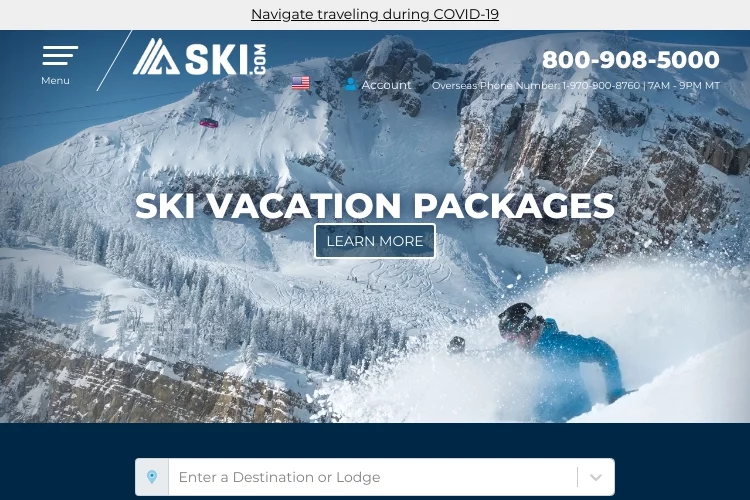
- Ski.com: Specializes in full vacation packages combining flights, lodging, and lift tickets across North American and international resorts — strongest for travelers who prefer bundled pricing with concierge-style logistics support
- Liftopia: Focuses on dynamic lift ticket pricing, offering pre-purchase discounts that grow deeper the further in advance the ticket is secured — well-suited for flexible travelers who commit to dates early in the planning cycle
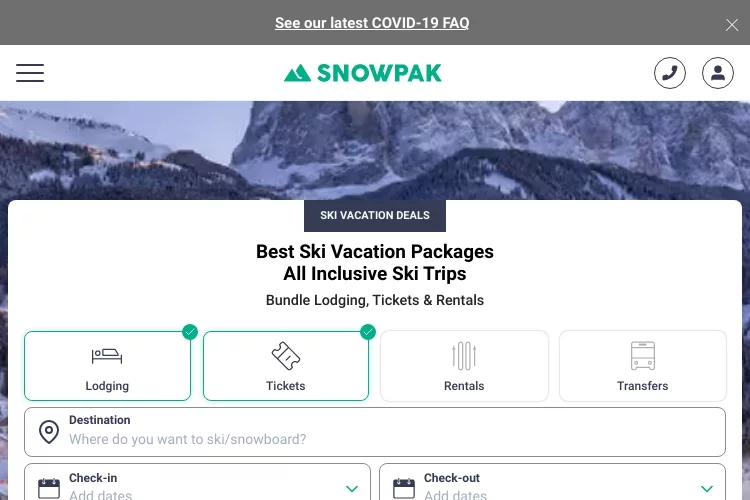
- SnowPak.com: Packages lodging with lift tickets at mid-range North American resorts, with competitive group booking options and a straightforward interface for comparing multiple destinations side by side
- Snow.com: Aggregates deals across North American and international ski destinations, with particular depth on European resort packages and multi-resort passes designed for extended ski holidays
How to Stack Platform Deals Effectively
The most effective approach combines a lift ticket purchased through a deal aggregator with lodging booked independently through a vacation rental platform and flights secured through an airline rewards program or sale fare alert. This decoupled approach consistently outperforms all-in-one package pricing by 10% to 20% in direct cost comparisons, though it requires more coordination time and careful attention to cancellation policy alignment across separate bookings from different vendors.
Pro insight: Booking lift tickets and lodging separately almost always outperforms all-inclusive resort packages — bundled packages price convenience at a markup that disciplined planners can consistently avoid with modest additional effort.

Who Gets the Most Value from Discount Ski Packages
Best-Fit Scenarios for Package Deals
All-inclusive ski packages deliver their strongest value proposition for first-time mountain travelers who lack the knowledge to assemble individual components effectively, for international travelers unfamiliar with North American resort geography, and for travelers with extremely limited planning time who value simplicity over marginal cost savings. In each of these cases, the premium paid for a bundled package translates into reduced decision fatigue and logistical risk — a trade-off with legitimate value that extends beyond pure price comparison.
- International travelers unfamiliar with domestic resort geography or transportation options
- First-trip families who want all logistics resolved through a single point of contact
- Travelers booking during peak holiday weeks, when individual component availability is most fragmented
- Groups of four or fewer adults where condo sharing provides diminishing per-person benefit
When All-Inclusive Makes More Sense
The calculus shifts toward all-inclusive packages when destination resorts bundle genuine value into the package that would otherwise cost more to assemble independently — ski school access, airport transfers, equipment storage, and meal credits that approach face value at the resort's own outlets. Packages with authentic add-on value are meaningfully different from packages that simply aggregate individual components at higher margins under a convenience banner. Careful line-item comparison between a package price and the sum of its independently available parts identifies which category a given offer occupies before any commitment is made.
Building a Repeatable Strategy for Low-Cost Ski Travel
Multi-Season Pass Planning
Multi-resort season passes represent the most powerful long-term tool for reducing per-day lift ticket costs for committed skiers. Major pass networks — Ikon Pass and Epic Pass being the most prominent across North America — distribute their per-day cost across 30 or more resort days when used consistently across a full season, reducing effective lift ticket prices to $25 to $50 per day at resorts that would otherwise charge $150 to $200 at the window. The investment threshold is significant upfront, but the per-visit return compounds quickly for skiers who take three or more trips per season and plan their travel around partner resort networks.
Committing to a specific pass network requires accepting its geographic constraints, but the market has expanded broadly enough that most major North American and European destination resorts now participate in at least one of the two dominant networks, giving pass holders strong destination flexibility without abandoning their cost structure or forfeiting days they have already purchased.
Gear Acquisition Over Time
Committed skiers who build their gear collection strategically — purchasing properly fitted boots first as the most performance-critical item, then skis, then softgoods — eliminate rental costs permanently while gaining the fit and performance advantages that standardized rental fleets cannot replicate. The total investment across a complete personal kit typically reaches break-even against cumulative rental fees within three to four seasons of regular skiing, after which every subsequent trip's gear cost drops to maintenance and periodic waxing expenses only. Keeping gear tuned and stored correctly extends equipment lifespan considerably and preserves resale value when upgrade cycles eventually arrive.
Quick Wins That Unlock Cheap Ski Vacation Deals Right Now
Immediate Steps Before the Next Booking
Several actions produce immediate, measurable reductions in ski trip cost without requiring long planning horizons or significant scheduling flexibility. These steps apply regardless of destination, budget level, or party size, and each one independently moves the total cost needle without requiring travelers to sacrifice mountain time or experience quality in the process.
- Pre-purchase lift tickets at least two weeks out through a deal aggregator rather than buying at the window on arrival day
- Book lodging on Sunday evenings, when weekly vacation rental cycles reset and availability tends to peak for the following week
- Rent equipment from off-mountain shops in the resort town rather than at the base lodge — savings average 20% to 30% for equivalent gear
- Pack lunch in a compact daypack to avoid slope-side restaurant pricing, which typically runs two to three times equivalent off-mountain costs
- Use resort mobile apps to monitor real-time lift wait times, maximizing daily run counts without any additional expenditure
Day-Of Savings That Add Up
On-mountain spending represents the least-controlled cost category for most skiers, making it the most common source of budget overrun on otherwise well-planned trips. Setting a firm daily cash spending limit before arriving at the mountain and leaving credit cards in the rental unit eliminates the low-friction purchases that accumulate invisibly — single-serve beverages at base lodge prices, impulse equipment add-ons, and après-ski spending that routinely exceeds planned amounts by the final evening of a multi-day stay. Small daily disciplines compound across a four-day trip into savings that require no sacrifice of actual skiing time or on-mountain enjoyment.
Frequently Asked Questions
What is the cheapest time of year to book a ski vacation?
The lowest prices for ski vacations typically appear during two windows: the early pre-season period in October and November, when resorts pre-sell lift tickets at introductory rates to generate advance revenue, and the late-season window in late February through March, when lodging operators clear remaining inventory aggressively. Midweek travel within either of these periods produces the deepest combined savings on both lift tickets and accommodations, often delivering 40% to 50% below peak-weekend pricing.
Is it cheaper to buy a ski package or book components separately?
In most cases, booking lift tickets, lodging, and transportation independently produces lower total costs than purchasing an all-inclusive package — savings typically range from 10% to 20% compared to bundled pricing for equivalent components. Package deals deliver their strongest value for first-time travelers, international visitors unfamiliar with domestic resort geography, or those booking during peak holiday weeks when individual component availability is most limited and fragmented across multiple vendors.
Which booking platforms offer the best cheap ski vacation deals?
Liftopia specializes in dynamic lift ticket pricing that rewards early purchase with progressively deeper discounts. Ski.com offers full vacation packages across North American and international destinations with concierge support. SnowPak.com and Snow.com provide strong competition on lodging-plus-lift bundles and multi-destination comparison tools. Searching across at least two platforms simultaneously before committing to any single booking consistently surfaces pricing differences that a single-platform search misses.
Final Thoughts
The gap between what uninformed travelers spend on ski vacations and what strategic planners pay for equivalent mountain experiences is not a matter of luck — it is a direct function of timing, platform knowledge, and a willingness to decouple lodging from lift tickets from transportation. Travelers ready to pursue genuine cheap ski vacation deals should begin by comparing pre-season lift ticket prices across the aggregator platforms profiled above, set date-specific price alerts well before the target travel window, and verify their gear options before the season opens to eliminate rental fees from the equation entirely. The mountain is accessible; the deals are real; the only remaining variable is preparation.
 |
 |
 |
 |

About Frank V. Persall
Frank Persall is a lifelong skier originally from the United Kingdom who has spent years pursuing the sport across premier resorts in Europe, North America, and beyond. His passion for skiing has taken him from the Alps to the Rocky Mountains, giving him a broad perspective on resort terrain, snow conditions, gear performance across price points, and the practical realities of ski travel with a family. At SnowGaper, he covers ski resort guides, gear reviews, and skiing technique and travel resources for enthusiasts of every level.
You can get FREE Gifts. Or latest free skiing books here.
Disable Ad block to reveal all the info. Once done, hit a button below
|
|
|
|