A ski lift is any mechanical system that moves you uphill at a ski resort — and there's more than one kind. The types of ski lifts you'll find at a mountain range from open-air chairs dangling over the snow to sealed gondola pods to flat moving belts you simply stand on. Whether you're brand new to skiing or just brushing up on your mountain vocabulary, knowing the difference between each one makes every resort day smoother.

Ski lifts go by many names: chairlifts, gondolas, T-bars, rope tows, magic carpets, cable cars, and funiculars. Each one has a specific design, a specific purpose, and a different level of difficulty to board and exit. Understanding the different types of skiing goes hand in hand with knowing which lift system gets you there — and if you've ever been curious about how the whole concept started, the history of the ski lift stretches back nearly a century and makes for a fascinating read.
Below, you'll find a plain-language breakdown of every major lift type: how each one works, which ones match your experience level, how resorts keep them running, tips for riding the trickier ones, and a comparison table so you can see everything at a glance.
Contents
Which Lift Is Right for Your Skill Level?
Not every lift at a resort is designed for every skier. Some are slow and forgiving, built specifically for people still finding their footing. Others move fast and require you to board and exit without the system stopping. Matching the types of ski lifts to your current ability level saves you a lot of stress at the loading zone — and avoids some embarrassing pile-ups.
Lifts Built for Beginners
If you're just starting out, you'll almost certainly spend your first runs on one of these two surface lifts — meaning you stay on the snow the whole time rather than being lifted into the air:
- Magic Carpet (Conveyor Belt Lift): A flat, moving belt you simply stand on with your skis. No loading skill required — it works exactly like an airport walkway. Nearly every resort has one near the beginner slope, and it's the gentlest possible introduction to lift riding.
- Rope Tow: A continuously moving rope you grip with both hands while your skis stay on the ground. Low-tech but effective for short, gentle hills. Wear good gloves — bare hands on a rope tow will leave a mark after a few runs.
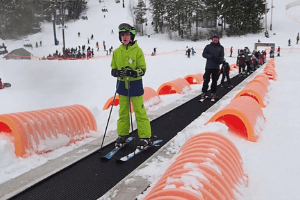

Both lifts are slow, forgiving, and a solid first step before you graduate to something more involved. Once you can comfortably stop and turn on a beginner slope, you're ready to try a chairlift.
Lifts for Intermediate and Advanced Skiers
Once you're comfortable on the mountain, these are the lift types you'll use most often:
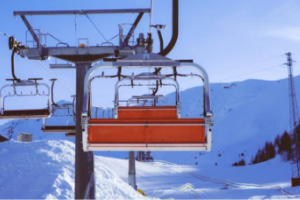
- Chairlift: The most common lift at any resort. A chair — usually holding two to six people — hangs from a moving cable and carries you over the snow. You sit down as the chair comes around and slide off at the top onto an exit ramp.
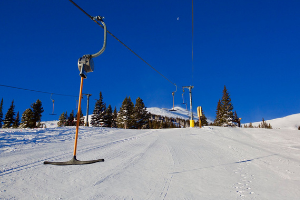
- T-Bar: A surface lift where a T-shaped bar presses against the back of your thighs as you ski uphill. Two riders can share one bar. Common at European resorts and takes a little balance practice to master.
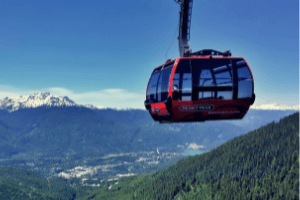
- Gondola: An enclosed cabin holding anywhere from 8 to 30 passengers. You step inside, doors close, and you ride in comfort. Ideal for longer ascents and bad weather days.
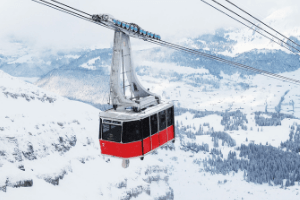
- Cable Car (Aerial Tram): Similar to a gondola but much larger — some hold over 100 people. Two large cabins alternate back and forth between terminals. Found at resorts with long, high-altitude access routes.
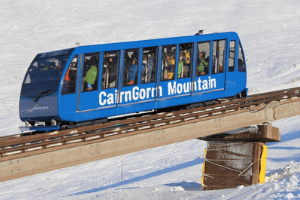
- Funicular: A rail-based car that travels on a steep, fixed track. Less common than cable lifts, but you'll find them at certain European and Japanese ski resorts.
If you're not sure which lift to take, check the trail map before leaving the lodge — most resorts color-code lifts so you can plan your route and avoid accidentally ending up on terrain above your level.
Ski Lift Myths You Can Stop Believing
There's no shortage of misinformation floating around about ski lifts. A few persistent myths make new skiers anxious — and occasionally lead more experienced riders into poor decisions. Let's clear up the most common ones.
Myth: All Ski Lifts Are the Same
People sometimes use "chairlift" as a catch-all term for any ski lift, but that's like calling every car a sedan. The types of ski lifts vary significantly in design, speed, passenger capacity, and terrain coverage. A magic carpet operates completely differently from a gondola. A T-bar is nothing like a funicular. Each lift type exists because it solves a specific problem on a specific kind of terrain.
According to Wikipedia's overview of aerial lifts, ski lift systems are broadly divided into aerial lifts — where riders leave the ground — and surface lifts, where riders stay on the snow. Within each category, there are multiple distinct subtypes, each with its own engineering and operating requirements.
Myth: Gondolas Are Just for Sightseers
Gondolas are often associated with scenic tourist rides, but at ski resorts they're fully functional access lifts used by skiers and snowboarders every single day. Because they're enclosed, gondolas are particularly valuable in bad weather — wind, snow, and cold affect open chairlifts far more than they affect a sealed cabin. Many resorts let you store your skis in outside racks and ride in your boots, making gondolas more comfortable than a chairlift on a bitter morning.
How Ski Lifts Work: The Mechanics Behind the Ride
You don't need an engineering background to understand what's happening when you board a ski lift. But knowing the basics helps you feel more confident as a rider — and explains why certain lifts feel noticeably different from others.
Fixed-Grip vs. Detachable Systems
Most chairlifts fall into one of two categories:
- Fixed-grip lifts: The chair is permanently clamped to the cable. The cable moves at a constant speed — typically around 2 to 3 meters per second — which means you board and exit at full speed. Older and simpler, but requires more coordination at the loading zone.
- Detachable (high-speed) lifts: The chair unclips from the main cable at the loading terminal, slows to a near-walking pace to let you board safely, then reattaches and accelerates back to full speed. These are faster overall — often 5 to 6 meters per second — and much easier to get on and off.
High-speed detachable chairlifts are now standard at modern resorts. If you see a sign that says "Express Lift," it's almost certainly a detachable system. The slower fixed-grip versions still exist at older or smaller mountains.
Cables, Towers, and Drive Stations
Every cable-based lift runs on the same core principle: a large bull wheel (essentially a giant pulley) at the top terminal drives the cable in a continuous loop, while the bottom terminal uses a tension system to keep the cable taut. Towers spaced along the route support the cable above the snow, and the chairs or gondola pods clip onto the moving cable and travel the full circuit continuously.
Cable cars work slightly differently. Instead of a continuous loop of many cabins, two large cabins travel in opposite directions on separate cables, counterbalancing each other's weight. This design allows heavier loads over much longer spans without the cable sagging excessively in the middle — which is why cable cars are used for the longest, highest mountain ascents.
How Resorts Keep Ski Lifts Running Safely
Ski lifts are among the safest forms of transportation in the world — but that record is the result of rigorous, ongoing maintenance and inspection. It doesn't happen by accident, and it doesn't skip days.
Daily Inspection Routines
Before a lift opens each morning, resort technicians work through a standardized checklist that typically covers:
- Visual inspection of every chair or cabin for structural damage or loose hardware
- Cable tension verification and sheave (the individual pulley wheels on each tower) inspection
- Testing of emergency stop systems and backup power generators
- Lubrication of mechanical components — cold temperatures thicken grease and increase wear
- Verification that loading-zone conveyor belts and deceleration zones are operating correctly
All of this happens before the first skier arrives at the base. If any check fails, the lift stays closed until the issue is resolved. There's no gray area on that point.
What Happens When a Lift Stops
Lifts stop for all kinds of reasons — high winds, a fallen object near the cable, a mechanical sensor trigger, or a skier who fell at the loading zone. Most stoppages are brief and completely routine. Operators typically restart within a few minutes once the cause is identified and cleared.
If a lift stops with you on it, stay seated and wait. Don't try to exit the chair or cabin on your own. Resort staff are trained in lift evacuation procedures and carry the right equipment — rescue harnesses, lowering ropes, and radios — to get you down safely if needed. It happens rarely, but the protocol is rehearsed regularly.
Safety tip: Always lower the safety bar on a chairlift, even on short rides. It takes one second and it's the single most effective thing you can do to prevent an accidental fall from height.
Step-by-Step: How to Ride Different Lift Types
Knowing what the types of ski lifts are is useful. Actually getting on and off them confidently is the part that takes practice. Here's a practical breakdown for the ones that catch people off guard the most.
Loading and Unloading a Chairlift
The chairlift is the lift most beginners are nervous about, but it becomes muscle memory after a few rides. The key is committing to each movement without hesitating.
- Loading: Ski forward to the marked loading spot and wait your turn. Watch the chair in front of you to time your approach. When it's your turn, slide to the line, look back over your shoulder, and sit down as the chair swings around. The chair scoops you up naturally — you don't need to jump or lunge for it.
- On the lift: Lower the safety bar once everyone is seated. Keep your ski tips angled slightly upward so they don't catch on anything below. Relax and enjoy the view.
- Unloading: Raise the safety bar about 100 meters before the top terminal. As the chair approaches the exit ramp, stand up smoothly, point your skis straight ahead, and glide away from the lift to clear the path for the next chair behind you.
The most common beginner mistake is hesitating at the loading zone. On a fixed-grip lift, the chair doesn't stop for you — hesitating just makes the timing harder. Commit to the move.
Getting On a T-Bar or Rope Tow
Surface lifts pull you rather than carry you, which requires a slightly different approach than an aerial lift.
- T-Bar: Stand next to your partner (or solo if the bar allows). Reach back and catch the pole as it comes, then tuck the horizontal T-section against the back of your thighs — do not sit on it like a chair. Let the lift do the pulling; don't lean back aggressively. Keep your skis in the grooved tracks and stay relaxed. To exit at the top, simply release the bar and it retracts automatically.
- Rope Tow: Grab the moving rope with both gloved hands and lean slightly back to let the tension pull you forward. Grip progressively firmer as you feel the rope take your weight. When you reach the top, let go cleanly and ski away to the side to clear the path.
All Major Ski Lift Types Side by Side
Here's a quick-reference breakdown of every major lift type, side by side. If you're at a new resort trying to figure out what's what, this table gets you oriented fast.
| Lift Type | Surface or Aerial | Typical Capacity | Best For | Most Common At |
|---|---|---|---|---|
| Magic Carpet | Surface | Continuous flow | Beginners, young children | Beginner slopes worldwide |
| Rope Tow | Surface | Continuous flow | Beginners, short gentle hills | Small and budget resorts |
| T-Bar | Surface | 1–2 riders per bar | Intermediate terrain | European Alps resorts |
| Chairlift | Aerial | 2–8 per chair | All skill levels | Nearly every resort globally |
| Gondola | Aerial (enclosed) | 8–30 per cabin | All-weather, longer ascents | Large destination resorts |
| Cable Car (Tram) | Aerial (enclosed) | 50–150 per cabin | High-altitude access | Large resorts, high-peak terrain |
| Funicular | Rail-based | 20–100 per car | Steep fixed-route ascents | European and Asian resorts |
Capacity and Speed Differences
Chairlifts strike the best balance between speed and throughput for most resorts. They move continuously, load frequently, and can carry thousands of skiers per hour on a busy express lift. Cable cars move fewer trips per hour but carry far more people per trip, making them efficient for high-traffic bottlenecks like summit access. Surface lifts are the slowest and least expensive to build and operate, which is why rope tows still appear at smaller community mountains. Gondolas sit in the middle — slower loading than chairlifts but more comfortable and weather-resistant for longer rides.
Where You'll Find Each Lift Type
North American resorts lean heavily on chairlifts, with gondolas added at larger ski areas. European resorts tend to have a more diverse mix — T-bars, funiculars, pulse gondolas, and combination systems are all common in the Alps in ways you rarely see in Colorado or Utah. If you're planning a trip to Europe, it's genuinely worth practicing your T-bar technique before you arrive. Getting it wrong on a busy Alpine surface lift with a line behind you is a memorable experience for all the wrong reasons.
Frequently Asked Questions
What is the most common type of ski lift?
The chairlift is by far the most common lift type at resorts in North America and most of Europe. It carries skiers through the air on open bench seats attached to a moving cable and can be found at nearly every mountain, from small local hills to large international destination resorts.
Is a gondola the same as a cable car?
Not exactly. Both are enclosed aerial lift systems, but gondolas run as a continuous loop of smaller cabins that load and unload frequently at slow speed. Cable cars (also called aerial trams) use just two large cabins that shuttle back and forth between two fixed terminals. You'll know you're on a cable car when the cabin is very large and it doesn't share the line with other cars.
What is a magic carpet lift at a ski resort?
A magic carpet is a slow, flat conveyor belt installed on beginner slopes. You stand on it with your skis and it carries you gently uphill — no loading or unloading skill required. It's the easiest lift available and almost always found near the bunny slope or ski school area. Most children learn on one before moving on to a chairlift.
Are ski lifts safe to ride?
Yes — ski lifts are statistically one of the safest forms of transportation. They're subject to strict engineering standards, daily mechanical inspections, and regular third-party safety audits. The most common lift-related injuries actually happen during loading and unloading rather than while riding, which is why paying attention at the base zone matters more than anything else.
Final Thoughts
Now that you can name every major lift type, understand how each one works, and know what to expect when you board them, you're ready to approach any mountain with confidence. Head over to the skiing guides on SnowGaper to explore resort breakdowns, gear recommendations, and technique tips that will help you make the most of your next day on the slopes.
 |
 |
 |
 |

About Frank V. Persall
Frank Persall is a lifelong skier originally from the United Kingdom who has spent years pursuing the sport across premier resorts in Europe, North America, and beyond. His passion for skiing has taken him from the Alps to the Rocky Mountains, giving him a broad perspective on resort terrain, snow conditions, gear performance across price points, and the practical realities of ski travel with a family. At SnowGaper, he covers ski resort guides, gear reviews, and skiing technique and travel resources for enthusiasts of every level.
You can get FREE Gifts. Or latest free skiing books here.
Disable Ad block to reveal all the info. Once done, hit a button below
|
|
|
|