Our team has ridden chairlifts at dozens of resorts across North America, and we still get that same quiet thrill on the first lift ride of any trip — the creak of the cable, the cold air rising as the mountain spreads out below. It sounds like a simple thing now, but someone had to invent it. The question of who invented the ski lift leads back to a fascinating collision of railroad money, Austrian expertise, and a banana boat engineer who changed skiing forever.

Before the chairlift existed, skiing was a sport defined as much by suffering as by pleasure. Every run down the mountain demanded an equal climb back up. Skiers strapped climbing skins to their skis, grabbed rough rope contraptions, or simply hiked — and the number of runs in a day was brutally limited by human endurance. The invention of the chairlift didn't just improve the experience. It created an entirely new industry.
The history of how that happened — who built what, where, and why — is one of the most compelling engineering stories in winter sports. Our team has dug into the records to bring the full picture into focus, from the earliest rope tows to the high-speed detachable lifts that define today's big-mountain resorts.
Contents
- Before the Chairlift: How Skiers Climbed Mountains on Their Own
- Who Invented the Ski Lift: James Curran and the Sun Valley Breakthrough
- The Benefits and Early Challenges of the First Chairlift
- How the Chairlift Shaped the Modern Ski Industry
- Every Type of Ski Lift Compared: A Practical Guide
- Frequently Asked Questions
Before the Chairlift: How Skiers Climbed Mountains on Their Own
To fully appreciate who invented the ski lift and why it mattered, it helps to understand what came before it. Our team covered where skiing originated in depth — the short answer is Scandinavia, where skis were tools for survival long before recreation. As the sport spread to the Alps and then to North America, the fundamental problem remained unchanged: getting down was thrilling, but getting back up was genuinely hard work.
Rope Tows and J-Bars: The First Mechanical Attempts
The earliest mechanical solution was the rope tow — a continuous loop of rope powered by a motor or repurposed vehicle engine that skiers grabbed with their hands to be dragged uphill. The first rope tow in North America appeared in Vermont in the early twentieth century, and it worked, barely. Hands burned through mittens. Shoulders ached. Falls were frequent. These primitive systems handled only a handful of skiers at a time and couldn't scale to meet growing demand.
The J-bar and T-bar — surface lift mechanisms that push skiers from behind while they stay on the snow — came next and represented a genuine step forward. But these systems also had firm limits: they worked best on moderate grades and couldn't cover the long, steep vertical drops that defined the most exciting terrain at serious mountains.
The Hard Limits of Early Uphill Systems
The deeper problem wasn't mechanical failure. It was throughput. A rope tow might move fifty skiers per hour on a good day. Modern resorts need to move thousands. Anyone who has explored what alpine skiing involves as a discipline understands how central vertical is to the experience — and vertical without a reliable, high-capacity lift is simply inaccessible to most people. That gap between potential and reality is exactly what the chairlift was built to close.
Who Invented the Ski Lift: James Curran and the Sun Valley Breakthrough
Averell Harriman's Ambitious Vision
Averell Harriman, heir to the Union Pacific Railroad fortune, wanted to build an American ski resort that could rival the great European destinations — Chamonix, St. Moritz, Kitzbühel — that drew wealthy travelers from across the world. He sent Count Felix Schaffgotsch, an Austrian nobleman and experienced skier, across the American West to scout the ideal location. After months of searching through California, Colorado, and the Pacific Northwest, Schaffgotsch arrived in a valley in central Idaho and declared it perfect. Sun Valley was born.

Harriman needed a way to move skiers uphill efficiently and comfortably — something that would make Sun Valley feel as luxurious as the Swiss Alps. He turned to his own company's engineering department for the answer.
James Curran's Chairlift Blueprint
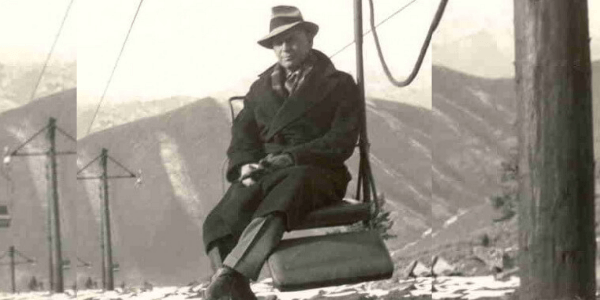
James Curran was a Union Pacific engineer who had spent years designing systems to load banana bunches onto cargo ships — systems that used a continuously moving cable with hooks spaced at regular intervals. Curran adapted that mechanism for a very different cargo: human beings seated in chairs. The concept was straightforward and brilliant. A cable looped continuously around two terminals. Chairs attached at fixed intervals. Each chair scooped a skier off the loading platform and carried them smoothly up the mountain. No hiking. No rope burns. No limit on vertical.
According to Wikipedia's documented history of the chairlift, Curran's first installation opened at Sun Valley in the winter of 1936. Our team finds it genuinely remarkable that the technology underpinning nearly every ski resort on earth traces back to a banana boat loading system and the vision of one railroad executive.
The Role of Robert Winterhalder
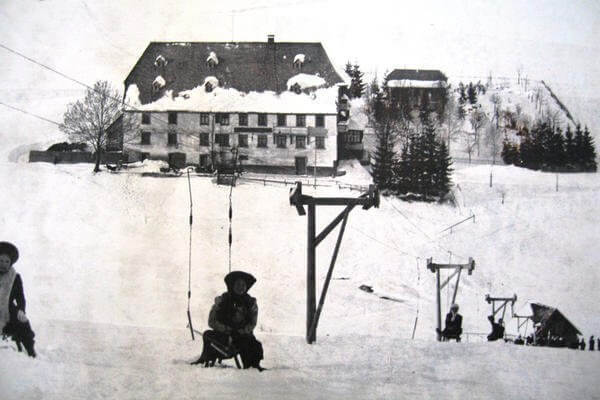
Some historical accounts also credit a German farmer named Robert Winterhalder, who reportedly built a simple rope-and-chair apparatus for hauling firewood up steep hillsides. Winterhalder's contraption used a comparable principle — a moving cable with attached seats — but it never crossed into recreational skiing or resort-scale application. The connection is historically interesting, but the decisive leap from agricultural hauling device to purpose-built ski resort infrastructure belongs to Curran and Harriman's Sun Valley project.
The Benefits and Early Challenges of the First Chairlift
What the Chairlift Got Right Immediately
The Sun Valley chairlift solved every core problem that rope tows and J-bars had failed to address. Skiers no longer needed upper body strength to ride uphill. Capacity increased dramatically. The seated position meant riders arrived at the top rested rather than exhausted, which translated directly into more runs per day and a better overall experience. Guests who had never considered themselves athletic could suddenly access full mountain terrain. That democratizing effect was immediate and powerful.
Early Limitations and Engineering Refinements
Early chairlifts were not without problems. The original single chairs moved at a fixed, relatively slow speed, and the open design offered no protection from wind, snow, or extreme cold. Loading required precise timing — a skill that confused many first-time riders and occasionally led to embarrassing spills at the platform. The chairs themselves were basic wooden benches with a simple overhead bar, a long way from the heated, high-back seats with footrests that modern skiers expect. These limitations drove decades of engineering refinement that eventually produced the high-speed detachable systems in use today.
How the Chairlift Shaped the Modern Ski Industry
Once Sun Valley demonstrated that a mechanical chairlift could transform a remote mountain into a profitable destination, the race was on. Resorts across Colorado, Vermont, Utah, and the Pacific Northwest rushed to install their own versions, and skiing exploded from a niche pursuit into a mainstream winter sport with genuine commercial scale.
The top ski destinations in the USA that most people visit today — from Park City to Vail to Stowe — all owe their modern infrastructure to that first Sun Valley installation. The entire business model of the ski resort: lift tickets, slope-side lodges, ski schools, equipment rentals — all of it cascades from the single fact that a chairlift made repeatable, high-volume runs possible for ordinary visitors.
The Union Pacific's Strategic Investment
Harriman's involvement wasn't accidental. He understood that a glamorous resort would attract train passengers, and train passengers would generate revenue for Union Pacific lines leading into Idaho. The connection between transportation infrastructure and resort development — the idea that a mountain destination's reach depends entirely on how people can get there — still shapes the industry today. Looking at who owns Aspen Ski Resort and the corporate structures behind major destinations, we see the same logic playing out across generations of ski resort ownership.
From Single Chairs to High-Speed Detachable Quads
The chairlift itself kept evolving relentlessly. Early single chairs gave way to doubles, then triples and quads. The genuinely transformative development was the detachable lift — a system where the chair physically releases from the moving cable at loading and unloading stations, slows to a comfortable walking pace, then re-grips the cable and accelerates back to full speed. Modern high-speed detachable quads and six-packs move 2,400 to 3,600 skiers per hour up a mountain — a throughput that would have seemed impossible to those first Sun Valley guests. Understanding how long the ski season runs in the USA is easier when we recognize that efficient lift infrastructure is what makes consistent daily operations economically viable across a full winter calendar.
Every Type of Ski Lift Compared: A Practical Guide
Pro insight from our team: Arriving at the main chairlift in the first hour after opening almost always means shorter queues and first tracks on freshly groomed runs — the single most consistent tip our team offers for getting the most out of any mountain day.
The modern resort offers far more ways up the mountain than Curran ever imagined. The right choice depends on terrain, weather, group experience level, and the specific resort's infrastructure. Here's how the main lift types stack up side by side:
| Lift Type | Best For | Typical Speed | Hourly Capacity |
|---|---|---|---|
| Magic Carpet | True beginners, young children | Very slow | 800–1,200 |
| Surface Lift (T-bar / J-bar) | Beginner to intermediate flat terrain | Slow | 1,000–1,500 |
| Fixed-Grip Chairlift (2–4 person) | Intermediate runs, smaller resorts | Moderate | 1,200–2,000 |
| High-Speed Detachable Quad | All levels, primary mountain access | Fast | 2,400–3,200 |
| Six-Pack / Eight-Pack | High-traffic main lifts, large resorts | Very fast | 3,000–3,600 |
| Gondola / Aerial Tram | Long approach, severe weather exposure | Moderate | 1,500–2,500 |

What Experienced Skiers Know About Riding Lifts
The most important thing most beginners miss is timing the approach to the loading zone. Walking forward with confidence, stopping precisely at the marked line, and sitting back as the chair swings in are skills that become automatic with experience. Lowering the safety bar once the group is seated is a habit our team considers non-negotiable — even on shorter, slower lifts at smaller mountains.
The debate between skiing vs. snowboarding often spills into lift preference as well — snowboarders generally find detachable chairs significantly easier to load and unload than T-bars, which require a different stance and technique. Equipment compatibility with specific lift types is a practical consideration that most people don't think about until their first awkward surface lift attempt. What a ski pass covers in terms of lift access also varies dramatically by resort and ticket tier — another reason understanding the lift infrastructure of a specific mountain matters before booking.
Gondolas, Trams, and the Future of Uphill Transport
For resorts with extreme weather exposure or very long vertical rises, enclosed gondolas and aerial trams provide protection that open chairlifts simply cannot match. Some resorts have begun integrating electric and hybrid drive systems to reduce energy consumption — a direction our team expects to become standard practice as the industry responds to sustainability pressure and rising operating costs. The engineering spirit that James Curran brought to Sun Valley is still very much alive in the next generation of lift design.
Frequently Asked Questions
Who exactly invented the ski lift?
James Curran, an engineer for the Union Pacific Railroad, designed and built the first chairlift. He adapted cable-and-hook technology he had developed for loading banana bunches onto cargo ships, redirecting the concept toward carrying skiers up a mountain at Sun Valley, Idaho, under the direction of railroad executive Averell Harriman.
Where was the first ski lift built?
The first chairlift was built at Sun Valley Resort in Blaine County, Idaho. Averell Harriman had the resort constructed specifically to attract rail passengers from the east, and the chairlift was the centerpiece technology that made the destination viable as a world-class ski destination.
Did ski lifts exist before the chairlift?
Yes — rope tows and surface lifts like the J-bar and T-bar predate the chairlift. However, these early systems required significant physical effort from riders, handled far fewer skiers per hour, and worked poorly on steep or long vertical terrain. The chairlift was the first system where riders sat comfortably and contributed zero physical effort during the uphill ride.
How has the chairlift evolved since its invention?
The original single-person fixed-speed chairs have given way to high-speed detachable lifts carrying four to eight passengers at a time. Detachable grips allow chairs to slow at stations for easy boarding and unloading, then re-engage the cable at full speed. Modern six-packs and eight-packs can transport more than 3,000 skiers per hour — a throughput unimaginable at Sun Valley's opening day.
Why did the ski lift have such a lasting impact on skiing as a sport?
Before the chairlift, the number of runs any skier could complete in a day was strictly limited by the physical effort of climbing back up after each descent. The chairlift eliminated that constraint entirely, making high-volume recreational skiing accessible to people of all fitness levels and turning mountain resorts into commercially viable enterprises that could support lodges, ski schools, and year-round infrastructure.
The entire modern ski resort — every groomed run, every lodge, every lift ticket — exists because one railroad engineer looked at a banana loading system and saw a chairlift.
 |
 |
 |
 |

About Frank V. Persall
Frank Persall is a lifelong skier originally from the United Kingdom who has spent years pursuing the sport across premier resorts in Europe, North America, and beyond. His passion for skiing has taken him from the Alps to the Rocky Mountains, giving him a broad perspective on resort terrain, snow conditions, gear performance across price points, and the practical realities of ski travel with a family. At SnowGaper, he covers ski resort guides, gear reviews, and skiing technique and travel resources for enthusiasts of every level.
You can get FREE Gifts. Or latest free skiing books here.
Disable Ad block to reveal all the info. Once done, hit a button below
|
|
|
|