Most skiers are genuinely shocked to learn that even a high-end pair of ski boots carries a functional lifespan of just 50 to 200 ski days — a range that puts many recreational skiers dangerously close to the replacement threshold without ever suspecting it. Knowing how long do ski boots last is one of the most underrated pieces of gear knowledge in the sport, and it has direct consequences for your safety, your technique, and your wallet on the hill. If you take your time on the mountain seriously, whether you're a weekend warrior or a season-pass devotee in the skiing community, understanding boot longevity is as essential as understanding your bindings or your edge angles.

Ski boots are constructed from thermoplastic polyurethane shells that harden, crack, and degrade through repeated heat cycles, UV exposure, and mechanical compression — and that process happens whether you're actively skiing or storing your boots in a warm garage through the off-season. A boot that looks clean and intact on the outside can have a shell that's lost meaningful stiffness, a liner that's completely packed out, and buckles that no longer hold their ratchet setting reliably under load. What you see on the surface rarely tells you the full story about what's happening structurally.
This guide walks you through the real numbers behind ski boot lifespan, the specific warning signs that tell you a boot is failing, and the concrete steps you can take to extend its usable life and time your replacement correctly. You'll find a side-by-side comparison of boot types by category, an honest look at the new versus used debate, and a practical inspection routine you can run before every season without booking a boot fitting appointment.
Contents
- How Long Do Ski Boots Last? The Numbers That Actually Matter
- Casual Skiers vs. Dedicated Riders: How Frequency Changes Everything
- Reading the Warning Signs: When Your Boots Are Telling You Something
- Ski Boot Lifespan by Type: A Side-by-Side Breakdown
- New Boots vs. Used Boots: Weighing Your Options
- How to Inspect Your Ski Boots Before Every Season
- A Long-Term Strategy for Getting the Most from Your Investment
How Long Do Ski Boots Last? The Numbers That Actually Matter
The 50-to-200-Day Rule
The benchmark cited most consistently by boot fitters and ski shop technicians is 50 to 200 ski days as the functional lifespan of a typical ski boot, and the range exists because boot construction, stiffness rating, and use intensity all pull that number in different directions. The lower end applies to stiffer race-style boots that transmit enormous forces through the shell with every carved turn, while the upper end describes softer recreational models used conservatively over many seasons with good storage habits between them. The shell material — almost always polyurethane — begins to harden and lose its rebound properties from the moment it leaves the factory, and by the time you notice the boot skiing differently, the degradation is usually well advanced. According to Wikipedia's overview of ski boot construction, the thermoplastic materials used in modern shells are inherently susceptible to thermal fatigue, which is exactly why heat and cold cycles accumulate damage even between ski seasons.
Does Storage Time Count Against You?
Yes — and this surprises most skiers — your boots age even when you're not wearing them. Polyurethane degrades through a chemical process called hydrolysis, where ambient moisture slowly breaks down the polymer chains regardless of mechanical use, which means a boot stored in a hot attic or car trunk through a summer can age the equivalent of a full ski season in terms of material integrity. A reasonable rule of thumb among fitters is that a boot maintained in controlled storage conditions has a maximum shelf life of roughly 10 to 12 years from its manufacturing date before the shell becomes structurally unreliable, even if it has never been mounted to a binding.
Pro Tip: Check the manufacturing date stamped inside your boot shell — if it's more than 8 years old, have a boot fitter assess shell integrity before your next trip, regardless of how few days you've put on them.
Casual Skiers vs. Dedicated Riders: How Frequency Changes Everything
The Weekend Skier's Timeline
If you ski 10 to 15 days per season, a quality mid-range boot will realistically serve you well for 8 to 12 years before the shell loses meaningful stiffness and the liner compresses beyond useful life, because you're unlikely to hit the 200-day ceiling within that decade of ownership. Storage degradation and UV exposure become your primary concerns rather than sheer mechanical wear, and the liner will typically pack out and feel noticeably looser well before the shell itself fails structurally. Expect to replace or upgrade your liner at roughly the halfway point of the boot's life to restore that secure, performance-oriented fit and avoid mistaking equipment failure for a technique problem.
The Season Pass Holder and Heavy User
Ski 50 or more days per season — which is common among dedicated enthusiasts and anyone who genuinely uses a season pass to its full value — and you're looking at a boot lifespan of 3 to 5 years for recreational models and potentially just 2 to 3 years for stiffer performance or race-oriented boots, because high-flex boots transmit significantly more force through the shell with every turn. Inspecting your boots at the end of every season rather than waiting for obvious symptoms is a smart, non-negotiable habit at this use level. Understanding how your boot interacts with your binding system is part of this bigger equipment picture, and our guide on how to choose ski bindings covers the compatibility and safety considerations that connect directly to boot condition.
Warning: A boot that feels "just fine" can have lost 30–40% of its flex stiffness without showing any obvious visible damage — reduced responsiveness and inconsistent edge control are often the first real signs that the shell has degraded past its performance threshold.
Reading the Warning Signs: When Your Boots Are Telling You Something
Shell and Buckle Failures
The most critical failure point in an aging ski boot is the shell itself — specifically, cracks that develop around the buckle attachment points, along the spine of the boot, or at the toe box where the shell flexes most aggressively during forward lean. Run your fingers firmly along these zones at the start of each season and press the shell inward at the sides to feel for brittleness or hear audible cracking sounds that indicate the polyurethane has hardened past its safe flex range. Buckles that no longer hold their ratchet setting under moderate load, bails that bend out of position repeatedly, or power straps that have cracked along their length are all signs the boot is nearing the end of its safe functional life and should not be used at speed or on challenging terrain.
Liner Breakdown and Fit Changes
A severely packed-out liner means your foot is shifting inside the shell rather than being held precisely in place, which translates directly into delayed edge response, reduced power transmission, and a loss of control that inexperienced skiers often misattribute to poor technique rather than equipment failure. The foam cells inside the liner are permanently deformed through repeated compression and heat cycles, and once they're gone, no amount of cinching your buckles tighter restores the precision fit you originally had. Pull the liner out of the shell annually and compress it firmly between your hands — if it springs back slowly or barely at all, the foam is finished and replacement is the correct next step before new boots become necessary.
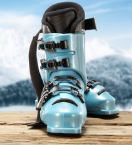
Ski Boot Lifespan by Type: A Side-by-Side Breakdown
Understanding the Differences Across Boot Categories
Not all ski boots are built from the same materials or designed for the same level of mechanical punishment, and the category of boot you own has a significant, measurable effect on how long it will perform at its intended level before degrading past the point of useful function. Stiffer boots designed for advanced performance skiing transmit more force through the shell per unit of time on snow, accelerating both buckle fatigue and shell micro-cracking, while softer recreational boots sacrifice some energy transmission precision for a longer usable lifespan under casual use conditions. The table below summarizes the practical lifespan expectations across the main boot categories at both casual and heavy use levels.
| Boot Type | Flex Index | Avg. Functional Days | Lifespan (Casual Use) | Lifespan (Heavy Use) |
|---|---|---|---|---|
| Beginner / Rental-Grade | 60–80 | 50–100 | 8–12 years | 3–5 years |
| Intermediate All-Mountain | 85–100 | 100–150 | 7–10 years | 4–6 years |
| Advanced / Expert Freeride | 105–120 | 80–130 | 6–8 years | 3–5 years |
| Race / High Performance | 120–140+ | 50–80 | 4–6 years | 2–3 years |
| Touring / AT Boot | 90–120 | 80–150 | 6–10 years | 3–5 years |
These figures represent performance lifespan — the point at which the boot no longer delivers its intended responsiveness and precision — rather than the point of catastrophic structural failure, which can arrive earlier depending on specific storage conditions, impact history, and individual foot mechanics that concentrate stress unevenly through the shell.
New Boots vs. Used Boots: Weighing Your Options
The Case for Buying New
Buying new ski boots gives you a known baseline where you start the clock yourself, you know the complete storage history, and you get a shell that hasn't already been heat-molded to accommodate someone else's foot anatomy and pressure points. A new boot can be custom-fit through professional heat molding to match your foot's exact shape and volume, delivering a level of precision and power transfer that a used boot — even one in excellent cosmetic condition — simply cannot replicate without significant re-fitting work and additional cost. For skiers planning to ski 30 or more days per season, new boots are almost always the correct financial decision once you factor in remaining useful lifespan and the fit quality that directly affects your performance.
When Used Boots Make Sense
Used boots carry real, inheritable risk because you cannot fully know how many days they've seen, how they were stored, whether the shell has hidden stress fractures, or how aggressively the previous owner skied them. The one defensible scenario for buying used is for a true beginner on a strict budget who is still establishing whether skiing is a long-term pursuit — a gently used boot from a reputable ski shop with documented service history gives them a functional option without a full financial commitment. Even in that case, a professional inspection of the shell, buckles, and welt condition is mandatory before a single day on snow, and knowing how to handle the boots correctly from the start — something our guide on how to put on ski boots covers in practical detail — protects both the boot's remaining life and the skier's safety.
Insider Insight: The resale value of ski boots drops sharply after 50 ski days — a "lightly used" pair offered at a steep discount may already be past half its functional life, so always ask the seller for an honest day count before committing to any purchase.
How to Inspect Your Ski Boots Before Every Season
A Practical Pre-Season Inspection Routine
Running a thorough inspection at the beginning of each season takes under 15 minutes and gives you a clear, evidence-based picture of whether your boots are safe and functional for another year on the mountain. Start by examining the shell exterior under strong lighting, pressing firmly along all flex zones and checking for surface cracks, whitening or crazing of the plastic at stress points, or any deformation around the buckle tower mounts where the material is thinnest and most vulnerable. Next, cycle every buckle through its full range of motion and confirm that each ratchet holds its setting under firm thumb pressure — any buckle that slips back even one notch under load needs replacement before you ski a single run. Check the toe and heel welt condition as well, since worn welts affect how your bindings engage and release, which is a direct, non-negotiable safety concern.
- Inspect the shell exterior for cracks, crazing, and deformation at flex points and buckle mounts under good lighting
- Test every buckle ratchet for slip under load and replace any that fail to hold their set position
- Examine toe and heel welts for wear past marked indicators that could compromise binding function
- Remove the liner and compress it firmly to assess remaining foam rebound and check for visible breakdown
- Confirm the power strap holds tension and hasn't cracked or stiffened along its length
When to Call in a Professional
If your inspection reveals shell cracks, buckles that won't hold reliably, or toe and heel welts worn past their indicators, take the boots to a certified boot fitter rather than making an independent judgment call about whether they're safe to ski on. A qualified fitter can assess whether a targeted repair extends usable life meaningfully or whether the cumulative cost of repairs makes replacement the smarter long-term investment — and that 20-minute conversation is almost always worth having before you commit to a full season on compromised equipment that can directly affect your edge control and your safety margin on challenging terrain.
A Long-Term Strategy for Getting the Most from Your Investment
Storage, Care, and Off-Season Habits
How you store your boots between seasons has a direct and measurable effect on how many ski days you actually get out of them before the shell loses its performance characteristics. Store them in a cool, dry location away from direct sunlight and heat sources, with the liners removed and the buckles left in a relaxed — not fully closed — position to avoid compressing the shell unnecessarily during the months it sits idle. Leaving your boots in a hot car trunk through a summer is one of the most common and damaging mistakes recreational skiers make, because a single hot season of trunk storage can accelerate shell degradation by the equivalent of one to two full ski seasons, effectively stealing years from your investment without a single day of use. Using dedicated boot bags and cedar boot trees controls moisture and prevents the liner from developing persistent odor, which is a reliable early indicator of foam breakdown well before visible deterioration appears.
Budgeting for Replacement on a Smart Schedule
Proactive replacement planning is the single most effective way to avoid being caught mid-season with a compromised boot and no time to get properly fitted before a trip you've already paid for. If you ski 20 days per season, build a 7-to-8-year replacement cycle into your gear budget from the day you purchase each pair, treating it the same way you'd plan for replacing any high-performance equipment with a known service life. If you're a heavy user at 50-plus days per season, budget for replacement every 3 to 4 years and recognize it as a cost of safe, high-performance operation rather than an unexpected expense that catches you off guard. Building this awareness into your broader trip planning and gear management approach makes the whole process less reactive and more sustainable over a long skiing career.
Frequently Asked Questions
How many ski days does a typical pair of ski boots last?
Most ski boots last between 50 and 200 ski days depending on boot type, flex stiffness, and how aggressively you use them. Race and high-performance boots at the stiffer end wear faster due to greater force transmission per turn, while softer recreational boots tend to reach the higher end of that range under moderate use and good storage conditions.
Can you tell if ski boots are worn out just by looking at them?
Not reliably. Shell degradation often shows no visible cracks until failure is imminent, and liner pack-out isn't apparent from the outside. The most telling indicators are a looser fit despite cinched buckles, reduced stiffness when you flex forward, buckles that slip under load, and whitening or surface crazing at the boot's flex points.
Is it worth resoling or repairing aging ski boots?
Replacing worn heel and toe soles is absolutely worth doing when the shell is structurally sound, since welt wear directly affects binding engagement and release — a real safety issue — and the repair cost is modest relative to a full replacement. Major shell cracks or severely packed-out liners are harder to justify repairing once you factor in the labor cost against the remaining functional lifespan of the boot.
Do ski boots expire if I store them without using them?
Yes. Polyurethane shells degrade through hydrolysis — a chemical reaction driven by ambient moisture — regardless of whether you ever ski in them. A boot stored in poor conditions such as heat, humidity, or direct UV exposure can become structurally unreliable after 8 to 10 years even with minimal ski days on it, so storage environment matters as much as use frequency.
Should heavy skiers buy new boots every season?
Not every season, but every 3 to 4 years is a realistic and responsible cycle for skiers logging 40 to 50 days per season on performance or all-mountain boots. High-performance and race boots used at that intensity may need replacement closer to the 2-to-3-year mark. Monitoring fit, flex response, and buckle function at the start of each season gives you the most accurate read on exactly where your specific boots stand.
Final Thoughts
Your ski boots are the single most direct connection between your body and the mountain, and skiing on a pair that has quietly degraded past its functional life compromises every turn, every edge set, and every emergency stop you make. Run the inspection routine at the start of each season, store your boots in a cool and dry environment through the off-season, and build replacement into your long-term gear budget so you're never caught mid-trip with boots that have stopped doing their job — then get out there and make every one of those hard-earned ski days count.
 |
 |
 |
 |

About Frank V. Persall
Frank Persall is a lifelong skier originally from the United Kingdom who has spent years pursuing the sport across premier resorts in Europe, North America, and beyond. His passion for skiing has taken him from the Alps to the Rocky Mountains, giving him a broad perspective on resort terrain, snow conditions, gear performance across price points, and the practical realities of ski travel with a family. At SnowGaper, he covers ski resort guides, gear reviews, and skiing technique and travel resources for enthusiasts of every level.
You can get FREE Gifts. Or latest free skiing books here.
Disable Ad block to reveal all the info. Once done, hit a button below
|
|
|
|