Up to 40% of alpine skiers experience toenail damage during a single ski season — and most of them accept it as an unavoidable side effect of the sport. It isn't. If you've limped off the mountain with throbbing, blackened toenails, it's time to get serious about understanding skier's toe causes and treatment before you snap into your bindings again. This condition is almost entirely preventable, and it affects skiers across every experience level. Whether you're carving groomers or hunting steep lines, every tip in our complete skiing resource hub points to one truth: pain you understand is pain you can eliminate.
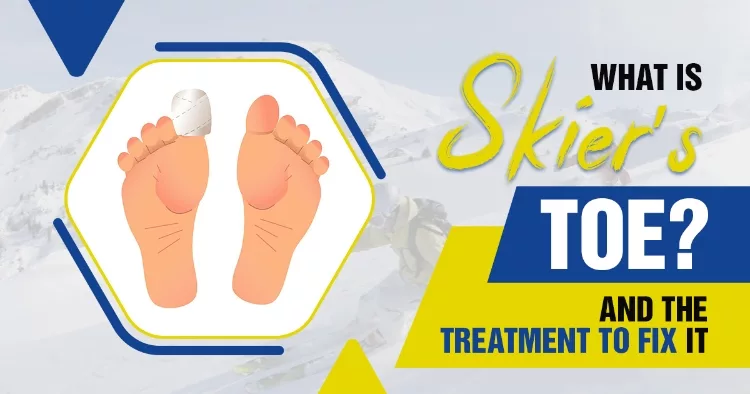
Skier's toe — clinically called subungual hematoma — is blood pooling beneath the toenail after repeated mechanical trauma. In skiing, that trauma happens when your foot slides forward inside the boot shell on descents, hammering your toes against the front of the boot with every steep pitch, aggressive turn, or sudden stop. The big toe and second toe absorb the worst of it.
The mechanics are simple. The damage is cumulative. Left unaddressed, you end up losing a toenail — or worse, developing a chronic condition that turns every ski day into an exercise in pain management. This guide covers all of it: causes, at-risk scenarios, symptoms, treatment steps, gear decisions, and long-term prevention strategies that actually hold up across a full season.
Contents
- Who Gets Skier's Toe and Why: Causes, Risk Factors, and Symptoms
- Skier's Toe Causes and Treatment: Your Step-by-Step Recovery Roadmap
- Boot Fit and Equipment: Your Primary Line of Defense
- Common Mistakes That Guarantee Skier's Toe
- Skier's Toe Myths That Are Keeping You in Pain
- A Long-Term Strategy for Skier's Toe Prevention
- Frequently Asked Questions
- Next Steps
Who Gets Skier's Toe and Why: Causes, Risk Factors, and Symptoms
Skier's toe doesn't discriminate by ability level. It hits beginners with poorly fitted rental boots and aggressive experts skiing massive vertical without adjusting their technique. The injury mechanism is consistent — what varies is which risk factor is driving it for you.
The Mechanics Behind the Damage
Every time you point downhill and lean back — or hit a steep roll and absorb the pitch — your foot drives forward inside the boot. Without a tight, precise fit locking your heel in place, your toes compress against the front shell repeatedly. One run: manageable. Twenty runs over four hours: hemorrhage beneath the nail plate.
Three mechanical triggers account for the vast majority of cases:
- Forward flex on descents — your foot slides forward as you lean into turns or absorb moguls
- Boot too large or worn out — excess volume inside the shell allows longitudinal foot movement
- Improper buckle tension — top buckles cinched tight, lower buckles loose, leaving the foot free to slide
Who Is Most at Risk
Skiers who push terrain limits tend to see higher rates of skier's toe — particularly those who ski fast, handle high vertical, or regularly tackle steep pitches. If you're curious about how terrain type affects your body mechanics, the overview of different skiing disciplines is worth reviewing, since each style creates different pressure patterns inside the boot.
Additional risk groups include:
- Skiers who bought boots online or without a professional fitting
- Anyone with boots more than 150 ski days old (shells pack out, creating extra volume)
- Skiers with naturally long second toes (Morton's toe)
- Anyone cutting toenails too short or too long before a ski trip
- Skiers using thin athletic socks instead of dedicated ski socks
Recognizing the Symptoms
Symptoms range from barely noticeable to acutely debilitating depending on severity. Know what you're dealing with before you decide on a course of action:
- Early stage: mild tenderness at the tip of the big or second toe, slight redness
- Mid-stage: visible bruising or purple discoloration under the nail, throbbing pain that persists after skiing
- Severe stage: nail fully black, intense pressure pain even at rest, potential nail separation from the nail bed
If you feel burning or sharp pain during a run — not after — you're catching it early. That's the window where a boot adjustment can prevent serious damage.
Skier's Toe Causes and Treatment: Your Step-by-Step Recovery Roadmap
Treating skier's toe depends entirely on severity. Mild cases respond well to conservative home care. Moderate-to-severe cases need medical evaluation. Doing the wrong treatment for the wrong severity level extends your recovery significantly.
| Severity | Key Symptoms | Treatment Approach | Estimated Recovery |
|---|---|---|---|
| Mild | Tenderness, slight bruising under nail | Rest, ice 20 min on/off, elevation, padding | 2–4 weeks |
| Moderate | Black/purple discoloration, throbbing pain | Ice, compression, possible trephination by provider | 4–8 weeks |
| Severe | Full hematoma, extreme pressure pain, nail lifting | Medical evaluation, possible nail removal, antibiotics | 3–6 months |
Immediate First Aid on the Mountain
If you notice toe pain mid-day, take these steps before continuing to ski:
- Stop at the lodge and remove your boots completely for at least 20 minutes
- Elevate your foot and apply a cold pack or snow wrapped in a cloth — never directly on skin
- Re-buckle your boots starting from the bottom and work up, ensuring heel lock before tightening the instep buckle
- If pain returns immediately on the next run, call it a day — continuing causes compounding damage
At-Home Treatment for Mild to Moderate Cases

For cases where the nail is discolored but the pain is manageable, the following protocol works:
- Rest: no skiing for a minimum of 3–5 days after the injury
- Ice therapy: 20 minutes on, 20 minutes off, three times per day for the first 48 hours
- Elevation: keep the foot above heart level whenever possible during the first 24 hours
- NSAIDs: ibuprofen or naproxen reduces both inflammation and pain — take with food
- Toe protection: use a gel toe cap or foam padding to prevent further pressure if you need to wear shoes
Do not attempt to drain the hematoma yourself with a needle or sharp object. That's a direct path to infection.
When to See a Doctor
Go to a medical provider if any of the following apply:
- Pain is severe and doesn't respond to elevation or ice within a few hours
- The nail is fully detached or separating at the base
- You see pus, feel warmth spreading up the toe, or develop a fever — signs of infection
- The hematoma covers more than 50% of the nail surface
A provider can perform trephination — a small hole drilled through the nail to release pressure — which provides near-immediate pain relief when done correctly and within 48 hours of injury.
Boot Fit and Equipment: Your Primary Line of Defense
Every case of skier's toe I've seen in a decade of following this sport traces back to one root problem: the boot doesn't fit correctly. Equipment is the single highest-leverage intervention available to you, and most skiers dramatically underinvest in getting it right.
Getting a Professional Boot Fit
A certified boot fitter — not a general ski shop employee — is what you need. They will:
- Measure your foot volume, length, and width, not just your shoe size
- Assess your ankle flexibility and stance width
- Identify if you need a custom or semi-custom footbed to control pronation
- Punch or grind the shell if pressure points exist
- Verify that your heel locks solidly before the foot has room to slide forward
A proper fit means 3–5mm of clearance at the toe in a neutral stance — not zero, not 15mm. Zero creates compression bruising. Too much creates impact bruising. Both produce skier's toe for different reasons.
Insoles, Socks, and Footbeds
The gear inside your boot matters as much as the shell:
- Ski-specific socks: thin, merino wool, knee-high. No athletic socks. No double-socking. Extra material creates friction that moves your foot forward.
- Custom footbeds: over-the-counter insoles like Superfeet Green or the Sidas 3D line reduce internal volume and stabilize the foot's position, significantly limiting forward slide
- Toe caps: if you're returning to skiing after a previous skier's toe injury, a silicone gel cap over the affected nail absorbs direct impact
Buckle and Lace Technique
This is where most skiers — including experienced ones — get it wrong. The correct buckling sequence is non-negotiable:
- Kick your heel back hard into the boot before buckling anything
- Close the lower two buckles first (ankle and instep) firmly
- Close the top buckles to a snug — not crushing — tension
- Flex forward in the boot; your heel should not lift at all
If your heel lifts during a forward flex test, you haven't locked the foot in place. Everything buckled above that is decorative. This is the most common driver of skier's toe across alpine skiing and resort skiing alike.
Common Mistakes That Guarantee Skier's Toe
Knowing what not to do eliminates more skier's toe than almost any positive intervention. These are the patterns that set up the injury, season after season.
Boot Fit and Purchase Mistakes
- Buying boots based on shoe size alone — ski boot sizing is its own system. A size 10 shoe is not a size 10 boot.
- Choosing comfort over performance fit — a boot that feels like a slipper in the shop is a boot that moves your foot on the mountain
- Keeping boots past their useful life — after roughly 150 ski days, the liner compresses significantly and creates excess volume; the fit you had in year one is gone
- Buying boots online without a fitting — unless you have an existing measured shell size from a certified fitter, online boot purchases are a gamble
On-Mountain Errors
- Skiing with loose buckles to reduce perceived pressure — this is backwards logic; loose buckles mean more foot movement, not less
- Wearing cotton socks or two pairs of socks — both increase internal boot volume and create friction points that shift the foot forward
- Ignoring early toenail sensitivity — mild pain during run three is a signal; pushing through to run twenty turns a manageable bruise into a severe hematoma
- Not trimming nails before a ski trip — long nails press directly into the boot toe box on every descending pitch
Pro insight: Trim your toenails straight across — not rounded at the corners — two days before any ski trip. Doing it the morning of leaves the nail edge slightly sharp and more prone to embedding into surrounding skin under boot pressure.
Skier's Toe Myths That Are Keeping You in Pain
Misinformation about skier's toe is widespread — and believing the wrong things means you keep making the same mistakes. Let's address the most persistent ones directly.
Myth 1: Tighter Boots Will Fix the Forward Slide
This is the most damaging myth in ski boot fitting. When skiers feel toe pain, the instinct is to crank up buckle tension. But tightness alone doesn't prevent forward slide — heel lock does. You can overtighten a poorly fitted boot until your circulation is cut off and still have your foot driving forward on steep descents.
What actually fixes forward slide:
- A shell that fits your foot volume correctly
- A custom footbed that controls pronation and stabilizes heel position
- Proper buckling sequence starting at the heel, not the top cuff
Myth 2: Black Toenails Are a Badge of Honor for Serious Skiers
This one circulates constantly in ski culture, and it's complete nonsense. Black toenails are not evidence that you're skiing hard — they're evidence that your equipment isn't fitted correctly. Elite skiers and professional instructors rarely deal with skier's toe because their boots are dialed in precisely. The suffering isn't the point. The skiing is.
Myth 3: You Just Have to Wait It Out
Mild cases do resolve on their own, yes. But moderate-to-severe hematomas left untreated create nail bed scarring that causes repeated toenail deformity for years. Catching the condition early and treating it properly — not just waiting — is what determines whether you deal with this once or chronically.
A Long-Term Strategy for Skier's Toe Prevention
One-time fixes don't hold. The skiers who never deal with skier's toe have systems in place — habits they run before, during, and after every season. Here's what that looks like in practice.
Nail and Foot Maintenance Protocol
Make this a non-negotiable part of your pre-trip routine:
- Trim toenails 2–3 days before your first ski day of any trip — straight across, no shorter than the tip of the toe
- Apply a urea-based foot cream to prevent skin thickening and calluses that alter foot volume inside the boot
- If you have a previous injury, use silicone gel toe protectors on affected toes for the first two days of any trip
Off-Season Foot Conditioning
Foot and ankle strength directly affects how well your foot holds position inside a ski boot. Weak intrinsic foot muscles fatigue faster, allowing the foot to roll and slide forward under load.
Include these in your off-season routine:
- Toe splays: spread all toes apart, hold 5 seconds, 3 sets of 10
- Single-leg calf raises on a sloped surface: builds eccentric Achilles strength and foot arch stability
- Short-foot exercises: activate the intrinsic arch muscles that keep your foot longitudinally stable
Pre-Season Boot Assessment
Before the season starts, run your boots through this checklist:
- Check liner compression — press your thumb into the heel pad; if you feel the shell immediately, the liner is dead
- Inspect buckles and straps for cracks or slippage under tension
- Have a boot fitter reassess your fit if you haven't been in for two or more seasons
- Replace footbeds annually — even high-quality custom footbeds lose their support structure over a full season of use
The investment in annual boot maintenance pays for itself the first time you avoid a three-month toenail recovery. Skier's toe causes and treatment becomes a much shorter conversation when your equipment is in proper order.
Frequently Asked Questions
What exactly is skier's toe?
Skier's toe is a subungual hematoma — blood pooling beneath the toenail — caused by repeated foot-forward impact inside a ski boot. The big toe and second toe are most commonly affected. It produces discoloration ranging from red to purple to black, accompanied by pressure pain that can persist for days after skiing.
How long does it take for skier's toe to heal?
Mild cases resolve in 2–4 weeks. Moderate cases with significant bruising take 4–8 weeks. Severe cases involving nail separation or medical intervention can take 3–6 months, since you're waiting for a full new nail to grow in. Early treatment significantly shortens recovery time in all categories.
Can I keep skiing with skier's toe?
For mild cases, yes — with modifications. Pad the affected toe with a gel cap, rebuckle your boots with correct heel-lock technique, and monitor pain closely. If pain worsens during the run, stop skiing for the day. For moderate-to-severe cases, continuing to ski extends the injury and significantly delays healing.
Will I lose my toenail?
If the hematoma covers a large portion of the nail bed and goes untreated, nail loss is possible. The nail detaches naturally as pressure and inflammation separate it from the nail bed. The new nail typically grows in fully over 3–6 months, though it may be temporarily thickened or ridged.
Is skier's toe the same as runner's toe?
Mechanically, yes. Both conditions are subungual hematomas caused by repeated toe impact inside footwear. The trigger differs: runner's toe comes from the toe striking the front of a running shoe on downhill sections; skier's toe comes from the foot sliding forward inside a ski boot shell. The injury pattern and treatment are essentially identical.
Does boot stiffness affect skier's toe risk?
Yes. A stiffer boot (higher flex index) limits how much the cuff can flex forward during a run, which reduces the forward slide that drives toe impact. However, a stiff boot that fits poorly can still produce skier's toe — stiffness doesn't compensate for poor fit. You need both the right flex and the right volume match for your foot.
Can custom orthotics prevent skier's toe?
Custom footbeds reduce skier's toe risk significantly by eliminating excess internal boot volume and stabilizing the foot's longitudinal position. They don't guarantee prevention on their own — you still need correct fit and buckling technique — but they are one of the highest-impact single interventions available, particularly for skiers with flat arches or significant pronation.
How should I trim my toenails to prevent skier's toe?
Cut toenails straight across, leaving approximately 1–2mm of white nail visible beyond the skin line. Don't round the corners aggressively. Trim 2–3 days before a ski trip, not the morning of. Nails that are too long press directly into the boot toe box on descents; nails cut too short remove the protective buffer that keeps the nail plate from the boot shell.
Next Steps
- Book a boot fitting appointment with a certified boot fitter before your next ski day — bring your current boots and your most-used ski socks so they can assess your existing setup and identify fit problems directly.
- Inspect your current boots tonight: press into the heel liner, check buckle integrity, and test how much your heel lifts when you flex forward without buckling. If the heel lifts more than a few millimeters with the lower buckles closed, your fit is compromised.
- If you have an active injury, start the treatment protocol now — ice, elevation, NSAIDs — and schedule a medical evaluation if the hematoma covers more than half the nail surface or pain is not improving within 48 hours.
- Add foot conditioning to your weekly workout: three sets of toe splays and single-leg calf raises three times per week builds the intrinsic strength that keeps your foot locked in position on the mountain.
- Set a calendar reminder two weeks before your next trip to trim toenails, check footbed condition, and confirm boot buckles are functioning correctly — make pre-trip foot prep a standing habit, not an afterthought.
 |
 |
 |
 |

About Frank V. Persall
Frank Persall is a lifelong skier originally from the United Kingdom who has spent years pursuing the sport across premier resorts in Europe, North America, and beyond. His passion for skiing has taken him from the Alps to the Rocky Mountains, giving him a broad perspective on resort terrain, snow conditions, gear performance across price points, and the practical realities of ski travel with a family. At SnowGaper, he covers ski resort guides, gear reviews, and skiing technique and travel resources for enthusiasts of every level.
You can get FREE Gifts. Or latest free skiing books here.
Disable Ad block to reveal all the info. Once done, hit a button below
|
|
|
|