If you need one boot to start with, the Rossignol EVO 70 HV+ is the standout choice for wide feet in 2026 — its generous 104mm last (the internal width of the shell) gives you real room without sacrificing support. Finding ski boots that actually fit wide feet is one of the most frustrating parts of the whole ski gear experience. You squeeze into a pair that looks great on the shelf, spend two runs on the mountain, and end up with numb toes and cramped arches for the rest of the day.
The truth is, most ski boots are built around a 98–100mm last. That's fine for medium-volume feet, but if you're naturally wide across the forefoot or have a high instep, you need something designed with extra volume from the start. Last width is the single most important spec to check when shopping for wide-fit boots — it's not about flex rating or brand prestige, it's about how much room your foot actually has inside the shell. We've tested and researched the best options available this season across all ability levels, and this guide breaks them all down for you. Whether you're looking for a beginner-friendly option, an all-mountain performer, or a touring boot that won't punish your feet on the skintrack, there's something here for you.
Before we dive in, it helps to understand the basics. Ski boot sizing uses Mondopoint (your foot length in centimeters), and last width is measured in millimeters across the widest part of the shell. Wide-fit boots typically start at 100mm and go up to 106mm or more. If you've been borrowing rental boots and dreading the experience, or if you've tried multiple standard boots and always ended up with foot pain, you almost certainly need a wide last. Pair your new boots with quality heated ski socks for all-day warmth and comfort, and check out our full ski gear reviews section for everything else you need on the mountain.
Contents
- Our Top Picks for 2026
- Detailed Product Reviews
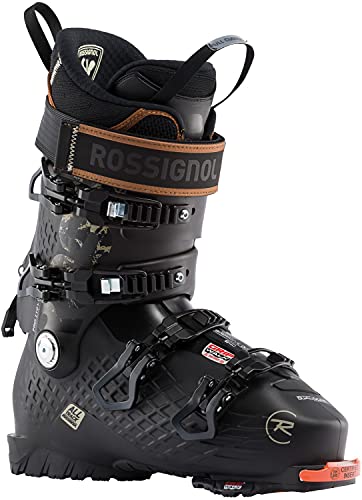
- Rossignol Alltrack Pro 110 Lt Gw — Best for Backcountry Wide Feet
- Dalbello Panterra 120 ID GW MS — Best for Aggressive Wide-Footed Skiers
- Atomic Hawx Ultra XTD 130 BOA — Best for Touring Precision
- Rossignol EVO 70 HV+ — Best Overall Wide Fit
- Nordica HF Pro 110 Men's — Best Easy-Entry Wide Boot
- Atomic M HAWX Magna 110 S GW — Best All-Mountain Wide Boot
- HEAD Nexo LYT 100 W — Best Budget Wide Boot for Women
- What to Look For When Buying
- Frequently Asked Questions
Our Top Picks for 2026
- #PreviewProductRating
- Bestseller No. 1
 Rating:

- Bestseller No. 2
 Rating:
 - Bestseller No. 3
 Rating:
 - Bestseller No. 4
 Rating:
 - Bestseller No. 5
 Rating:
 - Bestseller No. 6
 Rating:
 - Bestseller No. 7
 Rating:
Detailed Product Reviews
1. Rossignol Alltrack Pro 110 Lt Gw Ski Boots — Best for Backcountry Wide Feet
The Rossignol Alltrack Pro 110 Lt Gw is built for skiers who want to go beyond the groomed runs without leaving comfort behind. Its 100mm last hits the sweet spot for medium-wide feet — roomy enough to avoid pinching across the forefoot, yet precise enough to give you real feedback when you're pushing hard on variable terrain. The Grilamid plastic shell is notably lighter than most freeride boots in this category, which matters a lot when you're hiking to access untracked lines.
What makes this boot stand out is the Dynafit-certified Tech insert system. That means you can click into lightweight touring bindings for the uphill and then ski in full alpine performance mode on the descent. You don't often find this combination at this weight — most boots force you to choose between touring efficiency and downhill precision. The 110 flex is firm enough for intermediate-to-advanced skiers but not punishing on the walk back to the lodge. The liner is comfortable out of the box, though like most performance boots it benefits from a few days of break-in.
If you ski mostly at the resort but occasionally hike for a powder lap or plan to do some ski touring, this is an excellent choice. Keep in mind that at 100mm, this is on the narrower end of what we'd call "wide" — if you have truly wide feet (104mm+), you may want to look at the Rossignol EVO 70 HV+ further down this list instead. For those with medium-wide feet who also want touring capability, though, the Alltrack Pro 110 is hard to beat in 2026.
Pros:
- Dynafit-certified Tech inserts for touring compatibility
- Lightweight Grilamid shell reduces fatigue on long days
- 100mm last suits medium-wide feet well
- 110 flex works for intermediate to advanced skiers
Cons:
- 100mm may still feel tight for very wide feet
- Premium price for a freeride/touring crossover boot
2. Dalbello Sports Panterra 120 ID GW MS Ski Boot — Best for Aggressive Wide-Footed Skiers
Dalbello's Panterra 120 ID GW MS is the choice for hard-charging skiers with wide feet who refuse to compromise on performance. The 120 flex rating (a measure of how stiff the boot is — higher means more response and control at speed) puts this firmly in expert territory. The ID in the name stands for Individual Dosage — Dalbello's system that lets you fine-tune the flex by swapping spoilers, so you can dial in the exact stiffness that suits your skiing style and body weight.
The DB HyperLite shell construction keeps weight down without sacrificing torsional stiffness (resistance to twisting), which is exactly what you want when you're laying out fast carves on hard groomers. The last width runs 100–102mm, which is adjustable through the ID system, meaning it can accommodate slightly different foot shapes within that range. This is not a beginner boot — the stiff flex demands a properly balanced stance and an aggressive forward lean. But if you're an advanced skier with wide feet who has always felt like performance boots were leaving you out of the fun, the Panterra 120 was designed with you in mind.
Grip Walk sole compatibility is a nice bonus here. GripWalk (a rockered rubber sole) makes walking in ski boots significantly less awkward — a feature you'll appreciate at mountain restaurants and base lodges. The boot runs fairly true to size, though the liner does pack down with use, so sizing exactly to your Mondo measurement is the safe move.
Pros:
- Stiff 120 flex for advanced and expert skiers
- ID system allows flex and fit customization
- Grip Walk compatible for easier walking
- HyperLite shell balances performance and weight
Cons:
- Too stiff for beginner or casual intermediate skiers
- Higher price point reflects its performance-focused design
3. Atomic Hawx Ultra XTD 130 BOA Ski Boots 2026 — Best for Touring Precision
The Atomic Hawx Ultra XTD 130 BOA is a high-performance freeride touring boot, and the 2026 update brings some notable refinements. With a 98mm last, this is technically on the narrower side — but the Mimic Platinum liner is heat-moldable, meaning you take it to a boot fitter, they heat and shape it to your exact foot anatomy, and suddenly a 98mm boot can feel surprisingly accommodating for certain wide-foot shapes, especially those with high volume rather than pure width.
The BOA Fit System (a dial-and-cable closure system instead of traditional buckles) is the headline feature. You turn one dial and the entire boot tightens evenly and precisely. No more hunting for the right buckle setting on cold mornings with gloves on. It's genuinely faster and more consistent than buckles, and once you've used it you'll wonder why it took so long to catch on in ski boots. The 130 flex rating makes this a serious expert boot — stiff, responsive, and demanding of technique.
The XTD designation means this boot walks. It has a walk/ski mode switch that lets the cuff pivot freely for uphill efficiency, then locks down for descending. If ski touring is your primary use case, this is one of the most polished options on the market in 2026. Just know that the 98mm last means if you have truly wide feet, you'll want to budget for a professional heat-molding session before hitting the mountain. Check out our guide to the best ski bindings to make sure your new boots are properly matched with compatible touring or alpine bindings.
Pros:
- BOA Fit System provides fast, precise, even closure
- Mimic Platinum liner heat-molds to your foot shape
- Walk/ski mode for genuine touring versatility
- Expert-level 130 flex for serious performance
Cons:
- 98mm last requires heat-molding for truly wide feet
- Very stiff — not suitable for beginners or intermediates
- Premium price reflects its touring pedigree
4. Rossignol EVO 70 HV+ Ski Boots — Best Overall Wide Fit
Here's the boot that genuinely earns the "wide fit" label. The Rossignol EVO 70 HV+ features a 104mm last — wider than almost anything else in this list — with a specifically widened forefoot, toe box, and ankle area. That's a real architectural difference, not just marketing. If you've ever had black toenails after a day of skiing, or felt your little toe pressing painfully against the shell wall, a boot built around a 104mm last will change your relationship with skiing entirely.
The flex rating here is 70, which sits in the beginner-to-intermediate range. That means the boot is more forgiving — it doesn't demand perfect technique to ski comfortably. This is excellent news for recreational skiers who spend most of their time on groomed trails and want a boot that won't fight them. The custom fit liner includes heel support with softer padding through the ankle and instep, and the boot's easy-open overlap design makes getting in and out dramatically simpler, especially at the end of a long day when your feet are tired. GripWalk sole compatible (sold separately) adds walkability.
The trade-off with a softer flex is that aggressive skiers may feel the boot deflecting slightly when they push hard. If you're carving at speed and driving through steep terrain, a 70 flex will limit your responsiveness. But for recreational skiers — and honestly for any wide-footed skier who just wants to enjoy the mountain without foot pain — this boot hits the mark beautifully. It's the most comfortable option in this roundup for people with genuinely wide feet, and in 2026 it remains one of Rossignol's most thoughtfully designed entry-level options.
Pros:
- 104mm last — genuinely the widest fit in this lineup
- Widened forefoot, toe box, and ankle area by design
- Soft 70 flex is forgiving and comfortable for casual skiers
- Easy-open overlap makes entry and exit simple
- Softer padded liner for all-day comfort
Cons:
- 70 flex is too soft for advanced or aggressive skiers
- GripWalk sole sold separately
5. Nordica HF Pro 110 Men's — Best Easy-Entry Wide Boot
Nordica's HF Pro 110 takes a different approach to the entry-and-exit problem that plagues wide-footed skiers. Traditional front-entry boots can be a real struggle when your foot is wide — you're fighting the shell opening every single time. The HF Pro uses a rear-entry design (you enter from the back, not the front) combined with Nordica's hands-free HF Pro Closure System. You step in, the cable locks automatically, and you're ready to ski. No fumbling with buckles. No wrestling your foot through a narrow opening.
The 100mm last sits comfortably in the medium-wide range, and the Tri Force shell technology provides a solid structural foundation without excessive weight. The Primaloft liner (an insulation material known for warmth and softness) is anatomically shaped and genuinely warm — a meaningful advantage on cold days. The 110 flex puts this in intermediate-to-advanced territory, which is a pleasant surprise given how user-friendly the entry system is. You're not giving up performance for convenience here.
The HF Pro Closure System's adjustable cable length is worth highlighting. Different skiers have different lower leg shapes, and being able to tune the cable fit means the boot can accommodate a wider range of leg anatomy than a fixed closure would allow. For skiers who have always found buckle adjustment fiddly or who have physical limitations that make traditional closures difficult, this boot removes a real barrier. It's one of the most underrated wide-fit options of 2026.
Pros:
- Hands-free rear-entry closure system — no buckle wrestling
- Adjustable cable length fits varied leg shapes
- Primaloft liner provides warmth and comfort
- 110 flex offers real performance despite easy entry
Cons:
- Rear-entry boots can feel slightly less precise than front-entry for expert carvers
- 100mm last may still feel snug for very wide feet
6. Atomic M HAWX Magna 110 S GW — Best All-Mountain Wide Boot
The Atomic HAWX Magna 110 S GW is Atomic's dedicated wide-last all-mountain boot, and it earns its place in this list through genuine engineering rather than marketing spin. Memory Fit Technology is the standout feature here — you heat the shell (at a ski shop or with a boot dryer), and the thermoplastic material conforms to the exact shape of your foot. For wide-footed skiers who fall just outside the standard shell shapes, this custom-forming capability can be the difference between a boot that works and one that doesn't.
The Fit System Cuff means the upper part of the boot (the cuff that wraps around your lower leg) is independently adjustable for width and angle. Wide feet often come with wider ankles and calves, and most boots simply assume a standard cuff shape. The HAWX Magna addresses this directly. The Prolite Construction keeps the overall package lighter than traditional all-mountain boots — you'll notice the difference on long days with lots of vertical.
The 110 flex is solidly intermediate-to-advanced, versatile enough for blue runs and confident on blacks. GripWalk sole compatibility means walking between lodge and gondola doesn't have to be an exercise in humiliation. If you're looking for an all-mountain boot that genuinely fits wide feet across the entire foot — not just the forefoot — and want the reassurance that it can be custom-molded at purchase, the HAWX Magna 110 deserves serious consideration. Cold feet on the mountain? Pair these with ski boot heaters to keep circulation going through the coldest days.
Pros:
- Memory Fit heat-moldable shell for custom wide fit
- Adjustable Fit System Cuff accommodates wider calves/ankles
- Prolite Construction reduces weight
- GripWalk compatible for easy walking
Cons:
- Heat-molding requires a visit to a ski shop for best results
- 110 flex won't satisfy the most aggressive expert skiers
7. HEAD Nexo LYT 100 W Ski Boots — Best Budget Wide Boot for Women
The HEAD Nexo LYT 100 W rounds out this list as the most accessible wide-fit option for women who want solid performance without a premium price tag. The Smart Frame construction keeps this boot notably lightweight — LYT (light) is a genuine descriptor here, not just a name. Less boot weight means less fatigue, especially noticeable at the end of a long day when your legs are already tired from skiing.
The Duo Flex system is a clever design — it combines a soft inner flex with a firmer outer flex zone, giving the boot a progressive feel that's forgiving when you're cruising but more supportive when you drive hard. This makes the 100 flex rating feel more versatile than the number alone suggests. The 35mm Velcro strap across the top of the boot provides a micro-adjustable closure point that helps dial in the fit around the instep — a particularly useful feature for wide feet that sometimes struggle with standard buckle gaps.
The wide last accommodates broader forefeet well, and the women's-specific construction accounts for anatomical differences in calf shape and flex point. This isn't a boot for someone who skis expert terrain every weekend, but for intermediate women who want comfortable all-day fit at a reasonable price, the Nexo LYT 100 W is a smart, practical choice. If you're shopping for the first time, also consider visiting a local ski shop for a professional boot fit alongside using this guide — according to Wikipedia's overview of ski boot design, proper fitting by a trained bootfitter is considered essential to both performance and injury prevention.
Pros:
- Lightweight LYT construction reduces fatigue
- Duo Flex system provides progressive, versatile feel
- Velcro strap adds micro-adjustability at the instep
- Women's-specific design for better anatomical fit
- More accessible price point than performance options
Cons:
- 100 flex is the ceiling for intermediate skiers — not expert territory
- Older model — may be harder to find in all sizes in 2026
What to Look For When Buying Ski Boots for Wide Feet
Last Width: The Number That Actually Matters
When you're shopping for wide-fit ski boots, last width is the most important specification on the page. The last is the internal width measurement of the shell, measured in millimeters at the widest point of the forefoot. Standard boots run around 96–98mm. Wide-fit boots start at 100mm and go up to 106mm or more for high-volume options. Here's a rough guide for where you likely fall:
- 98–100mm: Medium-wide. Suits feet that feel slightly tight in standard boots but aren't dramatically wide.
- 100–102mm: Wide. Good for most people who would describe their feet as wide.
- 103–106mm: Extra wide / high volume. For feet that have genuinely never fit standard ski boots comfortably.
If you're unsure of your last width, a boot fitter can measure your foot and tell you exactly what range to shop in. Don't guess — buying the wrong last width is the most common and most expensive ski boot mistake you can make.
Flex Rating and Your Skiing Level
Flex rating (stiffness of the boot) runs roughly from 50 (very soft, very forgiving) to 130+ (very stiff, very responsive). The right flex for you depends on your weight, skiing ability, and how aggressively you ski. A general rule: beginner to intermediate skiers are typically happiest between 60 and 90 flex, intermediate to advanced between 90 and 110, and advanced to expert at 110 and above. If you're skiing mostly groomed trails a few weeks a year, don't let a salesperson talk you into a 120 flex boot because it "sounds better." A softer flex you can actually ski in is worth far more than a stiff boot that fights you all day.
Liner Quality and Heat Molding
The liner — the removable inner boot that your foot actually contacts — makes an enormous difference in fit and comfort for wide-footed skiers. A stock liner out of the box is designed for an average foot shape. Heat-moldable liners (like the Atomic Mimic Platinum) allow a bootfitter to heat and press the foam to your exact foot anatomy, creating a custom fit without the cost of fully custom boots. If the shell fits your width but you have other irregularities — high instep, bony ankles, wide heel — a heat-moldable liner or custom footbed can resolve a lot of those secondary fit issues.
It's also worth investing in quality ski socks to go with your new boots. If you're heading somewhere cold, consider our picks for the best heated ski socks to maximize warmth and comfort inside the boot. Thin, technical ski-specific socks always outperform thick everyday socks for performance and blood flow.
Walk Mode and GripWalk Compatibility
If you walk any distance in your ski boots — between the parking lot and gondola, around resort villages, into mountain huts — GripWalk sole compatibility is worth having. GripWalk soles have a rubber tread and a slightly rockered toe that makes walking dramatically more natural and less slip-prone. Walk mode (found on touring boots like the Rossignol Alltrack Pro and Atomic Hawx Ultra XTD) goes further by unlocking the boot's cuff so your ankle can flex freely for hiking. Neither feature affects your skiing performance — they only help when you're off your skis. If you do any backcountry or ski touring, walk mode is near-essential. For pure resort skiing, GripWalk is a nice-to-have. You'll also want to protect your soles between uses — see our roundup of the best ski boot sole protectors to extend the life of both standard and GripWalk soles.
Frequently Asked Questions
How do I know if I need wide ski boots?
If you regularly experience numbness, tingling, or pressure across the ball of your foot after an hour of skiing, your boots are likely too narrow. Other signs include your little toe pressing against the shell wall, an inability to wiggle your toes while standing in the boot, or boots that require excessive force to buckle. A last width of 100mm or more is generally the starting point for wide-fit boots. The most reliable way to find out is to visit a qualified boot fitter who can measure your foot width and recommend specific models.
What is last width in ski boots and why does it matter?
Last width is the internal measurement of the ski boot shell at its widest point, measured in millimeters across the forefoot. It determines how much room your foot has inside the boot. Standard boots typically measure 96–98mm, while wide-fit options range from 100mm to 106mm. If the last width is too narrow for your foot, you'll experience pressure, restricted blood flow, and potentially numbness — all of which compromise both comfort and ski performance. Matching your foot width to the correct last width is the single most important fit consideration when buying ski boots.
Can I stretch ski boots to make them wider?
Yes, within limits. A qualified boot fitter can use a boot press and heat gun to punch out (stretch) specific pressure points in the shell. This is a standard procedure for addressing localized issues like a bunion or a wide fifth metatarsal. However, punching is not the same as buying a genuinely wide-last boot — you can only gain a few millimeters and in specific spots, not across the entire forefoot. If your foot is genuinely wide, start with a wide-last boot and let a fitter fine-tune from there rather than trying to stretch a narrow boot into something it isn't.
What flex rating should I choose for ski boots?
Flex rating indicates how stiff the boot is — higher numbers mean stiffer boots that respond faster but demand more skill. For beginners and casual skiers, a flex of 60–80 provides a forgiving, comfortable experience. Intermediate skiers who ski several times a season typically do well with 80–100 flex. Advanced and expert skiers generally prefer 100–130+ for maximum power transfer at speed. Your body weight also plays a role — a lighter skier may find a 110 flex boot feels stiffer than expected, while a heavier skier may need to size up to feel adequate support. When in doubt, start with a softer flex and work up as your technique improves.
Are wide ski boots available for women?
Yes. Several manufacturers offer women's-specific wide-last boots that account for anatomical differences beyond just foot width — including lower calf position, different ankle flex point, and narrower heel. The HEAD Nexo LYT 100 W reviewed above is one example. Women-specific boots typically have a lower cuff height and a softer flex than equivalent men's models at the same number, which better suits the average female skier's physiology. That said, many women with wide feet also successfully ski in unisex or men's boots, particularly if they have wide feet and a higher body weight. A boot fitter can advise on which approach works best for your specific foot shape.
Do wide ski boots affect performance on the slopes?
A boot that fits your foot correctly — including fitting your width — will always outperform a boot that's too narrow. When boots pinch, your foot tenses up, circulation is reduced, and the subtle feedback between your foot and the ski is lost. A properly fitted wide boot allows your foot to relax and transmit your movements to the ski cleanly. The trade-off is that very wide-last boots (104mm+) can sometimes feel slightly less precise on edge compared to a 98mm racing-oriented boot at the same flex. But for recreational and all-mountain skiers, a comfortable and correctly fitted wide boot will improve your skiing, not hurt it.
Buy on Walmart
- Rossignol Alltrack Pro 110 Lt Gw Ski Boots, Men, Black, 28.5 — Walmart Link
- Dalbello Sports, Panterra 120 ID GW MS Ski Boot - 2023, Anth — Walmart Link
- Atomic Hawx Ultra XTD 130 BOA Ski Boots 2026 — Walmart Link
- Rossignol EVO 70 HV+ - Ski Boots for Men and Women - Black — Walmart Link
- Nordica HF Pro 110 Men's Medium Fit Easy Entry Alpine Ski Bo — Walmart Link
- Atomic M HAWX Magna 110 S GW (Men's), Anthracite/Black/Teal, — Walmart Link
- HEAD Nexo LYT 100 W Ski Boots 2020 25.5 — Walmart Link
Buy on eBay
- Rossignol Alltrack Pro 110 Lt Gw Ski Boots, Men, Black, 28.5 — eBay Link
- Dalbello Sports, Panterra 120 ID GW MS Ski Boot - 2023, Anth — eBay Link
- Atomic Hawx Ultra XTD 130 BOA Ski Boots 2026 — eBay Link
- Rossignol EVO 70 HV+ - Ski Boots for Men and Women - Black — eBay Link
- Nordica HF Pro 110 Men's Medium Fit Easy Entry Alpine Ski Bo — eBay Link
- Atomic M HAWX Magna 110 S GW (Men's), Anthracite/Black/Teal, — eBay Link
- HEAD Nexo LYT 100 W Ski Boots 2020 25.5 — eBay Link
The best ski boot for wide feet is simply the one that fits your foot — get the last width right first, and everything else falls into place.
 |
 |
 |
 |

About Frank V. Persall
Frank Persall is a lifelong skier originally from the United Kingdom who has spent years pursuing the sport across premier resorts in Europe, North America, and beyond. His passion for skiing has taken him from the Alps to the Rocky Mountains, giving him a broad perspective on resort terrain, snow conditions, gear performance across price points, and the practical realities of ski travel with a family. At SnowGaper, he covers ski resort guides, gear reviews, and skiing technique and travel resources for enthusiasts of every level.
You can get FREE Gifts. Or latest free skiing books here.
Disable Ad block to reveal all the info. Once done, hit a button below
|
|
|
|