Which heated ski gloves are actually worth your money in 2026 — and which ones will leave your fingers freezing halfway down the mountain? That's the question we set out to answer. After digging into specs, user feedback, and real-world performance data, the SAVIOR HEAT S01 and the Outdoor Research Prevail Gore-TEX consistently rose to the top — but the right pick really depends on your priorities, your budget, and how cold your hands actually get.
Heated ski gloves have come a long way. The early models were bulky, unreliable, and barely lasted a half-day run. Today's options feature fast-heating carbon fiber elements, smart battery indicators, touchscreen-compatible fingertips, and serious waterproofing. Whether you're fighting Raynaud's syndrome (a condition that causes extreme cold sensitivity in the fingers), recovering from an injury, or just someone whose hands turn into blocks of ice on the chairlift, there's a heated glove designed for you.
This guide covers seven of the best options available right now. You'll find full reviews, a practical buying guide, and answers to the most common questions buyers ask. If you're also gearing up for a full ski kit refresh, check out our ski gear reviews section for more in-depth breakdowns. And if you're shopping for gloves for younger riders, we've got you covered too — browse the best girls' ski and snowboarding gloves and the best boys' ski and snowboarding gloves as well.

Contents
- Top Rated Picks of 2026
- Full Product Breakdowns
- Heated Gloves for Men Women — Best Budget Pick
- Lenz Heat Glove 6.0 Finger Cap — Best Full-Finger Coverage
- Outdoor Research Prevail Gore-TEX — Best Premium All-Rounder
- Zanier Aviator.GTX — Best for All-Day Warmth
- Gerbing 7V Women's S7 — Best for Women Who Ride Hard
- ActionHeat 5V Lightweight Women's — Best Lightweight Option
- SAVIOR HEAT S01 — Best Battery Life
- Buying Guide
- Frequently Asked Questions
- Next Steps
Top Rated Picks of 2026
- #PreviewProductRating
- Bestseller No. 1
 Rating:

- Bestseller No. 2
 Rating:
 - Bestseller No. 3
 Rating:
 - Bestseller No. 4
 Rating:
 - Bestseller No. 5
 Rating:
 - Bestseller No. 6
 Rating:
 - Bestseller No. 7
 Rating:
Full Product Breakdowns
1. Heated Gloves for Men Women, Rechargeable Hand Warmer Gloves — Best Budget Pick
If you're stepping into the world of heated gloves for the first time and don't want to drop a fortune, these unisex rechargeable gloves are a genuinely solid entry point. The standout feature is the dual 7.4V 3000mAh battery system that promises up to 8 hours of continuous warmth — enough for a full day on the mountain without hunting for a charger at lunch. The gloves heat up in just 10 seconds, which sounds like a marketing claim until you actually use them in single-digit temperatures and realize how much that matters.
You get three temperature levels: high (140–149°F), medium (122–130°F), and low (113–120°F), each indicated by a colored LED light so you're never guessing. The battery indicator shows remaining power in 25% increments, which is more useful than it sounds when you're deep in a run and wondering if you'll make it back warm. The FCC-certified batteries include overcurrent, overvoltage, and overcharge protection — a detail that matters more as lithium battery-related incidents have become a real concern with cheaper electronics.
The touchscreen-compatible fingertips work reliably enough for checking trail maps or answering messages without pulling your gloves off. Double-layer waterproof fabric handles rain and wet snow well. These aren't going to win any premium build-quality awards — the exterior materials feel budget-grade — but for the price, the warmth-to-cost ratio is hard to argue with.
Pros:
- Up to 8 hours of heat per charge with dual high-capacity batteries
- Heats hands in about 10 seconds
- FCC-certified batteries with multiple built-in safety protections
- Clear battery level indicator in 25% increments
- Touchscreen-compatible fingertips
Cons:
- Materials feel less premium compared to higher-priced competitors
- Heat distribution may feel uneven near the fingertips for some users
2. Lenz Heat Glove 6.0 Finger Cap for Men — Best Full-Finger Coverage
Lenz is a name that serious winter athletes tend to respect, and the Heat Glove 6.0 Finger Cap shows why. Most heated gloves concentrate their heating elements on the back of the hand and miss the fingertips — the very spot where coldness sets in fastest. Lenz wraps the heating element around the entire finger and the back of the hand, giving you genuinely full-coverage warmth rather than the partial heat you get from many competitors. If you've ever felt your fingers go numb despite wearing "heated" gloves, you'll understand immediately why this matters.
The glove-only listing means you'll need to purchase compatible Lenz lithium battery packs separately, which adds to the total cost but also gives you real flexibility. If you already own Lenz batteries from a different product in their lineup, these connect via push buttons without any fuss. The system is built for the serious skier or snowboarder who expects modular, high-performance gear rather than an all-in-one package.
These gloves are built with quality materials throughout. The construction feels robust and designed for high-output winter sport use. The catch, of course, is that you're buying just the glove shell — factor in battery packs when comparing prices to the all-in-one options on this list. That said, for riders who demand real fingertip heat coverage and are willing to invest in a proper system, the Lenz 6.0 is in a different league.
Pros:
- Heating element fully encircles the fingers — not just the back of the hand
- Compatible with all Lenz lithium battery packs for flexibility
- Push-button battery connection is simple and reliable
- Premium build quality from a respected winter sports brand
Cons:
- Sold as glove only — batteries must be purchased separately, raising total cost
- Higher price point than budget-friendly options
3. Outdoor Research Prevail Heated Gore-TEX Gloves — Best Premium All-Rounder
Outdoor Research has built a strong reputation in the outdoor gear world for a reason, and the Prevail Heated Gore-TEX gloves represent what happens when a serious gear brand applies that same standard to heated technology. These feature a genuine GORE-TEX waterproof insert — not a generic "waterproof membrane," but the real deal — combined with EnduraLoft insulation (333G palm, 133G back) and a goat leather palm for grip and durability. The result is a glove that performs as well in harsh weather as it does at managing heat.
The ALTIHeat battery-powered heat system is integrated cleanly into the design, with a zippered compartment for the rechargeable lithium-ion batteries and customizable heat settings. The gauntlet is cinchable to keep cold air out, and there's a removable leash so you don't drop a glove off a chairlift. Small things, but they reflect the thoughtful design philosophy throughout. Touchscreen compatibility is included, though as with all thick gloves, fine touchscreen work (typing passwords, for instance) is more difficult than with thinner gloves.
The construction is a 2L woven outer of polyester and nylon, which is windproof and breathable on top of being waterproof. The 320G polyester fleece lining keeps internal comfort high. You're paying a premium here, but the Prevail offers something most heated gloves don't: the confidence that it would perform well even if the heating element failed. It's a fully capable cold-weather glove first, and a heated glove second. If you're heading to challenging terrain and need gear that doesn't quit, this is a strong contender. Pair these with the right base layers — see our guide on what to wear to a ski resort for a full kit breakdown.
Pros:
- Genuine GORE-TEX waterproof insert — waterproof, windproof, and breathable
- Premium goat leather palm for grip and longevity
- Thoughtful details: glove clip, removable leash, zippered battery compartment, cinchable gauntlet
- ALTIHeat system with customizable heat levels
- Would perform well as a non-heated glove too
Cons:
- Premium price tag — one of the more expensive options on this list
- Bulkier build may reduce dexterity for some riders
4. Zanier Aviator.GTX Heated Gloves — Best for All-Day Warmth
Zanier isn't a name you'll find in every ski shop, but among skiers who've tried them, the Aviator.GTX tends to generate strong loyalty. The heating technology is built around highly developed textile heat elements — thin, flexible heating layers woven into the glove fabric — paired with a unique electronic control system. The result is warmth that feels natural and even, rather than the "hot spot" sensation some cheaper gloves produce. You'll notice the difference on long, cold days.
The lithium-ion batteries weigh just 60 grams, which is genuinely light for this category, and they're cleverly concealed in the extra-long GORE-TEX cuff. You can hardly feel them during use, which is a significant comfort win — some heated gloves leave you very aware of the battery pack strapped to your wrist. Three heat levels are available, and on the lowest setting, the batteries deliver up to 10 hours of warmth. That's the kind of runtime that gets you through a full day at a destination resort like one of the world's top ski mountaineering destinations without anxiety about battery life.
The GTX designation means you're getting a true GORE-TEX waterproof/breathable shell here, which is worth paying for if you ski in variable conditions. The Aviator.GTX sits in the upper-mid price tier — not the most expensive on this list, but not budget gear either. The blend of long battery life, lightweight battery integration, and genuine waterproofing makes this a compelling choice for the skier who's on the hill from first chair to last run.
Pros:
- Up to 10 hours of battery life on low setting
- Lightweight 60g batteries concealed in the cuff — barely noticeable during use
- Textile heat elements deliver even, natural-feeling warmth
- GORE-TEX shell for real waterproof and breathable protection
Cons:
- Upper-mid price range may be a stretch for casual skiers
- Less widely available than some competing brands
5. Gerbing 7V Women's S7 Battery Heated Gloves — Best for Women Who Ride Hard
Gerbing has been in the heated clothing game longer than most — the brand is frequently cited as the pioneer of battery-powered heated apparel for outdoor sport. The Women's S7 gloves reflect that experience. Built specifically for a female hand fit (not just a shrunken men's version), these gloves feature a premium outer shell with the Cyberian Cordloc system, Gerbing's proprietary cord management approach that keeps the heating system's wiring organized and protected without creating pressure points on your hands.
The TPC molded cinch strap locks the glove securely at the wrist, keeping cold air from rushing up your sleeve — a small design detail that makes a real difference on blustery days. Reflective piping adds low-light visibility, which matters if you're skiing dawn patrol runs or staying on the hill past the afternoon fade. The 7V heating system is efficient and proven across thousands of Gerbing products, and the warmth coverage is solid across the hand and fingers.
Where the S7 falls slightly short of the premium pack is in the feature count — there's no touchscreen compatibility listed, and the specifications are leaner than competitors at similar price points. But if you're a woman who skis hard and wants a dependable, purpose-built heated glove from a brand with a genuine track record, the S7 earns its place. Gerbing's customer service reputation is also strong, which matters when you're investing in electronics-equipped gear.
Pros:
- Purpose-built for a female hand fit — not a scaled-down men's glove
- Proven 7V Gerbing heating system with long track record
- TPC molded cinch strap for a secure, cold-air-blocking wrist seal
- Reflective piping for low-light visibility
Cons:
- Fewer features listed compared to competitors at similar prices
- No touchscreen compatibility noted
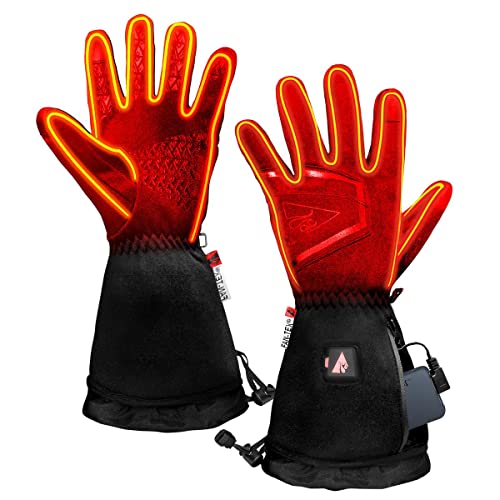
6. ActionHeat 5V Lightweight Battery Heated Gloves for Women — Best Lightweight Option
ActionHeat markets these as a "lightweight" option and that description holds up. The softshell construction keeps the overall weight and bulk down, which translates directly to better hand feel and dexterity on the mountain. If you find that most heated gloves feel like wearing oven mitts, the ActionHeat 5V might surprise you — the lighter build makes pole planting and equipment adjustments noticeably easier than with heavier heated options.
The Fantex waterproof membrane keeps moisture out while the exterior shell uses heat-trapping material to boost warmth retention. A waterproof zippered battery pocket stores the rechargeable battery securely, and the palm and fingers feature silicone reinforcement for grip. Three heat levels are available, and ActionHeat claims up to 8 hours of runtime — competitive with larger, heavier gloves. The weather-tight elastic cuff with cinch cord does a decent job of sealing the wrist, though it's not as robust as a longer gauntlet style.
These are particularly well-suited to women dealing with Raynaud's syndrome, arthritis, or poor circulation, as the even heat distribution along the hand helps address the specific symptoms these conditions cause. They also work well for hiking, camping, and snowshoeing — versatile enough to take beyond the ski hill. If you're building out a full winter activity kit, these pair nicely with other gear covered in our best cross country ski gloves roundup. The 5V system is lower voltage than the 7V Gerbing or 7.4V options, so peak heat output won't match the higher-voltage competitors — worth keeping in mind if you run very cold.
Pros:
- Lightweight softshell construction for better dexterity and hand feel
- Up to 8 hours of heat from rechargeable battery
- Silicone palm and finger reinforcement for grip
- Good for Raynaud's, arthritis, and circulation-related cold sensitivity
- Versatile beyond skiing — hiking, camping, snowshoeing
Cons:
- 5V system produces lower peak heat than higher-voltage competitors
- Cuff seal not as robust as longer gauntlet-style gloves
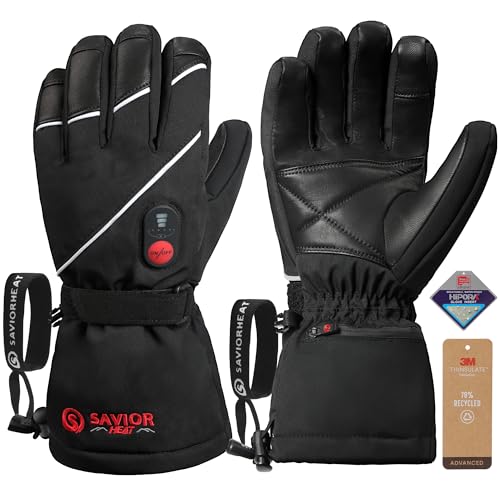
7. SAVIOR HEAT Heated Gloves for Men Women, 3M Rechargeable — Best Battery Life
SAVIOR HEAT has earned a loyal following in the heated apparel space, and the S01 gloves give you a clear understanding of why. The headline number is the battery life: up to 12 hours of warmth from dual 7.4V 3000mAh lithium-polymer batteries, according to SAVIOR HEAT's own testing data. That's the longest runtime on this entire list. A dual-port fast charger fully recharges both batteries in about 2 hours, so you can run a full day on the mountain and have both batteries topped off again by the time you're ready for tomorrow's first run.
Heat kicks in within 10 seconds and spreads evenly across the full hand — both fingers and back. You've got three precise temperature modes: 104–113°F for gentle all-day warmth, 113–122°F for moderate cold, and 122–149°F for maximum output when temperatures plunge. The upgraded heating elements are designed to distribute heat without creating hot spots, which was a complaint about earlier heated glove models. The 3M branding refers to the use of 3M materials in the construction, known in outdoor gear circles for quality and durability.
The real-leather exterior gives these a more premium feel than most comparably-priced heated gloves, and the construction holds up well to the wet, rough conditions that ski gloves face regularly. The unisex sizing accommodates both men and women comfortably. If you're heading to a demanding destination — say, a place like one of the world's top ski mountaineering destinations — the combination of all-day battery life, fast heat-up, and quality build makes the SAVIOR HEAT S01 a reliable choice. For most skiers looking to balance performance and price in 2026, this is one of the strongest all-around options available.
Pros:
- Up to 12 hours of battery life — longest on this list
- Fast 2-hour full recharge via dual-port charger
- Heats the entire hand — fingers and back — in 10 seconds
- Three precise heat modes for varying conditions
- Real leather construction with durable 3M materials
Cons:
- Battery life figures are from manufacturer testing — real-world on high heat will be lower
- Unisex fit may not suit those with narrower hands
Buying Guide: How to Choose the Best Heated Ski Gloves
Shopping for heated ski gloves in 2026 is genuinely different from buying regular ski gloves. You're evaluating both the glove itself and an electronic system. Here's what matters most when you're comparing options.
Voltage and Heat Output: 5V vs. 7V vs. 7.4V
Voltage (V) tells you how much power the heating system runs on — and it directly affects how warm the gloves can get and how long the battery lasts at a given setting. Higher voltage generally means higher peak heat and longer runtime, but it also tends to mean a heavier battery. The 5V ActionHeat gloves are lighter and gentler, well-suited for mild cold or users with moderate circulation issues. The 7V Gerbing system is a proven mid-tier performer. The 7.4V systems (SAVIOR HEAT, and the budget rechargeable option) deliver the most heat and the longest runtimes — better for extreme cold or all-day use. If you frequently ski in temperatures below 10°F (-12°C), prioritize higher-voltage systems.
Battery Life and Recharge Time
Manufacturer battery life claims are almost always measured on the lowest heat setting. On high heat, expect roughly half to two-thirds of the advertised runtime. For a typical six-to-eight-hour ski day, you want at least 6–8 hours of claimed life so you have buffer when running warmer settings. Also check recharge time — some systems take 4–6 hours to recharge, which means you'll need to start charging as soon as you get back to the lodge to be ready for the next day. The SAVIOR HEAT S01's 2-hour fast charge is a standout convenience feature. If you're planning a multi-day trip to a resort, shorter recharge windows take real stress off your evening routine.
Waterproofing: Membrane Type Matters
Not all waterproof claims are equal. A generic "waterproof membrane" will keep your hands dry in light snow but may fail in sustained wet conditions or after heavy use. GORE-TEX (used by Outdoor Research Prevail and Zanier Aviator.GTX) is the gold standard — fully waterproof, windproof, and breathable, meaning your hands won't sweat inside a sealed environment. If you regularly ski in wet, heavy snow or springtime conditions, spending more for GORE-TEX is worth it. For dry, cold powder days at altitude, a quality non-GORE-TEX membrane may be sufficient. Also consider the palm material — goat leather (Outdoor Research) holds up better to pole friction and gripping than synthetic materials over time.
Fit, Sizing, and Gender-Specific Design
Heated gloves are more form-dependent than regular gloves because the heating elements and battery housing are positioned to work with specific hand proportions. A glove that's too large will leave battery bulk in the wrong place; too small and the heating wire may create pressure points. Women's-specific designs (Gerbing S7, ActionHeat 5V) are engineered for a female hand profile — narrower palm, different finger length ratios. If you're a woman buying from the unisex options, size down and check the brand's sizing chart carefully. Also consider gauntlet length: a longer cuff (like the Zanier Aviator.GTX) creates a better seal against jacket sleeves and keeps cold air out more effectively on windy days.
Frequently Asked Questions
How long do heated ski glove batteries typically last?
Most heated ski gloves claim 4 to 12 hours of battery life depending on heat setting. The key thing to understand is that those numbers are almost always measured on the lowest heat setting. On the highest setting, expect roughly half the advertised time. For most ski days, a glove claiming 8 hours on low will give you 3–5 hours on high — enough for a full day if you manage the settings. Models like the SAVIOR HEAT S01 and the budget dual-battery gloves push toward the longer end, while lighter 5V systems may fall shorter on very cold days when you need maximum heat output.
Are heated ski gloves safe to use?
Yes, modern heated ski gloves from reputable brands are designed with multiple safety protections. Look for FCC-certified batteries and built-in protections against overcurrent, overvoltage, and overcharging — all of which prevent battery failures or fires. Avoid extremely cheap options without safety certifications. Most quality gloves also have automatic safety shutoffs. As with any lithium battery product, don't store them in very hot conditions (like a hot car in summer), don't charge them with non-approved chargers, and inspect cables periodically for damage.
Can I use heated ski gloves for activities other than skiing?
Absolutely. Heated ski gloves work well for snowboarding, snowshoeing, hiking, hunting, camping, cycling in cold weather, and everyday winter use. The main consideration is whether the waterproofing and durability level matches the activity. Ski-specific gloves with leather palms and rigid cuffs may be overkill for casual walking, but lighter options like the ActionHeat 5V work equally well across multiple winter activities. Anyone who spends extended time outdoors in cold weather — regardless of the specific sport — can benefit from heated gloves.
Do heated gloves work for Raynaud's syndrome?
Yes, and they're widely recommended for people managing Raynaud's syndrome (a condition where cold temperatures or stress trigger extreme coldness and color changes in fingers and toes, caused by reduced blood flow). The consistent, controllable warmth that heated gloves provide helps maintain hand temperature above the threshold that triggers Raynaud's episodes. Many users with the condition report significant improvement in comfort and hand function during cold weather activities. Look for gloves with full-finger heating coverage — like the Lenz Heat Glove 6.0 — rather than options that only heat the back of the hand.
How do I care for and store heated ski gloves?
Always remove the batteries before washing, and follow the manufacturer's instructions — most heated gloves can be hand-washed or spot-cleaned but should not go in a washing machine with batteries installed. Store gloves at room temperature with batteries partially charged (around 50%) — don't store lithium batteries fully drained or fully charged for extended periods, as both reduce long-term battery capacity. Avoid compressing gloves in tight storage spaces where heating wires could be damaged. Inspect the heating elements and connections at the start of each season before heading to the mountain.
What's the difference between 5V and 7.4V heated gloves?
Voltage determines how much power the heating system uses, which affects peak heat output and battery runtime. A 5V system (like ActionHeat) is lighter and gentler — good for mild cold conditions or users who want long battery life at a lower temperature. A 7.4V system (like SAVIOR HEAT or the budget dual-battery gloves) produces more heat and often runs longer because the higher capacity batteries are sized for the higher demand. For skiing in temperatures below about 15°F (-9°C), or for people with significant circulation issues, a higher-voltage system is generally the better choice. For casual winter use in milder cold, 5V is often sufficient and more comfortable due to lighter weight.
Buy on Walmart
- Heated Gloves for Men Women, Rechargeable Hand Warmer Gloves — Walmart Link
- Lenz Heat Glove 6.0 Finger Cap for Men (Gloves Only) — Walmart Link
- Outdoor Research Prevail Heated Gore-TEX Gloves, Solid Black — Walmart Link
- Zanier Aviator.GTX Heated Gloves — Walmart Link
- Gerbing 7V Women's S7 Battery Heated Gloves M — Walmart Link
- ActionHeat 5V Lightweight Battery Heated Gloves for Women - — Walmart Link
- SAVIOR HEAT Heated Gloves for Men Women, 3M Rechargeable Ele — Walmart Link
Buy on eBay
- Heated Gloves for Men Women, Rechargeable Hand Warmer Gloves — eBay Link
- Lenz Heat Glove 6.0 Finger Cap for Men (Gloves Only) — eBay Link
- Outdoor Research Prevail Heated Gore-TEX Gloves, Solid Black — eBay Link
- Zanier Aviator.GTX Heated Gloves — eBay Link
- Gerbing 7V Women's S7 Battery Heated Gloves M — eBay Link
- ActionHeat 5V Lightweight Battery Heated Gloves for Women - — eBay Link
- SAVIOR HEAT Heated Gloves for Men Women, 3M Rechargeable Ele — eBay Link
Next Steps
- Check current prices on the two or three gloves that best match your needs — prices shift frequently on Amazon, and deals on last-season models can offer significant savings heading into 2026.
- Verify your sizing by measuring your dominant hand and cross-referencing each brand's specific size chart before ordering — heated gloves fit differently than standard ski gloves due to battery and wire placement.
- Compare battery voltage to your typical ski conditions — if you regularly ski in temperatures below 15°F or have circulation issues, prioritize the 7V or 7.4V options over the lighter 5V models.
- Browse the full ski gear reviews at our ski gear reviews hub to round out your kit with goggles, back protectors, and more before the season starts.
- Read buyer reviews on Amazon filtered to verified purchases and sorted by most recent — this gives you the most accurate picture of real-world performance, battery longevity after a full season, and any durability issues that emerged over time.
 |
 |
 |
 |

About Frank V. Persall
Frank Persall is a lifelong skier originally from the United Kingdom who has spent years pursuing the sport across premier resorts in Europe, North America, and beyond. His passion for skiing has taken him from the Alps to the Rocky Mountains, giving him a broad perspective on resort terrain, snow conditions, gear performance across price points, and the practical realities of ski travel with a family. At SnowGaper, he covers ski resort guides, gear reviews, and skiing technique and travel resources for enthusiasts of every level.
You can get FREE Gifts. Or latest free skiing books here.
Disable Ad block to reveal all the info. Once done, hit a button below
|
|
|
|