The first time you see a superpipe in person, it's genuinely disorienting. You're used to groomed runs, maybe some moguls, the occasional jump — and then suddenly there's this enormous carved channel with walls rising two stories above the snow. It stops you cold. If you've been getting deeper into the world of skiing and freestyle terrain and keep running across the term, it's worth understanding exactly what is a superpipe, how it differs from what you've already seen, and what it actually takes to ride one.
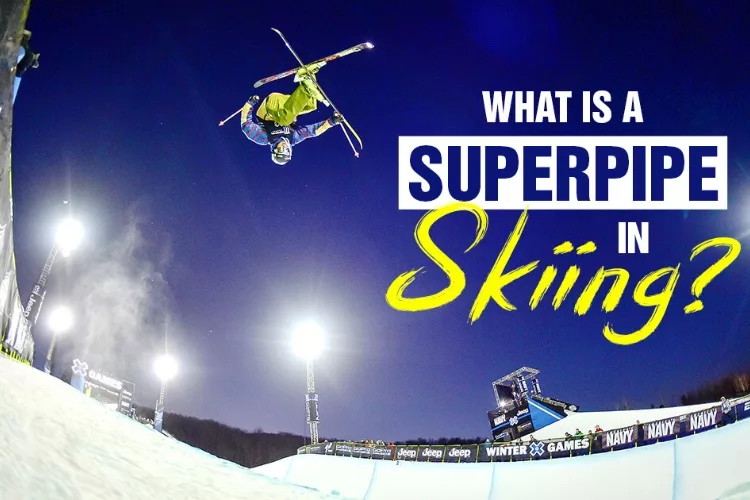
A superpipe is a purpose-built snow structure — essentially a halfpipe scaled up to meet specific size standards. By official definition, the walls must reach at least 6.7 meters (roughly 22 feet) in vertical height. That number is the dividing line between a standard halfpipe and a superpipe, and the difference it creates for riders is profound. You'll find superpipes at elite ski resorts and at major international competitions, including the Winter Olympics, where ski halfpipe has been a medal discipline since 2014.
Whether you're a skier trying to understand what you're approaching at a resort terrain park, or a fan watching competition coverage and trying to follow the action, this guide covers the structure, history, and practical realities of the superpipe from several angles. There's more here than just "it's a big halfpipe" — and once you know the full picture, you'll see freestyle skiing differently.
Contents
From Halfpipe to Superpipe: A Brief History
The Origins of the Halfpipe
The halfpipe traces its roots directly to skateboarding culture in the 1970s. Skaters began building wooden ramps that mimicked the curved walls of drainage channels and swimming pools, and the back-and-forth wall-riding motion became a discipline in its own right. When freestyle snowboarding emerged in the late 1970s and early 1980s, riders adapted that concept to snow. Early efforts were crude — riders would dig trenches into hillsides by hand, pack the walls as best they could, and take turns launching off whatever shape they managed to produce. The results weren't consistent, but the concept worked, and momentum built quickly.
Through the 1980s, grooming machines entered the picture, allowing crews to cut more uniform channels. Resorts recognized the draw and began maintaining halfpipes as official terrain features. By the time snowboarding reached the Winter X Games in the late 1990s, the halfpipe was already a central discipline. Skiers were riding halfpipes informally around the same time, though it took longer for competitive ski halfpipe to gain the same institutional recognition. For a broader look at how these disciplines fit within the sport overall, the overview of different types of skiing is a useful reference point.
Olympic Recognition and the Superpipe Standard
The term "superpipe" entered regular use in the early 2000s, driven largely by the X Games, where venue infrastructure had advanced to the point that walls could be cut to previously impossible heights. As tricks evolved and athletes began performing multi-rotation maneuvers that required significant hang time, standard halfpipes stopped providing what riders needed. The superpipe standard — walls at or above 6.7 meters — became the benchmark for serious competition.
Snowboard halfpipe became an Olympic event at the 1998 Nagano Winter Games. Ski halfpipe, using superpipe-scale structures, joined the program at the 2014 Sochi Games. Olympic inclusion brought standardized specifications and consistent venue requirements that have largely held since. Today, the International Ski Federation (FIS) governs competition halfpipe standards for skiing, and any venue hosting a top-level event must meet or exceed the superpipe threshold. That formalization matters — it means riders, coaches, and spectators can expect the same basic structure whether the event is in Utah, Switzerland, or Japan.
How a Superpipe Is Built and Maintained
The Construction Process
Building a proper superpipe begins with choosing a slope of the right pitch — typically between 17 and 18 degrees. Too flat and riders won't generate enough speed to reach the lip; too steep and the transitions become dangerously fast. Once the location is determined, substantial volumes of snow are moved, layered, and compacted to create the raw base structure. That initial shaping can take days of work before any precision cutting begins.
The cutting itself is done with specialized equipment. Machines like the Zaugg Pipe Monster carve the walls with mechanical precision, following a fixed template geometry. A single pass doesn't produce a competition-ready result — multiple passes over multiple days are required to reach the target measurements. The finished structure is typically 150 to 200 meters long, around 20 to 22 meters wide at the top, with walls angled at approximately 85 degrees from horizontal. That near-vertical wall geometry is what gives superpipe riding its distinctive character. The curved transition from the flat base to the vertical lip — called the "tranny" — is what riders use to generate upward momentum on every hit.
Snow Conditions and Ongoing Upkeep
A superpipe requires consistent maintenance throughout the season. Temperature is the most important variable. Warm conditions soften the walls, making them spongy and unpredictable — the lip can crumble or grab when a rider contacts it at high speed. Hard freezes create an icy surface that offers little edge grip. The ideal is sustained cold, dry conditions that keep the snow firm without turning it to glass.
A superpipe wall that isn't groomed daily develops ruts and irregularities at the lip — small surface flaws that translate directly into inconsistent launch angles and unpredictable air.
Maintenance crews often work overnight to reset the surface between competition days or high-traffic periods. Some venues use water injection systems to deliberately harden the snow surface for competitions where consistency is paramount. If you're visiting a resort with a superpipe, ask park staff which days it's freshly cut — the difference between a well-maintained pipe and a worn one is not subtle. A fresh pipe rewards your technique; a deteriorated one punishes small mistakes that a good surface would have forgiven.
Halfpipe vs. Superpipe: A Side-by-Side Look
The distinction between a standard halfpipe and a superpipe is more than size. The two structures produce fundamentally different riding experiences, and understanding the gap helps you make sense of what you're looking at when a venue advertises one or the other.
| Feature | Standard Halfpipe | Superpipe |
|---|---|---|
| Wall Height | Under 6.7 m (22 ft) | 6.7 m (22 ft) or higher |
| Typical Width | 12–15 meters | 20–22 meters |
| Typical Length | 100–150 meters | 150–200 meters |
| Grooming Equipment | Standard pipe cutters | Specialized machines (Pipe Monster, etc.) |
| Air Above Lip (Elite) | 1–3 meters | 5–7+ meters |
| Primary Use | Recreational, developmental | Advanced riding, elite competition |
| Olympic Standard | No | Yes (FIS certified) |
The most immediately noticeable difference from a rider's perspective is speed and air time. A superpipe's larger transitions give you more room to load and release momentum as you move from the flat base up the wall to the lip. That additional energy translates into dramatically more air — elite riders regularly clear 5 to 7 meters above the wall, sometimes exceeding that on exceptional conditions. At those heights and rotation speeds, the margin for error is extremely narrow.
For context, if you've watched mogul skiing where aerial elements appear briefly in the course, you already know that freestyle skiing blends athleticism with precise technique. The superpipe amplifies both of those demands considerably. In moguls, aerial sections are short and highly choreographed in advance; superpipe riding involves real-time decisions on every hit based on your current speed, wall condition, and where you are in your trick sequence.
Common Misconceptions About the Superpipe
Superpipes Are Only for Snowboarders
This is probably the most persistent misconception surrounding the discipline. Superpipes are absolutely and equally a skiing venue. Ski halfpipe has been an Olympic discipline since 2014, and many of the athletes who have defined the event — David Wise, Maddie Bowman, Cassie Sharpe, Brita Sigourney — are skiers. The tricks they perform use twin-tip skis and a technical vocabulary that's distinct from snowboarding but no less complex.
The confusion is understandable given history. Snowboarding adopted the halfpipe about a decade before competitive ski halfpipe became a structured mainstream event, giving it a long head start in public visibility. Skiers had been riding halfpipes informally for years before the competition infrastructure arrived, but institutional recognition took longer to follow. Today the disciplines coexist in the same terrain, often on the same schedule at major resorts and competitions.
You Have to Go Huge to Enjoy One
Watching competition footage can make the superpipe feel completely inaccessible. Seeing someone throw a quad cork or a 1440 at seven meters above the lip isn't exactly an invitation for a recreational skier to try the same feature. But the superpipe is a terrain feature, not a performance mandate. You ride it at whatever level of commitment your skill and comfort allow.
Many skiers ride superpipes at a controlled, moderate level: generating consistent speed, hitting the transition cleanly, working on airs without rotation. The larger walls actually benefit intermediate riders in one key way — you have more transition space to work with, which gives you slightly more time to react and adjust compared to a smaller pipe. Progression in a superpipe is real and measurable without ever approaching competition-level tricks. You build from what you can do reliably and expand from there.
Challenges That Trip Up Superpipe Riders
Reading the Pipe
Every superpipe has its own character. The slope angle, snow density, wall geometry, and daily grooming quality all affect how you need to ride it. Reading those variables correctly — understanding where to generate speed, where to compress into the transition, and where to extend for the launch — takes multiple runs and real attention. If you drop in without that awareness, you'll either run out of speed before reaching the lip or find yourself going so fast that you can't control your trajectory off the top.
A useful habit when approaching an unfamiliar pipe is spending a few minutes watching other riders from the bottom or from the side of the channel. Notice where they set their edge on the transition, how early or late they leave the lip, and what line they take across the flat base between walls. That observation isn't just a beginner move — experienced riders do it every time they encounter new terrain. The pipe will tell you what it wants from you if you watch it long enough before you ride it.
Speed and Timing Consistency
Consistency is the hardest quality to develop in a superpipe. Every hit on a run should produce roughly similar air height and a predictable flight arc so you can plan your trick sequence in advance. Losing speed mid-run — from dragging a hand on landing, catching an edge on the flat base, or absorbing a hit instead of releasing it — compounds run over run and can leave you unable to reach the lip by the bottom of the pipe.
The consequences of falls in a superpipe are also higher than in most other terrain. You're hitting the snow from greater heights and at odd angles. Protecting yourself during the learning phase isn't optional — it's smart. A resource like the guide to best back protectors for skiing and snowboarding is worth reading before you start pushing your speed higher. Back impacts from high falls are among the more serious risks in superpipe terrain, and the right protective gear meaningfully changes the stakes when things go wrong.
A Practical Path to Riding the Superpipe
Start With Smaller Features
You don't arrive at a superpipe on your first day in a terrain park. The standard progression starts with smaller jumps and rails, then moves to a standard halfpipe, and eventually — when you're technically ready — a superpipe. Each step in that ladder develops specific skills that the next step requires. Smaller features teach you edge control and basic airtime awareness. The standard halfpipe teaches you pipe-specific timing and wall reading. The superpipe is where you apply and expand all of it at a larger scale.
If your home resort doesn't have a superpipe but does have a halfpipe, make the most of that terrain. Focus on generating consistent speed, making clean wall contact, and landing with your weight centered over your skis. Those skills transfer directly. When you eventually access a superpipe, the scale will feel different, but your technical foundation will carry over more than you might expect. The pipe is larger — the principles are the same.
Gear Considerations
Twin-tip skis are standard for superpipe skiing because they allow you to ride forward and backward with equal control. That switch-riding ability becomes essential as you progress to tricks that involve fakie landings. Your helmet should be a current-generation model that meets recognized safety certification standards and fits correctly without movement — take the time to get it fitted properly before you escalate your riding.
Goggles also matter more in pipe terrain than some riders realize. When you're in the channel, you're constantly transitioning between different light angles — shadowed walls, bright sky at the lip, and everything in between. High-contrast lenses help you read the snow surface quickly on each hit. If you're looking for solid options that perform well across varying conditions, the guide to best goggles for flat light conditions covers lenses that handle difficult terrain park lighting effectively.
Beyond hardware, a few sessions with a terrain park coach is among the highest-return investments you can make at this stage. An experienced instructor watching your pipe hits from outside the channel can give you specific, immediate feedback that compresses months of solo trial and error into a handful of productive sessions. Most resorts with superpipes offer some form of freestyle coaching — look for it, and use it.
Frequently Asked Questions
What is a superpipe in skiing?
A superpipe is an oversized halfpipe snow structure with walls measuring at least 6.7 meters (22 feet) in vertical height. It's used for both freestyle skiing and snowboarding and serves as the official competition venue for Olympic halfpipe events. The scale allows elite riders to generate the air time needed to perform complex aerial maneuvers.
How is a superpipe different from a regular halfpipe?
The primary difference is wall height. A standard halfpipe has walls below the 6.7-meter threshold, while a superpipe meets or exceeds it. Superpipes are also wider, longer, require specialized grooming machines to build, and are held to stricter construction standards for competition use. The riding experience is substantially different in terms of speed, air height, and physical demand.
Can intermediate skiers ride a superpipe?
Yes, with the right preparation. You don't need to perform competition-level tricks to ride a superpipe. Intermediate skiers who are comfortable with halfpipe fundamentals — consistent speed, clean wall contact, and controlled air — can ride a superpipe at a manageable level. Building up through smaller features and a standard halfpipe first is strongly recommended.
Where can you find a superpipe to ski?
Superpipes are maintained at a select number of major ski resorts, typically those with well-developed terrain parks. In the United States, venues like Park City Mountain in Utah, Mammoth Mountain in California, and Buttermilk in Colorado maintain superpipes that are accessible to the public on scheduled park hours. International competition venues also maintain them seasonally.
Is ski halfpipe the same as superpipe skiing?
Effectively yes. In competitive skiing, "halfpipe" refers to the discipline, and the structure used is always a superpipe by FIS standards. When people say "ski halfpipe" in a competition context, they mean skiing in a superpipe. The term "superpipe" tends to be used more when describing the physical structure itself, while "halfpipe" describes the event or discipline.
Final Thoughts
Understanding what is a superpipe gives you a better lens for the entire freestyle skiing world — from the competition coverage you watch to the terrain park you ride at your local resort. If you're ready to take the next step, start by finding a resort with a well-maintained halfpipe or superpipe, spending time watching before you drop in, and gearing up with proper protection before you start pushing your limits. The superpipe rewards patience, and every run teaches you something specific about your technique.
 |
 |
 |
 |

About Frank V. Persall
Frank Persall is a lifelong skier originally from the United Kingdom who has spent years pursuing the sport across premier resorts in Europe, North America, and beyond. His passion for skiing has taken him from the Alps to the Rocky Mountains, giving him a broad perspective on resort terrain, snow conditions, gear performance across price points, and the practical realities of ski travel with a family. At SnowGaper, he covers ski resort guides, gear reviews, and skiing technique and travel resources for enthusiasts of every level.
You can get FREE Gifts. Or latest free skiing books here.
Disable Ad block to reveal all the info. Once done, hit a button below
|
|
|
|