More than 400 million skier visits are logged at ski resorts worldwide every single year — and that number hasn't faded as newer sports have come along. If you're asking yourself why is skiing fun enough to justify lift tickets, cold mornings, and a pile of gear, the answer is simpler than you think: skiing delivers speed, scenery, challenge, and community all at once, and nothing else stacks those four things the same way. Start by browsing ski resorts near you and you'll quickly see why people plan entire winters around this sport.
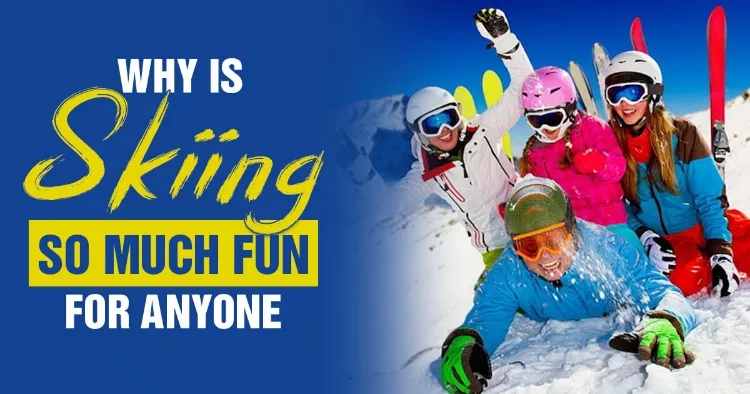
Skiing isn't just a sport. It's a full sensory experience — the crunch of edges biting into groomed snow, the burn in your legs on a long blue run, the clean snap of a carved turn. These things get into your head and stay there. People who try skiing once almost always end up planning their next trip before the first one is over.
The reasons go deeper than adrenaline, though. Whether you're a total beginner or a seasoned rider, the sport keeps delivering in ways that evolve as your skills grow. This post unpacks exactly why skiing is fun, what gear actually matters, and what habits separate a great day on the mountain from a frustrating one.
Contents
Why Skiing Has Held Its Appeal for So Long
Skiing has existed in some form for over 5,000 years — originally as a tool for winter travel, documented in prehistoric cave paintings and ancient Nordic records. Today it's one of the most widely practiced winter sports on earth, and the core appeal hasn't changed: you're moving fast through a beautiful environment using nothing but your own body and two planks of shaped material.
There are a few foundational reasons why is skiing fun at its root level:
- Speed you control: Few sports let you move this fast under your own precise command. The sensation of gliding down a mountain while making deliberate movements is genuinely unlike anything else in daily life.
- Environment matters: Mountains, snow, and cold clean air are restorative. Time at altitude in a natural setting does things to your mood that no gym ever will.
- Progress is visible and immediate. Every run, you can feel yourself improving — tighter turns, more confidence, less falling. That feedback loop is deeply satisfying.
- The social element is strong. Skiing with friends or family creates shared memories that stick for years.
To understand the full range of what skiing can be, check out this guide to different types of skiing — it puts everything from alpine racing to backcountry touring in context.
The Physical Rush Is Real
Your body doesn't lie. When you're carving a groomed run or picking a line through trees, your legs, core, and arms are all working together. It's a full-body workout disguised as fun. Your heart rate climbs, your quads burn, and you feel it for two days afterward — but in the good way.
The adrenaline spike at the top of a steep pitch, the focus required to navigate moguls, the constant micro-adjustments your body makes — this is what makes skiing feel alive. You can't zone out. You have to be present, fully, on every run. That's rare, and that's a big part of why it feels so rewarding.
The Mental Reset You Didn't Know You Needed
Here's something people don't talk about enough: skiing forces you completely off your phone and out of your head. You cannot be thinking about work emails while navigating a black diamond. The mountain demands your full attention. That enforced focus is one of the most effective mental resets available to you — and it's one of the underrated reasons skiing is fun even when conditions aren't perfect.
Pro tip: If you're feeling burned out before a ski trip, lean into it — research consistently shows that outdoor physical activity at altitude drops cortisol levels fast. Two days on snow can reset what two weeks at a desk can't.
The Gear That Unlocks More Fun
Bad gear doesn't just make skiing less comfortable — it makes it less fun. The right equipment genuinely changes what's possible on the mountain. This isn't an excuse to spend recklessly; it's a reminder that the right basics pay off immediately in how much you enjoy each run.
Skis, Boots, and Bindings
Your boots are the single most important piece of equipment you'll own. A well-fitted boot transfers your movements precisely to the ski. A poorly fitted boot creates pain, fatigue, and sloppy control — none of which are fun for anybody. Get a proper boot fitting before you buy anything else.
- Ski length: Beginners do better on shorter skis (chin to nose height) — easier to control and more forgiving. Intermediates and experts usually go longer for stability at speed.
- Flex rating: Softer flex suits beginners and lighter skiers. Stiffer flex gives advanced skiers better response when pushing hard.
- Rocker profile: All-mountain rocker makes skis forgiving in mixed conditions. Camber underfoot gives sharper edge grip on packed groomers.
Ski tuning matters more than most beginners realize. Dull edges and oxidized bases make your skis feel sluggish and unpredictable. Understanding what ski tuning involves — and keeping your gear in good shape — is one of the easiest ways to add immediate fun to every outing.
Goggles and Protection
You need to see clearly to ski well, and poor visibility from fog, flat light, or UV glare kills your performance and your confidence. A good pair of goggles handles all three issues at once. Don't cheap out here.
Beyond goggles, don't skip back protection. Falls happen — to beginners and experts alike. A quality back protector absorbs real impact without restricting your movement. Our full review of best back protectors for skiing and snowboarding covers the top options at every price point.
Safety reminder: A helmet is not optional equipment — wear one on every single run, no matter your skill level or how easy the terrain looks.
Fun Looks Different at Every Skill Level
One of the best things about skiing is that it meets you exactly where you are. The mountain doesn't care whether you're working through a beginner slope or charging off-piste in knee-deep powder. There's always a version of fun available — it just changes as you develop.
When You're Just Starting Out
The first day on skis is humbling for almost everyone. You fall. You slide sideways. You wonder if this is actually worth it. Push through — it absolutely is. Here's what actually helps:
- Take at least one half-day lesson with a qualified instructor. It compresses weeks of trial-and-error into hours.
- Stick to green runs until you're linking turns consistently without panic stops. There's no shame in this — the majority of all skiing happens on green and blue terrain.
- Expect soreness in your quads and ankles on day two. This is normal. Day three is when things start clicking.
- Dress in layers and keep your feet warm. Cold, uncomfortable beginners quit early. Don't let that be you.
The moment skiing becomes genuinely fun for beginners is when they stop fighting the mountain and start moving with it. It can happen on day one or day three — but when it clicks, you'll feel it immediately.
As You Get Better
As your technique improves, the mountain opens up. Blues become comfortable. Blacks start feeling achievable. Each new level of terrain unlocks a completely different version of the sport. That's what makes skiing endlessly interesting — there's always a harder run, a steeper line, a tighter trees section waiting for you.
Advanced skiers often specialize: moguls, powder, park, or racing. Each sub-discipline has its own techniques, gear culture, and community. You're never really "done" with skiing. You just get to keep going deeper into it.
Habits That Make Every Run Better
Skiing well isn't purely about natural talent or expensive gear. How you approach each day on the mountain — before you even snap into your bindings — has a major effect on how much fun you actually have.
Before You Hit the Slope
- Warm up your legs and hips before your first run. Cold muscles are slower to respond and more injury-prone.
- Check conditions the night before. Ice, windpack, and fresh powder each require a different approach and gear setup.
- Eat a real breakfast. Skiing burns more calories than most people expect — running out of energy mid-mountain is genuinely unpleasant.
- Start your first run on easier terrain regardless of your skill level. Let your body wake up before you push it.
On the Mountain
The best skiers you'll see on any mountain aren't always the fastest. They're the most efficient. They read terrain early, pick their lines ahead of time, and ski in complete control. Clean technique means your muscles work with the mountain instead of against it — and you can ski for hours without burning out.
- Look ahead, not down at your ski tips. Your body follows your eyes, every time.
- Keep your hands forward and relaxed. Dropping them back throws off your balance and makes everything harder.
- Rest when you need to. Fatigue is the leading contributor to ski injuries. A 15-minute break at the lodge can save your entire afternoon.
Skiing vs. Snowboarding: A Real Comparison
If you're new to snow sports, you've probably wondered whether to start with skiing or snowboarding. Both are great. But the experience and learning curve are genuinely different, and the choice matters more in year one than it does later on.
What the Numbers Show
| Factor | Skiing | Snowboarding |
|---|---|---|
| First 3 days | Easier to get moving and stop | More falls early, steeper initial curve |
| Intermediate progression | Gradual, terrain-based | Faster once basics click |
| Terrain versatility | Better in moguls, trees, groomers | Better in powder, park features |
| Primary fatigue | Quads and knees | Hips, ankles, wrists |
| Chairlift ease | Straightforward from day one | Awkward until you develop habits |
| Gear cost (entry level) | Slightly higher due to two boots | Slightly lower overall |
Most people stick with whichever sport they try first — and that's completely fine. But if you're asking which delivers more variety across more terrain types over a lifetime of skiing, skiing wins that comparison. Groomed runs, moguls, trees, backcountry, racing — skiing handles all of it without compromise. That versatility is a core reason why is skiing fun for such a wide range of people across such a long span of time.
Final Thoughts
Skiing delivers something genuinely hard to find elsewhere — speed, presence, physical challenge, and mountain scenery all in one package. If you've been on the fence, stop overthinking it and book a trip. Pick a resort, rent gear for your first day, sign up for a lesson, and get on the snow. One good run is usually all it takes to understand exactly why skiing is fun — and why people keep coming back to it for a lifetime.
 |
 |
 |
 |

About Frank V. Persall
Frank Persall is a lifelong skier originally from the United Kingdom who has spent years pursuing the sport across premier resorts in Europe, North America, and beyond. His passion for skiing has taken him from the Alps to the Rocky Mountains, giving him a broad perspective on resort terrain, snow conditions, gear performance across price points, and the practical realities of ski travel with a family. At SnowGaper, he covers ski resort guides, gear reviews, and skiing technique and travel resources for enthusiasts of every level.
You can get FREE Gifts. Or latest free skiing books here.
Disable Ad block to reveal all the info. Once done, hit a button below
|
|
|
|