Ski tuning is the process of sharpening your ski edges, repairing the base, and applying fresh wax so your equipment grips, glides, and responds the way it should on every run. If you've been asking yourself what is ski tuning and whether it's truly necessary, the direct answer is: yes, every pair of skis requires regular maintenance to stay safe and perform well. From beginner green runs to expert black diamonds, a well-tuned ski gives you the edge control and speed that worn, oxidized equipment simply cannot deliver. Explore the full range of skills and gear covered on our skiing resource hub to see how tuning fits into your overall progression on the mountain.

When your skis fall out of tune, the polyethylene base dries out and becomes slow, while the steel edges develop burrs — tiny jagged nicks that catch unpredictably and make clean carving nearly impossible. You might notice your skis sliding sideways on firm hardpack, chattering through turns, or feeling heavy and unresponsive compared to a freshly tuned pair on the same slope. These aren't just performance annoyances; dull edges reduce your ability to stop or control your speed when conditions get icy or steep, and that's a genuine safety issue you can't afford to ignore.
According to skiing equipment guidelines on Wikipedia, the base and steel edges are the two primary contact surfaces between your ski and the snow, and maintaining them directly affects both performance and rider safety. Understanding each part of the tuning process gives you the power to decide when to tune at home, when to visit a shop, and how often to schedule maintenance throughout the season. If you want context on how equipment fits into the broader sport, our guide to what is alpine skiing covers the fundamentals that make tuning so important.
Contents
When and Why Your Skis Need a Tune
Ski tuning isn't a one-time event — it's an ongoing part of owning and riding skis, and knowing when your skis actually need attention saves you from sliding around on dead equipment without realizing what's wrong. Most recreational skiers tune their skis once or twice per season, while high-frequency skiers who ride several days per week benefit from a tune every 10 to 15 days on the mountain. The right frequency depends on your skill level, the terrain you prefer, and the conditions you typically encounter throughout the winter.

Signs Your Skis Are Overdue for a Tune
Your skis give clear signals when they need attention — you just need to know what to look and feel for before your next day on the mountain.
- Chattering through turns — your skis vibrate and skip instead of carving smoothly, which means the edges have lost their bite on firm or icy snow.
- Sliding sideways on flat traverses — if you're losing grip on easy terrain that should feel effortless, your edges are dull and can no longer hold an angle against the snow.
- A dry, chalky-white base — run your fingernail across the base; if white scratches appear easily, the base is dehydrated and needs wax immediately before the next ski day.
- Visible scratches or gouges — deep core shots that reach the ski's wood or foam core need P-tex repair before they absorb water and cause permanent internal damage.
- Rust on the edges — a light orange tinge on the steel edge means oxidation has set in, and a quick deburring pass restores the bite you're missing on every turn.
Conditions That Wear Skis Down Fastest
Not all ski days are equally punishing on your equipment, and understanding which conditions accelerate wear helps you schedule maintenance more strategically.
- Icy or hardpack groomed runs — firm snow puts enormous stress on your edges and dulls them faster than soft powder ever will, especially if you're making aggressive carved turns.
- Rocky or early-season terrain — skiing over exposed rocks, dirt patches, or lift line edges causes base gouges and edge nicks that require immediate repair before your next run.
- Wet spring snow — warm, heavy snow is abrasive and strips wax from your base faster than cold dry powder, leaving the base slow and thirsty within a single session.
- Machine-made snow — snowmaking produces harder, icier crystals than natural snow, which is more abrasive on your bases and edges and demands more frequent tuning at resort-heavy destinations.
The Benefits and Drawbacks of Regular Ski Tuning
Like most forms of equipment maintenance, ski tuning comes with clear upsides and a few honest trade-offs worth understanding before you commit to a routine. Knowing both sides helps you build a schedule that fits your skiing lifestyle without overdoing it or neglecting your skis entirely.
What You Gain From a Fresh Tune
The performance difference between a tuned and an untuned ski is dramatic and immediately noticeable, even for intermediate skiers who've never experienced a quality tune before.
- Sharper edge hold — freshly sharpened edges bite into hard snow and ice with precision, giving you real control during steep descents and fast carving runs.
- Faster, more consistent glide — a freshly waxed base glides over snow with significantly less friction, making you faster on flat runouts and smoother through variable conditions.
- More predictable turning — uniform, deburred edges make carving feel intentional and responsive rather than unpredictable and chattery turn after turn.
- Extended ski lifespan — regular base repair prevents small scratches from becoming deep core shots that compromise the structural integrity of your ski across multiple seasons.
- Safer skiing — better control translates directly to a reduced risk of falls, especially on steep or icy terrain where a single moment of lost grip has real consequences.
The Honest Downsides to Keep in Mind
Ski tuning has a few genuine drawbacks, and being realistic about them helps you plan your maintenance budget and routine without surprises.
- Cost adds up quickly — a professional full tune typically costs between $40 and $80 at most ski shops, and multiple tunes per season represent a meaningful ongoing expense for frequent skiers.
- Edge material is finite — every sharpening pass removes a tiny amount of steel from your edges, and over many seasons of aggressive tuning, those edges eventually become thin enough to require replacement.
- DIY has a learning curve — home tuning requires an upfront investment in tools and real practice before you can tune confidently without risking accidental damage to your edges or base geometry.
- Shop timing is inconvenient — dropping skis off for a professional tune requires planning ahead, especially during peak season when turnaround times can stretch to several days.
Common Ski Problems That Tuning Can Fix
Most on-mountain frustrations that skiers blame on their own technique actually trace back to equipment that hasn't been maintained properly, and recognizing that difference is the first step toward finding the real fix instead of spending hours on lessons for a problem that a tune would solve in an afternoon.
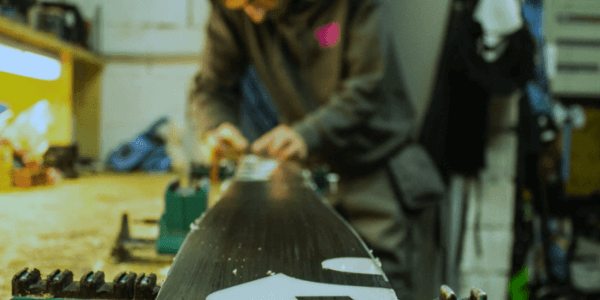
Edge Problems and What They Feel Like
Your edges are the steel strips running along the sides of the ski base, and when they're compromised, you feel it in every turn, every stop, and every moment you try to hold a line on hard-packed snow.
- Burrs — small hooks or nicks created by rocks or other debris catch unpredictably mid-turn and make the ski feel grabby and erratic rather than smooth and reliable.
- Dull edges — edges worn down without sharpening lose their ability to grip snow, producing a helpless sliding feeling on any slope steeper than a gentle beginner run.
- Inconsistent bevel angle — if the edge angle is uneven along the ski's length, the ski turns differently on each side, creating a frustrating asymmetry that technique corrections alone cannot fix.
- Rust spots — oxidation on steel edges reduces sharpness and makes the ski feel sticky and sluggish on contact instead of gliding cleanly through each turn initiation.
Base Problems and How to Spot Them
The polyethylene base of your ski is the surface that actually contacts and glides on snow, and when it deteriorates, even perfect technique can't compensate for the drag and slowness it creates.
- Base oxidation (dry base) — the chalky white appearance on an untuned base means the polyethylene has lost its ability to hold wax, making the ski measurably slower in every condition.
- Shallow scratches — surface-level gouges can be filled with P-tex and sanded smooth, restoring a flat running surface that glides efficiently without dragging on the snow.
- Core shots — deep gouges that expose the wood or foam core require professional repair to seal out moisture before it causes internal delamination and permanent structural damage to the ski.
- Concave or convex base — a base that's no longer flat relative to the edges (called railed or base high) is corrected with a stone grind, which removes material to bring the base back to a true flat surface.
The Core Steps of a Basic Ski Tune
A full ski tune follows a specific sequence, and understanding each step helps you appreciate what you're paying for at a shop or guide your own DIY efforts effectively at home. The process always moves from structural repair to precision finishing to protective wax application — never skip ahead or reverse the order.
Step 1 — Base Repair and Grinding
Start with any damage to the base before touching the edges, because grinding or waxing a damaged surface locks problems in rather than solving them.
- Inspect the base under bright light for scratches, gouges, and core shots — run your hand along the base to feel for depressions or rough patches your eyes might miss.
- Fill shallow scratches with a P-tex candle — melt the plastic material into the gouge, allow it to solidify fully, and scrape it flush using a sharp metal scraper.
- Send the base through a stone grinder (shop equipment) to remove a thin, uniform layer and restore a perfectly flat running surface across the full length of the ski.
- Confirm the base is flat and smooth before moving forward — a warped or concave base undermines every subsequent step in the tuning process.
Step 2 — Edge Sharpening
Edge sharpening is the most precision-sensitive part of tuning and the step that most directly affects how your ski performs on hard snow and ice, so taking your time here pays dividends on every run afterward.
- Use a file guide (an angle-holding clamp) to run a mill bastard file along the side edge at a consistent bevel angle — typically 2° to 3° for recreational skiers, with steeper angles offering sharper grip but shorter durability between tunes.
- Apply a 0.5° to 1° base edge bevel (a slight rounding of the base edge) to prevent the tip and tail from hooking or catching during normal skiing and powder turns.
- Finish with a diamond stone — move from a medium grit to a fine grit to polish the sharpened edge, removing file marks and creating the crisp, clean finish that grips snow most effectively.
Step 3 — Waxing Your Bases
Waxing is the final step and the one you'll repeat most often throughout the season — it's also the most approachable part of tuning for anyone starting out at home. Before your first season with a new pair, check out our guide on whether new skis need to be waxed, because understanding the baseline sets you up for a consistent routine from day one.
- Choose wax based on snow temperature: cold-temperature waxes (harder, blue or green) for temps below 28°F (-2°C), and warm-temperature waxes (softer, red or yellow) for spring-like conditions above that threshold.
- Melt wax onto the base with a dedicated ski iron set to the correct temperature — let a thin bead of wax drip onto the base and spread it evenly from tip to tail in overlapping passes.
- Allow the wax to cool for at least 20 to 30 minutes, then scrape off the excess with a plastic scraper, leaving behind only the wax absorbed into the base's pores for lasting protection and glide.
- Brush the base with a nylon brush to expose the base structure (the textured pattern that channels water away underfoot) and activate the final layer of glide performance.
What Is Ski Tuning Like in the Real World?
Understanding the theory of ski tuning is useful, but seeing how it plays out in actual scenarios helps you set realistic expectations for your own equipment maintenance, whether you're brand new to the sport or preparing for a demanding performance-oriented ski day.
A Beginner's First Shop Tune
You've bought a used pair of skis, read through our tips for beginner skiers, and you're doing everything right technically — but your skis feel sluggish and unpredictable on anything firmer than fresh corduroy. Here's what that first shop visit typically looks like from start to finish:
- The shop technician inspects both skis and finds: a dry, oxidized base, multiple shallow scratches, dull edges with visible burrs, and no wax at all remaining from the previous owner.
- Base repair takes around 15 minutes — P-tex fills the scratches, a stone grind restores the flat surface, and the tech confirms the base is ready before moving forward.
- Edge sharpening adds another 10 minutes — the tech runs an edge guide along the full length of both skis at a 2° side edge angle, removing all the burrs and restoring clean grip.
- Hot wax application completes the tune — the tech irons on an all-temperature wax, scrapes it clean, and brushes the base before returning the skis.
- Total cost: around $55. Total turnaround: same day. The difference you feel on your very next run is immediate — turns are sharper, glide is smoother, and stopping feels far more controlled and predictable.
A Race Skier's Pre-Competition Prep
An advanced or competitive skier approaches tuning with significantly more specificity, because the difference between a 1° and a 2° edge angle genuinely affects carving decisions at high speed and can determine whether you hold a line or wash out through a gate.
- A custom edge bevel profile is applied — sharper through the mid-section of the ski (the primary contact zone during carved turns) and slightly detuned (rounded) at the tip and tail to prevent hooking on variable snow surfaces.
- Temperature-specific wax is selected based on the exact snow temperature and humidity forecast for race day — not just the general condition category, but the precise number.
- Multiple progressive passes with diamond stones — moving from medium to fine to ultra-fine grit — create the cleanest possible edge finish, maximizing grip on hard-packed and icy race terrain.
- A final hand-check of every centimeter of both edges confirms no remaining burrs before the skis leave the tuning bench and go into ski bags for race morning.
DIY Tuning vs. Taking Your Skis to the Shop
Once you understand what ski tuning involves, the natural next question is whether to do it yourself or trust a professional, and the answer depends on the specific task at hand rather than a blanket rule that applies to every situation. Many experienced skiers combine both approaches strategically — handling routine waxing and deburring at home while reserving professional services for jobs that genuinely require shop-grade equipment.
What You Need for Home Tuning
Home tuning is absolutely achievable for the average skier, and once you've invested in the right tools upfront, your ongoing maintenance cost drops to almost nothing per tune.
- A ski vise or bench clamp to hold your skis stable and at the right height while you work
- A gummi stone (also called a rust eraser) for removing light surface rust and deburring edges quickly between full sharpening sessions
- An edge file guide and a mill bastard file for sharpening side edges to a consistent, repeatable bevel angle
- Diamond stones in medium and fine grit for finishing and polishing edges after filing
- A ski wax iron, a plastic scraper, and a selection of temperature-rated hard waxes for routine hot waxing at home
- P-tex candles and a metal scraper for filling small base scratches between professional stone grinds
A complete starter kit runs approximately $80 to $150 and pays for itself after two or three shop visits you no longer need to schedule or pay for separately throughout the season.
When Professional Tuning Is Worth Every Dollar
Despite the appeal of DIY, certain situations clearly call for a professional tune, and recognizing those moments saves you from accidentally damaging your skis with an improperly executed home repair.
| Situation | DIY or Shop? | Why |
|---|---|---|
| Light surface rust between ski days | DIY | A gummi stone removes light rust in under two minutes with zero special setup required. |
| Quick wax top-up before a ski day | DIY | Rub-on wax or a fast iron session takes 15 minutes and needs only basic equipment. |
| Deep core shot exposing the ski's internal core | Shop | Professional epoxy and base-welding tools are needed to seal moisture out permanently. |
| Full base grind to restore flatness | Shop | Stone grinders cost thousands of dollars and require professional calibration to run safely. |
| Precise race-level edge beveling | Shop | Custom angle profiles require skilled hands and professional edge guides to achieve repeatably. |
| End-of-season storage wax application | DIY | A thick coat of storage wax ironed on and left unscraped is a simple protective step any skier can do at home. |
The most practical approach for most recreational skiers is to wax at home before every few ski days, use a gummi stone to deburr edges after hard icy days, and schedule one full professional tune before the season opens and one more midseason if you're logging significant days. This combination gives you consistent performance every day on the mountain while reserving shop equipment for the jobs that genuinely require it.
Frequently Asked Questions
How often should I tune my skis?
Most recreational skiers who ski a handful of days per season need a full professional tune once or twice per year — once before the season opens and once mid-season if they're logging frequent days. Skiers who ride every week should plan for a tune every 10 to 15 ski days, while performance-focused skiers tuning for hard-pack and ice may tune even more frequently to maintain precise edge angles on demanding terrain.
Can I tune my skis at home without professional equipment?
Yes — you can handle most routine maintenance at home with a starter kit that runs $80 to $150. Home tuning covers waxing, light edge deburring with a gummi stone or file, and small base scratch repairs using P-tex candles. Tasks like full stone grinds and core shot repairs require professional equipment that the average home tuner simply doesn't have access to, so those jobs belong in the shop.
What does a ski tune cost at a shop?
A basic wax-and-edge deburr tune typically runs $25 to $45 at most ski shops, while a full tune that includes a stone grind, complete edge sharpening with a file and diamond stones, and hot wax runs $50 to $80. Many shops offer multi-tune packages at a discount if you prepay before or during the early part of the season, which is worth asking about when you drop your skis off.
What is the difference between a basic tune and a full tune?
A basic tune covers waxing and light edge deburring — it's a performance refresh for skis already in decent shape that just need a boost before your next ski day. A full tune adds a stone grind to flatten and texture the base, complete edge sharpening with a mill bastard file and diamond stone, and P-tex base repair for any scratches or gouges, making it the right choice for skis that haven't been professionally serviced in a full season or longer.
How do I know if my ski edges need sharpening?
Run your thumbnail lightly along the side edge of your ski — a sharp edge shaves a thin sliver of nail material cleanly, while a dull edge glides past without catching at all. On the mountain, the clearest signal is your skis sliding out rather than gripping when you try to carve a turn or make a controlled stop on firm or icy snow — that loss of bite is your edges telling you it's time for a sharpen.
Key Takeaways
- Ski tuning is the process of sharpening edges, repairing the base, and applying wax — skipping it directly reduces your control, speed, and safety every time you ski.
- Most recreational skiers need one or two professional full tunes per season, supplemented by DIY waxing and light deburring between ski days to maintain consistent performance.
- A home tuning kit costing $80 to $150 handles routine waxing and edge maintenance, but stone grinds and core shot repairs require professional equipment and should always go to a shop.
- Sharp edges and a freshly waxed base aren't optional upgrades — they are the foundation of predictable, confident skiing on any terrain you choose to push yourself on.
 |
 |
 |
 |

About Frank V. Persall
Frank Persall is a lifelong skier originally from the United Kingdom who has spent years pursuing the sport across premier resorts in Europe, North America, and beyond. His passion for skiing has taken him from the Alps to the Rocky Mountains, giving him a broad perspective on resort terrain, snow conditions, gear performance across price points, and the practical realities of ski travel with a family. At SnowGaper, he covers ski resort guides, gear reviews, and skiing technique and travel resources for enthusiasts of every level.
You can get FREE Gifts. Or latest free skiing books here.
Disable Ad block to reveal all the info. Once done, hit a button below
|
|
|
|