Picture this: you've just finished a long morning on the slopes, popped your skis off at the base area, and now you're shuffling toward the lodge across a flat stretch of packed snow. Every step is a small battle. Your ankles are locked in that forward-leaning ski position, and the stiff plastic cuff is fighting your natural stride with every move. If that sounds familiar, you already get why walk mode on ski boots exists — and why more skiers are asking about it before they buy. Whether you're newer to the world of skiing or upgrading after years on the hill, this guide covers everything you need to make a smart decision about this feature.

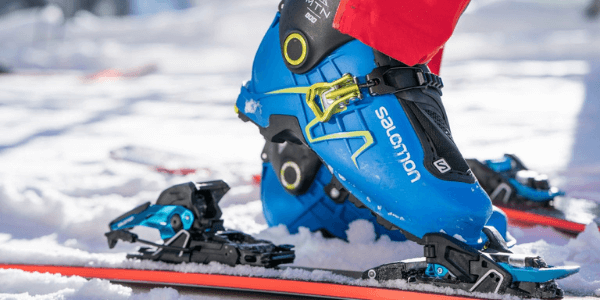
Walk mode — sometimes called hike mode or tour mode depending on the brand — is a mechanical switch built into the upper cuff of a ski boot. In standard ski mode, the cuff is locked rigid, giving you the power transfer and ankle control that skiing demands. Flip the lever (or twist the buckle, depending on the design), and that same cuff becomes free to pivot forward and backward, letting you walk with something that actually resembles a normal human stride. It's a feature that started in alpine touring boots and has since made its way into many everyday resort boots.
So do you actually need it? That depends on how you ski, where you go, and what your budget looks like. This guide breaks down what walk mode does at a mechanical level, who benefits most, how to use it correctly, what it costs across different price points, and what specs to pay attention to when shopping.
Contents
What Walk Mode on Ski Boots Actually Does
The Mechanics Behind the Switch
Most ski boots consist of two main parts: a rigid plastic outer shell and a padded inner liner. The outer shell itself has two sections — a lower portion that wraps around your foot, and an upper cuff that wraps around your shin and calf. In a standard downhill boot, those two sections are locked together at a fixed forward lean angle, typically somewhere between 12 and 20 degrees. That lean is intentional. It positions your center of mass correctly over your skis and allows you to transmit force from your legs into your edges efficiently.
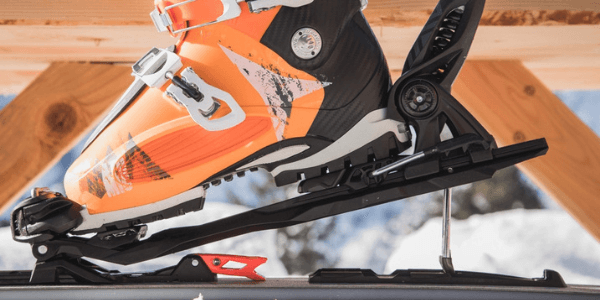
Walk mode releases that lock between the cuff and the lower shell. Once unlocked, the cuff can pivot freely within a range of motion that comes much closer to how your ankle moves during normal walking. The physical mechanism varies by manufacturer. Some boots use a lever on the back of the cuff. Others use a dial, a twist-lock buckle, or a cable-and-pin system. The underlying goal is the same across all of them: let the heel rise and the ankle flex so that walking doesn't feel like fighting your own gear.
Ski Mode vs. Walk Mode: The Real Difference
The contrast between the two modes is something you feel immediately. In ski mode, each walking step requires you to work against a wall of rigid plastic. Your calf and shin muscles take the strain, and your stride becomes a kind of stiff, forward lurch. In walk mode, that resistance largely disappears. You can climb stairs, move across flat terrain, and navigate a resort village at something approaching a normal pace.
It's worth being realistic, though. Even in walk mode, ski boots are still ski boots. They're stiffer and more unwieldy than any other type of footwear. The improvement is relative — you're going from very difficult to walk in, to manageable. According to research summarized in Wikipedia's overview of ankle joint mechanics, the ankle needs roughly 20–30 degrees of dorsiflexion (upward bending) for a comfortable walking stride. Walk mode unlocks enough of that range to make a tangible difference in real-world situations.
Who Really Benefits From Walk Mode
Skiers Who Cover a Lot of Ground
If you do any backcountry or alpine touring — skinning uphill on skins, bootpacking a ridge, hiking to access a trailhead — walk mode isn't a luxury. It's a necessity. Alpine touring (AT) boots are built around this feature precisely because covering elevation on foot with a locked cuff is genuinely exhausting. Without walk mode, your lower legs fight the plastic shell for thousands of steps, and you arrive at the top already tired before the descent even starts.
Even at a resort, some skiers cover more ground on foot than they realize. Think about the long flat runouts you need to skate across, the traverse to a different lift cluster, or the occasional short hike to reach a bowl that's just out of the ski area boundary. If you regularly walk more than a few hundred feet at a time on snow or mixed terrain, walk mode will make a measurable difference in how your legs feel by the end of the day. Fatigue in your lower legs has a way of affecting your skiing technique before you even notice it.
Resort Skiers: Is It Worth It?
For a pure resort skier who spends the whole day lift-to-lift and steps out of their boots at every meal break, the case for walk mode is a bit softer. You'll appreciate it in the parking lot and in the base lodge, but if your total walking-in-boots time is under ten minutes per day, you might not feel the feature justifying extra cost.
That said, a lot of recreational skiers find the comfort gain worthwhile even for short distances. There's also a durability angle worth considering. Repeatedly flexing a boot that isn't designed to flex — forcing the cuff against its locked position during walking — puts stress on the plastic and the structural components in ways that accelerate wear. If you've ever wondered about how your equipment holds up over seasons, it's worth reading about how long ski boots last and what shortens their lifespan. Walk mode, used correctly, is part of how you keep a boot in good shape for longer.
How to Use Walk Mode the Right Way
Switching Between Modes
Using walk mode is straightforward once you know where the switch lives on your specific boot. On most models, it's a lever or button on the back of the upper cuff near the top. Some boots place it on the side. Look for a small icon — typically a boot with a movement arrow for walk mode and a locked boot icon for ski mode. Slide, press, or twist the mechanism depending on your boot's design. The click or snap you feel when it engages is confirmation that it's locked into the chosen setting.
The single most important rule: always switch back to ski mode before you step into your bindings. Skiing with the cuff unlocked removes the lateral support your boot is engineered to provide. You lose edge control and precise energy transfer — and depending on your binding setup, the boot may not interact with the binding correctly. Make it a habit to check the mode every time you put your skis on, especially after a walk from the lodge or a bathroom stop. If you're newer to boot setup in general, reviewing how to put on ski boots properly covers the full process and pairs well with understanding walk mode as part of your routine.
Common Mistakes to Avoid
Forgetting to switch back to ski mode is the most common error, and it happens to experienced skiers too — especially on cold early mornings when you're rushing. Build a physical habit around it: touch the lever every time your skis go on. Some skiers even put a small piece of colored tape near the lever as a visual reminder during their first few days with a new boot.
Another issue: forcing the mechanism when it's stiff from cold. At low temperatures, the plastic and metal components in the walk mode mechanism can become resistant and feel almost stuck. Don't force it. Warm the boot slightly by holding it close to your body or stepping briefly into a heated space, then try again. Forcing a cold mechanism is one of the faster ways to break a component that's otherwise designed to last for seasons.
Walk Mode Boots Across Every Budget
Entry-Level Options
Walk mode used to be a feature reserved for high-end boots. That's changed considerably. You can find boots with functional walk mode mechanisms in the $300–$450 range, though the design tends to be simpler and the range of cuff motion is typically smaller. These are reasonable options if you want the feature without committing to a major investment — particularly if you're a recreational skier who doesn't push hard on technical terrain and wants the benefit mainly for resort comfort.
Mid-Range and Premium
Mid-range boots in the $450–$700 range generally offer a more refined mechanism, a wider range of cuff motion, and better overall construction. Premium boots above $700 — especially dedicated AT models — often include interchangeable rubber and tech-compatible soles, fittings for touring binding systems, and walk mode mechanisms engineered to handle thousands of transitions across multiple seasons. The table below gives you a practical sense of what each price tier delivers.
| Price Range | Walk Mode Quality | Cuff Range of Motion | Best Suited For |
|---|---|---|---|
| Under $300 | Rarely included | N/A | Budget resort skiing, beginners |
| $300–$450 | Basic lever or buckle | ~10–15° | Casual resort skiers wanting comfort |
| $450–$700 | Solid mid-range mechanism | ~15–25° | Intermediate to advanced resort skiers |
| $700–$1,000+ | Full AT-grade walk system | 25–55°+ | Backcountry, ski touring, mountaineering |
A more expensive boot with a wider cuff range isn't automatically the right choice for you. A $400 boot with basic walk mode might be entirely sufficient if your skiing is mostly groomed runs and you just want to walk to lunch without limping. An $800 AT boot is the right tool for skinning — but unnecessary weight and complexity for a resort-only skier.
Smarter Ways to Make the Most of Walk Mode
On the Mountain
One underused application of walk mode at a resort: long flat cat tracks and gentle runouts where you'd otherwise have to skate or pole yourself along awkwardly. Some skiers toggle to walk mode for these sections, shuffle through more easily, then switch back to ski mode at the top of the next pitch. It adds a few seconds but can meaningfully reduce lower-leg fatigue on long days with lots of flat traversing.
Bootpacking — hiking uphill in your ski boots without skis attached — is another clear use case. Whether you're accessing a closed gate during a guided trip or hiking a short ridge for a better line, walk mode turns a punishing slog into something more manageable. Any time you'll be moving on foot for more than a few minutes, toggling to walk mode is worth the two-second effort. Your calves will thank you at the end of the day.
Off the Mountain
The benefits extend to the unglamorous parts of a ski day: the walk from the parking area to the ticket window, navigating a resort village between runs, moving through a crowded lodge to find your group. These distances feel short in normal shoes but add up fast in ski boots. Over a multi-day trip, that compounded comfort makes a real difference in how your legs feel on day three versus day one.
- Switch to walk mode any time you remove your skis and expect to cover more than about 50 feet on foot.
- Always do a visual check of the walk mode lever position before stepping into your bindings — make it part of your setup routine every single time.
Walk Mode Features Worth Knowing Before You Buy
What the Specs Actually Mean
When you're reading product listings, walk mode tends to appear alongside a few specific numbers and terms. The most useful is cuff range of motion, measured in degrees. A boot offering 15° of unlocked cuff movement is adequate for resort walking. A dedicated touring boot might offer 40–55°, which approaches a truly natural walking stride. More degrees generally means a better walking experience, but also a heavier and more mechanically complex boot.
Watch out for "adjustable forward lean" being confused with walk mode. Forward lean adjustment lets you change the fixed angle at which the cuff is locked in ski mode — useful for dialing in your skiing stance, but completely unrelated to walk mode. It won't help you walk more comfortably. If a product description only mentions forward lean adjustment, that boot does not have walk mode.
Some boots also advertise interchangeable soles as part of their walk mode package. This matters most for AT boots used with tech bindings, where different sole profiles are needed for touring versus resort skiing. For a purely resort-focused boot, sole interchangeability is usually irrelevant.
Fit Still Comes First
Walk mode is a genuinely useful feature, but it shouldn't drive your boot selection. Ski boot fit affects your performance, your control on the hill, and your physical safety. A boot with a great walk mode mechanism that fits your foot poorly is still a poor choice. When you're trying on boots, prioritize fit and flex rating (how stiff the boot is at a given skill level) first. Then look at which of the well-fitting models happen to include walk mode.
The best approach is to work with a knowledgeable boot fitter at a specialty shop rather than buying based on spec sheets alone. Flex rating, last width (the volume of the boot's footbed), and shell fit are all things that benefit from hands-on evaluation. Walk mode is a feature you'll appreciate every time you leave your skis behind — but only if the boot underneath it actually fits correctly.
Frequently Asked Questions
Can you ski with walk mode turned on?
You should not ski with walk mode engaged. Walk mode unlocks the cuff, removing the lateral support and power transfer that skiing requires. Skiing in walk mode reduces your control and can be dangerous, especially on steeper terrain. Always confirm the boot is in ski mode before clipping into your bindings.
Is walk mode only for backcountry and touring skiers?
No. Walk mode originated in alpine touring boots, but it now appears in many everyday resort boots. Backcountry skiers need it most, but resort skiers benefit from the added comfort during walks between lifts, around the base area, and through resort villages.
How do I tell if my ski boot has walk mode?
Look for a lever, button, or dial on the back or side of the upper cuff. It's usually marked with a boot-and-arrow icon for walk mode and a locked-boot icon for ski mode. If you're not sure, check the manufacturer's product page or the boot's manual — it will be listed as a key feature if it's included.
Does using walk mode affect skiing performance?
When the boot is properly switched back to ski mode, walk mode has no effect on skiing performance — the cuff locks just as it would in any standard downhill boot. Some dedicated AT boots with very wide cuff range can feel marginally less stiff than pure downhill models, but this varies significantly by brand and construction.
Do walk mode boots weigh more than regular ski boots?
The added mechanism can contribute a small amount of extra weight, but the difference in modern resort boots is often negligible — typically under 100 grams per boot. Dedicated AT boots designed for serious touring have closed the weight gap substantially over the past decade, though they may still be slightly heavier than equivalent pure downhill models.
Key Takeaways
- Walk mode on ski boots unlocks the upper cuff so your ankle can move more naturally while walking — always switch back to ski mode before clipping into your bindings.
- The feature is essential for backcountry and touring skiers, and genuinely useful for resort skiers who cover significant ground on foot between runs.
- Basic walk mode is available in boots starting around $300–$450, while full AT-grade walk systems with wide cuff range of motion typically start above $700.
- Boot fit and flex rating should drive your purchase decision first — walk mode is an important secondary feature, not a substitute for a boot that fits your foot correctly.
 |
 |
 |
 |

About Frank V. Persall
Frank Persall is a lifelong skier originally from the United Kingdom who has spent years pursuing the sport across premier resorts in Europe, North America, and beyond. His passion for skiing has taken him from the Alps to the Rocky Mountains, giving him a broad perspective on resort terrain, snow conditions, gear performance across price points, and the practical realities of ski travel with a family. At SnowGaper, he covers ski resort guides, gear reviews, and skiing technique and travel resources for enthusiasts of every level.
You can get FREE Gifts. Or latest free skiing books here.
Disable Ad block to reveal all the info. Once done, hit a button below
|
|
|
|