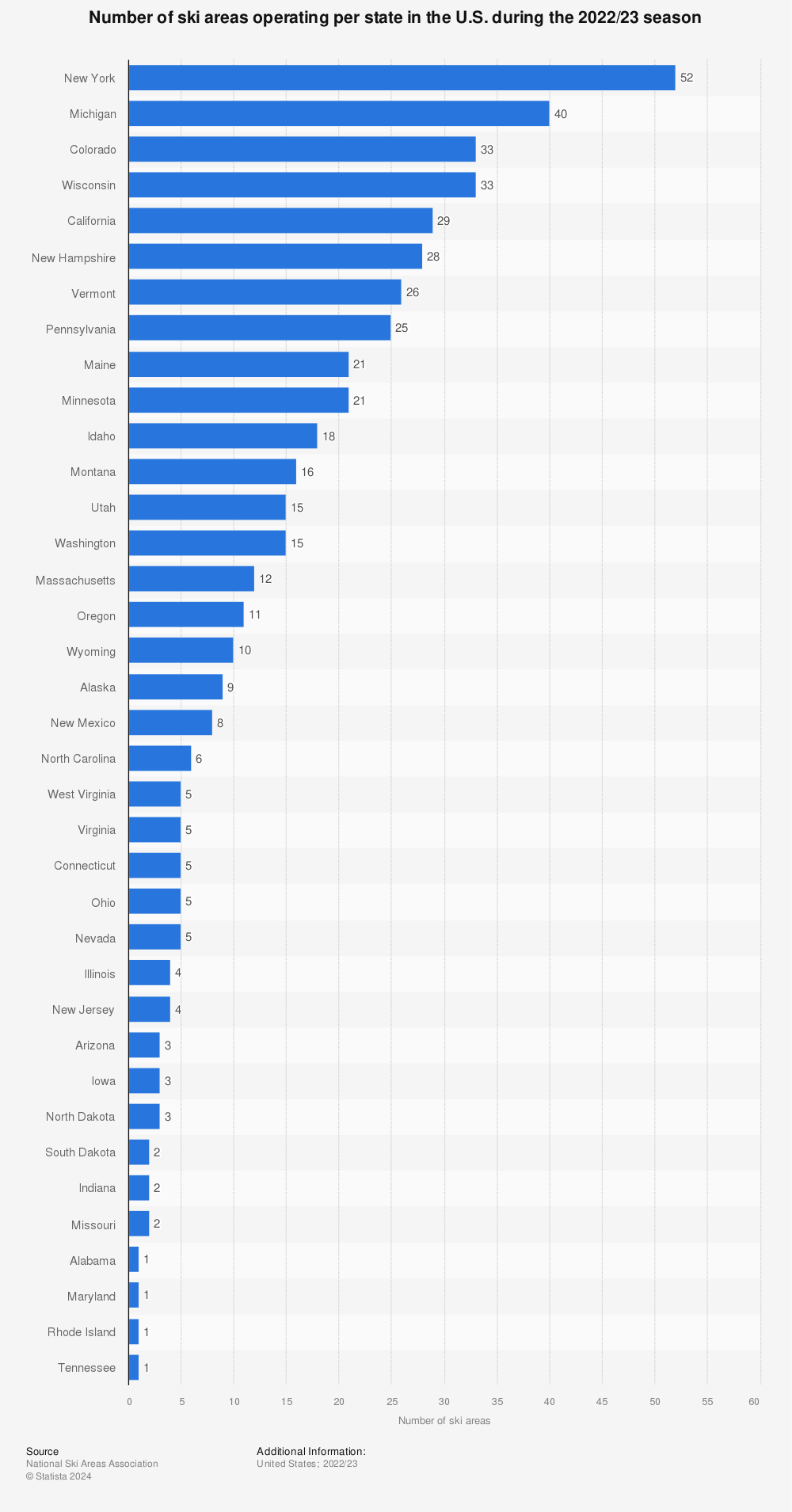
There are more than 450 active ski areas spread across the United States, and when you start ranking the states with most ski resorts, the answer will genuinely surprise you. New York — not Colorado, not Vermont — holds the top spot by raw count, with roughly 50 ski areas operating each season. That single fact changes how you should think about planning any ski trip in this country.

The divide between "most resorts" and "best skiing" is real, and it matters to your wallet just as much as it matters to your experience on the mountain. You need to understand both sides before you commit to a destination, and this guide lays it out directly without fluff.
We cover which states lead the count, what those numbers mean for your trip planning, how costs compare across state lines, and how to get the most from wherever you end up. If you're already thinking about logistics, our guide on planning a ski trip is a good companion read alongside this one.
Contents
States With Most Ski Resorts: The Numbers That Flip Your Assumptions
When most skiers picture the country's top ski destination, Colorado or Vermont comes to mind immediately. But the actual data on which states have the most ski resorts tells a completely different story. The National Ski Areas Association (NSAA) tracks operating ski areas across the country every season, and the rankings consistently catch even seasoned skiers off guard.
New York: Volume Over Prestige
New York sits at the top with around 50 ski areas in a typical season. Most are smaller, family-run mountains with limited vertical, serving the enormous population of skiers who need drivable, accessible terrain in the Northeast. Hunter Mountain and Whiteface Mountain are the headliners, but dozens of smaller areas fill out the landscape across the Catskills and Adirondacks.
- Vertical drops mostly range from 500 to 3,000 feet across the state
- Season lengths vary significantly depending on elevation and region
- Snowmaking is critical here — natural snowfall alone doesn't sustain the season
- The dominant model is day-trip skiing, not destination resort vacations
Michigan: The Underrated Contender
Michigan consistently ranks second or third nationally with over 40 ski areas, concentrated in the northern Lower Peninsula and the Upper Peninsula. The terrain skews toward beginners and intermediates, but the sheer number of options makes Michigan one of the most legitimately useful ski states in the country — one that gets nowhere near the attention it deserves.
- Boyne Mountain and Boyne Highlands anchor the premium end of the market
- Lake-effect snow from the Great Lakes delivers reliable natural snowfall each winter
- Vertical drops stay modest — under 500 feet at most areas
- Strong regional pass programs make skiing multiple mountains affordable and easy
Colorado: Quality Over Quantity
Colorado runs roughly 28 to 30 operating ski areas, which puts it behind both New York and Michigan in raw count. What it lacks in volume, it overcompensates for in scale — Vail, Breckenridge, and Telluride are among the largest ski areas in the world by acreage. If you want the best skiing in America, Colorado delivers it without question, but you're choosing quality over count when you go there.
How the Resort Count Shapes Your Entire Trip
The number of ski areas in a state directly affects your experience from start to finish. It changes how far you drive between mountains, how many options you have when one resort is iced out, and how much leverage you have when planning your itinerary across multiple days.
More Resorts Means More Flexibility
When a state has 40 or 50 ski areas, you can build a full week around multiple mountains without driving more than an hour between them. You can chase better conditions, skip crowded weekends at popular spots, and find terrain that actually matches your skill level. This optionality is the real hidden value of skiing in states with most ski resorts — it's not about any single mountain, it's about how much choice you have on any given day.
Smaller mountains in high-count states like New York and Michigan often have zero lift lines on weekday mornings — show up early and you can lap your favorite run for hours without waiting once.
Terrain Variety Changes Your Progression
More resorts naturally translates to more variety in terrain type, difficulty, and mountain character. You get everything from groomed beginner slopes at small local hills to serious expert terrain at the flagship destinations, all within the same state. If you're still building your skills, having multiple difficulty levels accessible within one state accelerates your development in a way that being locked into a single resort simply can't match.
What You'll Actually Spend Depending on the State
Skiing in New York costs a fundamentally different amount than skiing in Colorado, and the gap is wide enough to reshape your entire trip budget. You should understand the cost landscape by state before you book anything. Our guide on how much it costs to go skiing goes deeper on the full picture, but here's a clean snapshot of what each major state will run you.
Lift Ticket Price Ranges by State
| State | Approx. Ski Areas | Day Ticket (Budget) | Day Ticket (Premium) | Season Pass Range |
|---|---|---|---|---|
| New York | ~50 | $40–$65 | $100–$150 | $300–$800 |
| Michigan | ~40 | $35–$55 | $80–$120 | $250–$650 |
| Colorado | ~29 | $80–$130 | $200–$260+ | $700–$950+ |
| Vermont | ~20 | $60–$90 | $130–$185 | $500–$900 |
| Utah | ~15 | $70–$105 | $160–$210 | $600–$900 |
Hidden Costs That Catch People Off Guard
The lift ticket is never the full story. Rental gear, parking, resort lodging, and on-mountain food stack up quickly — especially at destination resorts in Colorado and Utah. Lock in tickets early through discount channels rather than buying at the window, and finding cheap lift tickets through grocery store programs or multi-day packages can save you $50 to $100 per person per day without sacrificing anything on the mountain.
- Rental gear runs $30–$80 per day depending on resort tier and equipment type
- On-mountain lunch averages $15–$25 at most resorts before drinks or dessert
- Parking at major Colorado resorts can cost $30–$50 per day during peak season
- Lodging near Colorado resorts can easily double or triple your total trip cost
The Four Major Ski States Compared Directly
You deserve a blunt, direct comparison of the four states that dominate any conversation about skiing in America. These are the ones that matter most to your decision, and here's exactly how they stack up on the factors that affect your actual experience on the mountain.
Vertical Drop, Snow Quality, and Season Length
New York and Michigan lead in resort count but trail significantly in vertical drop and snow quality compared to western states. Colorado and Utah have drier, lighter powder that experienced skiers strongly prefer — you pay for it in every conceivable way, but the skiing itself is genuinely better. Vermont sits in an interesting middle ground: real mountain terrain, solid resort infrastructure, and strong East Coast culture, but with ice and variable conditions that define northeastern skiing for better or worse.
- Best powder snow: Utah — consistently the lightest, driest snow in North America
- Most terrain by acreage: Colorado — biggest ski areas in the country by a wide margin
- Best value for budget skiers: Michigan — low prices, reliable snowfall, no pretension
- Most accessible from population centers: New York — within 3 hours of over 20 million people
- Longest average season: Colorado — many resorts run from November through April
Simple Moves That Get You More From Any Ski State
Knowing which states have the most ski resorts is the foundation, but knowing how to extract the most value from wherever you ski is what separates a great trip from an expensive disappointment. These moves apply regardless of which state you're heading to.
Know Before You Go
Research the specific resorts on your itinerary before you leave home, not the night before you ski. Check snow reports, study the terrain map for any mountain you haven't visited, and understand the regional quirks that affect conditions. Michigan's flat light, Colorado's altitude effects, and New York's icy afternoons after 1 p.m. can each catch you off guard if you haven't accounted for them in your plan.
- Sign up for email snow alerts from the resorts you're targeting
- Check webcams the morning of your ski day — surface conditions change fast
- Download trail maps before you're out of cell service range at the mountain
Timing Is Your Biggest Lever
Every major ski state has a peak window where conditions, snowpack, and weather align most reliably. In Colorado, late February through mid-March delivers the best combination of deep snow and warm afternoons. In New York and Michigan, January is typically your strongest bet before freeze-thaw cycles damage the surface. Avoid holiday weeks at any resort in any state — the mountain is identical, but the lift lines will cost you two hours of skiing every single day. Midweek trips in states with most ski resorts give you the full experience without the crowd tax.
Frequently Asked Questions
What state has the most ski resorts in the USA?
New York has the most ski areas by count, typically operating around 50 ski areas in a given season. Most are smaller community mountains rather than large destination resorts, but the total volume is unmatched by any other state in the country.
Does having more ski resorts mean better skiing?
Not at all. New York and Michigan lead in count but trail in terrain quality, vertical drop, and snow conditions compared to Colorado and Utah. More resorts means more flexibility and easier access for nearby populations, but the best skiing consistently comes from states with fewer, larger, higher-elevation mountains.
Is Colorado the best state for skiing even though it doesn't have the most resorts?
Colorado is the best state for serious skiing, full stop. It has the largest ski areas by acreage, the most consistent snowpack, and the highest average elevations in the country. The variety of terrain at a single Colorado resort often exceeds what entire states offer across all their combined ski areas.
Which state offers the best value for budget skiers?
Michigan is the clear winner for budget-conscious skiers. Lift tickets are cheaper than any other major ski state, lake-effect snow keeps conditions reliable, and the absence of destination resort pricing means you spend far less on food, lodging, and parking than you would in Colorado or Vermont.
The state with the most ski resorts isn't always the best place to ski — but knowing the difference between count and quality is what turns a wasted trip into one you'll talk about for years.
 |
 |
 |
 |

About Frank V. Persall
Frank Persall is a lifelong skier originally from the United Kingdom who has spent years pursuing the sport across premier resorts in Europe, North America, and beyond. His passion for skiing has taken him from the Alps to the Rocky Mountains, giving him a broad perspective on resort terrain, snow conditions, gear performance across price points, and the practical realities of ski travel with a family. At SnowGaper, he covers ski resort guides, gear reviews, and skiing technique and travel resources for enthusiasts of every level.
You can get FREE Gifts. Or latest free skiing books here.
Disable Ad block to reveal all the info. Once done, hit a button below
|
|
|
|