Austria is home to more than 400 ski areas — but the biggest ski resorts in Austria operate on an entirely different scale, with some interconnected networks spanning over 300 kilometers of groomed pistes across multiple mountain villages. If you're committing a week and real money to an alpine trip, the resort you pick matters enormously. Not every mega-resort suits every skier, and the one with the most kilometers on paper isn't always the best fit for your goals. This guide covers all 11 of Austria's largest ski areas with honest, direct assessments of terrain, difficulty, atmosphere, and value. For a broader look at world-class destinations, explore our full ski resorts directory.
Size is measured in piste kilometers — the combined length of all marked and groomed runs in a resort's network. That number is useful, but it's only one data point. Terrain distribution, vertical drop, lift capacity, snow reliability, and elevation all shape your actual experience just as much as raw kilometers. A resort with 280 km of mostly blue cruisers is a fundamentally different place than one with 180 km of high-altitude black runs.
According to Wikipedia's overview of skiing in Austria, Tyrol and Salzburg alone host the largest concentration of major ski areas in the country, with the Alps spanning all nine federal states. The 11 resorts in this guide represent the absolute top tier of that landscape and account for the vast majority of Austria's annual skier visits.
Contents
- Which of the Biggest Ski Resorts in Austria Suits Your Skill Level
- Matching Austria's Giant Resorts to Your Skiing Goals
- A Closer Look at All 11 of the Biggest Ski Resorts in Austria
- What People Get Wrong About Austria's Biggest Ski Resorts
- How to Plan, Pack, and Prep for an Austrian Ski Trip
- Frequently Asked Questions
- Final Thoughts
Which of the Biggest Ski Resorts in Austria Suits Your Skill Level
The Best Picks for Beginners and Intermediates
Not every massive resort caters equally to newer skiers. Some of the most famous names on this list are genuinely beginner-hostile — their beginner zones feel like an afterthought bolted onto a resort designed for experts. If you're still building confidence on the mountain, your shortlist should look like this:
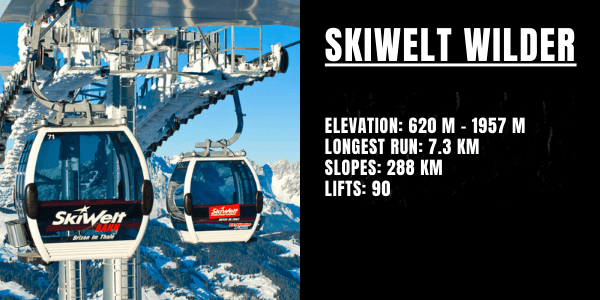
- SkiWelt Wilder Kaiser – Brixental (284 km) — The largest ski area in Tyrol has a terrain distribution that strongly favors blue and red runs. Wide, well-groomed motorways dominate the lower mountain, making it one of the best intermediate resorts in all of Europe.
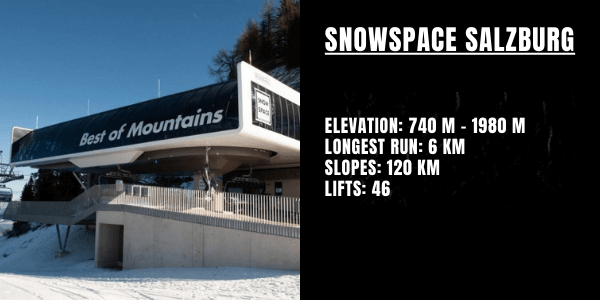
- Snow Space Salzburg (220 km) — Part of the massive Ski amadé network. The Wagrain base area is gentle and well-connected, with affordable multi-day passes and excellent snow grooming.
- Serfaus-Fiss-Ladis (198 km) — Consistently underrated. The underground funicular connecting Serfaus village to the slopes means you avoid the cold wait at a surface lift. Beginner infrastructure here is genuinely excellent.
- Hochkönig – Maria Alm/Dienten/Mühlbach (120 km) — Quieter than most resorts on this list, with a relaxed pace and wide open cruising terrain that's ideal for skiers who want room to breathe.
Before you hit any of these big resorts, dial in your technique. Even on blue runs, poor stance creates bad habits fast. Read our guide on the best tips for a perfect ski stance — it's one of the highest-return investments you can make before stepping on an Austrian lift.
Pro tip: As an intermediate skier, look for resorts where red runs make up at least 40% of total terrain — that's your progression sweet spot. Too many blues and you'll plateau; too many blacks and you'll spend most of the day hiking back up after a tumble.
Where Advanced and Expert Skiers Should Head
If you're chasing steeps, real vertical, and meaningful off-piste access, narrow your list to three resorts immediately:
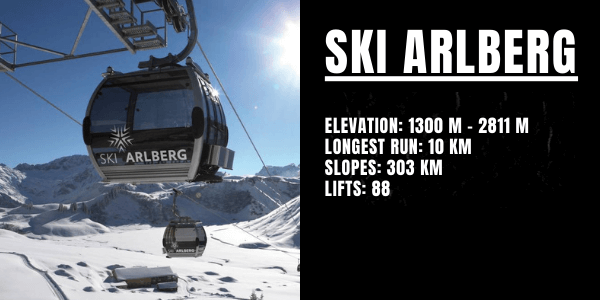
- Ski Arlberg (305 km) — The birthplace of alpine skiing technique. The Valluga at 2,811 m and the Schindlergrat couloirs are for serious skiers only. Off-piste access here is world-class.
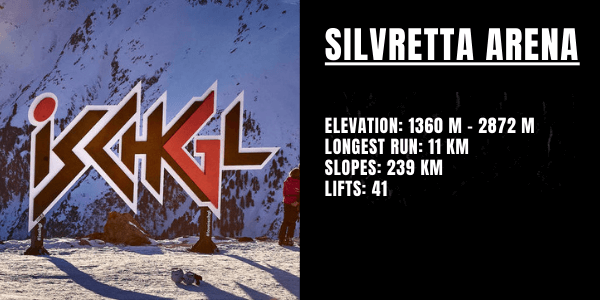
- Silvretta Arena Ischgl – Samnaun (239 km) — High altitude means reliable snow from November through May. The cross-border terrain into Switzerland adds genuine variety, and the off-piste potential is enormous for those willing to earn their lines.
- Sölden (148 km) — Glacier skiing on the Rettenbach and Tiefenbach glaciers means a top elevation of 3,340 m. The Schwarze Schneid black run is legitimately demanding. Sölden's season also extends further than almost any other resort on this list.
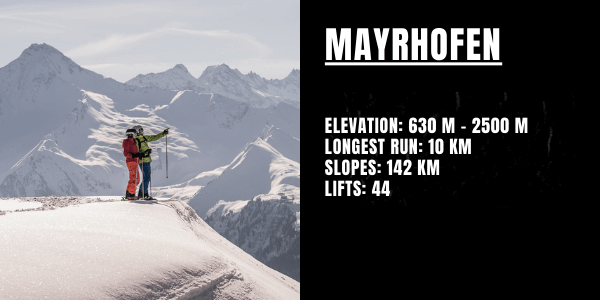
Mayrhofen also deserves a specific call-out: the Harakiri run carries a 78% gradient, making it the steepest groomed piste in all of Austria. It's not for the faint-hearted.
Matching Austria's Giant Resorts to Your Skiing Goals
Family Ski Trips
Traveling with kids changes your priorities completely. You want short lift queues, beginner zones close to accommodation, good childcare options, and terrain that doesn't terrify a 7-year-old on their second day. Your top three family choices from the biggest ski resorts in Austria:
- Serfaus-Fiss-Ladis — Dedicated children's ski areas in all three villages. The underground railway to the slopes is a genuine novelty kids love. Traffic-free village centers are a major safety bonus.
- SkiWelt Wilder Kaiser – Brixental — Multiple base villages mean you can choose accommodation that puts you directly on easy terrain. The sheer size means your family never runs out of options as skill levels improve throughout the week.
- Snow Space Salzburg — One of the most affordable big resorts in Austria. Family passes through Ski amadé offer genuine savings over individual daily lift tickets.
Freestyle, Off-Piste, and Racing
Match your goals to the right mountain:
- Freeride and off-piste: Ski Arlberg, Ischgl, Sölden. All three offer high-altitude snowpack, marked freeride routes, and access to untracked terrain with proper local guiding available.
- Park and freestyle: Mayrhofen (the Vans Penken Park is consistently rated one of Europe's best), Saalbach-Hinterglemm (the Nitro Snowpark caters well to intermediate freestylers).
- Race training and heritage: Kitzbühel — home of the Hahnenkamm downhill, one of the most demanding FIS World Cup courses on the calendar. Racing culture here is embedded in the mountain's identity.
Après-Ski and Social Skiing
Austria pioneered the concept of après-ski as a cultural institution, not just a bar at the bottom of a slope. If mountain time is only half the trip for you, these resorts deliver the rest:
- Ischgl — Opening and closing concerts attract major international acts. On-mountain bars start pumping mid-afternoon. This is the most internationally famous après scene in Austria.
- Saalbach-Hinterglemm — The circular ski circuit connects the whole resort. After skiing the ring, the village atmosphere is lively without the overcrowded chaos of Ischgl.
- Mayrhofen — Accessible from Innsbruck by train, which makes day-trips viable. The village packs enormous energy into a relatively small footprint.
A Closer Look at All 11 of the Biggest Ski Resorts in Austria
The Top Five by Total Piste Kilometers
Here's a full comparison of all 11 resorts ranked by piste kilometers, so you can make a quick side-by-side evaluation before diving into the detail:
| Resort | Pistes (km) | Lifts | Top Elevation | Best For |
|---|---|---|---|---|
| Ski Arlberg | 305 | 97 | 2,811 m | Experts, freeriders |
| SkiWelt Wilder Kaiser – Brixental | 284 | 90 | 1,957 m | Intermediates, families |
| Skicircus Saalbach Hinterglemm Leogang Fieberbrunn | 270 | 70 | 2,096 m | All levels, après-ski |
| Silvretta Arena Ischgl – Samnaun | 239 | 45 | 2,872 m | Advanced, high-altitude |
| Snow Space Salzburg | 220 | 59 | 2,185 m | Beginners, budget-conscious |
| Serfaus-Fiss-Ladis | 198 | 68 | 2,828 m | Families, intermediates |
| KitzSki Kitzbühel – Kirchberg | 188 | 57 | 2,000 m | Luxury, race heritage |
| Mayrhofen | 157 | 23 | 2,500 m | Experts, freestyle, après |
| Sölden | 148 | 34 | 3,340 m | Advanced, glacier skiing |
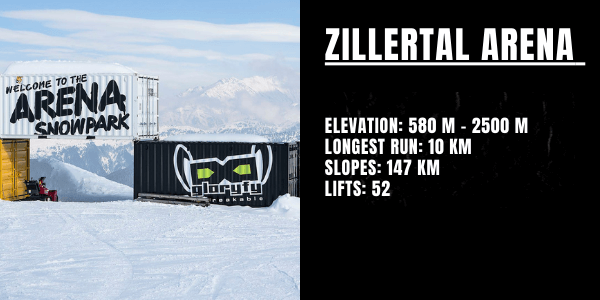
| Zillertal Arena | 143 | 49 | 2,500 m | Intermediates, value |
| Hochkönig | 120 | 34 | 2,000 m | Relaxed, beginners |
Ski Arlberg sits at the top with 305 km of pistes connecting St. Anton, Lech, Zürs, Stuben, and Warth-Schröcken. The 2016 merger of Lech-Zürs with St. Anton created one of Europe's largest single-pass ski areas. Difficult terrain dominates the upper mountain, but the variety across the linked villages is exceptional.
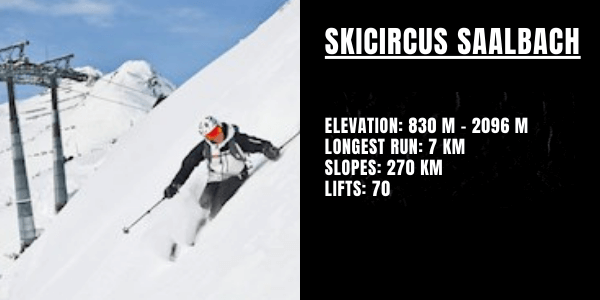
The Skicircus Saalbach Hinterglemm Leogang Fieberbrunn circuit is one of Austria's most satisfying ski-around resorts. You can ski a full loop connecting all four villages in a single day — a bucket-list experience for any intermediate-to-advanced skier.
Resorts 6 Through 11
These six resorts all clear 120 km of pistes and each has a specific identity worth knowing before you book:
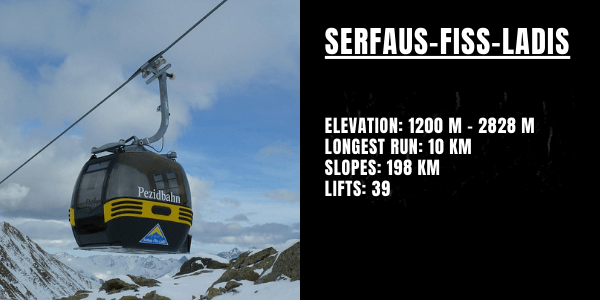
- Serfaus-Fiss-Ladis (198 km) — High plateau location at 1,427 m base elevation means reliable snow cover. Three distinct villages, each with its own character, connected by a single lift pass. The children's areas are genuinely world-class.
- KitzSki Kitzbühel – Kirchberg (188 km) — Kitzbühel's prestige is unmatched in Austria. The Hahnenkamm downhill race course is here. The town itself is beautiful and expensive. If you want race heritage and village charm, this is your resort.
- Mayrhofen (157 km) — Fewer lifts than most resorts of this size, but high-capacity gondolas handle the volume efficiently. The combination of the Harakiri black run, a world-class snow park, and an electric village atmosphere makes Mayrhofen a uniquely complete experience.
- Sölden (148 km) — Two glaciers, a 3,340 m peak, and a James Bond film location (Spectre was partly shot here). Sölden opens earlier and closes later than almost every other resort on this list.
- Zillertal Arena (143 km) — Connects Zell am Ziller, Gerlos, Königsleiten, and Wald-Königsleiten. The eastern Zillertal location means slightly less tourist saturation than the main valley resorts. Good value.
- Hochkönig (120 km) — Three villages — Maria Alm, Dienten, and Mühlbach — connected by a wide-ranging piste network. The most relaxed and crowd-free resort on this entire list. If you want space to ski without shoulder-to-shoulder lift queues, come here.



What People Get Wrong About Austria's Biggest Ski Resorts
Myth: Bigger Resorts Are Always More Crowded
This is the most common misconception people have about the biggest ski resorts in Austria, and it's simply not true. Size and crowd density are not the same thing.
- A resort with 300 km of pistes and 90 lifts can distribute its skier load far more efficiently than a compact resort with 60 km and 15 lifts.
- Ski Arlberg's vast network means you can ski for an entire week without repeating a single run, and on most days you'll find completely empty pistes away from the main corridors.
- Hochkönig and Zillertal Arena, despite their size, consistently rank among Austria's least-congested resorts by skier density per kilometer of piste.
The truth is that peak week crowd pressure — Christmas, New Year's, and mid-February school holidays — affects all Austrian resorts proportionally. Book outside these windows and even Ischgl becomes a manageable experience.
Myth: You Need Expert Skills to Enjoy These Resorts
Some beginners look at a resort like Ski Arlberg or Ischgl and assume they'll be out of their depth. That's wrong. Every resort on this list has a dedicated beginner progression area, and all of them have a significant percentage of blue and red terrain accessible to intermediate skiers.
- SkiWelt Wilder Kaiser has more blue-rated terrain than almost any comparable resort in the Alps.
- Snow Space Salzburg's Wagrain area is one of the most welcoming beginner mountains in Europe.
- Even Sölden — primarily known for its steep glaciers — has a well-developed lower mountain with gentle learning terrain near the base at Giggijoch.
Myth: Large Resorts Are Impersonal and Overwhelming
Big doesn't mean soulless. Several of the resorts on this list are built around historic alpine villages with genuine character. Kitzbühel's medieval town center, Lech's traditional Vorarlberg architecture, and St. Anton's skiing heritage all give these destinations a distinct identity that smaller resorts simply can't replicate. The scale of the mountain doesn't diminish the charm of the village. It just gives you more terrain to work with before you head back down for dinner.
Warning: Don't let resort size intimidate your planning. The bigger the resort, the more important it is to spend the first morning with a piste map rather than following crowds — you'll find far better skiing 10 minutes away from the main gondola.
How to Plan, Pack, and Prep for an Austrian Ski Trip
Essential Gear for Austrian Mountain Conditions
Austrian resorts at altitude expose you to rapid weather changes. Conditions can shift from blue-sky spring skiing to whiteout in under two hours. Your gear needs to handle both extremes.
- Layering system — Base layer, mid-layer fleece, and a waterproof hardshell or insulated ski jacket. A quality women's ski jacket or men's equivalent is non-negotiable at altitude.
- Helmet — Non-negotiable on Austrian resorts. High-speed groomed runs and heavy traffic make helmet use mandatory for anyone serious about safety.
- Goggles — Bring two lenses: a low-light lens for flat-light days and a mirrored lens for high-altitude glacier sun. Austrian spring days at 3,000 m produce intense UV exposure.
- Gloves or mittens — Waterproof gauntlet-style gloves for the upper mountain; lighter gloves for spring afternoons in the village.
- Ski socks — One good pair of merino wool ski socks per day. Do not reuse. Your feet will thank you.
- Sunscreen — SPF 50+ and lip balm. Glacier reflection doubles UV exposure at altitude. This is not optional.
If your equipment needs a tune before departure, a sharp edge and fresh wax make a noticeable difference on the hard-packed groomed runs that dominate Austrian piste surfaces. Check out our breakdown of the best ski and snowboard tuning kits to get your gear race-ready before you fly.
When to Book and What to Expect
Timing your Austrian ski trip correctly can mean the difference between perfect conditions and week-long frustration:
- Late January to mid-February — Best snow depth across most resorts. Cold nights refreeze the pistes overnight. Avoid school holiday weeks (varies by country) for crowd control.
- March — Spring conditions begin. Longer days, warmer afternoons, and often the most enjoyable skiing of the season. Snow quality softens after noon.
- December — Early season. Higher resorts like Sölden, Ischgl, and Ski Arlberg are reliable due to elevation. Lower resorts carry more risk of thin cover early in the month.
- April and May — Glacier skiing only. Sölden and Hintertux (outside this top-11 list) are your options for late-season turns.
Book accommodation at least three to four months ahead for peak January and February dates at the most popular resorts — Ischgl, St. Anton, and Kitzbühel fill quickly, and last-minute prices at these resorts are steep.
Frequently Asked Questions
What is the biggest ski resort in Austria by piste kilometers?
Ski Arlberg is the largest, with 305 km of marked pistes connecting St. Anton, Lech, Zürs, Stuben, and Warth-Schröcken under a single lift pass. It was significantly expanded when the Warth-Schröcken link opened in 2016, pushing it to the top of Austria's size rankings.
Are Austria's biggest ski resorts suitable for beginners?
Yes. Every resort on this list has dedicated beginner areas and a significant percentage of blue and red runs. SkiWelt Wilder Kaiser, Snow Space Salzburg, and Serfaus-Fiss-Ladis are particularly well-suited to newer skiers thanks to their terrain distribution and learner infrastructure.
Which Austrian ski resort is best for families with young children?
Serfaus-Fiss-Ladis is the top family choice. It has an underground funicular connecting the traffic-free village to the slopes, dedicated children's ski areas in all three villages, and terrain that scales well as kids improve through the week.
What's the best Austrian ski resort for off-piste and freeride skiing?
Ski Arlberg is the strongest choice for freeride, with the Valluga providing access to serious off-piste terrain and a strong local guiding culture. Ischgl and Sölden are close behind — all three offer high-altitude snowpack that holds up longer into the season than lower resorts.
When is the best time to ski Austria's biggest resorts?
Late January through mid-February delivers the most consistent snow depth and cold temperatures for firm piste surfaces. March offers longer days and spring conditions that many skiers prefer. Avoid Christmas week and mid-February school holidays if crowd levels matter to you.
Is Kitzbühel worth visiting even though it's not the biggest resort?
Absolutely. KitzSki offers 188 km of pistes, but the resort's value isn't just in its size — it's in its heritage, the Hahnenkamm race course, the medieval town center, and a prestige factor that makes it one of the most iconic ski destinations in the world. It's worth the visit regardless of where it sits in the size rankings.
How do Austria's biggest ski resorts compare to American mega-resorts like those in Lake Tahoe?
Austrian resorts generally offer more vertical-linked, multi-village terrain than most North American equivalents. If you've enjoyed the best ski resorts in Lake Tahoe, Austria's alpine infrastructure — with its high-speed gondola networks, interconnected villages, and consistent snowpack — represents a significant step up in both scale and on-mountain variety.
Do I need to speak German to ski in Austria's biggest resorts?
No. English is widely spoken at all major Austrian ski resorts, particularly in the international ones like Ischgl, St. Anton, and Kitzbühel. Lift staff, ski school instructors, and most hotel and restaurant workers in the top resorts are accustomed to English-speaking guests. Learning a few basic German phrases is appreciated but never required.
Final Thoughts
The biggest ski resorts in Austria offer some of the most rewarding skiing on the planet — but only if you choose the right one for your skill level and goals. Pick your resort, get your gear dialed in before you fly, book early to lock in the best accommodation near the lifts, and commit to at least five days on the mountain so you can actually explore what these incredible ski areas have to offer.
 |
 |
 |
 |

About Frank V. Persall
Frank Persall is a lifelong skier originally from the United Kingdom who has spent years pursuing the sport across premier resorts in Europe, North America, and beyond. His passion for skiing has taken him from the Alps to the Rocky Mountains, giving him a broad perspective on resort terrain, snow conditions, gear performance across price points, and the practical realities of ski travel with a family. At SnowGaper, he covers ski resort guides, gear reviews, and skiing technique and travel resources for enthusiasts of every level.
You can get FREE Gifts. Or latest free skiing books here.
Disable Ad block to reveal all the info. Once done, hit a button below
|
|
|
|