You're standing in the lodge after a brutal morning on the mountain, peeling off your boots, and your feet are so numb you can barely feel your toes. Sound familiar? Cold feet don't just ruin your day — they shorten it. You cut runs early, lose focus, and stop having fun. That's exactly why ski boot heaters have become one of the most talked-about gear upgrades in 2026.
The good news is the technology has come a long way. Today's heated insoles and foot warmers offer Bluetooth app control, all-day battery life, and slim enough profiles to fit inside a snug ski boot without sacrificing comfort. Whether you're an all-day ripper, a cold-footed beginner, or someone who hunts and works outdoors in freezing temps, there's a heated insole system built for you. For a broader look at ski gear, check out our full ski gear reviews hub.
We've tested and researched the top options on the market — from premium Hotronic and Therm-ic systems to budget-friendly app-controlled insoles — so you can make a confident decision. Below you'll find honest reviews, a practical buying guide, and answers to the questions most buyers have before pulling the trigger.
Contents
- Best Choices for 2026
- In-Depth Reviews
- HOTRONIC XLP 2C BT Custom — Best for Custom Insole Users
- HOTRONIC XLP 2C BT BDI Set Small — Best All-in-One Kit
- Therm-ic Heat Kit + C-Pack 1300 — Best for Long Battery Life
- Hotronic XLP C Heat Elements — Best Budget Upgrade
- NASOLZIK Heated Insole 5000mAh — Best Value APP Insole
- APP Heated Insoles 5000mAh — Best for Long Outdoor Days
- Therm-ic Powersock Set — Best Heated Sock System
- Buying Guide
- What People Ask
- Key Takeaways
Best Choices for 2026
- #PreviewProductRating
- Bestseller No. 1
 Rating:

- Bestseller No. 2
 Rating:
 - Bestseller No. 3
 Rating:
 - Bestseller No. 4
 Rating:
 - Bestseller No. 5
 Rating:
 - Bestseller No. 6
 Rating:
 - Bestseller No. 7
 Rating:
In-Depth Reviews
1. HOTRONIC Foot Warmer XLP 2C BT Custom — Best for Custom Insole Users
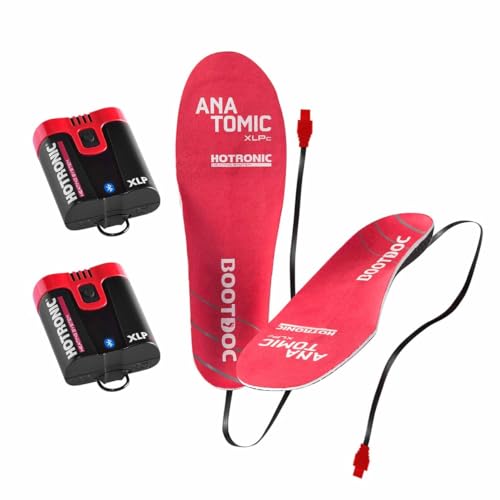
If you already have a pair of premium custom or aftermarket insoles that you love, you probably don't want to swap them out just to get heated feet. That's exactly the problem the HOTRONIC XLP 2C BT Custom kit solves. This package gives you the heating elements and Cambrelle (a soft textile material often used in boot liners) covers that sit on top of your existing insoles — so you keep your arch support, your custom fit, and add heat on top. The dual XLP 2C Bluetooth lithium-ion batteries deliver up to 24 hours of continuous heat, which is genuinely impressive for a foot warmer system.
Bluetooth control through the Hotronic Heat App is smooth and responsive. You don't have to fidget with buttons on the battery pack or pull your boots off mid-run. Just grab your phone, tap your preferred heat level, and get back to skiing. The batteries mount discreetly outside the boot, and the design keeps them shielded from the cold — which matters because battery performance drops significantly in freezing temperatures. Build quality feels premium throughout, which is what you'd expect from a brand that's been in the heated boot business for decades.
The one thing to understand going in: this is a heating element kit only — your own custom insoles are required and not included. If you don't already own a quality aftermarket insole, you'll want to look at one of the complete BDI bundle options instead. But if you do have your own insoles, this kit is one of the cleanest, most capable heated setups you can buy in 2026.
Pros:
- Up to 24 hours of battery life — outlasts most full ski days
- Bluetooth app control means no fumbling with your boots mid-slope
- Designed to work with your existing custom insoles
- Dual battery system keeps weight and bulk balanced between feet
Cons:
- Custom insoles not included — extra cost if you don't already own them
- Premium price point compared to budget alternatives
2. HOTRONIC Foot Warmer XLP 2C BT BDI Set Small — Best All-in-One Kit
If you want a complete plug-and-play heated insole system without sourcing extra components, the HOTRONIC XLP 2C BT BDI Set is the one to consider. This package comes with anatomically shaped heated insoles (the BDI insoles are Hotronic's own anatomical design), heating elements already integrated, plus the dual XLP 2C Bluetooth batteries. You open the box and you're ready to heat. For most skiers, that simplicity is worth a lot.
The four-level heating system gives you real flexibility. Three constant heat settings let you dial in comfort based on conditions — a cold bluebird day calls for something different than a warmer spring afternoon. The fourth mode is a Power Boost option that kicks heat up beyond the regular max setting when your toes are already too far gone and need emergency recovery. App control works seamlessly on both iOS and Android through the Hotronic Heat App, and the interface is intuitive enough that you won't need to read a manual. Battery life tops out at 24 hours on the low setting, though real-world use at mid or high levels will bring that number down — budget for a full day comfortably on the mid settings.
The small size designation matters here — check the size chart carefully before ordering. Hotronic's BDI insoles come in specific size ranges, and getting the wrong size will affect both heating coverage and comfort. If you pair this system with well-fitted ski boot bags to protect your setup during transport, the whole kit stays in great shape season after season.
Pros:
- Complete all-in-one system — nothing extra to buy
- Anatomical BDI insoles offer solid foot support alongside heat
- Power Boost mode for extra warmth when you need it most
- Bluetooth app control, no in-boot fumbling required
Cons:
- Size-specific — verify fit carefully before purchasing
- Higher price than budget-tier heated insole options
3. Therm-ic Set Heat Kit + C-Pack 1300 — Best for Long Battery Life
Therm-ic has been producing high-end thermal management gear for winter sports for years, and the Heat Kit + C-Pack 1300 bundle shows why the brand has such a loyal following. This set includes two ultra-thin heating elements, two Cambrelle top covers (the soft textile layer you feel underfoot), and a pair of C-Pack 1300 batteries. Everything is designed to work together, and the fit-and-finish reflects that — nothing feels like an afterthought.
What makes Therm-ic's heating elements stand out is how thin they are. You can integrate them into virtually any insole without creating noticeable bulk inside your boot. Ski boots already have a tight fit by design, so anything that adds volume is a problem — Therm-ic's approach avoids that issue entirely. The self-adhesive Cambrelle covers stick firmly to your insoles and trim to fit your foot size, giving you a smooth surface underfoot with no hot spots or edge pressure. Heat distribution is even and consistent across the full footbed.
The C-Pack 1300 batteries provide reliable all-day performance, and Therm-ic's battery packs have a good reputation for holding up in sustained cold. This is a system that experienced skiers and ski tourers trust for long days in demanding conditions. If you're also looking at keeping feet warm from every angle, pairing this with one of the options in our best heated ski socks guide can give you layered warmth on particularly brutal days. According to Wikipedia's overview of frostbite, the feet and toes are among the most vulnerable areas in cold exposure — a fact that makes quality heated insoles more than just a comfort upgrade.
Pros:
- Ultra-thin heating elements integrate into any insole type
- Cambrelle covers trim to size for a custom, comfortable fit
- Complete kit — elements, covers, and batteries all included
- Therm-ic's proven battery reliability in sustained cold conditions
Cons:
- No Bluetooth app control — heat adjustment requires accessing the battery pack
- C-Pack 1300 is on the smaller side; heavier users in extreme cold may want a higher-capacity battery
4. Hotronic XLP C Heat Elements 1 Pair — Best Budget Upgrade for Existing Hotronic Users
Already own a Hotronic XLP C battery pack? Then the Hotronic XLP C Heat Elements are exactly what you need if your current elements have worn out or if you want to set up a second pair of boots. This is a straightforward replacement and upgrade option — one pair of Hotronic's newest-generation heating elements with an updated size, shape, and anatomical design compared to older models.
The redesigned shape improves heat delivery across the footbed and follows the natural contour of your foot more closely than previous versions. Heat distribution is more even from heel to toe, which makes a noticeable difference on long cold days when the front of your foot tends to lose warmth first. The elements are specifically engineered to pair with Hotronic XLP C battery packs, so you cannot use these without compatible Hotronic batteries — they are sold separately and are not included here.
If you're already in the Hotronic ecosystem, this is a smart and cost-effective way to keep your system performing at its best without replacing the entire setup. For new buyers without existing Hotronic gear, look at the full bundle options (products #1 or #2 above) instead. These elements alone are the best deal for the loyal Hotronic user who wants the latest heating technology without starting from scratch.
Pros:
- Updated anatomical shape improves comfort and heat delivery vs. older elements
- Cost-effective replacement for existing Hotronic XLP C system owners
- Genuine Hotronic quality at a lower entry point
Cons:
- Requires Hotronic XLP C batteries — sold separately, not included
- Not a standalone product for first-time buyers
5. NASOLZIK Heated Insole 5000mAh — Best Value APP-Controlled Insole
Not every skier needs a $300 Hotronic system. If you're dipping your toes into heated insoles for the first time — or if you're buying for a teen who may outgrow the boots next season — the NASOLZIK Heated Insole offers solid app-controlled warmth at a fraction of the cost of premium systems. The 5000mAh battery is a highlight here. At low heat settings, you're looking at 8 to 9 hours of runtime. Even on high, you get 3 to 4 hours — enough to cover most morning or afternoon ski sessions without recharging.
Smartphone control through the DRCODC app gives you four temperature levels and a real-time battery readout on your phone. Setup requires scanning a QR code or searching for the app by name, and the heating elements cover the full length of the insole footbed rather than just the toe area — a meaningful difference in cold weather. The battery pack mounts to your calf with a Velcro strap and connects via a 65cm (about 25 inches) cable, which gives you enough slack to move naturally while skiing, hiking, or standing for long periods.
The trade-off at this price point is build quality and longevity. NASOLZIK is a newer brand without the track record of Hotronic or Therm-ic, and you should expect the system to last a few seasons rather than the decade or more you might get from the premium options. But as an entry point into heated insole technology, or as a secondary system for hunting or camping use, the value proposition here is hard to beat in 2026.
Pros:
- 5000mAh battery provides 8-9 hours on low — covers most ski days
- Full-foot heating coverage from heel to toe
- App control with real-time battery monitoring
- Significantly lower price than premium brands
Cons:
- Newer brand with limited long-term durability track record
- Calf-mounted battery may feel awkward for some skiers
- App interface less polished than Hotronic's dedicated app
6. APP Heated Insoles with 5000mAh Battery — Best for Extended Outdoor Days
When you need warmth that lasts all day and then some, this 5000mAh app-controlled heated insole system makes a strong case. The headline spec is an 11-hour runtime on lower heat settings — that's enough to cover a full day of skiing, hunting, or outdoor work without a midday charge. Heat-up time is fast at around 20 seconds, so you're not waiting for warmth when you step outside on a cold morning. Four heating modes are selectable both through the companion app and directly on the battery pack, giving you backup control if you don't want to pull out your phone.
The five-layer fabric construction is a thoughtful detail. The insole's layered design provides not just heating but also cushioning and structural support underfoot — useful in rigid ski boots where the boot itself provides most of the structure but the liner and insole still affect comfort over a long day. The washable design is a practical advantage: remove the battery, toss the insole in the wash, and it's ready for next use. Charging is flexible too — compatible with power banks, car chargers, and standard USB ports, which makes topping up easy on a road trip to the mountain.
The automatic shut-off feature protects battery life and prevents overheating, and multiple charging options mean you're rarely caught without a way to power up. This is a well-rounded system for buyers who want all-day warmth, app convenience, and a washable insole without the premium price of Hotronic or Therm-ic. Combine this with quality heated ski gloves for full extremity protection on the coldest days.
Pros:
- Up to 11 hours of runtime — genuinely full-day coverage
- Heats up in 20 seconds — no long warm-up wait
- Washable design makes maintenance simple
- Dual control — app and on-battery buttons
- Multi-source charging (power bank, car, USB)
Cons:
- Battery pack is external and must be mounted to the leg
- Brand less established than Hotronic or Therm-ic
7. Therm-ic Powersock Set Heat Uni + S-Pack 700B — Best Heated Sock System
Not everyone wants an insole system. If you're looking for heated warmth at the sock level rather than inside your insole, the Therm-ic Powersock is the option to know about. This is a fundamentally different approach — the heating elements are woven directly into the sock fabric rather than placed as a separate layer under your foot. The result is a more integrated, natural feel that some skiers strongly prefer, especially those who are sensitive to pressure points or who don't want any added bulk between their foot and insole.
The synthetic fabric blend is warm, breathable, and moisture-wicking — all important properties in a ski environment where sweat management matters as much as warmth. The S-Pack 700B batteries are compact and attach discreetly, keeping the profile low. Heat is distributed through the sock from the heating element sewn into the toe and midfoot areas, which provides warmth exactly where cold tends to hit first. The system is marketed as suitable for the coldest conditions, and Therm-ic's reliability in those conditions is well-documented among serious winter sports enthusiasts.
The trade-off compared to insole systems is that heated socks are less common and carry a different set of sizing and fit considerations. You need to make sure the sock thickness is compatible with your boot's volume, and the heating elements inside the fabric can't be repositioned the way a separate insole can. But for buyers who want a clean, integrated heated solution that starts at the sock layer, Therm-ic's Powersock system is the benchmark product in this category. If you want to explore what else goes into a complete cold-weather ski setup, our guide to the best heated ski vests and jackets for men covers the upper-body side of the equation.
Pros:
- Heating integrated directly into the sock — no separate insole required
- Moisture-wicking, breathable synthetic fabric
- Clean, low-profile setup with compact S-Pack batteries
- Therm-ic's proven reliability in extreme cold
Cons:
- S-Pack 700B has lower battery capacity than some insole systems — may not cover ultra-long days
- Sock sizing adds another fit variable to manage
- Heating elements can't be adjusted or repositioned like insoles can

Buying Guide: How to Choose the Best Ski Boot Heater
With options ranging from $50 to several hundred dollars, buying a ski boot heater requires knowing what actually matters for your situation. Here's what to focus on.
Battery Life and Heat Settings
Battery life is the spec that matters most in practice. A heated insole that dies after three hours is frustrating when you're on the mountain at noon. For full ski days, look for systems that offer at least 6 to 8 hours on a mid-level heat setting — not just the maximum rated hours on the lowest setting, which is rarely how you'll actually use it. Premium systems like Hotronic and Therm-ic typically deliver more consistent battery performance in cold temperatures because their battery chemistry is optimized for low-temperature environments. Budget insoles may list high capacity numbers but suffer more capacity loss as temperatures drop.
More heat settings give you more flexibility. Three or four levels — including a boost mode — means you can stretch battery life on warmer days and crank up heat when temperatures really drop. On a cold bluebird day at altitude, you'll want that top setting. On a warmer spring day, the low setting saves battery and keeps your feet comfortable without overheating.
Insole vs. Sock Systems
Most heated foot warmers for skiing are insole-based — a heating element sits inside your boot, on top of or integrated into your existing insole. Sock-based systems like the Therm-ic Powersock embed heating into the sock itself. Each approach has real trade-offs. Insole systems are more versatile and often easier to transfer between pairs of boots. Sock systems feel more natural and eliminate any concern about added volume inside a snug boot, but they introduce sock fit as an additional variable to manage. If your boots are already tight, a heated sock with slightly more volume than a standard ski sock could be problematic.
The key question for insole systems is whether you want a complete kit (insoles, elements, and batteries bundled together) or a modular approach (buying elements separately to attach to your own preferred insoles). Modular systems like the HOTRONIC Custom kit work best for people who already have expensive custom orthotics (arch supports) or premium aftermarket insoles they don't want to replace.
Bluetooth App Control vs. Manual Buttons
App-controlled systems have become the standard in 2026. Being able to adjust heat levels from your phone without touching your boots or battery pack is a genuine quality-of-life improvement on the mountain. Bluetooth connectivity is particularly valuable when your battery pack is tucked away and hard to reach. That said, manual button controls on the battery pack are useful as a backup — or if you simply prefer not to pull out your phone. Look for systems that offer both options if control flexibility matters to you.
Battery connection design also matters. Systems where the battery pack clips to the outside of the boot cuff or mounts to the calf keep it accessible. Some older-style systems tuck batteries inside the boot shaft, which protects them from cold but makes heat adjustment very difficult mid-run.
Fit, Volume, and Boot Compatibility
This is the most overlooked consideration for new buyers. Ski boots are fitted tightly by design — any added thickness from a heated insole system directly affects how your boot fits. Even a 2-3mm difference can change the feel of your boot significantly, especially if your boots are already fitted close. Before buying, check the element thickness spec if it's listed, and read reviews from people using similar boot styles (race-fit boots are especially unforgiving). If you're buying a complete insole kit, verify that the insole dimensions match your boot size — a too-large insole will bunch and curl, which reduces comfort and can create hot spots. For more on optimizing your boot setup overall, the guides on best ski boot dryers are worth reading to protect your full investment.
What People Ask
How long do ski boot heater batteries last on a full charge?
It depends on the system and the heat setting you use. Premium systems like the Hotronic XLP 2C series advertise up to 24 hours on the lowest setting, while budget 5000mAh insoles typically deliver 8 to 11 hours on low. In practice, skiing on mid or high settings brings those numbers down considerably — plan for 4 to 8 hours of real-world use on mid-level heat for most systems. Cold temperatures also reduce battery capacity, so the warmer it is, the closer you'll get to the advertised figures.
Can I use heated insoles in any ski boot?
Most heated insoles are designed to fit inside any ski boot, but volume (thickness) is a real concern. If your boots are already fitted snugly, adding a heated insole system may make them uncomfortably tight. Ultra-thin systems like Therm-ic's heating elements integrate into your existing insole without significant volume increase. Complete insole kits replace your current insole entirely, so the net volume change is small. Always check the insole dimensions against your boot shell size, and if in doubt, bring the insole system to your boot shop for a fitting check.
Are heated ski insoles worth the money?
For people who suffer from chronically cold feet on the mountain, yes — they're absolutely worth it. Cold feet cut ski days short, reduce enjoyment, and can become a safety issue in extreme conditions. A quality heated insole system pays for itself quickly in full days on the mountain instead of warming up in the lodge. Budget options in 2026 start well under $100, so the entry point is low enough that most skiers can try heated insoles without a major commitment.
Do heated insoles work for snowboarding boots too?
Yes. Most heated insole systems on this list are designed for ski boots but work equally well in snowboard boots, hiking boots, hunting boots, and winter work boots. The key is fitting the insole to the interior dimensions of the boot. Snowboard boots tend to have more volume than ski boots, so fit is usually less of a concern. The Hotronic and NASOLZIK systems in particular market their products explicitly for skiing, snowboarding, hunting, and hiking use.
How do I charge heated ski insoles?
Charging methods vary by system. Premium Hotronic and Therm-ic systems use proprietary chargers designed for their specific battery packs. Budget systems with 5000mAh batteries typically charge via USB-C, which makes them compatible with power banks, car chargers, laptops, and standard wall adapters. USB-C charging is a practical advantage for travel — one cable handles your insoles, phone, and other devices. Always check that the batteries are fully charged the night before a ski day rather than relying on a quick top-up in the car.
What is the difference between a heated insole system and a heated sock?
A heated insole system places heating elements directly under your foot inside the boot, powered by an external battery pack. A heated sock like the Therm-ic Powersock weaves heating elements into the sock fabric itself. Insole systems tend to be more versatile and easier to transfer between boots, while heated socks feel more natural and avoid adding any volume inside the boot. The choice comes down to personal preference, boot fit, and whether you're willing to manage the additional variable of heated sock sizing. Both approaches are effective when properly fitted.
Buy on Walmart
- HOTRONIC Foot Warmer XLP 2C BT Custom (pr) (01-0100-400) — Walmart Link
- HOTRONIC Foot Warmer XLP 2C BT BDI Set Small (01-0100-414-2) — Walmart Link
- Therm-ic Set Heat Kit + C-Pack 1300-1 Pair of Ultra-Thin Hea — Walmart Link
- Hotronic XLP C Heat Elements 1 Pair — Walmart Link
- NASOLZIK Heated Insole for Men Women - APP 5000mAh Battery R — Walmart Link
- Heated Insoles for Men & Women with APP Control, 5000mAh Hea — Walmart Link
- Therm-ic Powersock Set Heat Uni + S-Pack 700B (16885) — Walmart Link
Buy on eBay
- HOTRONIC Foot Warmer XLP 2C BT Custom (pr) (01-0100-400) — eBay Link
- HOTRONIC Foot Warmer XLP 2C BT BDI Set Small (01-0100-414-2) — eBay Link
- Therm-ic Set Heat Kit + C-Pack 1300-1 Pair of Ultra-Thin Hea — eBay Link
- Hotronic XLP C Heat Elements 1 Pair — eBay Link
- NASOLZIK Heated Insole for Men Women - APP 5000mAh Battery R — eBay Link
- Heated Insoles for Men & Women with APP Control, 5000mAh Hea — eBay Link
- Therm-ic Powersock Set Heat Uni + S-Pack 700B (16885) — eBay Link
Key Takeaways
- The HOTRONIC XLP 2C BT series (both the Custom kit and the BDI all-in-one bundle) represents the gold standard in ski boot heating for 2026 — up to 24 hours of battery life and seamless Bluetooth app control make these the top choice for serious skiers.
- The Therm-ic Heat Kit + C-Pack 1300 is the best option if you want ultra-thin heating elements that integrate into any insole without adding noticeable bulk — ideal for tight-fitting ski boots.
- Budget buyers will find strong value in the NASOLZIK and 5000mAh APP Heated Insoles, both offering full-foot coverage, app control, and multi-hour runtimes at a fraction of premium prices.
- If you prefer warmth at the sock layer rather than insole level, the Therm-ic Powersock + S-Pack 700B is the most refined heated sock system available — clean integration with no added bulk inside the boot.
 |
 |
 |
 |

About Frank V. Persall
Frank Persall is a lifelong skier originally from the United Kingdom who has spent years pursuing the sport across premier resorts in Europe, North America, and beyond. His passion for skiing has taken him from the Alps to the Rocky Mountains, giving him a broad perspective on resort terrain, snow conditions, gear performance across price points, and the practical realities of ski travel with a family. At SnowGaper, he covers ski resort guides, gear reviews, and skiing technique and travel resources for enthusiasts of every level.
You can get FREE Gifts. Or latest free skiing books here.
Disable Ad block to reveal all the info. Once done, hit a button below
|
|
|
|