Ski Gear ›
Best Heated Ski Vest and Jacket for Women: Reviews, Buying Guide & FAQs 2026
by Frank V. Persall
Which heated ski vest or jacket actually keeps you warm when the mountain bites back — and which ones are just overpriced hand warmers sewn into fabric? If you've spent even one run shivering through your base layers while your ski buddy glides by in toasty comfort, you already know the answer matters. The good news: the Venustas Women's Heated Down Jacket is our top overall pick for 2026, and it earns that spot with 90% down insulation, five carbon fiber heating zones, and up to 10 hours of runtime. But it's not right for everyone — which is exactly why we reviewed all five of the best options on the market today.
Heated outerwear has come a long way. Early battery-heated gear was bulky, short-lived, and barely worth the hassle. Today's best heated jackets and vests for women are lightweight, washable, and smart enough to let you dial in your warmth zone by zone. Whether you're a hardcore alpine skier pushing through powder at altitude or a weekend warrior who just hates being cold on the chairlift, there's a heated layer that fits your needs perfectly. You can pair any of these picks with the right heated ski socks and heated ski gloves to build a complete warm-layer system from head to toe.
In this guide, we break down five top-rated options — a slim heated vest, two softshell heated jackets, a fleece-lined heated jacket, and a premium heated down jacket — with honest pros, cons, and clear verdicts on who each one is for. We also cover exactly what to look for in ski gear so you buy once and buy right. Let's get into it.

Contents
Our Top Picks for 2026
- #PreviewProductRating
- Bestseller No. 1
 Rating:

- Bestseller No. 2
 Rating:
 - Bestseller No. 3
 Rating:
 - Bestseller No. 4
 Rating:
 - Bestseller No. 5
 Rating:
Our Hands-On Reviews
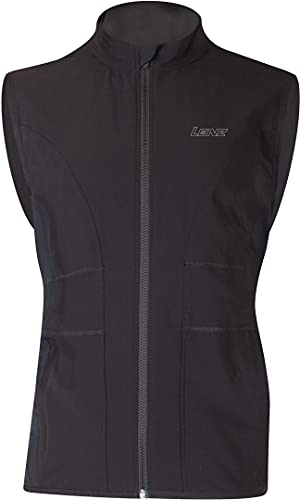
1. Lenz Heat Vest 1.0 Women — Best Heated Vest for Layering
If you want heat without bulk, the Lenz Heat Vest 1.0 is the closest thing to a magic trick in the heated outerwear world. This slim, breathable vest fits so snugly under your ski jacket that nobody would know it's there — and that's exactly the point. Lenz builds it with two heating elements focused on the kidney and back area, which is where your body loses core heat fastest during a cold run. The 4-way stretch construction and highly elastic seams mean it moves with you, not against you, whether you're carving hard turns or hiking a ridgeline.
The tradeoff is clear upfront: the battery pack is sold separately. That's a Lenz design choice — they sell their lithium pack batteries independently so you can scale up to a higher-capacity pack or share one pack between multiple Lenz garments. If you already own a Lenz battery system, this vest is a no-brainer add-on. If you're starting from scratch, budget for the battery. The heating coverage is also more focused than a full jacket — you're warming your core, not your arms — so this works best as a mid-layer under a windproof ski shell rather than a standalone outer piece.
That said, for skiers who run hot on the outside but cold through the core, this vest delivers exactly the targeted warmth you need without overheating your arms. It's ideal for high-output skiers, ski touring enthusiasts, or anyone who values freedom of movement above everything else. If you're building a complete warm system, check out our roundup of the essential ski resort outfit to see how this vest slots into a full layering strategy.
Pros:
- Extremely slim profile — fits under any ski jacket without adding bulk
- 4-way stretch fabric offers full freedom of movement on the mountain
- Targeted kidney and back heating hits the most heat-critical core zones
- Compatible with the full Lenz battery ecosystem for scalable power
Cons:
- Battery pack sold separately — adds significant cost to the total setup
- No arm heating — not ideal as a standalone outer layer in extreme cold
- Older 2017 model design; fewer heat zones than newer competitors
2. ORORO Women's 5 Heat Zones Softshell Heated Jacket — Best Everyday Heated Jacket
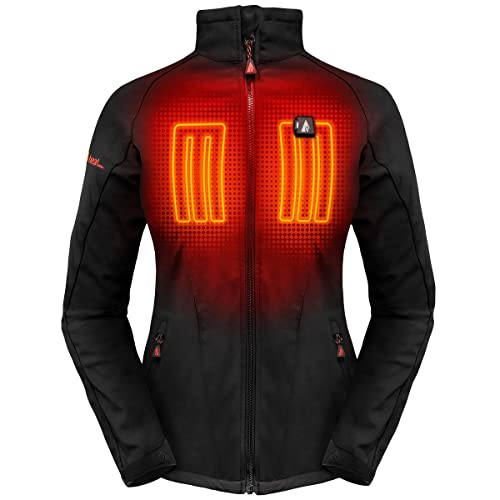
ORORO is one of the most trusted names in heated apparel, and their 5 Heat Zones Softshell Jacket is a strong reason why. Five strategically placed heating zones — the hand pockets, collar, and left and right back — mean warmth wraps around your core and hands simultaneously, delivering up to 8 hours of runtime on a single USB-C charge. That's a full day on the mountain without hunting for a power source. The USB-C charging is a genuine upgrade over older micro-USB systems; it's faster to charge and the cable is the same one you're probably already carrying for your phone.
The jacket itself is built with a PFC-free water-resistant shell — PFC (perfluorocarbon) is the chemical coating used in many water repellents that's been flagged as environmentally harmful, so ORORO's decision to go PFC-free is worth noting — paired with a soft fleece lining that adds real warmth without stuffing the jacket full of insulation. The result is a jacket that's light enough to pack into a bag but warm enough to handle cold chairlift rides with ease. One clever design touch: the power button is hidden inside the left-hand pocket, so the jacket's exterior stays completely clean and streamlined. No weird buttons breaking up the look.
Where this jacket shines most is versatility. It transitions naturally from ski days to après-ski dinners to weekend errands. It's not a burly, insulated shell meant to sit on top of a full ski kit — think of it as the heated softshell you wear under your main ski jacket or on its own during milder days. If you also want warmth on the men's side of the gear rack, take a look at the best heated ski vests and jackets for men for parallel options.
Pros:
- Five heating zones including collar and hand pockets for full-body warmth
- USB-C rechargeable battery — up to 8 hours runtime per charge
- PFC-free water-resistant shell is both eco-conscious and practical
- Hidden power button keeps the design sleek and uncluttered
- Soft fleece lining adds warmth without bulk
Cons:
- Not a standalone ski shell — works best as a mid-layer or mild-day outer
- Softshell construction offers less wind protection than a hardshell ski jacket
3. ActionHeat 5V Women's Battery Heated Jacket — Best Budget Pick
The ActionHeat 5V Heated Jacket is the pick for skiers who want real heat technology without paying premium prices. Built from a 94% polyester and 6% spandex blend, it's got enough stretch to move freely and enough structure to hold its shape after season after season of use. The breathable fleece lining is water-resistant — not waterproof, but it handles light snow and sleet without soaking through — which makes it a solid mid-layer option for resort skiing days that aren't full-on blizzards.
The tri-zone heating system places three ultra-fine heating panels along the chest and upper back. ActionHeat calls their technology ActionWave — essentially an infrared heat-reflective layer that helps trap and distribute warmth rather than just radiating it outward and losing it to cold air. The 5V signal technology means you're powering this with a standard 5V USB power bank (the kind you might already own), which keeps the cost of entry low and makes it easy to swap in a fresh battery pack mid-day. That's a practical advantage other heated jackets with proprietary batteries can't match.
The machine-washable design is a practical win that's easy to overlook until you're staring at a jacket crusted with chairlift grime and wondering how to clean it. ActionHeat built washing compatibility in from the start — disconnect the battery, zip the pocket, toss it in the wash. Simple. If budget is your primary concern and you need a heated jacket that actually works on the hill, this is the one to buy.
Pros:
- Compatible with standard 5V USB power banks — no proprietary battery required
- Machine washable — easy care that holds up season after season
- ActionWave infrared technology distributes heat more efficiently
- Chest and upper back heating panels hit the highest-priority core zones
Cons:
- Only three heat zones — fewer coverage areas than top-tier competitors
- Water-resistant, not waterproof — not suited for heavy snowfall or wet powder days
- Battery bank sold separately adds to the true total cost
4. Gerbing 7V Women's Thermite Fleece Jacket — Best for Maximum Heat
Gerbing has been making heated gear for decades, and the 7V Thermite Fleece Jacket is proof that experience shows. This jacket runs on a 7V system — higher voltage than the 5V USB standard — which translates directly into more heat output. The proprietary Microwire technology weaves ultra-thin heating elements through the fabric at the chest, back, and neck, and the result is heat that can reach up to 135°F on the highest setting. That's not a number you see from most heated jackets. For skiers who truly run cold or who ski in genuinely brutal conditions — think groomed runs at high elevation in January — the Gerbing Thermite delivers warmth that feels immediate and substantial.
The 3,400 mAh rechargeable lithium-ion battery is lightweight and included with the jacket, which takes the guesswork out of sourcing compatible power. Runtime reaches up to 8 hours at lower temperature settings, and four indicator lights let you know exactly which heat level you're running. Four discrete settings give you fine-tuned control: blast the heat during a frigid chair ride, dial it back to preserve battery while you're skinning or working hard on a steep groomer. According to heated clothing research, core body heating through electric garments has been shown to be significantly more energy-efficient than peripheral heating — and Gerbing's design philosophy leans into exactly that.
The Thermite is styled as a fleece jacket, which means it looks at home on and off the mountain. The fit is tailored for women and the styling is clean enough for après-ski or a casual day in town. This isn't a jacket you hide under another shell — it's designed to be the star of your outfit. If maximum heat output and Gerbing's proven durability are your priorities, this is your jacket.
Pros:
- 7V system delivers the highest heat output of any jacket in this roundup
- Microwire technology covers chest, back, and neck for broad warming coverage
- Up to 135°F on highest setting — serious warmth for serious cold
- Included 3,400 mAh battery — no separate purchase required
- Four heat levels with indicator lights for precise temperature control
Cons:
- Proprietary 7V battery system means you can't use standard USB power banks
- Fleece outer layer offers less wind and moisture resistance than a shell jacket
5. Venustas Women's Heated Down Jacket — Best Overall
The Venustas Women's Heated Down Jacket is the best overall pick in this roundup, and it earns that title the right way — by doing more things better than any other option here. Start with the insulation: 90% white duck down with 10% feathers. That's premium puffer jacket territory, and it means this jacket is genuinely warm even before you switch the heat on. The electric heating system adds five carbon fiber heating panels — chest, pockets, and mid-back — on top of already excellent passive insulation. Most heated jackets make you choose between heat technology and real insulation. Venustas gives you both.
The upgraded Silver Mylar thermal lining (a reflective material that bounces heat back toward your body instead of letting it escape outward) means the jacket heats up in seconds and holds that warmth even in sub-zero conditions. Three heat levels — High, Medium, and Low — let you dial in your comfort zone precisely. At Low, the battery stretches to a full 10 hours of runtime. That's a full ski day, beginning to end, on a single charge. The Venustas 36Wh battery pack is ultra-compact, and it includes a USB port so you can charge your phone or other devices while you're wearing it — genuinely useful on all-day mountain adventures.
The detachable hood is a practical bonus that gives you flexibility the other jackets here don't offer. Wear it with the hood for bluebird powder days when the wind picks up at the summit, remove it when you want a cleaner silhouette for après-ski. The jacket is fully capable as a standalone outer layer in most resort conditions — it's the complete package. Whether you're lapping runs at a busy resort or exploring backcountry terrain, this jacket is built to keep up. If you're thinking about a full heated gear setup for the 2026 season, pair this jacket with a quality pair of heated ski gloves for head-to-toe warmth management.
Pros:
- 90% white duck down insulation — genuinely warm even without the heating active
- Five carbon fiber heating zones cover chest, pockets, and mid-back comprehensively
- Up to 10 hours runtime at Low — a full ski day on one charge
- Silver Mylar thermal lining heats in seconds and retains heat in sub-zero temps
- USB port on the battery lets you charge devices on the go
- Detachable hood adds versatility for different conditions and styles
Cons:
- Premium price point — the most expensive pick in this roundup
- Down insulation loses some performance when wet; not ideal for heavy wet snow
What to Look For When Buying a Heated Ski Vest or Jacket for Women
Not all heated outerwear is built the same, and buying the wrong one means spending money on something that either can't keep up with your skiing style or sits in your closet collecting dust. Here's what actually matters when you're choosing a heated ski vest or jacket in 2026.
Heating Zones and Coverage
The number and placement of heating zones is the single biggest factor in how warm you'll actually feel. More heating zones means more coverage, but placement matters just as much as quantity. Look for jackets that heat the core — chest, back, and kidney areas — since warming your core is far more effective than warming your arms alone. Bonus points for collar and pocket heating, which warms blood flowing to your extremities. A vest with two well-placed core zones can outperform a jacket with four poorly placed ones. Consider how cold you typically run: if you're always freezing, prioritize more zones and higher voltage output.
Battery System and Runtime
Pay close attention to two things: the battery voltage and the runtime. Higher-voltage systems (like Gerbing's 7V) produce more heat but often run on proprietary batteries that cost more to replace. Lower-voltage 5V systems can use standard USB power banks — more flexible and cheaper to source, but with a lower heat ceiling. Runtime at your typical heat setting is what matters most for an all-day ski trip. Advertised maximums are almost always measured at the lowest heat setting; if you ski cold and tend to run on High all day, expect to cut those maximums roughly in half. Aim for at least 8 hours of quoted runtime if you want genuine all-day coverage.
Insulation and Weather Resistance
A heated jacket that soaks through in the first hour of a powder day isn't doing you any favors. Check whether the outer shell is water-resistant (handles light snow and sleet) or waterproof (handles prolonged heavy snow). For resort skiing, water-resistant softshell is usually sufficient — especially as a mid-layer under a hardshell. If you're using the jacket as your only outer layer, look for something with at least a DWR (Durable Water Repellent) coating. Down insulation runs warmer per gram than synthetic but loses its loft and insulating power when wet, so synthetic fill or a treated down is the smarter choice if you ski in wet conditions frequently.
Fit, Mobility, and Layering
A heated jacket that restricts your movement is a liability on the mountain. Look for stretch panels, articulated elbows, and a cut that's slim enough to layer under a ski shell without bunching. If you plan to wear it as a standalone outer jacket, make sure it's long enough to cover your waist when you're in a ski stance (bent knees, forward lean). Vests specifically excel as base-layer additions because their slim profile adds almost no bulk under an existing jacket. Check the sizing charts carefully — heated jackets often run slightly slim because of the internal wiring, and you don't want to size down and find yourself restricted when you're trying to carve a hard turn.
Common Questions
Are heated ski jackets worth it for women who ski casually?
Yes, even for casual skiers. If cold weather shortens your ski days or makes the chairlift miserable, a heated jacket pays for itself quickly in terms of enjoyment and time on the mountain. You don't need a top-of-the-line model — the ActionHeat 5V is an affordable starting point that delivers real, usable warmth without breaking the budget. The key is matching the jacket to your actual skiing frequency and conditions rather than buying more than you need.
Can I wash a heated ski jacket in a washing machine?
It depends on the specific jacket. The ActionHeat 5V is explicitly machine washable — just disconnect the battery pack, secure any loose cables, and wash on a gentle cycle. Other jackets like the Venustas and Gerbing models should be checked against their individual care instructions; many require hand washing or spot cleaning. Never machine wash any heated jacket with the battery still connected, and always air dry rather than using a dryer, as heat can damage the internal wiring over time.
How many heat zones do I actually need in a heated ski jacket?
For most recreational skiers, three to five heating zones covering the chest and back is sufficient. The core is where your body loses heat most critically, so a jacket that heats those areas well outperforms one with more zones placed ineffectively. If you run extremely cold or ski in very harsh conditions — think high-altitude resorts or groomed runs in January in the northern Rockies — five zones with collar and pocket heating gives you a noticeable additional comfort advantage. The Venustas five-zone system is the benchmark here.
What's the difference between a heated vest and a heated jacket for skiing?
A heated vest heats only your core (torso) and is designed to be worn as a mid-layer under your existing ski jacket. It adds targeted warmth without bulk and gives you full arm mobility — ideal for high-output skiing or ski touring. A heated jacket is a full outerwear piece that heats your core and often your collar and pockets; it can function as a standalone outer layer on mild days or as a mid-layer on extreme cold days. The choice comes down to how you ski: if you already have a great ski shell, a vest might be all you need. If you want one versatile outer piece, go with a jacket.
How long does the battery last on a heated ski jacket?
Battery runtime varies significantly by heat setting and jacket model. At the lowest heat setting, top models like the Venustas deliver up to 10 hours and the Gerbing and ORORO reach 8 hours — enough for a full day of skiing. At the highest heat setting, you can realistically expect 2 to 4 hours depending on the model and ambient temperature (colder weather draws more battery power). For all-day coverage at higher heat levels, carry a portable USB power bank if your jacket supports 5V charging, or invest in a spare proprietary battery for systems that require one.
Can I wear a heated ski jacket in the rain or heavy wet snow?
Most heated ski jackets in this roundup are water-resistant rather than waterproof — they'll handle light snow, sleet, and brief exposure to moisture, but prolonged heavy snowfall or rain will eventually soak through a softshell. If your local mountain gets a lot of wet snow or you ski in variable spring conditions, layer the heated jacket under a waterproof hardshell rather than relying on it as your sole weather barrier. Down-insulated heated jackets like the Venustas are particularly important to keep dry, as wet down loses its insulating ability. A waterproof shell over your heated layer is the safest combination for unpredictable mountain weather.
Buy on Walmart
- Lenz Heat Vest 1.0 Women, Black, Large (12), Vest Only, Batt — Walmart Link
- ORORO Women's 5 Heat Zones Softshell Heated Jacket, Fleece L — Walmart Link
- ActionHeat 5V Women's Battery Heated Jacket, 3 Zone Heat, Ma — Walmart Link
- Gerbing 7V Women’s Thermite Fleece Jacket – Heated Battery J — Walmart Link
- Venustas Women’s Heated Down Jacket with Battery & Detachabl — Walmart Link
Buy on eBay
- Lenz Heat Vest 1.0 Women, Black, Large (12), Vest Only, Batt — eBay Link
- ORORO Women's 5 Heat Zones Softshell Heated Jacket, Fleece L — eBay Link
- ActionHeat 5V Women's Battery Heated Jacket, 3 Zone Heat, Ma — eBay Link
- Gerbing 7V Women’s Thermite Fleece Jacket – Heated Battery J — eBay Link
- Venustas Women’s Heated Down Jacket with Battery & Detachabl — eBay Link
Key Takeaways
- The Venustas Women's Heated Down Jacket is the best overall pick for 2026 — it combines 90% duck down passive insulation with five active heating zones and up to 10 hours of battery life, making it the most complete heated jacket in this roundup.
- If you already own a great ski shell and just need core warmth underneath it, the Lenz Heat Vest 1.0 is the sleekest, most packable solution — virtually invisible under your jacket and built for full freedom of movement.
- The Gerbing 7V Thermite delivers the highest raw heat output of any jacket tested here, reaching up to 135°F, making it the right call for skiers who genuinely run cold in extreme mountain conditions.
- For budget-conscious skiers who want real heating performance without a premium price tag, the ActionHeat 5V works with standard USB power banks and is fully machine washable — a practical, no-fuss entry point into heated outerwear.
 |
 |
 |
 |

About Frank V. Persall
Frank Persall is a lifelong skier originally from the United Kingdom who has spent years pursuing the sport across premier resorts in Europe, North America, and beyond. His passion for skiing has taken him from the Alps to the Rocky Mountains, giving him a broad perspective on resort terrain, snow conditions, gear performance across price points, and the practical realities of ski travel with a family. At SnowGaper, he covers ski resort guides, gear reviews, and skiing technique and travel resources for enthusiasts of every level.
You can get FREE Gifts. Or latest free skiing books here.
Disable Ad block to reveal all the info. Once done, hit a button below
|
|
|
|