What's the single best pair of headphones to take on the mountain in 2026? If you've spent any time searching, you already know the answer isn't obvious — helmet speakers, bone conduction, over-ear models, and intercom systems all compete for the same pocket in your ski bag. After testing and researching everything from budget drop-ins to premium wireless rigs, the Origem Ski Helmet Speakers stand out as the top pick for most skiers, delivering Bluetooth 6.0 stability, a 40-hour total battery reserve, and a glove-friendly button layout that actually works at -15°C.
But the right choice really depends on how you ski. Are you carving groomers solo, ripping backcountry lines where situational awareness is critical, or coordinating with a group of four? Each scenario calls for a different piece of gear. Helmet speaker drop-ins work brilliantly if your helmet has an audio-ready liner — and most modern helmets do. Bone conduction headphones are the smart pick when you need to hear the mountain around you. And if you're riding lifts and logging runs for hours on end, battery capacity starts to matter as much as sound quality. If you're also building out your full ski kit, check out our guide to the best ski gear and our roundup of the best ski goggles for complete coverage.
This guide covers seven of the best headphones for skiing in 2026. You'll get in-depth reviews for each product, a focused buying guide that cuts through the noise, and honest answers to the questions we see most often. Whether you're shopping for your first helmet audio setup or upgrading from a years-old pair, you'll know exactly what to buy by the end.

Contents
- Top Rated Picks of 2026
- In-Depth Reviews
- Origem Ski Helmet Speakers — Best Drop-In Helmet Speakers
- Outdoor Tech Chips XV — Best Universal Fit
- Outdoor Tech Chips Ultra 2.0 — Best Battery Life
- Sena Snowtalk 2 — Best for Group Communication
- Shokz OpenRun (Aeropex) — Best Bone Conduction Budget Pick
- Shokz OpenRun Pro — Best Bone Conduction Overall
- Skullcandy Aviator 900 ANC — Best Over-Ear Option
- What to Look For When Buying
- Common Questions
- Key Takeaways
Top Rated Picks of 2026
- #PreviewProductRating
- Bestseller No. 1
 Rating:

- Bestseller No. 2
 Rating:
 - Bestseller No. 3
 Rating:
 - Bestseller No. 4
 Rating:
 - Bestseller No. 5
 Rating:
 - Bestseller No. 6
 Rating:
 - Bestseller No. 7
 Rating:
In-Depth Reviews
1. Origem Ski Helmet Speakers — Best Drop-In Helmet Speakers
The Origem Ski Helmet Speakers arrive as one of the freshest entries in the helmet audio category for 2026, and they make a strong case for the top spot right out of the box. Bluetooth 6.0 is the headline upgrade here — faster pairing, a more stable connection within ten meters, and noticeably fewer audio dropouts compared to older 4.2 or 5.0 units. If you've ever had your music cut out mid-run, you understand why that matters. The HDR Audio tuning adds genuine depth to the sound signature, moving well beyond the thin, tinny output you'd expect from drop-in speakers.
Battery performance is where these speakers really separate themselves from the competition. You get a full 10 hours of listening per charge — competitive with any dedicated sport headphone — but the charging case adds a total reserve of more than 40 hours. That's a full week of skiing without touching a wall outlet. The 15-minute quick charge delivering three hours of playback is a practical lifesaver on the lodge break before an afternoon session. The glove-friendly button system deserves its own mention: the buttons are large, logically placed, and respond without needing to remove your gloves or fumble around inside your helmet. Volume, track control, calls, and Siri all work exactly as advertised with a thick ski glove on. One important note — these are designed specifically for ski and snowboard helmets, not motorcycle helmets. Check your helmet's audio-ready liner before ordering.
Build quality feels solid for the price point. The speaker drivers are tuned to deliver clear mids and a warm low end without overwhelming detail in the high frequency range, which is appropriate for outdoor use where wind noise is always a factor. If you're primarily a helmet-speaker user and want the most current wireless standard available, Origem is your go-to pick in 2026.
Pros:
- Bluetooth 6.0 delivers the most stable wireless connection in this category
- 40+ hour total battery reserve with quick-charge capability
- Glove-friendly button layout that genuinely works in cold conditions
- HDR Audio produces rich, detailed sound for drop-in speakers
Cons:
- Only compatible with ski/snowboard helmets — not motorcycle or cycling
- No app-based EQ customization
2. Outdoor Tech Chips XV — Best Universal Fit
Outdoor Tech has been in the helmet audio game longer than almost anyone, and the Chips XV is their latest evolution — and it's a meaningful one. The most important upgrade is the TruTone Technology paired with the TruTone App, which gives you full EQ customization across music, calls, and podcasts. You can dial in presets, save them, and switch on the fly. That level of audio personalization is rare in the helmet speaker world and puts Chips XV squarely ahead of most drop-in competitors when it comes to sound quality flexibility.
The physical design has been refined as well. Outdoor Tech borrowed the sleeker, tapered silhouette from their Ultra line for Chips XV, which translates to a better fit in today's lower-profile helmets. This matters more than you'd think — older, thicker speaker pods can create uncomfortable pressure points during long days on the hill, particularly if you're wearing a tighter-fitting race helmet or a mid-profile all-mountain lid. The improved comfort and slimmer form factor make this an especially appealing pick for full-day resort skiing. Controls are accessible without removing gloves, covering music, calls, and voice assistant activation without needing your phone out of your pocket.
Chips XV targets the rider who wants more than just wireless audio — you want audio that's tuned to you personally. It's also genuinely universal, designed to drop into virtually any ski, snowboard, bike, or powersports helmet with a speaker pocket. If you're the type who switches between multiple helmets across different activities, the universal compatibility makes this a smart long-term investment.
Pros:
- TruTone app enables full per-preset EQ customization
- Universal helmet compatibility across snow, bike, and moto
- Slimmer profile provides better fit in modern low-profile helmets
- Hands-free controls work reliably with gloves on
Cons:
- Requires app download to unlock the best EQ features
- Battery specs not as clearly published as competitors
3. Outdoor Tech Chips Ultra 2.0 — Best Battery Life
If you're planning a week-long ski trip and don't want to worry about charging your speakers every night, the Chips Ultra 2.0 is the answer. Each charge delivers 12–13 hours of playback, which is already exceptional, but the included premium charging case stores three full charges — giving you up to 36 hours of total listening time before you need to find an outlet. For context, that's roughly two full ski days in a single charge cycle. The USB-C charging case is compact enough to slip into a jacket pocket or small bag, making it genuinely packable for travel.
Beyond battery, the Chips Ultra 2.0 delivers true wireless stereo performance via Outdoor Tech's patented drop-in design. The touch button controls are responsive and intuitive — track control, volume, call handling, and voice assistant activation all work without removing your gloves. The built-in microphone handles calls and voice commands clearly enough for slope-side conversations. Sound quality is strong across the board, with the stereo imaging adding noticeable width compared to mono speaker setups.
This model sits above the Chips XV in Outdoor Tech's lineup in terms of raw battery capacity, but it trades the TruTone app EQ customization for sheer endurance. If your priority is maximum uptime over audio tinkering, the Ultra 2.0 wins the category. Pair it with quality ski mittens that have a thumb port for easier phone access, and you've got a genuinely smooth slope-side audio setup.
Pros:
- 36 hours total battery life with the charging case — best in class
- USB-C charging case is compact and travel-friendly
- True wireless stereo with excellent imaging
- Patented drop-in design fits most helmet audio liners
Cons:
- No app-based EQ like the Chips XV
- Slightly pricier than budget alternatives
4. Sena Snowtalk 2 — Best for Group Communication
Most helmet speakers let you listen to music. The Sena Snowtalk 2 does something the others simply can't — it connects you in real-time with up to three other riders via Bluetooth Intercom. Sena built their name on motorcycle communication systems, and the Snowtalk 2 brings that pedigree directly to the mountain. The system fits into the ear pad pockets of most snow helmets without modification, and the included microphone connects for full duplex voice communication between group members. If you're coordinating runs, checking on kids, or staying in sync with a ski patrol partner, there's no cleaner solution than this.
The intercom range is strong across a typical ski run, though heavy tree cover can affect signal. You can still pair to your phone for music and calls — the intercom function doesn't lock out your other audio sources. The integration is intuitive enough that you can switch between group chat and personal audio without stopping or removing gloves. The hardware itself is low-profile and integrates cleanly into the ear pocket, not adding noticeable bulk to the helmet fit.
One honest caveat: if you're a solo skier who just wants music on the hill, the Snowtalk 2 is probably more unit than you need. The intercom feature drives the price up relative to pure-audio competitors. But for families skiing together, guide services, instructors, or any group that genuinely communicates on the mountain, it's an irreplaceable tool in 2026 and worth every dollar.
Pros:
- Bluetooth Intercom supports up to four connected riders simultaneously
- Fits neatly into most snow helmet ear pad pockets
- Dual-function — music/calls plus group intercom
- Microphone quality is optimized for slope-side voice communication
Cons:
- Overkill (and over-budget) for solo riders who just want audio
- Intercom range can drop in dense terrain
5. Shokz OpenRun (Aeropex) — Best Bone Conduction Budget Pick
The Shokz OpenRun — originally released as the Aftershokz Aeropex before Shokz rebranded their entire lineup — is the bone conduction headphone that turned the category mainstream. Bone conduction technology transmits sound vibrations through your cheekbones directly to your inner ear, bypassing the ear canal entirely. That means your ears stay completely open to the sounds around you — avalanche warnings, ski patrol commands, other riders, and the terrain feedback your ears naturally provide. For backcountry skiers and safety-conscious resort riders, this is a fundamental advantage no helmet speaker can replicate.
The OpenRun wraps behind the head with a lightweight titanium frame and sits just in front of the ear on the cheekbone. It's sweat resistant, fully compatible with helmets and goggles — no ear cups to conflict with your setup — and weighs almost nothing. The fit is secure enough that you won't feel it shifting during aggressive runs or deep powder turns. Battery life runs approximately six hours per charge, which covers most full ski days. The built-in microphone handles calls adequately, though wind noise is a known limitation in exposed terrain at speed.
Sound quality here is inherently different from traditional headphones — the bass response is lighter, and maximum volume won't compete with a noise-isolating earbud. But that's exactly the point. You're not trying to block out the world on the mountain; you're staying connected to it while enjoying your audio. At its price point, the OpenRun is the most accessible entry into bone conduction skiing audio, and it delivers on the core promise.
Pros:
- Open-ear design keeps you fully aware of mountain sounds and hazards
- Lightweight and helmet/goggle compatible with no interference
- Sweat resistant — handles temperature swings well
- Most affordable way to get into quality bone conduction audio
Cons:
- Lighter bass response compared to traditional headphones
- Wind noise affects call quality at speed
6. Shokz OpenRun Pro — Best Bone Conduction Overall
If the standard OpenRun feels like it leaves something on the table in terms of bass and overall sound fullness, the OpenRun Pro is Shokz's answer. This model uses their 9th-generation bone conduction technology with TurboPitch engineering, which noticeably deepens the bass response compared to any previous bone conduction product Shokz has released. The result is a fuller, richer sound that's still entirely open-ear — you can genuinely enjoy a bass-forward playlist without feeling like you're missing the low end. That's a meaningful step forward for a category historically associated with thin audio.
The fit has been upgraded as well. The OpenRun Pro includes a Shokz headband, and the ergonomic form wraps more securely around the head, making it a reliable companion during hard charging runs where your head is moving dynamically. The open-ear safety advantage remains fully intact — your ears are clear to hear the mountain in every direction. Sweat resistance is strong, and the device handles cold temperature operation without issues, which is a genuine concern for any electronics exposed to alpine conditions.
Battery life steps up from the standard OpenRun to approximately 10 hours per charge, giving you a full day on the mountain without anxiety about your audio dying on the last run. The built-in microphone performs acceptably for calls, and the controls are straightforward enough to operate without glove removal. For the rider who wants the best bone conduction sound available — without sacrificing the situational awareness that makes the format valuable in the first place — the OpenRun Pro is the clear choice. Rounding out your ski day setup with quality accessories like the right men's ski jacket makes the full experience significantly more comfortable.
Pros:
- 9th-gen bone conduction with TurboPitch delivers the best bass in the category
- 10-hour battery covers a full ski day comfortably
- Secure fit with included headband — stays put in aggressive terrain
- Full open-ear awareness without audio compromise
Cons:
- Premium price over the standard OpenRun
- Still can't match the volume ceiling of a traditional enclosed headphone
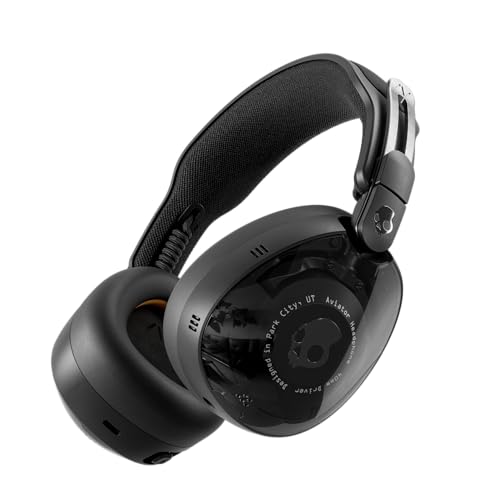
7. Skullcandy Aviator 900 ANC — Best Over-Ear Option
The Skullcandy Aviator 900 ANC is the outlier on this list — it's not a helmet speaker or a bone conduction unit. It's a full-size, premium over-ear wireless headphone, and it earns a place here because the lodge experience matters just as much as the on-slope audio. With up to 60 hours of battery life, adaptive ANC, and THX Spatial Audio with head tracking, the Aviator 900 is the headphone you reach for when you're off the mountain and want world-class audio on the ride home, in the hotel, or relaxing après-ski.
The six-microphone adaptive noise cancelling system automatically adjusts to your environment, which is genuinely useful in a noisy gondola or a crowded lodge. THX Spatial Audio with head tracking creates an immersive 360-degree soundstage that makes movies, podcasts, and music feel significantly more cinematic than standard stereo playback. Rapid Charge delivers four hours of playback from a 10-minute charge — a feature that earns its value when you're rushing out of the hotel room.
Be clear-eyed about what this is: the Aviator 900 doesn't belong on your head while you're skiing. The over-ear form factor isn't compatible with ski helmets, and ANC creates safety risks in slope environments by cutting off ambient sound. This is a complementary piece of kit for the full ski trip experience — bringing world-class audio to every non-skiing moment. If you spend significant time traveling to and from resorts and want your off-slope audio to match your on-slope investment, the Aviator 900 justifies its place in your bag. For a full breakdown of what to look for in ski accessories, our ski gear reviews section covers the complete category.
Pros:
- 60-hour battery life with ANC off — outstanding for travel
- THX Spatial Audio with head tracking produces genuinely immersive sound
- 6-mic adaptive ANC automatically adjusts to surrounding noise
- Rapid Charge gives 4 hours from a 10-minute charge
Cons:
- Not compatible with ski helmets — lodge and travel use only
- ANC creates situational awareness hazards on the slope
What to Look For When Buying Headphones for Skiing
Helmet Compatibility and Fit Type
This is the first question to answer before anything else. Most modern ski and snowboard helmets include audio-ready liner pockets designed to accept drop-in speaker pods like the Origine, Chips XV, and Chips Ultra 2.0. If your helmet has those pockets, you have the cleanest and most convenient audio solution available — speakers that integrate completely with the helmet, require no additional hardware on your head, and don't interfere with goggles or ear coverage.
If your helmet doesn't have speaker pockets, or if you prefer not to be locked into a single helmet for your audio, bone conduction headphones like the Shokz OpenRun or OpenRun Pro are your best alternative. They wrap behind the head and sit forward of the ear, requiring zero helmet pocket compatibility. The critical thing to verify is that whatever you choose doesn't create pressure points against your helmet padding — discomfort on a long ski day compounds fast. Communication-focused riders should look at the Sena Snowtalk 2, which occupies the same ear-pocket space as standard drop-ins but adds intercom capability.
Battery Life and Cold-Weather Performance
Cold temperatures reduce lithium battery capacity — typically by 20–30% compared to rated performance at room temperature. A speaker rated for 10 hours indoors may deliver 7–8 hours at -10°C. That's still enough for most ski days, but it's a real variable to account for when comparing specs. The Chips Ultra 2.0 with its 36-hour total reserve and the Origem with its 40-hour total reserve both build in enough buffer that cold-weather degradation doesn't become a practical problem.
Quick-charge features are disproportionately valuable for skiing. The 15-minute quick charge on the Origem's case, and Skullcandy's 10-minute Rapid Charge on the Aviator 900, give you back hours of playback during a normal lunch break without any planning anxiety. If you're on a multi-day trip and want zero friction, prioritize products with large total battery reserves — charging cases are the practical solution, not high single-charge ratings alone.
Safety and Situational Awareness
This is the consideration that distinguishes skiing audio from gym or commute audio. The mountain is an active, dynamic environment. You need to hear other skiers approaching from behind, patrol announcements, route-finding audio cues, and your own gear feedback. Any headphone setup that fully isolates your ears from the environment introduces real safety risk.
Helmet drop-in speakers — unlike in-ear earbuds — leave your ear canal open, providing a good balance between music enjoyment and ambient awareness. Bone conduction headphones like the Shokz models go further, leaving your ears completely unobstructed. In-ear earbuds with noise isolation are the most problematic format for skiing and are best avoided on the slope entirely. Over-ear headphones with active noise cancellation, like the Skullcandy Aviator 900, should stay in the lodge.
Controls, Glove Compatibility, and Durability
A headphone that requires precise fingertip control becomes nearly useless when you're wearing ski gloves. Look for products that explicitly advertise glove-friendly controls — large, tactile buttons with clear action differentiation between play/pause, volume, and call answering. The Origem's large control button and the Chips Ultra 2.0's outer touch buttons are both designed with this in mind. Avoid any product whose controls require a companion app to function for basic operations in the field.
Durability means two things in this context: weather resistance and impact tolerance. Drop-in speakers live inside your helmet and are protected from snow and moisture, but they should still carry some IPX or waterproof rating. Bone conduction headphones are exposed to the elements and need genuine sweat and moisture resistance to survive a full season. Check IP ratings carefully — IP55 or higher is the standard to look for in any active outdoor audio device.
Common Questions
Are helmet speakers safe to use while skiing?
Yes — with important caveats. Drop-in helmet speakers and bone conduction headphones are the safest formats for slope use because they leave your ear canal open, allowing you to hear other skiers, patrol alerts, and environmental sounds. In-ear earbuds with noise isolation and over-ear ANC headphones significantly reduce situational awareness and are not recommended while actively skiing. Keep volume at a level where you can still hear someone speaking to you from alongside.
Do ski helmet speakers work with any helmet?
Most drop-in speakers require an audio-ready helmet liner — a pre-cut pocket in the ear pad area sized for speaker pods. The majority of helmets released in the last five years include these pockets, but older or budget helmets may not. Check your helmet's product listing for "audio-ready" or "speaker compatible" in the features. Bone conduction headphones like the Shokz OpenRun and Sena Snowtalk 2 work with any helmet without requiring a specific liner.
What is bone conduction and why use it for skiing?
Bone conduction technology transmits audio vibrations through the cheekbone directly to the cochlea, bypassing the outer ear canal entirely. The result is that your ears remain physically open to ambient sound while you simultaneously hear your audio. For skiing, this means you keep full awareness of the mountain environment — other skiers, terrain, patrol, and gear feedback — while still enjoying music or taking calls. It's the format most recommended for backcountry riders and anyone prioritizing safety over audio isolation.
How do I keep my headphones from dying in the cold?
Cold weather reduces lithium battery output by roughly 20–30% compared to room-temperature ratings. To maximize performance: store your speakers in an inside jacket pocket between runs to keep them warm, use products with charging cases so you can top up during lunch breaks, and choose units with large total battery reserves. The Origem's 40-hour total reserve and the Chips Ultra 2.0's 36-hour reserve both provide practical cold-weather buffer. Quick-charge features are also valuable — even a 15-minute charge during lunch can recover several hours of playback.
Can I use the Sena Snowtalk 2 for music as well as group communication?
Yes. The Sena Snowtalk 2 supports both Bluetooth music/call streaming from your phone and the dedicated Bluetooth Intercom function for group communication. You can switch between music and intercom conversations without stopping or removing your helmet. The intercom connects up to four riders simultaneously, and the included microphone handles voice communication clearly for slope-side distances. The music experience is solid, though audio-focused users who don't need intercom will get better sound quality per dollar from the Origem or Chips Ultra 2.0.
What's the difference between the Shokz OpenRun and OpenRun Pro for skiing?
Both models share the open-ear bone conduction design and the core safety advantage of unobstructed hearing. The OpenRun Pro adds Shokz's 9th-generation bone conduction technology with TurboPitch, which meaningfully improves bass response and overall audio richness. Battery life also increases from approximately 6 hours on the standard OpenRun to 10 hours on the Pro. The Pro also comes with a headband for a more secure fit during dynamic activity. If your budget allows, the OpenRun Pro delivers a noticeably better audio experience while preserving everything that makes the format valuable for skiing.
Buy on Walmart
- Origem Ski Helmet Speakers, True Wireless Stereo Snowboard H — Walmart Link
- Outdoor Tech - Chips XV Bluetooth Helmet Speakers - Universa — Walmart Link
- Outdoor Tech - Chips Ultra 2.0 Headphones - True-Wireless Bl — Walmart Link
- Sena Snowtalk 2 - Universal Bluetooth Headset for Snow Helme — Walmart Link
- Aftershokz Aeropex (Rebranded as Shokz OpenRun) - Open-Ear B — Walmart Link
- SHOKZ OpenRun Pro-Bone Conduction Headphones, Open-Ear Bluet — Walmart Link
- Skullcandy Aviator 900 ANC Wireless Over-Ear Bluetooth Headp — Walmart Link
Buy on eBay
- Origem Ski Helmet Speakers, True Wireless Stereo Snowboard H — eBay Link
- Outdoor Tech - Chips XV Bluetooth Helmet Speakers - Universa — eBay Link
- Outdoor Tech - Chips Ultra 2.0 Headphones - True-Wireless Bl — eBay Link
- Sena Snowtalk 2 - Universal Bluetooth Headset for Snow Helme — eBay Link
- Aftershokz Aeropex (Rebranded as Shokz OpenRun) - Open-Ear B — eBay Link
- SHOKZ OpenRun Pro-Bone Conduction Headphones, Open-Ear Bluet — eBay Link
- Skullcandy Aviator 900 ANC Wireless Over-Ear Bluetooth Headp — eBay Link
Key Takeaways
- The Origem Ski Helmet Speakers are the best all-around pick for 2026 — Bluetooth 6.0 stability, a 40-hour total battery reserve, and glove-friendly controls give it a decisive edge over the competition for helmet drop-in audio.
- For situational awareness on the mountain, the Shokz OpenRun Pro is the definitive choice — its open-ear bone conduction design keeps your hearing fully intact while delivering the best bass performance in the bone conduction category.
- Group riders and families should prioritize the Sena Snowtalk 2, which adds four-way Bluetooth Intercom to standard music and call functionality — a feature no other product on this list offers.
- The Skullcandy Aviator 900 ANC completes the full ski trip audio experience with 60-hour battery and THX Spatial Audio for lodge and travel use — pair it with a helmet-compatible speaker for total coverage.
 |
 |
 |
 |

About Frank V. Persall
Frank Persall is a lifelong skier originally from the United Kingdom who has spent years pursuing the sport across premier resorts in Europe, North America, and beyond. His passion for skiing has taken him from the Alps to the Rocky Mountains, giving him a broad perspective on resort terrain, snow conditions, gear performance across price points, and the practical realities of ski travel with a family. At SnowGaper, he covers ski resort guides, gear reviews, and skiing technique and travel resources for enthusiasts of every level.
You can get FREE Gifts. Or latest free skiing books here.
Disable Ad block to reveal all the info. Once done, hit a button below
|
|
|
|