Which ski mitten actually keeps your hands warm when the temperature drops to single digits and the wind picks up on the ridge? You already know the wrong pair ruins your day faster than any lift line. After testing dozens of options across cold-weather conditions ranging from groomed resort runs to backcountry powder days, the Hestra Army Leather Heli Ski Mitten stands out as the top pick for 2026 — a professional-grade glove trusted by mountain guides and ski instructors who simply can't afford cold hands on the job.
Ski mittens outperform gloves in one critical way: your fingers share warmth. But not every mitten is built the same. The difference between a $40 department-store mitten and a purpose-built design from Hestra, Black Diamond, or Outdoor Research comes down to materials, waterproofing technology, and how well the fit seals heat inside. Whether you're charging hard lines in deep cold or cruising groomers with the family, the right mitten makes every run better. Check out the full ski gear reviews section for more top-rated picks across every category.
This guide reviews the 7 best ski mittens of 2026 across different budgets, warmth levels, and intended uses — with buying criteria explained clearly so you can match the right mitten to your skiing style. We also pulled in notes on compatible gear like ski glove liners that can add warmth inside these shells when temperatures get extreme.

Contents
- Top Rated Picks of 2026
- Our Hands-On Reviews
- Hestra Army Leather Heli Ski — Best Overall
- Outdoor Research Alti II GORE-TEX — Best for Women
- Dakine Titan Gore-Tex — Best Eco-Conscious Pick
- Rossignol Type Impr M — Best Budget Mitten
- Black Diamond Mercury — Best for Extreme Cold
- The North Face Montana — Best All-Mountain Women's
- SCOTT Ultimate Pro — Best for Freeride
- Key Features to Consider When Choosing
- FAQs
Top Rated Picks of 2026
- #PreviewProductRating
- Bestseller No. 1
 Rating:

- Bestseller No. 2
 Rating:
 - Bestseller No. 3
 Rating:
 - Bestseller No. 4
 Rating:
 - Bestseller No. 5
 Rating:
 - Bestseller No. 6
 Rating:
 - Bestseller No. 7
 Rating:
Our Hands-On Reviews
1. Hestra Mens and Womens Army Leather Heli Ski Mitten — Best Overall
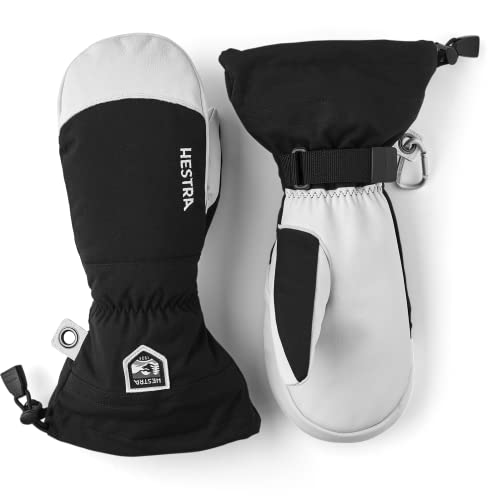
If you take your skiing seriously, the Hestra Army Leather Heli Ski Mitten is the benchmark everything else gets measured against. Hestra built this mitten specifically for professional mountain guides, patrollers, ski instructors, and freeriders — people who are outside all day, every day, in the worst conditions. That professional pedigree translates directly into real-world performance you'll feel from the very first run. The combination of army goat leather on the palm and Hestra's proprietary Triton fabric on the backhand gives you grip, durability, and weather resistance in a single package that cheaper mittens can't replicate.
What makes this mitten stand out in the warmth department is the insulation. Hestra uses an extremely thin polyester fiber with exceptionally high insulating capacity — the kind of material that holds heat even when moisture gets in. This is the warmest mitten in the entire Heli Ski family. On cold, wet powder days when other mittens start losing the battle against the elements, the Army Leather keeps holding warmth. The windproof, water-resistant, breathable Triton shell handles everything the mountain throws at you without making your hands feel like they're sealed in plastic bags.
Fit matters enormously with ski mittens, and Hestra nails it. The construction is precise, with minimal dead space that would otherwise let cold air pool around your fingers. You get full dexterity for pole handling and buckle adjustment without sacrificing warmth. Yes, this is a premium-priced mitten. But when you factor in the durability — goat leather resists abrasion far longer than synthetic alternatives — the cost-per-season math actually works in your favor compared to replacing cheaper mittens every year or two.
Pros:
- Professional-grade goat leather palm resists wear season after season
- Hestra Triton backhand fabric is windproof, water-resistant, and breathable
- Warmest mitten in the Heli Ski family — holds heat even in wet conditions
- Precise fit with minimal dead space keeps fingers warm
- Trusted by guides and patrollers who ski in extreme conditions daily
Cons:
- Premium price point is a significant investment upfront
- Leather palm requires occasional conditioning to maintain water resistance
2. Outdoor Research Women's Alti II GORE-TEX Mitts — Best for Women
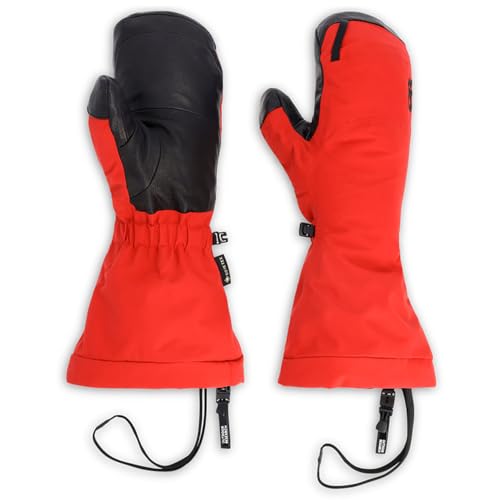
Outdoor Research built their reputation on one principle: get people outside and keep them there. The Women's Alti II GORE-TEX Mitts represent that philosophy applied to ski and alpine conditions specifically. GORE-TEX waterproofing is the gold standard in outdoor protection, and this mitten pairs it with women-specific sizing and construction that acknowledges the real anatomical differences in hand shape between men and women. If you've been making do with men's mittens that never quite fit right, the Alti II is going to feel like a revelation.
The GORE-TEX membrane provides guaranteed waterproofing with simultaneous breathability — sweat vapor escapes while liquid water stays out. On longer ski days or during periods of high exertion like hiking to a backcountry entrance, that breathability prevents the soggy-from-the-inside problem that plagues cheaper waterproof mittens. The construction quality throughout reflects Outdoor Research's commitment to alpine performance, with reinforced areas at contact points and a gauntlet cuff designed to seal out spindrift when you're moving fast through powder.
The Alti II works across a wide range of skiing styles. Resort skiing, backcountry touring, lift-accessed sidecountry — this mitten handles them all competently. The fit is trim enough for precise pole handling while still providing the warmth you need on cold days. Women who ski seriously and want a mitten that won't let them down on the coldest days of the season have a clear choice here. Pair these with quality ski glove liners on truly brutal days for maximum protection.
Pros:
- GORE-TEX waterproofing delivers guaranteed waterproof, breathable performance
- Women-specific construction fits more naturally than unisex designs
- Gauntlet cuff seals effectively against spindrift and wind
- Versatile across resort, sidecountry, and backcountry conditions
Cons:
- GORE-TEX pricing places it in the upper tier of ski mittens
- Limited color options compared to some competitors
3. Dakine Titan Gore-Tex Mitts — Best Eco-Conscious Pick
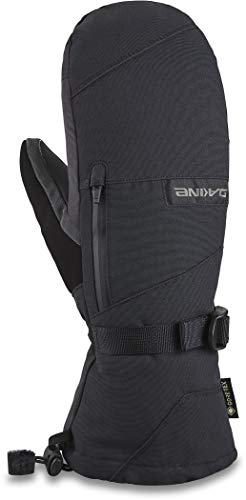
Dakine has always understood skiers and snowboarders at a fundamental level — they make gear for people who actually ride, not just people who look the part in the lodge. The Titan Gore-Tex Mitt brings serious performance to a mitten that's also built with environmental responsibility in mind. The face fabric uses 55% recycled polyester combined with a PFC-free DWR treatment, which means your waterproofing doesn't rely on the persistent fluorochemicals that have raised environmental concerns across the outdoor industry. That's a meaningful commitment, and it doesn't cost you any performance.
The waterproofing system here is GORE-TEX with GORE Warm technology — a combination that adds enhanced heat retention to the standard GORE-TEX waterproof/breathable barrier. The 150g polyester tricot lining provides substantial warmth without adding excessive bulk. The Rubbertec palm gives you tactile grip on poles and buckles even in wet conditions. The 4-way stretch in the shell construction allows natural hand movement, which matters when you're adjusting goggles or digging out a snack at the top of the lift without removing your mittens.
For skiers who care about where their gear comes from and what it's made of, the Dakine Titan delivers premium performance without compromise. The Responsible Collection designation isn't just marketing — the recycled and repurposed materials are documented in the product specs. You're getting GORE-TEX performance in a mitten that reflects the values most mountain people actually hold about the environment they ski in. The construction quality is what you'd expect from a brand that's been outfitting serious riders for decades.
Pros:
- GORE-TEX + GORE Warm technology for waterproofing and enhanced heat retention
- Recycled face fabric with PFC-free DWR — genuinely responsible materials
- 4-way stretch shell allows natural movement without restriction
- Rubbertec palm maintains grip in wet conditions
Cons:
- GORE-TEX price point — budget shoppers will look elsewhere
- Black colorway only limits personalization options
4. Rossignol Men's Type Impr M Ski Mittens — Best Budget Pick
Not every skier needs a $200 professional-grade mitten. If you're hitting the resort on weekends, skiing moderate temperatures, and want reliable waterproofing without the premium price, the Rossignol Type Impr M delivers exactly what you need. Rossignol's Imp'R waterproof and breathable membrane keeps the fundamentals covered at a price that leaves room in your budget for other gear upgrades. The fiber insulation provides adequate warmth for typical resort conditions — think 15°F to 35°F temperatures, which covers most skiing scenarios for the majority of recreational skiers.
The lining in the toe area — meaning the fingertip zone inside the mitten — adds targeted warmth where you actually feel cold first. That's a thoughtful design choice that pays off on chairlift rides when circulation slows and fingers start to chill. The construction is straightforward and durable enough for several seasons of regular use if you treat them properly. Rossignol knows ski equipment, and even their more affordable products reflect real understanding of how skiers actually use their gear on the mountain.
Where the Rossignol falls behind the premium options is in extreme cold and high-moisture conditions. On a bluebird groomer day at 20°F, you'll be perfectly comfortable. On a wet, heavy-snow storm day in the 28°F to 32°F range where snow is sticking to everything, you'll want more membrane performance. Know your conditions before you choose this mitten. For casual weekend skiers who don't regularly encounter extreme conditions, it's a smart, practical choice from a brand that knows skiing.
Pros:
- Accessible price point makes it a smart entry-level choice
- Imp'R membrane provides genuine waterproofing for typical resort conditions
- Targeted fingertip lining addresses where cold is felt first
- Backed by Rossignol's extensive ski gear expertise
Cons:
- Insulation insufficient for extreme cold or full backcountry days
- Membrane performance lags behind GORE-TEX in prolonged wet exposure
5. Black Diamond Men's Mercury Ski/Snow Mitts — Best for Extreme Cold
When the temperature drops below zero and you're two hours into a backcountry approach, or hanging on a belay ledge waiting for your partner on an alpine route, you need a mitten built for those conditions. The Black Diamond Mercury is exactly that mitten. Black Diamond engineered the Mercury for high-altitude expeditions, deep winter backcountry travel, and alpine climbing — not just a few runs at the resort. That extreme-condition pedigree means resort skiers are getting significant overkill in the best possible way: exceptional warmth reserves that keep you comfortable even in conditions you'll rarely encounter.
The shell construction is serious. Woven nylon with 4-way stretch provides durability and movement simultaneously. The goat leather palm with Kevlar stitching is not a minor detail — Kevlar-reinforced stitching is what climbers use because it resists abrasion against ropes and rock. Your ski poles aren't going to wear through the seams on these mittens. The BD.dry waterproof insert adds a breathable barrier layer that keeps snow and slush out while allowing heat and moisture vapor to escape. The removable liner gives you flexibility — pull the liner out for light activity, slide it in when conditions get serious.
The removable liner system is genuinely useful. It also means you can dry the shell and liner separately after a big day, which extends the life of both components. For skiers who push into the sidecountry or backcountry regularly, or who ski in the coldest climates, the Mercury justifies every penny. If you're pairing this with a strong ski setup, don't overlook the rest of your protection system — see our picks for ski and snowboard impact shorts to round out your safety gear.
Pros:
- One of the warmest mittens in Black Diamond's entire lineup
- Goat leather palm with Kevlar stitching provides exceptional durability
- BD.dry waterproof insert with breathable protection keeps hands dry
- Removable liner allows versatile use and easier drying
- Built for alpine climbing — handles anything skiing throws at it
Cons:
- Significant bulk may feel excessive for pure resort skiing
- Premium price reflects the extreme-condition specification
6. The North Face Women's Montana Insulated Ski Mitt — Best All-Mountain Women's
The North Face Montana Ski Mitt hits a sweet spot that a lot of women skiers are looking for: serious warmth with resort-friendly features at a price that doesn't require soul-searching. 250 grams of Heatseeker Eco synthetic insulation is a substantial warmth package — hollow-core fibers trap heat efficiently, and the synthetic material retains most of its loft even when damp, unlike down insulation. WindWall coverage adds a barrier against wind chill, which is often what turns a manageable cold day into a miserable one on exposed ridgelines and chairlifts.
The touchscreen-compatible Etip thumb deserves more attention than it gets. Being able to use your phone to check conditions, pull up trail maps, or take a quick photo without removing your mitten sounds like a small thing until you're standing on a cold summit and the thought of bare-handing your phone in the wind sounds genuinely terrible. It works reliably and doesn't compromise the warmth or waterproofing of the thumb area. The water-repellent DWR treatment on the outer shell handles typical snow and moisture contact effectively, keeping the insulation dry where it matters most.
The Montana is your go-to for all-day resort skiing where you want to stay warm without overthinking your gear. It's not designed for mountaineering or extreme backcountry expeditions, but it absolutely handles everything you'll encounter on a modern ski resort from first chair to last chair. The fleece lining adds comfort against your skin, making it easy to wear for full days without the irritation that stiffer linings can cause. This is the right mitten if your skiing is primarily resort-based and you want reliable warmth with practical features.
Pros:
- 250g Heatseeker Eco insulation provides generous warmth for resort skiing
- Touchscreen-compatible Etip thumb works reliably in cold conditions
- WindWall coverage blocks wind chill on exposed runs and chairlifts
- Fleece lining is comfortable against skin for full ski days
- Strong brand reliability and widely available sizing
Cons:
- DWR treatment rather than a full membrane — less waterproof than GORE-TEX options
- Not built for backcountry or expedition-level cold
7. SCOTT Mitten Ultimate Pro — Best for Freeride
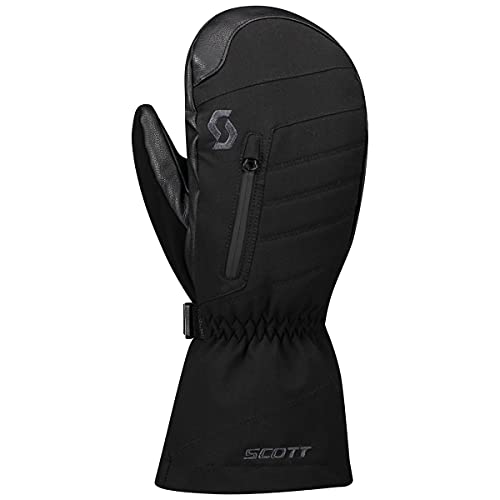
SCOTT has deep roots in freeride skiing and alpine performance, and the Ultimate Pro Mitten reflects that focus. This is not a casual resort mitten — it's built for riders who are charging hard terrain, spending time in variable backcountry conditions, and demanding performance from every piece of their kit. The Ultimate Pro designation signals SCOTT's highest-tier construction in their mitten lineup, with materials and engineering choices oriented toward maximum performance rather than cost reduction. If you ski hard and expect your gear to keep up, SCOTT delivers.
The construction prioritizes durability and weather protection for aggressive use. Freeride skiing puts different demands on mittens than groomed-run cruising — you're landing jumps, punching through breakable crust, and spending time stationary at the top of lines while reading terrain. Each of those scenarios stresses different parts of the mitten differently. The Ultimate Pro is engineered for that full range of demands. The palm construction and stitching hold up to the kind of rough handling that softer mittens simply don't survive across multiple seasons.
For the freeride-focused skier who needs a mitten that matches their ambition level, the SCOTT Ultimate Pro earns its place on this list. Pair it with gear that matches your commitment to performance — if you're spending at this level on mittens, you're probably also thinking carefully about your men's ski jacket and the rest of your protection system. According to Wikipedia's overview of ski gloves, the distinction between gloves and mittens often comes down to warmth versus dexterity — and for freeride conditions, warmth wins every time.
Pros:
- SCOTT's top-tier construction built for aggressive freeride skiing
- Durable materials hold up to the demands of hard terrain and variable conditions
- Engineered for the full range of freeride use cases — not just groomer comfort
- Reflects SCOTT's genuine expertise in alpine performance gear
Cons:
- Limited size/color availability on some retail channels
- Minimal published specification details compared to competing brands

Key Features to Consider When Choosing Ski Mittens
Waterproofing Technology: Membrane vs. DWR
This is the most important decision point after warmth. A dedicated waterproof membrane — GORE-TEX, BD.dry, or a brand-proprietary option — provides true waterproofing that a DWR (Durable Water Repellent) coating alone cannot match. DWR makes water bead off the outer fabric but eventually saturates in prolonged wet-snow contact. A membrane blocks liquid water entirely while allowing vapor to escape. For casual resort skiing in typical dry-cold conditions, DWR may be sufficient. For any serious skiing — backcountry, storm days, spring slush — a membrane is non-negotiable. GORE-TEX is the gold standard, verified by independent testing to strict performance criteria.
The membrane also matters for breathability. When you're working hard — hiking to a backcountry entrance or skiing aggressive terrain — your hands produce moisture vapor. Without breathability, that moisture condenses inside the mitten and makes you cold from the inside. Quality membranes solve both problems simultaneously. Budget mittens often compromise on breathability even when they advertise waterproofing, and you feel that compromise on every active day.
Insulation: Synthetic vs. Natural Fill
All seven mittens on this list use synthetic insulation, which is the right choice for ski applications. Here's why: synthetic insulation retains most of its warmth when wet, while down insulation collapses and provides almost no thermal protection when damp. Ski environments inevitably expose insulation to moisture — from snow, condensation, and sweat. Synthetic fill — whether it's Heatseeker Eco, polyester fiber, or a proprietary blend — keeps working even in those conditions.
Insulation weight is measured in grams (e.g., 150g, 250g) for synthetic fills — higher numbers mean more warmth and more bulk. Match the insulation weight to your typical conditions. Cold-climate skiing, extended backcountry days, or chairlift-heavy resort days where you're stationary for long periods all demand more insulation. Fast-paced, aerobic touring in moderate temperatures may actually benefit from less insulation to prevent overheating.
Palm Material and Grip
The palm is your contact point with poles, buckles, and safety gear. Leather palms — especially goat leather as used by Hestra and Black Diamond — provide superior grip, durability, and wear resistance compared to synthetic alternatives. Leather conforms to your hand shape over time and grips a pole effectively even in wet conditions. Synthetic palm materials like Rubbertec (Dakine) or rubberized coatings provide acceptable grip and often better initial wet-weather performance, but generally don't match leather's long-term durability.
If you'll be skiing multiple seasons with the same pair of mittens, a leather palm is worth the premium. If you're replacing mittens more frequently due to budget or changing needs, synthetic is perfectly functional.
Fit, Cuff Design, and Sizing
Fit determines warmth as much as insulation does. Dead space — air gaps between your fingers and the mitten fabric — allows cold air to pool and chill your hands regardless of how much insulation is present. A well-fitted mitten has minimal dead space at the fingertips while still allowing unrestricted curl for pole grip. Size up minimally if you're between sizes; sizing too large creates the dead space problem.
Cuff design matters for integration with your jacket sleeves. A gauntlet cuff that extends over your jacket sleeve seals out spindrift and prevents the gap where snow can work its way in during a crash or while digging out your skis. Most serious ski mittens use gauntlet cuffs for this reason. If your jacket has adjustable cuffs, practice the overlap before your first day on the mountain to confirm the seal works with your specific jacket. Refer to our roundup of the best ski clothing brands for jackets with compatible cuff systems.
FAQs
Are ski mittens warmer than ski gloves?
Yes, ski mittens are consistently warmer than ski gloves at equivalent insulation weights. In a mitten, your fingers share warmth with each other — your body acts as its own heat source for the entire finger compartment. In individual glove fingers, each digit must maintain its own temperature independently. The physics favor mittens in cold conditions by a meaningful margin, which is why professional mountain guides and expedition skiers prefer mittens when temperatures drop seriously low.
What insulation weight do I need for ski mittens?
For typical resort skiing in temperatures between 15°F and 35°F, 150g to 200g of synthetic insulation is sufficient for most skiers. For extreme cold below 0°F, extended backcountry days, or if you run cold naturally, look for 250g or more — or choose a mitten with a removable liner system like the Black Diamond Mercury that lets you add insulation when needed. Active backcountry skiers often prefer lighter insulation in the mitten itself and layer with a liner glove for temperature regulation.
What is GORE-TEX and why does it matter for ski mittens?
GORE-TEX is a proprietary waterproof, breathable membrane technology manufactured by W. L. Gore & Associates. It works by bonding an expanded polytetrafluoroethylene (ePTFE) membrane to fabric — the membrane has microscopic pores too small for liquid water droplets to pass through, but large enough for water vapor to escape. In ski mittens, this means snow and slush stay out while the moisture vapor from your hands escapes, keeping your hands dry from both external moisture and internal condensation. GORE-TEX products are tested and certified to specific performance standards, making them a reliable choice when waterproofing is critical.
How do I care for ski mittens to extend their life?
Dry your mittens completely after every ski day — stuff them loosely and allow air circulation, or use a boot and glove dryer set to a low-heat setting. Never dry on a hot radiator or with forced hot air, which damages membranes and insulation. For leather palms, apply a leather conditioner once or twice per season to maintain suppleness and water resistance. DWR coatings reactivate with heat — a 20-minute tumble in a low-heat dryer restores beading performance significantly. Wash mittens according to manufacturer instructions, typically with a technical outerwear cleaner rather than standard detergent, which strips DWR coatings.
Should I buy mittens with a removable liner?
Removable liner systems add versatility but also complexity. The main advantages are: you can adjust warmth by adding or removing the liner, dry the components separately after wet days, and replace just the liner if it wears out before the shell. The main trade-offs are added bulk, potential for the liner to bunch inside the shell, and a higher price point. For backcountry skiers who face variable temperature conditions across a long day, removable liners are genuinely useful. For resort skiers who are in consistent conditions, a fixed construction is simpler and often provides a better fit.
What is DWR and how long does it last on ski mittens?
DWR stands for Durable Water Repellent — a chemical treatment applied to the outer fabric of waterproof outerwear and mittens that causes water to bead up and roll off rather than soaking into the fabric. DWR is not a waterproof membrane and does not prevent water penetration on its own, but it keeps the outer fabric from becoming saturated, which maintains breathability and reduces moisture absorption. DWR effectiveness diminishes with use and washing over time. Most DWR coatings can be refreshed by tumble drying on low heat or using a DWR spray-on retreatment product available at outdoor gear shops.
Buy on Walmart
- Hestra Mens and Womes Ski Gloves: Army Leather Wind-Proof Wa — Walmart Link
- Outdoor Research Women's Alti II GORE-TEX Mitts, Agate, XS — Walmart Link
- Dakine Titan Gore-Tex Mitts - Black, Medium — Walmart Link
- Rossignol Men's Type Impr M Ski Mittens, Black, S — Walmart Link
- BLACK DIAMOND Men's Mercury Ski/Snow Mitts | Contains BD.Dry — Walmart Link
- The North Face Women's Montana Insulated Ski Mitt | Touchscr — Walmart Link
- SCOTT Mitten Ultimate Pro (Black, XLarge) 2022/23 — Walmart Link
Buy on eBay
- Hestra Mens and Womes Ski Gloves: Army Leather Wind-Proof Wa — eBay Link
- Outdoor Research Women's Alti II GORE-TEX Mitts, Agate, XS — eBay Link
- Dakine Titan Gore-Tex Mitts - Black, Medium — eBay Link
- Rossignol Men's Type Impr M Ski Mittens, Black, S — eBay Link
- BLACK DIAMOND Men's Mercury Ski/Snow Mitts | Contains BD.Dry — eBay Link
- The North Face Women's Montana Insulated Ski Mitt | Touchscr — eBay Link
- SCOTT Mitten Ultimate Pro (Black, XLarge) 2022/23 — eBay Link
Buy the warmest mitten your conditions actually demand — cold hands don't care about what you saved at checkout.
 |
 |
 |
 |

About Frank V. Persall
Frank Persall is a lifelong skier originally from the United Kingdom who has spent years pursuing the sport across premier resorts in Europe, North America, and beyond. His passion for skiing has taken him from the Alps to the Rocky Mountains, giving him a broad perspective on resort terrain, snow conditions, gear performance across price points, and the practical realities of ski travel with a family. At SnowGaper, he covers ski resort guides, gear reviews, and skiing technique and travel resources for enthusiasts of every level.
You can get FREE Gifts. Or latest free skiing books here.
Disable Ad block to reveal all the info. Once done, hit a button below
|
|
|
|