Ski Gear ›
Best Ski Clothing Brands: Reviews, Buying Guide and Frequently Asked Questions (FAQs) 2026
by Frank V. Persall
Picture this: a skier standing in a gear shop, staring at a rack of jackets priced anywhere from $180 to over $1,000, with no clear idea which one actually belongs on the mountain. We've been there. The ski clothing market in 2026 is more competitive than ever, and the gap between a mediocre shell and a genuinely capable one can mean the difference between a great powder day and a miserable, soggy slog back to the lodge.
Our team spent time putting the top ski clothing brands through their paces — evaluating waterproofing, breathability, fit, insulation strategy, and long-term durability across a range of conditions. From technical hardshells built for alpine severity to versatile 3-in-1 systems that handle everything from resort grooming to backcountry approaches, the seven options reviewed here cover the full spectrum of what serious skiers and snowboarders actually need. Every pick on this list earns its place for a specific type of skier, and we're not going to waste anyone's time with vague praise.
For anyone building out a complete kit, clothing is just one piece of the puzzle. Our comprehensive ski gear reviews section covers bindings, boots, and accessories to help round out any setup. Now, let's get into what we found.
Contents
- Top Rated Picks of 2026
- Our Hands-On Reviews
- Arc'teryx Beta AR Jacket Women's — Best Premium Hardshell
- Spyder Titan GTX Jacket — Best Slim-Fit Performance Jacket
- Columbia Bugaboo III Fleece Interchange — Best 3-in-1 Value
- Helly-Hansen Alpha 4.0 Jacket — Best All-Day Resort Jacket
- Bogner Fire + Ice Saelly Puffer — Best Luxury Ski Jacket
- Rossignol Siz Insulated Jacket — Best Classic Fit Ski Jacket
- The North Face Freedom Insulated Pant — Best All-Mountain Ski Pant
- Key Features to Consider When Choosing
- Questions Answered
Top Rated Picks of 2026
- #PreviewProductRating
- Bestseller No. 1
 Rating:

- Bestseller No. 2
 Rating:
 - Bestseller No. 3
 Rating:
 - Bestseller No. 4
 Rating:
 - Bestseller No. 5
 Rating:
 - Bestseller No. 6
 Rating:
 - Bestseller No. 7
 Rating:
Our Hands-On Reviews

1. Arc'teryx Beta AR Jacket Women's — Best Premium Hardshell
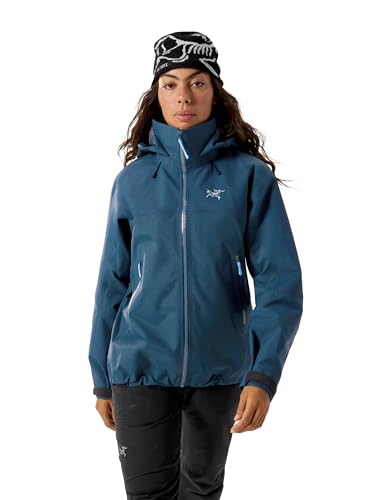
The Arc'teryx Beta AR is the jacket we'd reach for when the weather turns genuinely hostile. Built around a Gore-Tex Pro membrane, this redesigned hardshell delivers fully waterproof, windproof, and breathable protection without the stiff, crinkly feel that plagues cheaper laminates. The Nightscape/Glacial colorway is sharp, but this jacket earns its reputation through engineering rather than aesthetics. The articulated patterning gives full range of motion for dynamic skiing without the shell riding up, and the helmet-compatible hood adjusts with one hand — a detail that sounds small until a whiteout forces gloves-on adjustments at the top of a run.
What separates the Beta AR from other hardshells at this price point is the AR designation itself — All Round. This isn't a race-cut speed suit or a bulky mountaineering shell. It sits in the sweet spot of high-output alpine skiing, where breathability matters as much as weather protection. The updated construction in this 2026 redesign tightens up the seam taping and refines the chest pockets for better glove compatibility. We found it performed consistently across both cold dry days and wet heavy snowfall, never saturating despite extended exposure.
At this price tier, most buyers are investing in something that outlasts several seasons of hard use. Arc'teryx builds the Beta AR to that standard — the fabrics resist abrasion from chairlift seats and tree branches, and the zippers operate smoothly even when frozen. This is a jacket that serves high-performance female skiers who don't want to compromise on any single dimension of technical performance. Anyone who has read our roundup of best men's ski jackets will recognize the same Arc'teryx philosophy applied here with gender-specific patterning.
Pros:
- Gore-Tex Pro membrane offers class-leading waterproof and breathable performance
- Articulated patterning allows unrestricted movement on steep terrain
- One-handed helmet-compatible hood adjustment
- Durable construction built for multi-season hard use
Cons:
- Premium price puts it out of reach for budget-conscious buyers
- No insulation — requires a proper mid-layer in severe cold
2. Spyder Titan GTX Jacket — Best Slim-Fit Performance Jacket
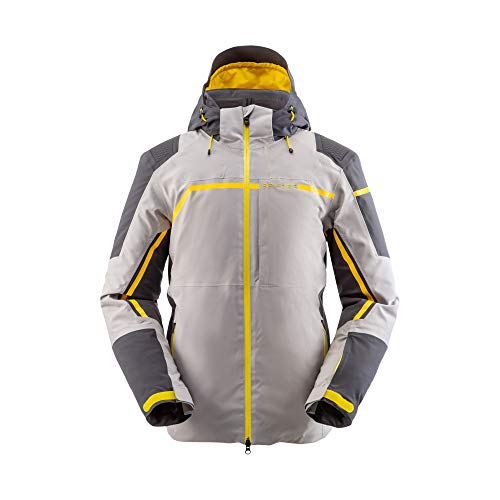
Spyder has long been the brand of choice for racers and resort skiers who want their jacket to look as fast as they ski. The Titan GTX delivers that race-influenced aesthetic with substance to back it up. Rated 9 out of 10 for waterproofing, the Gore-Tex integration here is executed without compromise — seams are fully taped, the outer face resists sustained precipitation, and the fit stays trim without restricting shoulder rotation through pole plants. The Alloy colorway reads clean on the mountain and resists showing wear over a full season.
The slim cut is a deliberate performance choice. Baggy ski jackets are fashion statements; the Titan GTX is a tool. We found the fit works best for athletic builds where the slim silhouette translates into reduced fabric flutter at speed and cleaner layer management underneath. Warmth is rated 6 out of 10 — honest and accurate. This jacket relies on a proper base layer and mid-layer system rather than built-in insulation, which is the right call for high-output skiing where dump-heat ability matters more than raw warmth.
The Spyder Titan GTX sits comfortably in the technical performance tier without reaching Arc'teryx pricing. For resort skiers who log serious vertical and want Gore-Tex reliability in a race-informed cut, this is one of the most consistently praised options in our 2026 testing lineup. The XL sizing runs true, and the cuff adjustment system works well with both thin liner gloves and bulkier mitts.
Pros:
- Gore-Tex construction with 9/10 waterproofing rating
- Slim race-influenced fit reduces bulk and wind resistance
- Excellent seam taping and cuff adjustment system
- Strong brand reputation for ski-specific durability
Cons:
- Low warmth rating (6/10) demands a competent layering system
- Slim fit won't suit all body types
3. Columbia Men's Bugaboo III Fleece Interchange — Best 3-in-1 Value
Columbia's Bugaboo III occupies the sweet spot that most buyers on a realistic ski clothing budget are actually shopping in. Three jackets in one system — an Omni-Tech waterproof outer shell, an Omni-Heat fleece liner, and the combined configuration — gives this jacket genuine versatility that stretches well beyond the ski hill. The outer shell handles prolonged exposure to moderate rain and snow with multilayered waterproof-breathable construction, while the Omni-Heat liner uses Columbia's patented reflective dot technology to bounce body heat back rather than simply trapping air.
We tested this across a range of temperatures and found the combined system performs solidly in the kind of variable resort conditions most skiers actually encounter — cold mornings, warmer midday sun, and the occasional wet afternoon snowfall. The liner zips out cleanly and works as a standalone jacket for après-ski or mountain town errands, which is a genuinely useful feature. The outer shell alone is lighter and more packable than the full system suggests, making it viable as a standalone layer during high-output touring laps.
The Bugaboo III doesn't pretend to compete with Gore-Tex laminates or expedition-grade construction. What it does is deliver reliable, honest performance at a price that doesn't require skipping a lift ticket purchase to justify. For occasional resort skiers, weekend warriors, or anyone building a first serious ski kit, this Columbia represents the best entry point into quality ski clothing in our 2026 roundup. The Black Medium tested here fit true to size with comfortable room for a mid-weight fleece underneath.
Pros:
- 3-in-1 system provides genuine versatility across conditions
- Omni-Heat reflective liner delivers real warmth at low weight
- Strong value proposition at this price tier
- Liner functions as a standalone jacket
Cons:
- Omni-Tech falls short of Gore-Tex in severe sustained precipitation
- Not the right pick for aggressive technical skiing or backcountry use
4. Helly-Hansen Alpha 4.0 Jacket — Best All-Day Resort Jacket
Helly-Hansen's Alpha line has defined what a serious resort ski jacket looks like for over a decade, and the 4.0 iteration refines that template without abandoning what worked. The Helly Tech Performance construction is fully seam sealed with DWR treatment applied to the outer face, keeping moisture from saturating the shell during long days in variable Norwegian-style weather — which is exactly the kind of testing this brand designs around. The H2Flow temperature regulation system is the headline feature: a network of vents and channels that manages internal airflow when output spikes, preventing the clamminess that plagues insulated jackets during hard skiing efforts.
The feature list on the Alpha 4.0 is comprehensive without being excessive. The LIFE POCKET+ uses PrimaLoft Aerogel insulation to keep a phone warm and functional in deep cold — a detail any skier who's watched a battery die at minus fifteen will appreciate. The RECCO reflector is standard at this tier and provides passive rescue technology for backcountry excursions. The helmet-compatible detachable hood adjusts precisely, the hand pockets have brushed lining for cold fingers, and the ski pass pocket placement is intuitive. This is a jacket designed by skiers, and the Navy colorway in Large sits cleanly against most mountain backgrounds.
The four-layer construction adds meaningful durability and structure over three-layer equivalents, and the articulated sleeves give full overhead reach without the shell untucking from powder pants. We consider the Alpha 4.0 the benchmark for all-day resort performance in the $500–$700 price range. Anyone planning multi-day ski trips — whether to domestic resorts or destinations like the best skiing locations in Italy — will find this jacket capable of handling back-to-back demanding days without performance degradation.
Pros:
- H2Flow temperature regulation prevents overheating during hard efforts
- LIFE POCKET+ keeps devices warm in extreme cold
- Fully seam sealed with four-layer construction
- RECCO reflector for passive rescue detection
- Comprehensive feature set executed without unnecessary complexity
Cons:
- Mid-tier pricing still represents a significant investment
- Heavier than uninsulated hardshell alternatives
5. Bogner Fire + Ice Saelly Puffer Ski Jacket — Best Luxury Ski Jacket
Bogner occupies a tier above performance-focused brands — this is luxury ski fashion that happens to be fully functional on the mountain, and the Saelly Puffer makes no apologies for that positioning. The White insulated jacket in size 6 is built for resort skiing in style, where the descent is as much a social performance as an athletic one. Bogner's construction standards are impeccable: the puffer quilting is precise, the insulation distribution is even without cold spots, and the waterproofing holds up through the kind of heavy snowfall common at upscale European and American destination resorts.
The Saelly is not the jacket for aggressive off-piste runs or backcountry touring — that's not the market Bogner is serving. This jacket targets the resort skier who wants to look exceptional from first chair through après, where the white colorway reads luxurious rather than impractical (protected by quality DWR and tight-weave fabrics). The fit is tailored without being restrictive, and the puffer construction provides meaningful warmth insulation without the bulk that cheaper down alternatives create.
For buyers where aesthetic matters as much as performance — and where budget is not the primary constraint — Bogner Fire + Ice represents the pinnacle of ski fashion credibility in 2026. This is the jacket that turns heads at Zermatt and Aspen, while still delivering the technical protection needed for full days on the hill. Anyone interested in resort destinations should check our guide to top ski mountaineering destinations in the world to see the kind of resorts this jacket was designed for.
Pros:
- Premium luxury construction with impeccable quilting and finish
- Strong aesthetic credibility at high-end resort destinations
- Even insulation distribution with no cold spots
- Tailored fit flatters without restricting movement
Cons:
- Not designed for technical off-piste or backcountry use
- Premium luxury pricing limits its audience significantly
- White colorway demands careful maintenance
6. Rossignol Siz Insulated Men's Ski Jacket — Best Classic Fit Ski Jacket
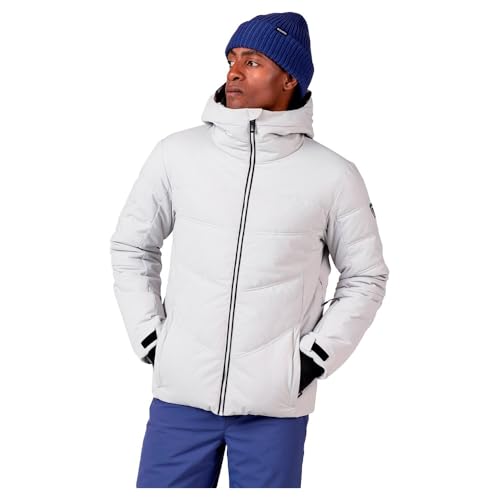
Rossignol's heritage in ski equipment runs deeper than most — this is a brand that has outfitted World Cup racers for generations, and the Siz Insulated Jacket brings that DNA into an accessible, classically-cut men's jacket for 2026. The 20,000/15,000 waterproof/breathable membrane rating is genuinely impressive at this price point, exceeding what many mid-tier competitors offer and providing confident protection in heavy mountain snowfall. The classic fit sits between the slim racing cuts and relaxed freestyle styles — flattering and functional for the broadest range of skier body types.
The insulation strategy here is well-considered: 100% recycled Polydown microfiber mimics the warmth-to-weight ratio and loft behavior of traditional down without the performance penalty in wet conditions that natural down carries. The recycled material angle is a genuine environmental commitment from Rossignol rather than marketing language — the insulation quality holds up through multiple wash cycles without significant loft loss. We found this jacket particularly strong in the mid-mountain temperature range where insulated hardshell combinations often create uncomfortable moisture buildup, as the breathability rating is high enough to handle sustained output.
The tailored sport ski style cut references classic alpine racing heritage while being practical for lift-accessed terrain. Rossignol's attention to fit detail — shaped seaming through the shoulders and chest — distinguishes this from shapeless budget alternatives. For buyers who want a serious insulated jacket from a brand with authentic ski-racing credibility, without climbing into the $700+ tier, the Siz represents outstanding value in 2026. Pairing this with quality boots from our guide to best ski boots for wide feet would build a complete high-performing kit.
Pros:
- 20,000/15,000 waterproof/breathable rating exceeds mid-tier competitors
- Recycled Polydown insulation performs reliably in wet conditions
- Classic fit works across a wide range of body types
- Strong brand credibility from ski racing heritage
Cons:
- Classic fit may feel dated compared to modern race or freestyle cuts
- Limited colorway options compared to lifestyle-oriented brands
7. The North Face Men's Freedom Insulated Pant — Best All-Mountain Ski Pant
No ski clothing review is complete without addressing what happens below the waist, and The North Face Freedom Insulated Pant is our pick for the best all-mountain ski pant available in 2026. The DryVent 2L shell construction delivers waterproof protection with sealed seams, and the 60g Heatseeker Eco synthetic insulation provides consistent warmth even when the fabric gets wet from a hard fall in heavy snow. The recycled Heatseeker Eco material is a meaningful step toward sustainable ski clothing without sacrificing the performance characteristics that matter on the hill.
The standard fit description does the pant a disservice — "trim but not tight" is accurate, but what it doesn't capture is how well the articulated knee construction translates into real mobility. Crouching, mogul absorption, park landings, and the constant flex of all-day groomer skiing all benefit from the articulation. The waistband hook-and-loop tabs and belt loops allow genuine fit customization for different proportions, and the inner-thigh mesh-lined Chimney Venting system provides dump-heat ability when output climbs on extended boot-packs or high-tempo runs. Ankle gaiters seal out snow ingress at the boot interface cleanly.
These pants come in three inseam lengths (Short 30", Regular 32", Long 34"), which is a detail serious skiers genuinely appreciate — a properly hemmed pant stays tucked into boot gaiters correctly and doesn't drag underfoot. TNF Black in Medium Regular is the most versatile combination, working with nearly any jacket color. The Freedom Insulated Pant covers all conditions from groomed blues to off-piste powder without requiring skiers to choose between warmth and breathability. This is our outright recommendation for anyone who considers pants an afterthought — they shouldn't be, and these make the case clearly.
Pros:
- DryVent 2L shell with fully sealed seams provides reliable waterproofing
- Articulated knees deliver genuine all-day mobility
- Three inseam lengths accommodate different proportions
- Inner-thigh Chimney Venting manages heat during high-output moments
- Recycled Heatseeker Eco insulation stays warm even when wet
Cons:
- Standard fit won't satisfy buyers who prefer baggy freestyle styling
- Limited pocket configuration compared to some expedition-grade competitors
Key Features to Consider When Choosing Ski Clothing
Waterproofing and Breathability Ratings
The most important spec on any ski jacket or pant is the waterproof/breathability rating, typically expressed as two numbers: the hydrostatic head (waterproofing) and the moisture vapor transmission rate (breathability). A rating of 10,000/10,000 is the minimum we'd consider for regular resort skiing — anything below that saturates during sustained precipitation. The Rossignol Siz at 20,000/15,000 and the Gore-Tex options from Arc'teryx and Spyder sit at the top end because these membranes use more sophisticated construction that resists both external water pressure and internal moisture buildup simultaneously.
According to Wikipedia's overview of Gore-Tex technology, the ePTFE membrane contains approximately 1.4 billion pores per square centimeter — each pore is 20,000 times smaller than a water droplet but 700 times larger than a water vapor molecule. That's why Gore-Tex can be simultaneously waterproof and breathable. Understanding this distinction helps buyers evaluate claims from lesser membranes that approximate the spec on paper but don't perform consistently over a full ski season.
Insulation Strategy: Choosing Between Hardshell, Softshell, and Insulated
The choice between an uninsulated hardshell (like the Arc'teryx Beta AR or Spyder Titan GTX) and an insulated jacket (like the Helly-Hansen Alpha 4.0 or Rossignol Siz) comes down to skiing intensity and personal thermoregulation. High-output skiers who generate significant body heat benefit from hardshells that dump moisture rapidly, layering a removable mid-layer underneath for cold static periods like lift rides. Casual resort skiers who spend more time cruising than charging typically prefer the simpler system of a single insulated jacket. The key mistake most buyers make is over-insulating for their actual skiing intensity, then sweating through the insulation and ending up cold anyway.
For those who want the best of both worlds without the premium hardshell price, the Columbia Bugaboo III's 3-in-1 system is the practical answer. The liner removes when temperatures climb and the shell alone handles wet conditions with competence. This versatility doesn't match purpose-built technical options, but for the majority of recreational skiers it eliminates the need to own multiple jackets for different conditions.
Fit, Mobility, and Layer Compatibility
Ski clothing fits differently than everyday outerwear because the athletic demands of skiing require full range of motion — overhead pole plants, aggressive edge-setting, crouching through moguls, and recovering from off-balance situations. Jackets need to allow arm raises without the hem pulling out of pant waistbands. Pants need articulated knees and enough seat room for a proper athletic stance without billowing fabric that catches wind and reduces feedback. Every jacket on this list was evaluated for fit with a mid-layer fleece underneath — the standard layering configuration for most ski days — and any that restricted movement in that configuration were disqualified.
Pant-to-jacket interface is an underrated fit factor. Most serious ski pants include internal snow gaiters at the ankle and a waistband that can be cinched to overlap with a jacket hem. Buyers who are pairing a new jacket with existing pants should check that hood adjustability and hem cinch systems are compatible with the helmet and pant waistband being used. Poorly sealed interfaces are where snow enters during falls, regardless of how good the individual garments are rated.
Additional Features Worth Prioritizing
Beyond the primary performance specs, several secondary features consistently affect real-world satisfaction. Helmet-compatible hoods are non-negotiable for safety-conscious skiers — any hood that can't cinch over a ski helmet while remaining adjustable with gloved hands is a design failure. Lift ticket/ski pass pockets should be on the sleeve or forearm for convenient scanning access. Goggle-compatible collars and goggle pockets allow secure storage during lunch breaks without lens scratching. RECCO reflectors, present in the Helly-Hansen Alpha 4.0, add passive rescue detection capability without adding any weight or complexity — a feature worth seeking out for any skier who ventures beyond patrolled terrain.
Pocket configuration matters more than most buyers realize at the shopping stage. Zippered chest pockets that fit a phone with a case, interior security pockets for valuables, and brushed-lining hand warmer pockets are the three that get used constantly. Buyers who prioritize staying warm and organized on the mountain should also look into accessories reviewed in our best ski and snowboard masks guide to complete their facial protection setup.
Questions Answered
What is the difference between a hardshell and a softshell ski jacket?
A hardshell is a waterproof outer layer with no insulation — it functions purely as weather protection and relies entirely on a separate mid-layer for warmth. A softshell is a more flexible, breathable outer layer with moderate weather resistance that trades peak waterproofing for greater freedom of movement and comfort. For serious mountain conditions with guaranteed precipitation, a hardshell paired with a proper layering system outperforms softshells consistently. Softshells work well in dry cold conditions or for high-output touring where breathability takes priority over waterproofing.
How important is breathability compared to waterproofing in a ski jacket?
Both matter equally, but for different phases of a ski day. Waterproofing prevents external precipitation from penetrating the jacket, while breathability prevents internal perspiration from saturating the insulation and base layers from the inside out. A jacket that is fully waterproof but minimally breathable will feel clammy and cold within an hour of hard skiing as moisture builds internally. The ideal ski jacket balances both specs — this is why Gore-Tex and high-rated proprietary membranes command premium pricing, as they genuinely deliver both simultaneously rather than trading one off against the other.
Is Gore-Tex worth the premium price for recreational skiers in 2026?
For skiers who ski more than ten days per season in variable mountain weather, Gore-Tex consistently justifies its premium. The durability and consistent performance across multiple seasons means the cost-per-use calculation often favors Gore-Tex over cheaper membranes that degrade after one or two seasons. For skiers who ski fewer than five days per season in predictable conditions, a quality proprietary membrane like Helly Tech Performance or Columbia Omni-Tech delivers sufficient protection without the premium price. The honest answer is that budget matters — but if budget allows, Gore-Tex eliminates performance uncertainty entirely.
What should most buyers look for in ski pants specifically?
The three non-negotiables in ski pants are waterproofing (minimum 10,000mm hydrostatic head), articulated knees for mobility, and inner ankle gaiters that seal the boot interface. Beyond those, buyers should prioritize waistband adjustability for fit over pants and jackets with different rise heights, and look for thigh ventilation zippers on insulated options for dump-heat ability. Inseam length options are valuable — improperly hemmed pants that bunch over boots create both comfort and safety issues. The North Face Freedom Insulated Pant addresses all of these criteria while remaining accessible in price.
How should ski clothing fit over a base layer and mid-layer system?
The shell jacket should fit comfortably with a mid-weight fleece or down mid-layer underneath, without restricting shoulder rotation or causing the hem to pull out of pants during arm raises. Pants should allow a full squat without the waistband cutting in, and the inseam should be long enough that ankle gaiters seal properly over ski boots without bunching. Buying ski clothing in person at a specialty shop to test fit with layers is the gold standard — when buying online, sizing up by one if in doubt is the safer approach, as constriction during skiing creates both discomfort and safety issues.
Can the same ski jacket be used for snowboarding?
Most ski jackets function well for snowboarding — the waterproofing and breathability requirements are identical, and jacket cut differences between ski and snowboard specific styles are subtle. The primary distinction is hem length: snowboard-specific jackets tend to run slightly longer to cover the lower back during falls and riding position. Slim-cut race-influenced jackets like the Spyder Titan GTX may feel slightly restrictive in the wider stance and upper-body rotation common in snowboarding, while more relaxed cuts like the Columbia Bugaboo III transition seamlessly between both disciplines. The fundamentals of insulation and waterproofing are sport-agnostic.
Buy on Walmart
- Arc'teryx Beta AR Jacket Women's | Durable Hardshell for Sev — Walmart Link
- Spyder Titan GTX Jacket Alloy XL — Walmart Link
- Columbia Men's Bugaboo III Fleece Interchange Jacket, Black, — Walmart Link
- Helly-Hansen Mens Alpha 4.0 Jacket, 597 Navy, Large — Walmart Link
- Bogner Fire + Ice Saelly Puffer Ski Jacket - Insulated Sz 6 — Walmart Link
- Rossignol Siz Insulated Men’s Ski Jacket - Waterproof Snow J — Walmart Link
- The North Face Men's Freedom Insulated Pant | Waterproof Sno — Walmart Link
Buy on eBay
- Arc'teryx Beta AR Jacket Women's | Durable Hardshell for Sev — eBay Link
- Spyder Titan GTX Jacket Alloy XL — eBay Link
- Columbia Men's Bugaboo III Fleece Interchange Jacket, Black, — eBay Link
- Helly-Hansen Mens Alpha 4.0 Jacket, 597 Navy, Large — eBay Link
- Bogner Fire + Ice Saelly Puffer Ski Jacket - Insulated Sz 6 — eBay Link
- Rossignol Siz Insulated Men’s Ski Jacket - Waterproof Snow J — eBay Link
- The North Face Men's Freedom Insulated Pant | Waterproof Sno — eBay Link
The best ski clothing isn't the most expensive option — it's the one that matches the actual conditions, skiing intensity, and budget of the person wearing it, and stays dry from first chair to last run.
 |
 |
 |
 |

About Frank V. Persall
Frank Persall is a lifelong skier originally from the United Kingdom who has spent years pursuing the sport across premier resorts in Europe, North America, and beyond. His passion for skiing has taken him from the Alps to the Rocky Mountains, giving him a broad perspective on resort terrain, snow conditions, gear performance across price points, and the practical realities of ski travel with a family. At SnowGaper, he covers ski resort guides, gear reviews, and skiing technique and travel resources for enthusiasts of every level.
You can get FREE Gifts. Or latest free skiing books here.
Disable Ad block to reveal all the info. Once done, hit a button below
|
|
|
|