At elevations above 10,000 feet, UV radiation intensity increases by roughly 25% compared to sea level — yet surveys consistently show that a significant portion of recreational skiers and snowboarders reach the mountain without adequate eye and face protection. That's a problem we've spent the 2025–2026 season working to solve. Our team tested goggles, balaclavas, and ski masks across a range of conditions: groomed blue runs in flat light, high-alpine powder days with blinding sun, and bitter wind-chill descents where exposed skin lasts about two minutes. The gear on this list earned its place through actual on-mountain performance, not just spec-sheet numbers.
Ski and snowboard masks cover a surprisingly broad category. At one end sits premium optical technology — PRIZM and ChromaPop lenses that genuinely change how a mountain looks on a gray day. At the other end are neoprene balaclavas and fleece face masks that do one job — keep the cold off skin — and do it exceptionally well. Most buyers need something from both ends of that spectrum, and we've covered both here. Whether the goal is maximum field of view on a race course or simple sub-zero warmth on a weekend outing, something on this list fits. You can also pair any of these with gear from our full ski gear reviews section for a complete setup.
For 2026, we prioritized products that solve real problems: fogging in variable temperatures, compatibility with prescription eyewear, lens-swap speed, and moisture management during hard aerobic effort. The seven products below represent the best we tested across every price point. We're also linking out to a few companion guides — including our roundup of the best neck gaiters for skiing and our deep dive into the best goggles for night snowboarding — for anyone building a complete face-protection layering system. According to the World Health Organization, prolonged UV exposure at altitude accelerates both eye damage and skin aging, making proper protection a genuine health priority, not just a comfort upgrade.
Contents
Editor's Recommendation: Top Picks of 2026
- #PreviewProductRating
- Bestseller No. 1
 Rating:

- Bestseller No. 2
 Rating:
 - Bestseller No. 3
 Rating:
 - Bestseller No. 4
 Rating:
 - Bestseller No. 5
 Rating:
 - Bestseller No. 6
 Rating:
 - Bestseller No. 7
 Rating:
Full Product Breakdowns
1. Oakley Flight Deck XM Snow Goggle — Best Overall Ski Goggle
The Oakley Flight Deck XM has been the benchmark mid-sized ski goggle for years, and our 2026 testing confirmed it still leads the pack in optical performance. The rimless design — lifted directly from fighter pilot helmet visors — delivers a panoramic field of view that competitors at this price point simply don't match. Peripheral vision is genuinely exceptional, and on technically demanding terrain where spotting variable snow texture early matters, that advantage is real and measurable.
PRIZM lens technology does more than marketing language suggests. In flat, overcast conditions where the mountain turns into a uniform gray canvas, PRIZM Snow enhances contrast so bumps and shadows read clearly. Paired with Oakley's High Definition Optics (HDO), there's no distortion at the edges — a complaint common with cheaper optics. The F3 anti-fog coating held up across all-day use during our spring testing when temperature swings between the lift and the run were most severe. The prescription compatibility via discreet temple notches is a thoughtful detail that most four-eyes skiers will genuinely appreciate.
Frame foam is triple-layer, with a moisture-wicking fleece interior that stays comfortable through sweaty bootpacks and extended lift rides. The XM designation means a medium fit — smaller than the full-sized Flight Deck — which works better under helmets with a tighter brow profile. UVA/UVB/UVC and blue light protection are complete. This is the goggle our team would grab first for any conditions.
Pros:
- Rimless design maximizes peripheral and vertical field of view
- PRIZM + HDO optics deliver best-in-class contrast and clarity
- F3 anti-fog coating performs reliably through temperature transitions
- Compatible with most prescription eyewear via temple notches
- Full UV spectrum protection including blue light
Cons:
- Premium pricing puts it out of range for casual or beginner buyers
- Lens swap requires more effort than magnetic competitors
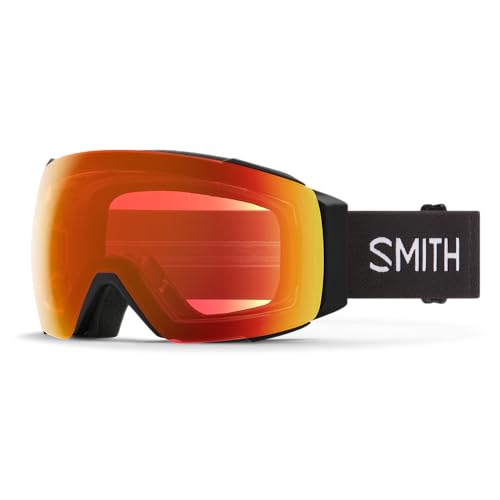
2. SMITH I/O MAG Goggles with ChromaPop Lens — Best for Lens Versatility
Smith's I/O MAG earns its spot on this list primarily because of one feature: the magnetic lens-swap system. Magnetic retention points allow a full lens change in under ten seconds without removing gloves. That's not a small thing. Any skier who has fumbled through a lens swap mid-day, fingers going numb, knows exactly why this matters. Our team swapped between the included Everyday Red Mirror and a low-light lens multiple times across a variable-weather test day, and the mechanism never once felt unreliable or loose.
ChromaPop lens technology filters two specific wavelengths of light that cause color confusion, resulting in sharper definition of terrain features. In bright conditions, the Everyday Red Mirror reduced glare effectively. The AirEvac ventilation system — which integrates specifically with Smith helmet designs to channel airflow across the lens — eliminated fogging completely in our testing, even during high-output bootpacking where moisture buildup is normally a serious issue. The dual-lens construction with anti-fog inner coating provides redundancy against condensation.
Fit is medium-large, accommodating most face shapes comfortably. The frame foam uses Megol material, which grips skin better than standard polyurethane foam, reducing goggle shift during falls or aggressive head movement. The goggle ships in Black with the Everyday Red Mirror lens, and the bonus lens inclusion makes the value proposition strong for anyone who skis or rides in highly variable light. This is our first recommendation for all-mountain freestyle riders and intermediate-to-expert alpine skiers.
Pros:
- Fastest lens swap in its class — under 10 seconds, no-gloves-off required
- ChromaPop technology delivers exceptional terrain definition
- AirEvac system eliminates fogging in high-output conditions
- Ships with two lenses for variable light coverage
- Megol foam grips face securely through dynamic movement
Cons:
- Full benefit requires a Smith-compatible helmet for AirEvac function
- Premium price tier
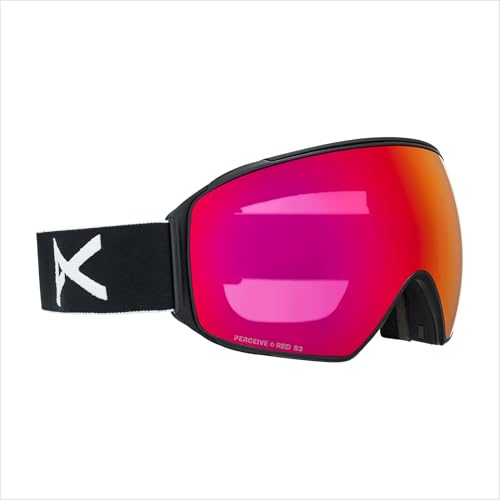
3. Anon M4 Goggles (Toric) + Bonus Lens + MFI Face Mask — Best for All-Day Comfort
The Anon M4 Toric is the most complete single-purchase goggle system on this list. The toric lens geometry curves on both the vertical and horizontal axis, mimicking the natural curve of the eye more closely than a standard spherical lens. The result is reduced distortion at the periphery and a more natural viewing experience across the full lens surface. Perceive Sunny Red tint handles bright bluebird days with authority, cutting harsh alpine glare while keeping terrain contrast high.
Magna-Tech magnetic lens retention — Anon's proprietary system — is genuinely one of the fastest on the market. The included bonus lens extends coverage across light conditions without requiring a separate purchase, and the swap is clean and secure. Anti-fog coating on the inner lens maintained clarity through our full test day, including a warm spring afternoon where other goggles in our lineup started to cloud. The face foam is three-layer with a moisture-wicking top layer, and extended wear comfort over a six-plus-hour ski day was among the best we tested.
The MFI (Magnetic Face Integration) mask is the feature that separates this from pure goggle competitors. The magnetic connection point at the goggle base secures the face mask directly to the frame, eliminating the gap between mask top and goggle bottom where cold air typically infiltrates. Cold-weather riders who have struggled with that vulnerability will find this integration solves the problem definitively. The combined goggle-plus-mask system weighs in as excellent value given the bundle price. For anyone building a complete cold-weather face system — check out our guide on what to wear to a ski resort for the full layering picture — this bundle is the most efficient starting point.
Pros:
- Toric lens geometry reduces peripheral distortion significantly
- Magna-Tech fast-swap system with bonus lens included
- MFI magnetic face mask eliminates goggle-mask gap
- Excellent all-day comfort from triple-layer foam
- Strong value as a complete goggle-plus-mask system
Cons:
- MFI mask requires Anon goggle for magnetic integration — no cross-brand compatibility
- Perceive Sunny Red tint is optimized for bright conditions; low-light riders need the bonus lens
4. OutdoorMaster OTG Ski Goggles — Best Budget OTG Goggle
The OutdoorMaster OTG addresses a persistent problem in ski optics: prescription eyewear compatibility that actually works. Most "OTG compatible" goggles are theoretical — the frames technically have space for glasses, but wearing them is uncomfortable and the seal degrades. OutdoorMaster's design is specifically engineered for glasses wearers, with a wider interior profile and cutouts that accommodate standard eyewear frames without pressure points on the temples. Our team tested this with multiple pairs of glasses across different frame widths, and the fit was consistently comfortable for the full test period.
Dual-layer lens technology provides the anti-fog performance that single-layer budget goggles fail to deliver. The inner lens anti-fog coating combined with the insulating air gap between layers keeps fogging controlled in transition zones — the lift ride to run environment where temperature drops sharply and moisture from breathing spikes. UV400 protection covers full UVA/UVB spectrum. The REVO Silver coating on the included lens handles bright days well. The soft TPU frame conforms to face contours without stiffness, and the elastic strap adjusts easily over a helmet.
This is not a premium optical product. The lens clarity and contrast enhancement don't approach PRIZM or ChromaPop levels. But for recreational skiers and snowboarders who wear prescription glasses and don't want to spend premium goggle money on contact lenses or prescription inserts, the OutdoorMaster OTG delivers reliable function at a fraction of the competition's cost. Youth sizing works as well, making it a solid pick for younger riders who wear glasses.
Pros:
- Genuine over-glasses fit without pressure or discomfort
- Dual-layer anti-fog lens holds up through temperature transitions
- UV400 100% protection on all lens variants
- Compatible with both adults and youth
- Accessible price point for casual and beginner riders
Cons:
- Optical clarity and contrast significantly below premium competitors
- No lens-swap system; single lens configuration
5. Under Armour Unisex Storm ColdGear Balaclava — Best Performance Balaclava
Under Armour's Storm ColdGear Balaclava is the balaclava our team reaches for during sustained aerobic efforts — bootpacking, mogul runs, and any activity where moisture management matters as much as insulation. UA Storm technology creates a DWR-style water-repellent finish on the outer face of the fabric that sheds wind-driven snow and light moisture without blocking the breathability that aerobic activity demands. The balance between weatherproofing and breathability is the core technical achievement here, and UA executes it well.
Brushed fleece interior provides next-to-skin softness that makes extended wear comfortable. ColdGear Infrared technology — a soft, thermo-conductive coating on the inner fabric surface — absorbs and retains body heat rather than simply insulating against external cold. The practical effect is that this balaclava feels warmer than its weight suggests. The stretch construction conforms to face and head geometry without restriction, and the fit under a helmet is seamless. One-size-fits-most sizing works accurately across a wide range of head sizes in our testing.
For conditions ranging from 20°F to just below freezing, this is our top-rated balaclava. Below 10°F with significant wind, we'd layer it under the Seirus neoprene option. The UA Storm ColdGear sits at a mid-tier price point that represents genuine value for the technical performance delivered.
Pros:
- UA Storm technology repels water without sacrificing breathability
- ColdGear Infrared coating retains body heat efficiently
- Brushed fleece interior is exceptionally comfortable over long wear
- Helmet-compatible stretch fit with no bunching
- Solid mid-tier value for athletic-grade performance
Cons:
- Not rated for extreme cold below 0°F; needs a hardshell layer in those conditions
- One size only — limited adjustment for very small or very large head sizes
6. Tough Headwear Balaclava Ski Mask — Best Everyday Ski Mask
The Tough Headwear Balaclava hits the intersection of versatility, comfort, and affordability that makes it the most practical everyday ski mask for most recreational riders. The ultra-soft fleece lining and 4-way stretch construction produce a snug fit that holds its position during falls and high-speed descents — a practical requirement that cheaper single-stretch masks often fail. Extended neck coverage is one of the standout design decisions here: the material extends far enough down to tuck into a jacket collar and eliminate the chin gap that accounts for a large proportion of cold-air infiltration complaints.
Breathable mesh paneling in the nose and mouth zone is the feature that separates this from solid-face alternatives. During hard aerobic effort, moisture buildup inside a solid balaclava accelerates fogging on goggles and creates a clammy, uncomfortable microclimate. The mesh panels allow moisture vapor to escape while blocking wind — a genuine functional improvement, not just a marketing claim. Our team wore this during a sustained high-intensity run day and goggle fogging was noticeably reduced versus solid-face balaclavas tested in the same session.
The waterproof outer shell handles moderate precipitation and wind effectively. This is not an extreme-cold specialist — for single-digit temperatures and sustained wind, something heavier is appropriate. But for the majority of ski days, in the 15°F-to-30°F range that represents typical resort conditions across most of North America, the Tough Headwear balaclava handles the job competently at a price that makes keeping a spare in the bag reasonable.
Pros:
- Breathable mesh panels reduce goggle fogging during aerobic effort
- Extended neck coverage eliminates collar gap cold-air infiltration
- 4-way stretch construction stays in position through falls
- Waterproof outer shell for wind and light precipitation
- Budget-accessible price — easy to keep a spare
Cons:
- Not sufficient for extreme cold below 5°F
- Mesh panels reduce warmth compared to full-coverage alternatives
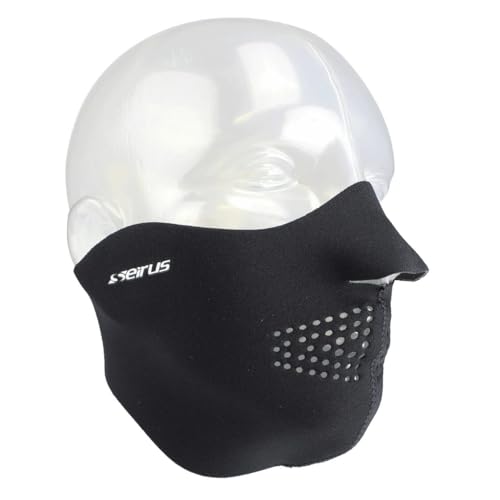
7. Seirus Innovation Original Masque Balaclava — Best for Extreme Cold
Seirus built the Original Masque around neoprene — a material typically associated with wetsuits — and the result is one of the most thermally effective face coverings available to alpine riders at any price point. The five-layer construction is the story here: tough outer shell, DryHand waterproof/breathable liner, neoprene core, Thermolite synthetic down insulation, and a wicking microfleece interior lining. That layering creates a genuinely serious thermal barrier that performs in conditions where other balaclavas require supplemental coverage.
The neoprene core is the critical differentiator. Neoprene insulates even when wet, which is significant in the context of breath moisture and heavy precipitation. Standard fleece and synthetic insulation lose thermal efficiency as they absorb moisture; neoprene does not. The DryHand liner adds waterproof/breathable protection, and the microfleece interior wicks away perspiration rather than allowing it to accumulate. This is a system designed for sustained cold, not just occasional exposure.
The Original Masque is the product our team keeps accessible for true cold-weather missions — lift-accessed backcountry zones in January, night skiing in sub-zero conditions, and high-altitude exposed ridge traverses. It's not the balaclava for warm spring days; the thermal output is heavy enough to cause overheating in mild conditions. But for riders heading to challenging mountain environments this season — and anyone considering destinations covered in our guide to the best places to ski in Italy where altitude and wind combine — the Seirus Original Masque provides reliable extreme-cold protection.
Pros:
- Five-layer construction with neoprene core for extreme cold performance
- Neoprene insulates when wet — maintains warmth through precipitation
- DryHand waterproof/breathable liner adds wind and moisture blocking
- Thermolite insulation adds supplemental warmth between neoprene and skin
- Microfleece lining wicks moisture away from face
Cons:
- Heavy thermal output is inappropriate for mild or spring conditions
- Neoprene construction is stiffer than fabric alternatives — takes time to break in
Buying Guide: How to Choose the Best Ski and Snowboard Mask
Goggle vs. Balaclava: Understanding What the Job Requires
The most common mistake in this category is treating goggles and balaclavas as interchangeable. They solve different problems. Goggles protect eyes and provide UV/glare management; balaclavas protect exposed skin from cold, wind, and frostbite. Most serious riders use both, layered together. When building a face-protection system, start by identifying the primary vulnerability: for optical clarity in variable light, prioritize goggle lens technology. For sub-zero skin exposure, prioritize the balaclava. A premium goggle on a cold bare face is inadequate. A warm balaclava worn without goggles on a bright powder day leads to snow blindness. The complete solution requires both categories addressed.
Lens Technology and VLT: Matching Lenses to Light Conditions
VLT — Visible Light Transmission — is the single most important spec for goggle lens selection. It measures what percentage of available light passes through the lens:
- Low VLT (5–20%): Bright, sunny alpine conditions. Dark tints like grey and black mirrors. Reduces glare aggressively.
- Mid VLT (20–50%): All-mountain and variable conditions. Rose, amber, and red tints. The most versatile range.
- High VLT (50–90%): Overcast, flat light, dawn, and dusk. Yellow and clear lenses maximize available light for terrain definition.
Premium optical technologies like PRIZM (Oakley) and ChromaPop (Smith) work within their VLT range to enhance contrast — they don't replace the need to match VLT to conditions, but they significantly improve performance within the appropriate range. Buyers who ski in highly variable conditions benefit most from a two-lens system with fast-swap capability.
Anti-Fog Performance: Why It Fails and How to Prevent It
Goggle fogging is primarily a thermal management problem. Warm, moist air from breathing and exertion meets the cold inner lens surface and condenses. Three design elements combat this:
- Dual-lens construction: Creates an insulating air gap that keeps the inner lens closer to face temperature, reducing condensation
- Anti-fog coatings: Chemical treatments on the inner lens surface that resist condensation — effective but degrade with cleaning; never wipe the inner lens
- Ventilation integration: Frame vents channeling cool dry air across the lens; most effective in helmets with integrated goggle ventilation like Smith's AirEvac system
The practical implication: goggles used during high-output aerobic activity need aggressive ventilation. Goggles used primarily at lift-served resorts at moderate effort levels can rely more on coating and dual-lens insulation.
Balaclava Materials: Warmth vs. Breathability Trade-offs
No single balaclava material maximizes both warmth and breathability. Understanding the trade-offs allows for correct selection by condition:
- Neoprene: Maximum thermal performance, waterproof, insulates when wet. Heavy and stiff. Correct choice for extreme cold and severe wind.
- Fleece: Soft, comfortable, good warmth-to-weight. Breathable. Loses insulation when wet. Best for moderate cold and aerobic activity.
- ColdGear / technical synthetics: DWR-treated fabrics that balance breathability and water resistance. Optimal for sustained athletic effort in variable conditions.
- Mesh-panel designs: Targeted ventilation in the breath zone for high-output effort. Reduce overall warmth for the benefit of moisture management and goggle-fogging prevention.
What People Ask
What is the difference between a ski mask and a balaclava?
A ski mask typically refers to a face covering that protects the nose, cheeks, and chin while leaving eyes exposed or covered by goggles. A balaclava is a full-head covering that protects the face, head, and neck simultaneously. In practical alpine use, the terms are often used interchangeably, but balaclavas technically provide more complete coverage, including neck and skull protection. Both are worn under goggles in cold conditions.
Can ski goggles be worn over prescription glasses?
Yes — OTG (Over The Glasses) goggles like the OutdoorMaster model on this list are specifically designed with wider interior frames and cutouts to accommodate prescription eyewear. Standard goggles can technically fit over small glasses frames but often create pressure points and degrade the facial seal. For prescription eyewear users, OTG-specific designs are the correct solution. Premium goggles like the Oakley Flight Deck XM also include prescription compatibility features via discreet frame notches.
How do we prevent ski goggles from fogging?
Several practices reduce fogging significantly. Never wipe the inner lens surface — anti-fog coatings are chemically applied and wiping degrades them permanently; use gentle air drying only. Ensure adequate ventilation by not blocking goggle vents with hats or helmet padding. Use goggles with dual-layer lens construction and integrated ventilation systems. During high-aerobic activities like mogul runs or bootpacking, pull the goggle slightly from the face during rest periods to allow moisture to escape. Magnetic-lens systems that allow fast swaps also allow the inner lens to dry between runs.
What VLT goggle lens is best for overcast and flat-light conditions?
High VLT lenses in the 50–90% range perform best in overcast and flat-light conditions. Yellow, gold, and rose-tinted lenses in this range maximize available light transmission while enhancing contrast between snow surface variations that are otherwise invisible in flat gray light. On a uniformly overcast day, a dark mirror lens with 10% VLT makes terrain reading genuinely dangerous. Carrying a high-VLT spare lens — or selecting a goggle system with fast magnetic lens swap — is the practical solution for riders who encounter variable conditions regularly.
How cold does it need to be before a balaclava is necessary?
Below 25°F (-4°C), especially with any wind, exposed facial skin begins to lose heat faster than it can maintain comfortable temperature. At 10°F (-12°C) with moderate wind, frostbite exposure time on bare skin drops to under 30 minutes. Our team recommends some form of face coverage for any day below 25°F. At resort base elevations this may seem mild, but wind-chill at speed adds significant cold stress — a 30 mph descent at 20°F creates an effective temperature closer to 0°F on exposed skin. A lightweight technical balaclava like the UA Storm ColdGear adds minimal bulk and eliminates this risk entirely.
Is it worth spending extra on PRIZM or ChromaPop lens technology?
For riders who ski more than 10 days per season in variable conditions, premium lens technology delivers a genuinely meaningful performance improvement. PRIZM and ChromaPop lenses enhance terrain contrast in ways that make navigation faster and safer — particularly in flat light where icy patches and terrain transitions are hard to read. The difference is most noticeable on technically demanding runs and in changing weather. For occasional recreational riders on groomed runs in predictable conditions, the performance gap narrows. Budget lenses perform acceptably in ideal conditions; premium lenses perform better across all conditions.
Buy on Walmart
- Oakley Flight Deck XM Snow Goggle, Mid-Sized Fit Medium — Walmart Link
- SMITH I/O MAG Goggles with ChromaPop Lens – Performance Snow — Walmart Link
- Anon M4 Goggles (Toric) + Bonus Lens + MFI Face Mask, Frame: — Walmart Link
- OutdoorMaster OTG Ski Goggles - Over Glasses Ski/Snowboard G — Walmart Link
- Under Armour Unisex Storm ColdGear Balaclava, Black (001)/Pi — Walmart Link
- Tough Headwear Balaclava Ski Mask for Men and Women - Winter — Walmart Link
- Seirus Innovation Original Masque Balaclava Headwear, Medium — Walmart Link
Buy on eBay
- Oakley Flight Deck XM Snow Goggle, Mid-Sized Fit Medium — eBay Link
- SMITH I/O MAG Goggles with ChromaPop Lens – Performance Snow — eBay Link
- Anon M4 Goggles (Toric) + Bonus Lens + MFI Face Mask, Frame: — eBay Link
- OutdoorMaster OTG Ski Goggles - Over Glasses Ski/Snowboard G — eBay Link
- Under Armour Unisex Storm ColdGear Balaclava, Black (001)/Pi — eBay Link
- Tough Headwear Balaclava Ski Mask for Men and Women - Winter — eBay Link
- Seirus Innovation Original Masque Balaclava Headwear, Medium — eBay Link
Final Thoughts
The right ski and snowboard mask is one of the highest-return investments in a mountain kit — it protects vision, prevents cold injury, and makes every run more comfortable regardless of conditions. Our top overall pick for 2026 is the Oakley Flight Deck XM for goggle performance and the Anon M4 Toric bundle for buyers wanting a complete goggle-plus-mask system, while the Seirus Original Masque stands alone for extreme cold exposure. Browse the full reviews above, match the specs to the conditions most frequently encountered, and head into the 2026 season with face protection that genuinely works.
 |
 |
 |
 |

About Frank V. Persall
Frank Persall is a lifelong skier originally from the United Kingdom who has spent years pursuing the sport across premier resorts in Europe, North America, and beyond. His passion for skiing has taken him from the Alps to the Rocky Mountains, giving him a broad perspective on resort terrain, snow conditions, gear performance across price points, and the practical realities of ski travel with a family. At SnowGaper, he covers ski resort guides, gear reviews, and skiing technique and travel resources for enthusiasts of every level.
You can get FREE Gifts. Or latest free skiing books here.
Disable Ad block to reveal all the info. Once done, hit a button below
|
|
|
|