Ski Gear ›
Best Neck Gaiters & Warmers For Skiing: Reviews, Buying Guide, and FAQs 2026
by Frank V. Persall
Which neck gaiter will actually keep you warm when the temperature drops and the wind picks up on the mountain? That's the question every skier asks before a season begins — and the answer depends on more than just price. After testing and researching the top options available in 2026, the Icebreaker Merino Flexi Chute stands out for all-day comfort and natural temperature regulation, but it's far from your only solid choice. Whether you want budget fleece, technical moisture management, or extreme cold-weather protection, there's a gaiter on this list built exactly for you.
A neck gaiter might seem like a small purchase compared to your skis or jacket, but it's the layer that makes or breaks a cold day on the slopes. Wind chill at elevation can be brutal. A bare neck and chin invite misery. The right gaiter seals that gap between your helmet and jacket, blocks gusts, and keeps you focused on the run — not how cold your face is. It's also one of the most versatile pieces of ski gear you can own, pulling double duty as a face mask, balaclava, or even a light hat depending on the style.

In this guide, you'll find in-depth reviews of seven top-rated neck gaiters and warmers for skiing in 2026, a practical buying guide to help you weigh your options, and answers to the most common questions shoppers have. If you're putting together your full cold-weather kit, you might also want to check out our picks for the best goggles for night snowboarding and skiing and the best men's ski jackets — because a great gaiter works even better when the rest of your gear is dialed in.
Contents
Best Choices for 2026
- #PreviewProductRating
- Bestseller No. 1
 Rating:

- Bestseller No. 2
 Rating:
 - Bestseller No. 3
 Rating:
 - Bestseller No. 4
 Rating:
 - Bestseller No. 5
 Rating:
 - Bestseller No. 6
 Rating:
 - Bestseller No. 7
 Rating:
Product Reviews
1. Turtle Fur Double-Layer Neck Warmer — Best Soft Fleece for Everyday Use
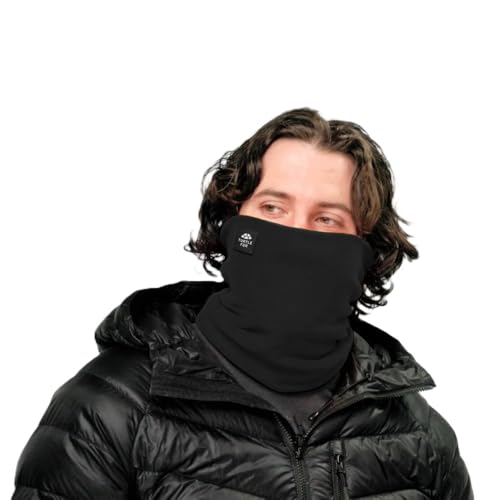
The Turtle Fur Double-Layer Neck Warmer is one of the most straightforward gaiters on this list — and sometimes that's exactly what you need. It's built from double layers of Chelonia 150 fleece, a plush, stretchy fabric that feels instantly soft against skin. No rough edges, no stiff seams, no break-in period. You pull it on and it's comfortable from the first run. For skiers who just want warmth without fuss, this gaiter delivers.
The seamless construction means there are no pressure points to irritate your neck after hours of wear. The fleece is breathable enough for active use — you won't feel suffocated on high-effort laps — and the natural stretch adapts to most head and neck sizes without needing adjustments. Turtle Fur also made this product from 100% post-consumer recycled polyester, which is worth noting if sustainable gear matters to you. It won't win awards for technical performance, but as a warm, soft, no-nonsense neck warmer, it earns its place.
The main trade-off is versatility. This is a neck warmer first — it can be pulled up to cover your chin or lower face, but it's not engineered for full face coverage the way some multi-purpose designs are. In very windy or wet conditions, you may want something with a waterproof layer. But on calm cold days at the resort? It's hard to beat for sheer comfort.
Pros:
- Extremely soft Chelonia 150 fleece — no itch, no break-in needed
- Seamless, stretchy construction fits most sizes without adjustment
- Made from 100% recycled polyester — eco-friendly choice
- Breathable enough for active skiing without overheating
- Affordable price point makes it easy to own multiples
Cons:
- Not designed for full face coverage in harsh wind or wet conditions
- Fleece can pill over time with heavy use
- Less technical than merino or moisture-wicking alternatives
2. Burton Heavyweight Neck Warmer — Best for Moisture Management
Burton knows ski gear, and the Heavyweight Neck Warmer reflects that experience. It's built on DRYRIDE Ultrawick Expedition 300 fabric — a heavyweight technical material designed to pull sweat away from your skin and dry quickly. If you run hot on the hill, sweat through hard charging sessions, or ski in wet conditions where dampness is a real concern, this fabric choice matters. You stay drier, which means you stay warmer.
The Living Lining technology adds another layer of function. It's a reactive fiber system that helps buffer temperature swings — when you're working hard and generating heat, it moves that heat away; when you stop and cool down, it helps retain warmth. The practical effect is a neck warmer that performs across a wider range of conditions than most. Add the chafe-free softlock seams and you have a product that's built for all-day comfort on busy ski days.
Burton's design is straightforward and purposeful. The True Black colorway works with almost any ski kit. The fit is generous enough to pull up over your nose without feeling constricting. For skiers who want a step up from basic fleece in technical performance — especially those who like to push hard on the mountain — this warmer earns its premium.
Pros:
- DRYRIDE Ultrawick fabric excels at moisture management
- Living Lining helps regulate temperature during activity changes
- Chafe-free softlock seams — comfortable through long days
- Burton brand quality and durability
- Works well for high-intensity skiing where sweat is a factor
Cons:
- Higher price than basic fleece options
- Single colorway available (True Black)
- Heavyweight construction may feel too warm for spring skiing
3. Merino.tech Merino Wool Ski Neck Gaiter — Best Merino Value
If you've been curious about merino wool but haven't wanted to spend big money on it, the Merino.tech gaiter is a compelling entry point. It's made from 100% Superfine Merino Wool at 17.5 micron — that's the fine, soft grade of merino that sits comfortably against sensitive skin without any scratching or itching. If past experiences with wool have turned you off, this fabric is a different story. It's genuinely soft from day one.
The 4-way stretch design fits head circumferences from 20 to 24 inches, which covers nearly everyone. Merino wool is naturally moisture-wicking, breathable in warm conditions, and insulating when cold — all without retaining odors the way synthetic fabrics tend to. The UPF 50+ sun protection is a bonus for spring skiing or high-altitude days when UV exposure is real. This gaiter transitions well from skiing to everyday cold-weather wear, so you'll get use out of it beyond the mountain.
At its price point, Merino.tech delivers material quality that punches well above its weight. It's thinner than some heavyweight fleece options, so on very cold days you might layer it under something else — but for three-season skiing and moderate cold, it covers everything you need. Solid construction, natural performance, and a price tag that doesn't sting.
Pros:
- 100% Superfine Merino Wool — soft, non-itchy, premium feel
- Natural moisture-wicking and temperature regulation
- Odor-resistant — stays fresh over multiple wears
- UPF 50+ sun protection for spring and high-altitude days
- Strong value for merino quality at this price
Cons:
- Thinner than heavyweight fleece — may need layering in extreme cold
- Merino wool requires more careful washing than synthetics
4. Icebreaker Merino Flexi Chute — Best Premium Merino All-Day Gaiter
Icebreaker is one of the most trusted names in merino wool outerwear, and the Flexi Chute lives up to that reputation. Built from 100% pure merino wool in a 200GM Jersey construction, this gaiter is double-layered for warmth without bulk. It sits comfortably against your skin for hours — non-itchy, non-clammy, and surprisingly light given how warm it keeps you. This is the gaiter for people who know they want quality and are willing to invest in it.
Merino wool at this weight and quality naturally regulates body temperature. When you're pushing hard on a steep run, it breathes and moves sweat away. When you're waiting on the lift and the wind cuts through, it insulates. You don't have to think about it — it just works. The Flexi Chute is also naturally odor-resistant, which is real when you're wearing something this close to your face for an entire ski trip. You can get multiple days of wear out of it without issues.
The design is clean and versatile — it works equally well as a neck gaiter, a partial face mask pulled up over the nose, or even a light hat in a pinch. Icebreaker sources its wool responsibly, which matters to environmentally conscious buyers. If you're the type who carefully chooses each piece of kit and wants gear that lasts for seasons rather than one winter, this is a strong pick.
Pros:
- Premium 100% merino wool — genuinely warm, soft, and odor-resistant
- Double-layer 200GM Jersey for all-day comfort
- Natural temperature regulation across a wide activity range
- Non-itchy fabric excellent for direct skin contact
- Durable and built to last multiple seasons
- Sustainably sourced merino wool
Cons:
- Premium price — the most expensive option on this list
- Requires gentle washing to maintain shape and softness
5. TICONN Neck Gaiter Face Cover Scarf — Best Budget Fleece Pick
The TICONN Neck Gaiter is the grab-and-go option on this list — simple, warm, stretchy, and priced so that losing it in the lodge won't ruin your day. At 10 inches by 9 inches with full stretch capability, it fits most adults as a versatile cold-weather gaiter that works for skiing, hiking, cycling, running, and more. The thick fleece material provides genuine warmth on cold days, and it breathes enough to wear during active runs without feeling suffocating.
You can wear it as a neck warmer, pull it up as a face cover, or fold it into a headband or hat. The fleece is soft enough for direct face contact, which is the main thing you want from a ski gaiter. No rough seams, no scratchy fabric against your nose and chin. It's a simple product that does its simple job well.
Don't expect technical performance from the TICONN — it's not moisture-wicking the way Burton's DRYRIDE is, and it won't regulate temperature the way merino does. But if you need an affordable, reliable cold-weather gaiter that packs flat and can live in your ski bag all season, this is a great choice. It's also a smart pick to keep a couple extras on hand for family members or friends who join you on the mountain.
Pros:
- Very affordable — easy to own multiples
- Thick, warm fleece that's soft against skin
- Versatile — works as gaiter, face cover, hat, or headband
- Stretchy universal fit works for most adults
- Packable and lightweight for easy transport
Cons:
- No moisture-wicking or technical performance features
- Not ideal for high-intensity skiing where sweat management matters
- Less durable long-term than premium options
6. BULA Convertible Balaclava Tactical Mask Neck Gaiter 2-Pack — Best 4-in-1 Versatility
The BULA Convertible Balaclava is the most versatile option on this list. One piece of gear that converts between four configurations — hood, face mask, neck gaiter, and full balaclava — means you're covered for whatever conditions you encounter on the mountain. And since it comes as a 2-pack, you're getting two units for the price most single gaiters run, which makes the math work out well.
The fabric is Polartec performance fleece (Polartec is a well-known technical fabric brand used across the ski industry), which means you're getting a material built for breathability, durability, and non-pilling performance over time. A cheap fleece will start looking ragged after a season of use — Polartec-based fabrics hold up much better. The balaclava configuration is particularly useful for truly brutal days when wind and cold demand full face coverage, something a basic neck gaiter can't provide.
The S/M sizing is worth noting — this fits most adults, but if you have a larger head you may want to verify sizing before ordering. Overall, if you're the type of skier who encounters widely varying conditions — warm mornings, cold afternoons, windy ridgelines, sheltered bowls — the BULA gives you options that a single-purpose gaiter doesn't. The 2-pack value makes it especially easy to recommend.
Pros:
- 4-in-1 design: hood, mask, neck gaiter, full balaclava
- Polartec performance fabric — breathable, durable, non-pilling
- Comes as a 2-pack — excellent value
- Full balaclava mode ideal for extreme cold and wind
- One product that handles a wide range of conditions
Cons:
- S/M sizing — may not fit larger head sizes
- Convertible designs can be slightly bulkier than simple gaiters
7. Seirus Innovation 8030 Neofleece Combo Scarf — Best for Extreme Cold
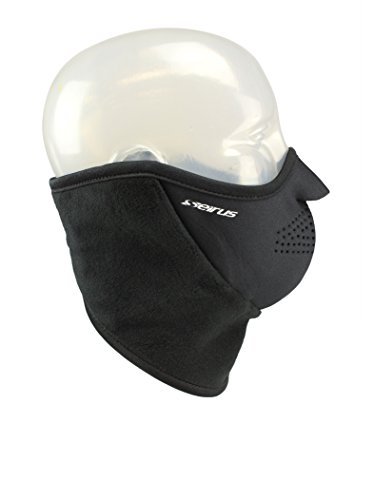
The Seirus Innovation Neofleece Combo Scarf is built for people who ski in genuinely cold conditions and need gear that takes it seriously. This is not a simple fleece tube. It features a 5-layer construction that includes a tough outer shell, a waterproof and breathable liner, fleece-lined neoprene (neoprene is the same insulating rubber-like material used in wetsuits), Thermolite synthetic down insulation, and a microfleece wicking lining against your skin. That's an engineered system, not a stretchy sock.
The result is a face and neck masque that is genuinely waterproof, wind-resistant, and warm even when conditions are at their worst. Powder days, blizzard runs, lift rides in sub-zero temperatures — this is the gaiter that holds up when lighter options start letting cold air through. The adjustable Velcro closure at the back lets you dial the fit precisely, which also means easy on and off without removing gloves.
The trade-off is that this is a specialized piece of gear. It's heavier and less packable than the simpler gaiters on this list. On moderate ski days, it may be more than you need. But if your home mountain is a cold one, or you regularly encounter windchills below zero, the Seirus fills a gap that softer fleece options simply can't. If you're also investing in a full cold-weather kit, pairing this with a set of heated ski gloves makes for a formidable defense against brutal mountain cold.
Pros:
- 5-layer construction — waterproof, windproof, and genuinely warm
- Neoprene core with Thermolite insulation for extreme cold performance
- Adjustable Velcro closure for a precise, secure fit
- Face mask and neck warmer in one integrated piece
- Best choice for consistently cold and windy ski environments
Cons:
- Heavier and bulkier than simple fleece or merino gaiters
- Overkill for mild ski days or spring conditions
- Less breathable than thin merino or synthetic gaiters under hard exertion

Choosing the Right Neck Gaiter for Skiing: A Buying Guide
Buying a neck gaiter sounds simple, but the differences between options are real — and the wrong choice can leave you cold, sweaty, or uncomfortable on the mountain. Here's what to think about before you decide.
Material: Fleece, Merino Wool, or Technical Synthetic?
The fabric your gaiter is made from determines how it performs. There are three main categories to understand:
- Fleece (polyester) — Soft, affordable, quick-drying. Great for casual skiers and cold but dry days. Doesn't regulate temperature as naturally as wool, and standard fleece can absorb sweat without moving it away. Chelonia and Polartec fleece are higher-quality versions that perform better than generic options.
- Merino wool — The gold standard for all-day comfort. Naturally temperature-regulating, moisture-wicking, and odor-resistant. Soft against skin with no itch. The trade-off is price and care requirements — merino needs gentle washing. If you're skiing frequently and wearing your gaiter for full days, merino pays for itself in comfort.
- Technical synthetics (like DRYRIDE or neoprene composites) — Engineered for specific performance. DRYRIDE excels at moisture management. Neoprene composites with waterproof liners are best for extreme cold and wet conditions. These are the right choice when basic warmth isn't enough and you need active performance from your gear.
Coverage and Configuration
How much of your face do you want covered? Different designs serve different needs:
- Simple neck tube — Covers neck and chin. Pulls up over the nose when needed. Most common and versatile form. Works for most recreational skiers.
- Face mask / scarf combo — Integrated design that covers the lower face and neck. Better seal in windy conditions. The Seirus Neofleece is a good example.
- Convertible balaclava — Adjusts between multiple configurations. Full head coverage available when needed. The BULA 2-pack is the best example here. Ideal for skiers who face changing conditions throughout the day.
Think about where you ski. If you're mostly on groomed runs at a resort with lifts, a basic neck tube gives you plenty of coverage. If you're doing long lift rides exposed to wind, or skiing off-piste in harsher conditions, more coverage options become worth it.
Fit and Sizing
A neck gaiter that's too loose will let cold air in and slip around. One that's too tight will feel uncomfortable after an hour. Here's what to look for:
- Most gaiters are one-size with stretch — check the stated head circumference range (typically 20–24 inches covers most adults)
- Seamless construction eliminates pressure points during extended wear
- Adjustable closures (like Velcro) let you dial the fit precisely — especially useful for face masques
- If you run between sizes, merino and quality fleece have enough stretch to accommodate
Breathability and Moisture Management
This matters more than most buyers expect. When you're skiing hard, your body generates heat and sweat — even your face and neck area. A gaiter that traps moisture against your skin will feel cold and clammy the moment you slow down. Consider these factors:
- Thin merino wool breathes better than most synthetic fabrics during high-exertion activity
- Technical moisture-wicking fabrics (like DRYRIDE) actively move sweat away — better for aggressive skiers
- Thick fleece is warm but less breathable — better for casual use and lift riding than hard skiing
- Waterproof layers (like in the Seirus) are warm and weather-resistant but sacrifice breathability — suited for extreme conditions, not all-day wear
If you already have your base layer sorted, it's worth thinking about how your neck gaiter fits into that system. The right combination — a moisture-wicking base, a breathable mid-layer, and a wind-blocking outer shell — is what keeps you comfortable in everything you wear to the ski resort.
Frequently Asked Questions
What is the difference between a neck gaiter and a neck warmer?
The terms are often used interchangeably, but there's a subtle distinction. A neck gaiter is typically a tube of fabric that fits over your head and can be pulled up to cover your face — it's designed to be adjustable and multi-functional. A neck warmer usually refers specifically to gear that stays around the neck and chin area without being pulled up as a face mask. In practice, most products marketed as ski neck warmers are gaiters that do both, so the difference mostly comes down to marketing language rather than a firm category rule.
Is merino wool or fleece better for ski neck gaiters?
Both materials have real strengths. Merino wool regulates temperature more naturally — it keeps you warm when cold and breathes when you're working hard — and it resists odors over multiple wears. Fleece is warmer per dollar and dries faster than wool after getting wet. For all-day skiing across varying conditions, merino is generally the more comfortable long-term choice. For budget-conscious buyers, or skiers who only need a gaiter for cold lift rides rather than full days on the mountain, quality fleece like Chelonia or Polartec performs well at a lower price.
Can I wear a neck gaiter instead of a ski mask or balaclava?
Yes — and for most recreational skiers, a well-fitting neck gaiter is all you need. Modern gaiters can be pulled up to cover your nose and chin, providing effective wind and cold protection for lift rides and runs. A full balaclava offers more complete coverage including the forehead and top of the head, which matters in extremely cold or windy conditions. A convertible design like the BULA balaclava gives you both options in one piece of gear. If you're skiing in consistently harsh conditions — strong winds, sub-zero temperatures, or long exposed lift rides — a balaclava configuration is worth having available.
How do I wash a merino wool neck gaiter?
Merino wool requires gentler care than fleece or synthetic gaiters. Machine wash on a cold, gentle cycle using a wool-safe or mild detergent. Avoid hot water and high heat, which can cause merino to shrink or lose its shape. Do not wring or twist the gaiter when wet — press out excess water gently. Lay flat to air dry rather than putting it in the dryer. With proper care, a quality merino gaiter like the Icebreaker Flexi Chute or Merino.tech will last multiple seasons without losing softness or performance.
Should a ski neck gaiter fit over my helmet?
A neck gaiter does not need to fit over your helmet — it sits between your helmet and your jacket collar. You put the gaiter on first, then your helmet on top. The gaiter seals the gap between your neck and the bottom edge of your helmet. When pulled up, it covers your nose and chin area below your goggles. For this reason, fit around your neck and face matters more than any interaction with your helmet. If you find the fit uncomfortable between your helmet and gaiter, check whether the gaiter is too thick for your helmet's lower profile, and consider a thinner merino option.
Are neck gaiters suitable for skiing in 2026 compared to face masks?
Neck gaiters remain the preferred choice for most skiers in 2026. They're more versatile than rigid face masks, breathe better during active skiing, and can be adjusted easily during the day — pushed down when you're working hard, pulled up on the lift or in wind. Dedicated face masks can offer better sealing for extreme conditions, but the trade-off in breathability makes them impractical for full ski days. The convertible designs that combine gaiter and mask functionality — like the BULA or Seirus options — offer the best of both worlds for skiers who want options depending on the day.
Buy on Walmart
- Turtle Fur Double-Layer Neck Warmer - Ultra-Soft, Stretchy C — Walmart Link
- Burton Heavyweight Neck Warmer, True Black, One Size — Walmart Link
- Merino.tech Merino Wool Ski Neck Gaiter - Face Mask Neck War — Walmart Link
- Icebreaker Merino Flexi Chute Ski Neck Gaiter For Women, Men — Walmart Link
- TICONN Neck Gaiter Face Cover Scarf, Neck Warmer Breathable — Walmart Link
- BULA Convertible Balaclava Tactical Mask Neck Gaiter 2-pack — Walmart Link
- Seirus Innovation 8030 Neofleece Combo Scarf - Face and Neck — Walmart Link
Buy on eBay
- Turtle Fur Double-Layer Neck Warmer - Ultra-Soft, Stretchy C — eBay Link
- Burton Heavyweight Neck Warmer, True Black, One Size — eBay Link
- Merino.tech Merino Wool Ski Neck Gaiter - Face Mask Neck War — eBay Link
- Icebreaker Merino Flexi Chute Ski Neck Gaiter For Women, Men — eBay Link
- TICONN Neck Gaiter Face Cover Scarf, Neck Warmer Breathable — eBay Link
- BULA Convertible Balaclava Tactical Mask Neck Gaiter 2-pack — eBay Link
- Seirus Innovation 8030 Neofleece Combo Scarf - Face and Neck — eBay Link
Key Takeaways
- For all-day comfort and natural temperature regulation, the Icebreaker Merino Flexi Chute is the top premium pick — it breathes on hard runs, insulates on the lift, and stays odor-free over multiple days of wear.
- If you ski hard and run warm, the Burton Heavyweight Neck Warmer is worth the price for its DRYRIDE moisture management and Living Lining temperature regulation.
- The BULA Convertible Balaclava 2-Pack is the best value for versatility — four configurations in one piece of Polartec gear, sold in pairs, covers any condition you'll encounter on the mountain.
- For extreme cold and wind protection where basic gaiters fall short, the Seirus Neofleece 5-Layer Combo Scarf is the purpose-built solution that no simple fleece tube can match.
 |
 |
 |
 |

About Frank V. Persall
Frank Persall is a lifelong skier originally from the United Kingdom who has spent years pursuing the sport across premier resorts in Europe, North America, and beyond. His passion for skiing has taken him from the Alps to the Rocky Mountains, giving him a broad perspective on resort terrain, snow conditions, gear performance across price points, and the practical realities of ski travel with a family. At SnowGaper, he covers ski resort guides, gear reviews, and skiing technique and travel resources for enthusiasts of every level.
You can get FREE Gifts. Or latest free skiing books here.
Disable Ad block to reveal all the info. Once done, hit a button below
|
|
|
|