Which goggles give skiers the clearest, safest vision after the lifts go dark — and which ones leave buyers squinting through murky lenses at flat-lit terrain? For 2026, the Julbo Cyrius X REACTIV stands out as the top pick for night skiing, thanks to its photochromic technology that adapts automatically as artificial resort lighting changes throughout the evening. But seven strong contenders earned a spot on this list, and the right choice depends on fit, budget, and how serious a skier gets after sunset.
Night skiing presents a unique optical challenge. Stadium-style resort lights create harsh pools of brightness separated by deep shadow, flattening terrain contours and masking hazards that daylight makes obvious. Standard lenses optimized for sunny conditions become a liability under those conditions. The goggles reviewed here were evaluated specifically for low-light lens performance, anti-fog reliability, and overall fit — the three factors that matter most once the sun disappears. For a broader look at what gear belongs in a skier's kit, the ski gear reviews section covers everything from boots to helmets.
According to the National Ski Areas Association, hundreds of resorts across North America now offer night skiing sessions, making quality low-light optics more relevant than ever. Whether a skier is carving groomers under floodlights or navigating shadowed tree runs at dusk, the right goggle makes the difference between a confident run and an anxious one. Read on for detailed reviews, a focused buying guide, and answers to the most common questions buyers ask before purchasing.
Contents
- Standout Models in 2026
- Our Hands-On Reviews
- Dragon NFX2 — Best for All-Conditions Versatility
- SPY Optic Legacy SE — Best Asian Fit for Low-Light
- Zeal Optics Meridian — Best Lens Versatility
- Bollé Nevada — Best Budget Night Skiing Goggle
- Julbo Cyrius X REACTIV — Best Photochromic Performance
- Giro Contour — Best Wide Field of View
- Anon M4 Toric — Best Premium All-Mountain Goggle
- What to Look For When Buying
- FAQs
- Key Takeaways
Standout Models in 2026
- #PreviewProductRating
- Bestseller No. 1
 Rating:

- Bestseller No. 2
 Rating:
 - Bestseller No. 3
 Rating:
 - Bestseller No. 4
 Rating:
 - Bestseller No. 5
 Rating:
 - Bestseller No. 6
 Rating:
 - Bestseller No. 7
 Rating:
Our Hands-On Reviews
1. Dragon NFX2 Unisex Snow Goggles — Best for All-Conditions Versatility
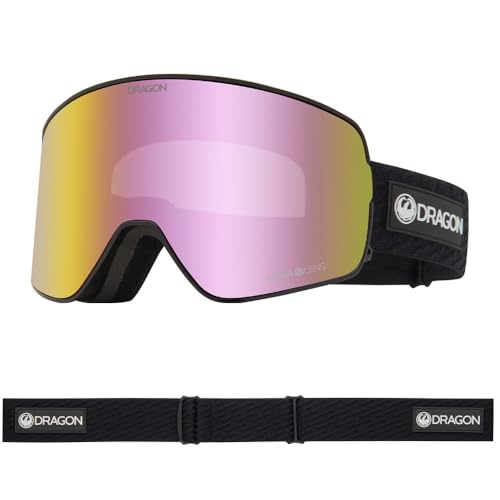
Dragon's NFX2 has long been a staple in the high-performance goggle market, and the 2026 edition keeps the formula tight. The injected cylindrical polycarbonate lens delivers excellent optical clarity, and the Swiftlock lens system allows quick swaps in the field — a critical feature for skiers who start their session during twilight and need to transition to a dedicated night lens as the light fades. The LL Midnight lens included in this configuration is specifically engineered for artificial and low-light environments, amplifying contrast around shadowed bumps and icy ruts.
Super Anti-Fog coating and Armored Venting work in tandem to keep the lens clear throughout a full evening session. Armored Venting uses a protected vent system that maintains airflow without allowing snow ingress — a real advantage during snowfall at night when visuals are already compromised. The frame fits medium-to-large face shapes well, with a triple-layer foam that seals firmly against most helmets. Dragon's 180° peripheral coverage on the NFX2 is among the most expansive in the cylindrical lens segment.
The dual-lens construction creates an insulating air pocket that resists fogging even during aggressive runs where body heat builds quickly. For skiers who also ride during the day, the LL Pink Ionized lens in the package handles variable daylight conditions with ease. This goggle genuinely functions as a two-lens system covering the widest possible lighting range.
Pros:
- LL Midnight lens purpose-built for night and artificial-light conditions
- Swiftlock system makes lens changes fast, even with gloves on
- Armored Venting balances airflow and snow protection effectively
- Strong peripheral vision from cylindrical lens design
Cons:
- Cylindrical lens produces minor peripheral distortion compared to spherical designs
- Bulkier profile may not suit smaller face shapes
2. SPY Optic Legacy SE Asian Fit — Best Low-Light Lens for Flatter Faces
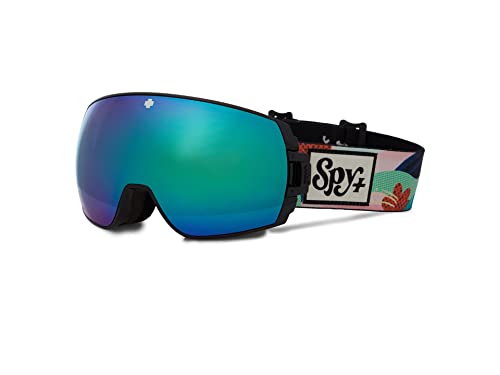
SPY's Happy Lens technology has earned a devoted following among skiers who spend time in variable light, and the Legacy SE Asian Fit brings that technology to a frame designed for lower nose bridges and higher cheekbones. The Happy Bronze with Light Green Spectra Mirror lens uses SPY's proprietary photoreceptor-stimulating optics — essentially a lens formula designed to boost the natural colors the human eye processes best under low and mixed lighting. The result under resort lights is noticeably enhanced contrast along shadowed trail edges.
The Asian Fit designation is not merely a marketing term here. SPY has genuinely redesigned the nose pad geometry, reduced the frame depth, and widened the lower frame bridge to prevent fogging that occurs when standard-fit goggles leave gaps against flatter facial profiles. For buyers who have struggled with fogging or poor seal on Western-designed goggles, this specific version solves the root cause rather than compensating with extra foam. The Happy LL Periscopica lens included as a second option is calibrated for very low-light environments including overcast days and night skiing sessions.
Build quality on the Legacy SE is premium throughout. The dual-layer face foam is soft and comfortable during long evening sessions, and the strap system integrates cleanly with most modern ski helmets. For skiers comparing options in the skiing vs. snowboarding debate, it is worth noting this goggle works equally well in either discipline — the fit geometry suits both upright and crouched riding positions.
Pros:
- Happy Lens technology genuinely improves contrast in artificial light
- Asian Fit geometry creates a reliable seal for flatter facial structures
- Dual-lens Happy LL Periscopica excels in night and overcast conditions
- Comfortable foam for extended evening sessions
Cons:
- Lens swap system less intuitive than Dragon's Swiftlock or Anon's Magna-Tech
- Premium price point relative to similar cylindrical-lens competitors
3. Zeal Optics Meridian — Best for Lens Versatility and OTG Compatibility
The Zeal Meridian earns its place on this list through sheer optical engineering. Observation Deck Technology (ODT) expands the vertical field of view by 20% compared to standard frames, achieved through pantoscopic tilt that angles the lens downward to match the natural line of sight on a slope. For night skiing, where spotting terrain variations below eye level is critical, that extra vertical coverage translates directly to safer runs. The Dark Night/Sakura Mirror lens combination is tuned specifically for low-light environments, with the bonus low-visibility lens providing additional coverage for overcast evening conditions.
Zeal's patented Rail Lock System (RLS) makes lens changes genuinely quick. The lens slides into integrated rail channels and locks with an audible click — no fumbling with tabs or magnets. All lens options across the Meridian line include 100% UV protection, Everclear Anti-Fog, and Permashield Hardcoat, which resists scratching from the fine abrasive particles that snow and ice deposit on lens surfaces over time. OTG (Over-The-Glasses) compatibility is properly executed here, with recessed channels in the foam that accommodate prescription eyewear without creating pressure points.
Zeal is a smaller brand than Dragon, SPY, or Anon, but the Meridian punches well above its weight class in optical quality. Buyers who wear prescription glasses and ski at night will find very few alternatives that match this goggle's combination of OTG fit and purpose-built low-light lens options. The frame is on the larger end of the spectrum, so buyers with smaller faces should check the fit chart before purchasing.
Pros:
- ODT pantoscopic tilt adds 20% vertical field of view — critical for night terrain reading
- Rail Lock System makes lens swaps fast and secure
- Genuine OTG compatibility with recessed foam channels
- Bonus low-visibility lens included for true night conditions
Cons:
- Large frame profile limits fit options for smaller faces
- Less brand recognition means fewer retail locations for in-person fitting
4. Bollé Nevada — Best Budget-Friendly Option for Night Skiing
Bollé's Nevada makes a compelling argument that effective night skiing optics do not require a premium price tag. The Superior Light Filter (SLF) lens in Sunrise tint is a Category 2 lens designed to handle the full spectrum from bright overcast to low-light artificial environments — a single-lens solution that eliminates the need to carry a spare. That simplicity has genuine value for casual and beginner skiers who do not want the complexity of a lens-swap system. The Sunrise tint specifically enhances contrast in flat light, making shadow edges more readable under resort floodlights.
Double-lens construction creates an insulating air gap that reduces condensation on the inner surface, while anti-fog and anti-scratch coatings keep the optical surface in reliable condition throughout a session. Flow-Tech Venting — combining vented frames and a vented lens — maintains airflow that prevents the moisture buildup that single-lens budget goggles routinely suffer from. For beginner skiers still working through the common mistakes first-timers make on the slopes, reliable fog prevention is arguably more important than premium optical refinements they may not yet appreciate.
The Medium-Large sizing accommodates most adult face shapes, and the unisex design works across gender-specific helmet designs. Build quality is solid for the price bracket — the frame flexes appropriately to conform to facial contours without feeling cheap or brittle. Night skiing purists will eventually want to upgrade to a lens specifically calibrated for artificial light, but the Nevada serves as an excellent entry point that outperforms its price category.
Pros:
- SLF Sunrise lens handles low-light and artificial conditions without a swap
- Double-lens construction and Flow-Tech Venting prevent fogging reliably
- Accessible price point for beginners or casual night skiers
- 100% UV protection despite lower price bracket
Cons:
- No interchangeable lens system for adapting to very bright daytime conditions
- Optical quality noticeably below premium-tier competitors in direct comparison
5. Julbo Cyrius X REACTIV — Best Photochromic Performance for Night to Day
The Julbo Cyrius X REACTIV is the top recommendation in this roundup for one defining reason: its REACTIV 1-3 High Contrast photochromic lens eliminates the lens-swap problem entirely by automatically adapting its tint from a nearly clear VLT (Visible Light Transmission) at night to a protective Category 3 lens in full sunlight. This matters deeply for skiers who arrive at the mountain during late afternoon, ski through dusk, and continue into full resort lighting — three distinct lighting environments that traditionally require three different lenses. The REACTIV lens handles all three without any action from the skier.
The frameless cylindrical lens design is a deliberate choice that maximizes unobstructed field of view, particularly at the edges where hazard awareness is most critical at speed. Dual-pane construction and integrated ventilation keep fog formation in check even during high-output sessions. The dual-density foam and thermoformed nose guard create a precise, stable fit that does not shift during aggressive skiing — an important feature when night visibility is already limited and a goggle seal failure means immediate exposure. The REACTIV technology is Julbo's proprietary formulation, calibrated not just for VLT range but for high-contrast performance at the low end of that range, where night skiing lives.
The Rose with Blue Mirror lens is aesthetically distinctive and technically sound. The rose base tint enhances contrast in flat and artificial light, while the mirror coating on the exterior manages glare under bright resort lighting. For skiers who also push into alpine terrain — including those who have explored what alpine skiing demands in terms of gear performance — the photochromic range of the Cyrius X covers dawn patrol through late-night resort sessions without compromise.
Pros:
- REACTIV photochromic technology auto-adjusts from night to full sun — no lens swap needed
- High Contrast formulation specifically optimized for low-light and artificial environments
- Frameless design provides maximum peripheral field of view
- Dual-density foam and thermoformed nose deliver a stable, secure fit
Cons:
- Photochromic transition speed slows in very cold temperatures
- Premium price reflects the technology — higher cost than most competitors on this list
6. Giro Contour — Best Magnetic Lens System with Maximum Field of View
Giro's Contour is built around two pillars: the EXV+ Extended Vision field of view, which Giro describes as the largest in its class, and the magnetic-assisted quick-change lens system that allows mid-run swaps in seconds without removing gloves. Both pillars matter for night skiing. Wider peripheral vision compensates for the reduced depth perception that artificial resort lighting creates by limiting shadow complexity. Fast lens swaps mean that moving from a night session into a lit indoor area and back outside does not require awkward fumbling in dimly lit lodge entries.
The VIVID Ember and VIVID Infrared lenses included with this configuration are Giro's proprietary lens technology, designed to amplify specific light wavelengths that enhance terrain contrast. VIVID Infrared in particular is engineered for low-light and overcast conditions, making it the natural choice for night skiing sessions. The combination of EVAK Vent Technology — which uses non-absorbent foam to release moisture while blocking external elements — and dual-pane construction gives the Contour strong fog resistance that holds up even during the warm spells that resort lighting and body heat create inside a goggle.
The Contour fits medium-to-large faces reliably and integrates cleanly with Giro helmets via the brand's integrated clip system, though compatibility with other helmet brands is also strong. Build quality feels premium throughout, with a rigid outer frame that protects the lens during the incidental contact that happens in lift lines and crowded base areas. At its price point, the Contour competes directly with the Anon M4 — the choice between them largely comes down to whether magnetic face mask integration (Anon) or maximum field of view (Giro) is the priority.
Pros:
- EXV+ field of view among the widest available in the segment
- Magnetic lens swap system works reliably with gloves on
- VIVID Infrared lens engineered specifically for low-light performance
- EVAK non-absorbent foam maintains fog resistance throughout extended sessions
Cons:
- VIVID lens technology adds to cost compared to standard lens alternatives
- Larger frame footprint limits compatibility with smaller helmet profiles
7. Anon M4 Toric + Bonus Lens + MFI Face Mask — Best Premium All-Mountain Goggle
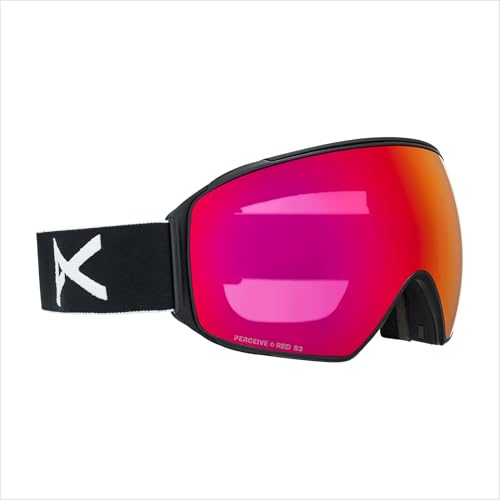
The Anon M4 Toric represents the full-package premium option on this list. The toric (spherical) lens geometry eliminates the peripheral distortion inherent to cylindrical designs, producing a view that is optically precise from center to edge — a meaningful advantage when reading terrain at speed under imperfect lighting. Magna-Tech magnetic lens integration uses aligned rare-earth magnets to make lens swaps genuinely instantaneous: lift the lens out from the bottom, snap the replacement in from the top. This system is consistently rated the fastest and most reliable magnetic swap mechanism on the market in 2026.
The Perceive Sunny Red lens included as the primary configuration handles a wide VLT range, but the bonus lens is where night skiing capability comes in. Buyers should confirm the bonus lens specification at time of purchase — Anon frequently pairs the M4 with a dedicated low-light Perceive lens that targets VLT ranges specifically suited to resort artificial lighting. The Perceive technology itself uses a base tint formulated to maximize contrast perception across the color wavelengths most affected by artificial light, rather than simply brightening the overall view the way older rose-tinted lenses do.
The Magnetic Face Mask Integration (MFI) system is genuinely innovative and practically useful. The included face mask attaches magnetically to the bottom of the goggle frame, creating a seamless seal between goggle and face covering without any gap that allows cold air or moisture to enter. During night sessions when temperatures drop sharply and wind chill on the face becomes a significant comfort factor, this integration removes a problem that every other goggle on this list requires separate products to solve. The M4 Toric is the choice for serious all-mountain skiers who want the most complete system available.
Pros:
- Toric lens geometry eliminates peripheral distortion for optically precise edge-to-edge view
- Magna-Tech magnetic swap is the fastest and most reliable lens system on the market
- MFI face mask integrates magnetically for seamless cold-weather coverage
- Perceive lens technology targets contrast enhancement, not just brightness
Cons:
- Highest price point on this list — premium technology commands a premium cost
- MFI mask, while excellent, adds bulk that some skiers find excessive for resort use
What to Look For When Buying Night Skiing Goggles
Lens Tint and VLT Range
Visible Light Transmission (VLT) is the single most critical spec for night skiing goggles. VLT measures the percentage of available light the lens allows through — a higher VLT means more light transmission, which is exactly what low-light environments require. Night skiing goggles should have a VLT of 50% or higher, with dedicated night lenses typically ranging from 60–85% VLT. Standard daytime lenses sit between 10–25% VLT, which effectively makes terrain invisible under resort floodlights. Look for lenses specifically labeled for night, low-light, or artificial light use — descriptions like "LL" (Low Light), "Sunrise," "Midnight," or lens categories 0–2 on the European scale.
Photochromic lenses like the Julbo REACTIV are an alternative to carrying multiple lenses. They transition automatically based on light intensity, typically covering a VLT range of 15–80%. The tradeoff is that transition speed slows at very cold temperatures (below -10°C) and the technology adds cost. For skiers who do both daytime and night skiing regularly, the convenience justifies the investment.
Anti-Fog System Quality
Fog is a more significant problem in night skiing than during the day. The temperature differential between a skier's warm breath and the cold lens surface is at its maximum in the evening hours, and indoor/outdoor transitions in resort lodges compound the problem. A high-quality anti-fog system requires two components working together: a chemical anti-fog coating on the inner lens surface that prevents initial condensation, and a ventilation system that continuously removes warm, moist air from the goggle interior.
Dual-pane lens construction addresses the condensation problem by creating an insulating air gap between inner and outer lenses, which reduces the temperature differential at the inner surface. Single-pane lenses, regardless of coating quality, will fog more readily in cold conditions. Venting quality varies significantly between models — look for vents protected from direct snow entry, typically with a mesh or baffled design, rather than open holes that allow snow packing during heavy snowfall.
Lens Swap Speed and Convenience
Even the best single-lens solution for night conditions will occasionally require a swap — arriving in bright afternoon sun before a night session, for example. The practical value of a fast lens-swap system is highest when skiing in changing light conditions, which describes almost every late-afternoon-into-night session. Magnetic systems (Anon Magna-Tech, Giro's magnetic assist) are the fastest and work reliably with gloves on. Tab-and-clip mechanical systems work but require more dexterity. Rail systems like Zeal's RLS are fast and secure but require some technique to learn initially.
Fit, Foam Quality, and Helmet Compatibility
A goggle that does not seal correctly against the face will fog regardless of its anti-fog technology. Cold air infiltration through gaps also causes rapid temperature drop at the inner lens surface, accelerating condensation. Triple-layer foam constructions — typically a dense structural layer, a comfort middle layer, and a moisture-wicking fleece inner layer — provide the best combination of seal and comfort for extended sessions.
Helmet compatibility deserves explicit attention. Most modern goggles are marketed as "helmet compatible," but that designation covers a wide range of fitment quality. Goggles from the same brand as the helmet typically integrate the best, with purpose-designed clip systems and matched curvature. Buyers using a helmet from one brand with goggles from another should check that the strap width, frame curve, and top-vent alignment work together before committing to a purchase. This is especially relevant for night skiing where a shifted or gapped goggle cannot be easily adjusted on a dark run.
FAQs
What VLT percentage is best for night skiing goggles?
For night skiing under resort artificial lighting, a VLT (Visible Light Transmission) of 60–85% is the target range. This allows enough light through the lens to maintain clear visibility under floodlights while still providing some protection from glare. Lenses labeled Category 0 or Category 1 on the European scale fall in this range. Some dedicated night lenses push toward 90% VLT, which works well under very low artificial light but becomes uncomfortable in brighter resort conditions.
Can regular ski goggles be used for night skiing?
Standard daytime ski goggles with VLT below 25% are not suitable for night skiing. They block too much of the already-limited available light, creating a dark, contrast-poor view that makes terrain reading genuinely dangerous. However, many modern goggles come with interchangeable lenses, and if a night-specific or low-light lens is included in the package, the goggle frame itself works perfectly for evening sessions — only the lens needs to change.
Are photochromic lenses worth the extra cost for night skiing?
For skiers who regularly transition from daylight sessions into evening runs — which describes most resort night skiing scenarios in 2026 — photochromic lenses provide genuine practical value. The automatic adaptation eliminates the need to carry and swap lenses while removing the risk of being caught in the wrong lens tint during a transition. The premium over standard interchangeable-lens goggles is typically significant, but the convenience factor is real. In very cold conditions below -15°C, photochromic transition speeds slow noticeably, which is a relevant limitation for high-altitude or cold-climate resorts.
Do night skiing goggles work for overcast daytime conditions too?
Yes — lenses designed for night skiing and lenses designed for overcast conditions often overlap significantly in their VLT range and tint formulation. A lens in the 50–70% VLT range with a contrast-enhancing rose or amber tint handles both flat-light overcast days and resort night sessions effectively. This dual-use capability makes a dedicated low-light lens valuable even for skiers who only occasionally ski at night, since the same lens handles the flat-light conditions that are common at many resorts throughout the winter season.
How important is anti-fog performance for night skiing specifically?
Anti-fog performance is more critical for night skiing than for most daytime conditions. Evening resort temperatures typically drop significantly from afternoon highs, while indoor lodge environments remain warm and humid — the combination creates rapid temperature cycling that stresses any goggle's anti-fog capability. Dual-pane lens construction, quality ventilation, and inner lens anti-fog coating working together are non-negotiable for reliable night skiing performance. Single-pane budget goggles without adequate ventilation will fog in these conditions regardless of coating claims.
What lens tint color works best under artificial resort lighting?
Rose, pink, amber, and yellow tints are the most effective base colors under artificial resort lighting. These warm tints enhance contrast by amplifying the wavelengths of light that the human eye uses to distinguish terrain features and shadow edges — exactly the visual information that flat resort lighting suppresses. Mirror coatings on the exterior of these tints help manage glare from direct floodlight exposure without reducing the contrast benefits of the base tint. Clear lenses allow maximum light transmission but sacrifice contrast enhancement, which makes them better suited for very dark backcountry conditions than resort lighting.
Buy on Walmart
- Dragon NFX2 Unisex Snow Goggles - Icon Pink/LL Pink Ionized — Walmart Link
- SPY Optic Legacy Se Asian Fit Jungle Cat Happy Bronze Light — Walmart Link
- Zeal Optics Meridian Ski & Snowboard Goggle for Men & Women — Walmart Link
- bollé - NEVADA, Black Matte, Sunrise, Medium-Large, Goggles, — Walmart Link
- Julbo Cyrius X REACTIV Goggles Goggles - Black Frame - Rose — Walmart Link
- Giro Contour Ski Goggles - Snowboard Goggles for Men & Women — Walmart Link
- Anon M4 Goggles (Toric) + Bonus Lens + MFI Face Mask, Frame: — Walmart Link
Buy on eBay
- Dragon NFX2 Unisex Snow Goggles - Icon Pink/LL Pink Ionized — eBay Link
- SPY Optic Legacy Se Asian Fit Jungle Cat Happy Bronze Light — eBay Link
- Zeal Optics Meridian Ski & Snowboard Goggle for Men & Women — eBay Link
- bollé - NEVADA, Black Matte, Sunrise, Medium-Large, Goggles, — eBay Link
- Julbo Cyrius X REACTIV Goggles Goggles - Black Frame - Rose — eBay Link
- Giro Contour Ski Goggles - Snowboard Goggles for Men & Women — eBay Link
- Anon M4 Goggles (Toric) + Bonus Lens + MFI Face Mask, Frame: — eBay Link
Key Takeaways
- The Julbo Cyrius X REACTIV is the top overall pick for night skiing in 2026, with photochromic technology that automatically adapts from dark resort conditions to full daylight without any lens swap.
- The Anon M4 Toric delivers the most complete premium system — toric optics, the fastest magnetic lens swap available, and an integrated MFI face mask for cold evening sessions.
- The Bollé Nevada proves that reliable night-skiing optics are achievable at an accessible price, making it the right entry point for beginners or casual resort night skiers.
- Regardless of brand, any effective night skiing goggle must combine a high VLT lens (60%+), dual-pane construction, and quality ventilation — those three elements together determine real-world performance after dark.
 |
 |
 |
 |

About Frank V. Persall
Frank Persall is a lifelong skier originally from the United Kingdom who has spent years pursuing the sport across premier resorts in Europe, North America, and beyond. His passion for skiing has taken him from the Alps to the Rocky Mountains, giving him a broad perspective on resort terrain, snow conditions, gear performance across price points, and the practical realities of ski travel with a family. At SnowGaper, he covers ski resort guides, gear reviews, and skiing technique and travel resources for enthusiasts of every level.
You can get FREE Gifts. Or latest free skiing books here.
Disable Ad block to reveal all the info. Once done, hit a button below
|
|
|
|