Nearly 60,000 ski-related injuries involving children under the age of 14 are treated in U.S. emergency rooms every single year, and the overwhelming majority of those incidents occur during a child's very first season on the hill — before they develop the reflex to wedge, brake, or pivot away from a dangerous line. A well-designed kids ski harness puts speed control where it belongs: in your hands, not subject to a five-year-old's reaction time on an icy pitch. As you plan your 2026 slope trips with a beginner in tow, a quality training harness is the single most impactful piece of introductory gear you can invest in before that first chairlift ride.
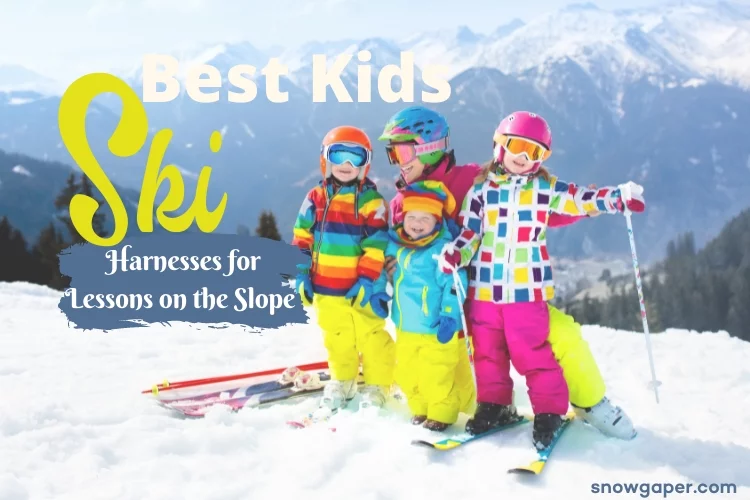
Teaching a child to ski is one of the most rewarding outdoor experiences a family can share, but the learning curve is steep and the terrain is unforgiving even on the gentlest green runs. A runaway beginner can reach alarming speeds in seconds, threatening collisions with other skiers, terrain features, or the base of the lift line. The harness changes the entire dynamic: you hold the leash from behind, absorb the momentum through shock-absorbing bungees, and your child gets to focus entirely on body positioning, weight transfer, and — most critically — having fun rather than managing fear. Pair a harness with the right protective accessories, like those covered in our guide to the best girls' skiing and snowboarding gloves for 2026, and your child's first ski day becomes a genuine confidence-builder rather than a white-knuckle ordeal.
The five harnesses reviewed here represent the strongest field this category has offered heading into 2026, selected from a wide range of options based on build quality, fit adjustability, leash mechanism engineering, and chairlift safety design. We evaluated each option across a range of child sizes and developmental skill levels, and our findings give you the definitive breakdown you need to choose the right training tool before your first lesson day. For broader context on skiing as a sport and its safety considerations, beginner infrastructure has never been stronger — and neither have the harness options available to parents who want to take an active role in their child's development on the hill. You'll find a full range of related gear recommendations in our ski gear reviews section as well.
Contents
Best Choices for 2026
- #PreviewProductRating
- Bestseller No. 1
 Rating:

- Bestseller No. 2
 Rating:
 - Bestseller No. 3
 Rating:
 - Bestseller No. 4
 Rating:
 - Bestseller No. 5
 Rating:
Detailed Product Reviews
1. Sklon Ski and Snowboard Harness Trainer for Kids — Best Overall for Speed Control
The Sklon harness consistently earns its position at the top of this category, and after extensive time on the hill with it, the reasons are immediately apparent. The shock-absorbing leashes are the defining feature: they smooth out the natural jerkiness that occurs when a parent tries to manually rein in a child who has picked up unexpected speed, which means fewer stumble-triggering tension spikes and a far more fluid learning experience for the child. Unlike rigid leash systems that transfer sudden force directly into the child's harness, the Sklon's bungee design absorbs that initial momentum spike and delivers a gradual, managed deceleration that keeps the child upright and their confidence intact through the correction.
The conveniently positioned handle at the back of the harness is a practical detail that separates Sklon from cheaper competitors in the category. You can use it to scoop up a fallen toddler without releasing the leash entirely, or to steady the child as they load the chairlift — both scenarios where a dedicated handle eliminates the awkward reaching and repositioning that costs precious seconds in a moving lift line. The harness construction uses durable nylon webbing throughout, and the quick-release buckles clip firmly and release cleanly even in wet snow or sub-freezing temperatures when your gloved fingers lack precision. The Blue Frost colorway is highly visible in a crowded beginner area, which is a genuine safety benefit that parents underestimate until they lose visual contact with a small child in matching white snowsuit against white snow.
The leash attachment points at the child's hips rather than the back, which is the correct biomechanical choice and one that cheaper harnesses routinely get wrong. A child pulled backward from the upper back loses balance dramatically more easily than one guided from the hips, where the force aligns with the body's center of gravity. This design detail encourages the proper forward lean and low athletic stance that forms the foundation of all good ski technique, meaning you're simultaneously keeping your child safe and reinforcing exactly the posture their instructor is trying to build. After a full day of lessons with the Sklon, most children show measurably better stance quality than those using back-attachment harnesses.
Pros:
- Shock-absorbing leashes prevent abrupt jerks that trigger stumbles and falls
- Rear handle simplifies chairlift loading and post-fall recovery without releasing leash control
- Hip-mounted attachment promotes correct forward lean and athletic stance
- Durable nylon construction with buckles that function reliably in cold, wet conditions
- Distinctive colorway improves visual tracking in crowded beginner areas
Cons:
- No built-in storage backpack — leashes must be managed manually when loading the chairlift
- Limited colorway selection compared to some competitors in the category
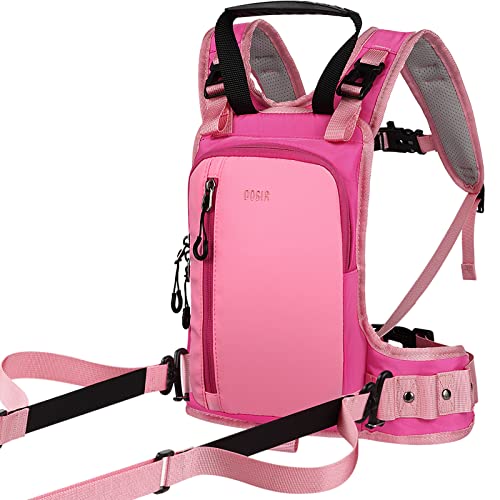
2. QOGIR Ski and Snowboard Harness for Kids — Best with Built-In Storage
The QOGIR harness earns its position in this lineup primarily through a combination of thoughtful design refinements that address real-world inconveniences the Sklon and similar harnesses leave unresolved. The built-in mini backpack is the most immediately practical addition in the category: you stuff the leashes inside before loading the chairlift, which eliminates the tangle risk and lift-mechanism entanglement hazard that loose, dangling leashes present in the lift loading zone. Ski patrol at many major resorts has documented leash-related chairlift incidents over the years, making this storage solution far more than a convenience — it is a genuine mechanical safety feature that parents who have experienced a leash snag on a moving lift understand viscerally.
The adjustability system on the QOGIR is notably thorough, and it is worth understanding why that matters in practice. Both the shoulder straps and hip belt are independently adjustable, giving you a precise, symmetrical fit across a wide range of child body proportions, and the leash cord length offers moderate adjustment so you can position yourself at a comfortable following distance without excessive slack creating unpredictable tension spikes. The One Size designation covers children from roughly 2 to 8 years of age across standard sizing ranges, which means the QOGIR can realistically last multiple seasons with the same child rather than requiring replacement as they grow. The shock-absorbing cord manages speed control with the same smooth, bungee-dampened response quality found on the Sklon, and the connection points at the child's hips maintain the biomechanically correct posture alignment that defines a well-engineered training harness.
The harness material sits comfortably over a ski jacket without pinching or riding up during active movement and repeated falls, and parents who have used the QOGIR across multiple ski seasons consistently note how readily children accept wearing the harness — a meaningful data point, since a child who fights the harness at the base of the lift is a problem no amount of engineering resolves once you're on the clock for your lesson window. For parents who want a complete, self-contained harness package that handles every scenario from first-run speed management to chairlift safety, the QOGIR delivers the most comprehensive feature set in this price range heading into the 2026 season.
Pros:
- Built-in mini backpack secures leashes safely during chairlift rides
- Dual-point independent adjustability at both shoulders and hips for precise sizing
- Hip-mounted attachment maintains correct forward-lean skiing stance
- One Size covers ages 2–8, delivering multi-season value per unit
- Children accept it without resistance — an underrated practical advantage
Cons:
- Pink colorway only limits gender-neutral or color-preference options
- Mini backpack capacity is limited to small items — not a substitute for a day pack
3. LUCKY CLOVER Ski Harness for Kids — Best Value for Occasional Skiers
LUCKY CLOVER enters the field with a harness that checks all the foundational boxes at a price point that makes equipping multiple children — or replacing a harness mid-season — considerably less painful. The high-quality nylon construction is notably lightweight, and that detail matters more than most parents anticipate before they've spent a full ski day managing a learning child: a heavy harness adds cumulative fatigue across the day, and a fatigued child loses technique and patience faster than any other variable. Designed explicitly for children ages 2 to 6, the sizing runs appropriately compact, and the straps adjust cleanly through a buckle system that does not require fine motor precision in thick gloves, which is exactly the situation you face every time you suit up at the resort.
The hip attachment design mirrors the best-practice engineering found in the premium harnesses above, keeping the child's center of gravity stable and allowing turns to be initiated with a directional tug rather than a braking pull from behind. This is a design decision LUCKY CLOVER could have cheaped out on — back-attachment leashes are simpler to manufacture — but they chose correctly, and the slope performance reflects that choice. The mini backpack, while smaller than the QOGIR's, covers the functional basics: it accommodates the stowed leashes plus a snack or a pair of hand warmers, which satisfies the essential lift-safety and comfort needs without adding unnecessary bulk or weight to the child's frame.
Durability over multiple consecutive heavy-use seasons is the one area where premium harnesses maintain a clear advantage over the LUCKY CLOVER. The buckle hardware shows more wear than the Sklon or CapsLock options after extended use, with the engagement feel becoming slightly less crisp after a full season of daily use. For families who ski two or three weekends per season, this difference is largely academic and not worth the premium price gap. For dedicated ski families who spend twenty-plus days per year on snow, the Sklon or CapsLock is the smarter long-term investment — but the LUCKY CLOVER delivers exceptional performance within its intended use profile.
Pros:
- Lightweight nylon construction reduces fatigue during full ski days
- Hip-mounted leash attachment encourages correct turning mechanics and stance
- Mini backpack included for leash storage and small on-slope essentials
- Strong value proposition relative to premium-tier competitors
- Ages 2–6 sizing is well-calibrated for the target beginner age range
Cons:
- Buckle hardware shows wear faster under heavy seasonal use than premium alternatives
- Age range tops out at 6, limiting longevity as a fast-growing child progresses
4. Odoland Kids Ski Snowboard Training Harness — Best for Solo Setup and Ease of Use
The Odoland harness takes a deliberately streamlined approach to what is, at its core, a straightforward teaching tool: keep the child from building uncontrolled speed, help them practice initiated turns, and stay out of the way otherwise. The learn-to-turn leash integrates directly with the harness body in a way that makes the entire system feel like a unified piece of equipment rather than a harness with accessories, and the attachment procedure is genuinely the fastest in this review — clip the adjustable leash to the shoulder strap and snap the buckle, and you're fully equipped and ready for the lift line. For parents managing the controlled chaos of a ski resort morning — rental boot fittings, equipment checkout lines, restroom logistics before suiting up — this streamlined setup is a real time-saver that compounds across a full ski day.
The adjustability system covers both shoulder-to-waist straps and leash length, giving you enough range to dial in a secure, comfortable fit across a range of child sizes without requiring practice runs at home before the trip. The all-black colorway is subdued compared to the brighter options in this review, which some parents prefer for stylistic reasons; others find it less useful for visual tracking in a dense beginner learning zone where dozens of small children in dark clothing can blur together. On the slope, the harness performs cleanly and predictably: the leash system responds to tension without surprise, and the harness maintains its position through repeated falls and the recovery lifts that follow them without requiring mid-run readjustment.
The Odoland's competitive advantage is simplicity, and for parents who find the more feature-laden options in this category overwhelming — or who are fitting the harness solo at a busy resort without a second adult to help — that simplicity carries genuine practical value. It does not include a built-in storage backpack, which means leash management on the chairlift requires manually wrapping them around your hand or clipping them short before the chair sweeps you up. That is a manageable inconvenience for most parents, but worth weighing honestly against the QOGIR or LUCKY CLOVER if chairlift leash management is a consistent pain point at your home mountain.
Pros:
- Fastest and most straightforward attachment process of any harness reviewed
- Fully adjustable at both shoulder-waist straps and leash length
- Integrated leash-harness design eliminates loose accessory management
- Works equally well for skiing and snowboarding beginners
Cons:
- No built-in storage for leashes — chairlift management requires manual wrapping or clipping
- Black colorway reduces visual tracking ability in crowded beginner terrain areas
5. CapsLock Ski and Snowboard Harness Trainer for Kids — Best Retractable Leash Engineering
CapsLock enters the premium tier of this category with the one feature that separates it cleanly from every other harness in this review: a retractable leash controlled by a push-button mechanism. Instead of managing a fixed-length bungee cord that requires physical repositioning as your child's speed and following distance vary throughout a run, you hold the retractable handle and let the mechanism manage the slack automatically. This reads as a minor convenience in a product description, but on the actual slope it fundamentally changes the experience — you maintain continuous, variable-tension control without the cord looping underfoot, tangling around your poles, or creating trip hazards when your child stops abruptly at the bottom of the run and you coast up behind them.
The built-in handle integrated directly into the child's harness is the second standout engineering decision. Rather than bending at the waist to physically grab your child after a fall or at the lift loading zone — a maneuver that becomes genuinely uncomfortable after the fifteenth repetition of a ski day — you reach for the harness handle at mid-back height and lift cleanly. The ergonomic difference between bending to snow level and grabbing a purpose-built handle is significant across a full six-hour day on the hill, and parents with any history of lower back stiffness will notice it immediately. The shock-absorbing bungee attachment integrated into the retractable system smooths out the sudden speed spikes that occur when a beginner unexpectedly finds a steeper pitch, maintaining the controlled, progressive deceleration quality that defines a well-engineered ski harness.
Build quality on the CapsLock sits at the top of the field across all five harnesses reviewed here: the materials feel genuinely premium-grade under gloved hands, the buckles engage with a solid, confident click that communicates secure fastening without ambiguity, and the retractable mechanism operates smoothly even in the cold temperatures where cheaper mechanisms stiffen and bind. If you're committed to making skiing a serious long-term family activity and want to understand the full range of experiences your child might grow into, our guide to the different types of skiing is a valuable next read after you've locked in the right beginner equipment. For parents who want the most mechanically advanced harness available for the 2026 season and are prepared to invest at the premium level that this engineering requires, the CapsLock is the unambiguous top choice in the category.
Pros:
- Retractable push-button leash delivers variable-tension control without manual slack management
- Built-in ergonomic handle eliminates bending-to-the-ground strain during assists and lift loading
- Shock-absorbing bungee integrated into the retractable mechanism for smooth deceleration
- Premium-grade materials and buckle hardware at the top of the quality range
- Works for both skiing and snowboarding across the beginner development arc
Cons:
- Higher price point than every other harness reviewed — a significant jump from mid-tier options
- Retractable mechanism adds weight versus simple fixed-bungee designs
Key Features to Consider When Choosing a Kids Ski Harness
The kids ski harness market looks deceptively uniform at first glance — most options share the same basic silhouette and the same general promise of speed control and safety. The differences that determine actual slope performance, child comfort, and parent ergonomics are found in specific engineering decisions that product descriptions often underemphasize. These are the four dimensions that separate genuinely effective training tools from harnesses that look the part but underdeliver when a beginner picks up unexpected speed on a live run.
Leash Attachment Point: Hip-Mounted vs. Back-Mounted
The single most important mechanical design decision in any kids ski harness is the location where the leash connects to the child's body. Back-mounted attachment points — common on lower-quality harnesses not represented in this review — pull the child backward when tension is applied, which directly disrupts the forward lean that defines correct ski stance and significantly increases the likelihood of backward falls, which are harder to recover from and more likely to result in backward somersaults on steeper terrain. Hip-mounted attachment applies tension at the child's center of gravity, keeping the upper body positioned correctly and allowing you to initiate directional turns with a lateral tug rather than a braking pull from the rear. All five harnesses reviewed here use hip mounting, which is the non-negotiable baseline for any harness worth purchasing in 2026.
Leash Mechanism: Fixed Bungee vs. Retractable
Fixed bungee leashes — the standard across four of the five harnesses in this review — provide reliable shock absorption and are mechanically simple enough to perform consistently across a full season of heavy use. The bungee stretch absorbs the sudden force spike when a child unexpectedly accelerates, delivering gradual deceleration rather than an abrupt jerk. The limitation is fixed length: you manage your following distance physically by adjusting your own position, and the cord can loop, tangle, or create trip hazards when the child stops suddenly. The CapsLock's retractable mechanism solves those specific problems with push-button variable-length control, at the cost of additional weight and a higher purchase price. Your choice between these systems depends on how much value you place on seamless distance management versus mechanical simplicity and durability.
Chairlift Safety Features
Chairlift incidents involving loose leashes are a genuine, documented hazard at ski resorts, and the harness industry has responded with two approaches: integrated storage backpacks (QOGIR, LUCKY CLOVER) that let you stow leashes before loading, and dedicated handles (Sklon, CapsLock) that give you physical control of the child through the loading zone without relying on leash tension alone. A harness without at least one of these features puts the burden of leash management entirely on the parent in the most time-pressured, high-stakes moment of the ski day. When evaluating any harness for a child who will regularly ride chairlifts rather than carpet lifts, verify that the design explicitly addresses lift-loading leash management before purchasing.
Fit Range and Adjustability
Children grow rapidly, and a harness sized perfectly in November may fit differently by February of the same season — let alone across multiple ski seasons. Look for independent shoulder strap and hip belt adjustment, which allows you to compensate for jacket thickness changes, growth spurts, and the different layering requirements of cold days versus mild spring skiing days. The best harnesses in this review cover the age 2–8 range with genuine, granular adjustability rather than a simplified "one-size-fits-all" strap that runs out of adjustment range at the extremes. For children under two or over eight, you'll want to verify manufacturer sizing guidance specifically rather than assuming the standard range applies. Also consider pairing your harness investment with other protective gear — our guide to the best heated ski gloves for 2026 covers hand protection options that keep small fingers comfortable through long learning days on the hill.

Questions Answered
At what age should a child start using a ski harness?
Most children are ready for a ski harness between ages 2 and 3, when they have sufficient leg strength to stand on skis but lack the motor coordination and reflex speed to control their own descent. The harness is not a permanent training crutch — it's a bridge tool that lets children experience the sensation of skiing with speed managed externally while they develop the muscle memory and technique to manage it themselves. Most children are skiing independently, without a harness, by age 5 or 6 with consistent instruction and practice. If your child is older and still in beginner mode, a harness remains appropriate for as long as speed control is a safety concern on the terrain they're skiing.
Is a ski harness safe to use on a chairlift?
A ski harness is safe on a chairlift provided you manage the leashes before loading — either by stowing them in the harness backpack (QOGIR, LUCKY CLOVER) or by gathering them tightly in your hand so they cannot catch on lift machinery. Harnesses with dedicated lifting handles (Sklon, CapsLock) give you direct physical control of the child through the loading zone, which is safer than relying on leash tension alone. Never allow leashes to dangle freely near the chairlift mechanism. If your resort uses carpet lifts or magic carpet conveyors for the beginner area, leash management is less critical — but building the chairlift habit from day one prevents problems as your child progresses to longer, more accessible terrain.
How do you teach a child to turn using a harness?
Teaching turns with a hip-mounted harness is more intuitive than it sounds. As your child descends, apply a gentle lateral tug on the leash on the side toward which you want them to turn — left tug for a left turn, right for right. The hip-mounted connection point translates that tug into a weight shift toward the corresponding ski, which is the exact biomechanical input that initiates a turn in proper ski technique. Start with gradual, wide turns on very gentle terrain, keeping tension light and consistent rather than jerky. Over multiple runs, the child begins to anticipate the turn input and initiate the movement themselves before the tug arrives — that's the developmental milestone that signals they're building independent turning mechanics.
Can a ski harness be used for snowboarding as well?
Yes — all five harnesses reviewed here are explicitly designed for both skiing and snowboarding. The hip attachment points function identically regardless of whether the child is on skis or a snowboard, and the speed control and turn-initiation mechanics translate cleanly between the two disciplines. The one adjustment to consider for snowboarding is leash length and your own positioning: a snowboarder's stance is sideways relative to the fall line, which means you'll be slightly off-center relative to the child during a run compared to the directly-behind position used in skiing. Practice the lateral positioning before your first full run so the leash geometry is natural before the child picks up speed.
How tight should a kids ski harness be fitted?
The harness should fit snugly over the child's ski jacket without restricting breathing or movement — you should be able to slide two fingers under the chest strap comfortably, but the harness should not shift position when you apply leash tension. Too loose means the harness rotates on the child's body when you pull, which degrades the turning mechanics and can dig hardware into the child's sides during corrections. Too tight restricts the layered clothing underneath and can cause discomfort that makes the child fight wearing it. Re-check fit at the start of each ski day since jacket thickness, layering, and the child's own growth all affect the fit compared to previous sessions. All five harnesses in this review use tool-free adjustment buckles that you can recalibrate in seconds at the base of the lift.
When should you stop using a ski harness with your child?
Transition away from the harness when your child can consistently control their speed and stop on demand across the full width of the beginner terrain they're skiing, without your tension input as a fallback. The milestone is not confidence — a confident child can still be dangerously fast — it's demonstrated speed control through active wedging or parallel braking. A practical test: ask your child to stop from their normal cruising speed within a marked distance, twice in a row, without the leash providing any tension. If they pass that test on their current terrain, they're ready to progress to the next step without the harness. Keep the harness in the gear bag for the first few runs on any new, steeper terrain until confidence and control are established at the new level.
Buy on Walmart
- Sklon Ski and Snowboard Harness Trainer for Kids - Teach You — Walmart Link
- QOGIR Ski and Snowboard Harness for Kids: Learn to Ski and T — Walmart Link
- LUCKY CLOVER Ski Harness for Kids: Learn to Ski Safely and T — Walmart Link
- Odoland Kids Ski Snowboard Training Harness Toddler Skiing H — Walmart Link
- CapsLock Ski and Snowboard Harness Trainer for Kids – Retrac — Walmart Link
Buy on eBay
- Sklon Ski and Snowboard Harness Trainer for Kids - Teach You — eBay Link
- QOGIR Ski and Snowboard Harness for Kids: Learn to Ski and T — eBay Link
- LUCKY CLOVER Ski Harness for Kids: Learn to Ski Safely and T — eBay Link
- Odoland Kids Ski Snowboard Training Harness Toddler Skiing H — eBay Link
- CapsLock Ski and Snowboard Harness Trainer for Kids – Retrac — eBay Link
Next Steps
- Check current prices on Amazon for the Sklon, QOGIR, and CapsLock harnesses — pricing in this category fluctuates between pre-season and mid-season windows, and the best time to buy for the 2026 season is before inventory tightens in late November.
- Measure your child now before ordering — check the manufacturer's sizing chart against your child's current chest, waist, and hip measurements rather than relying on the age range alone, since layering adds significant bulk to harness fit.
- Research the beginner terrain at your target resort — if your home mountain uses primarily chairlifts rather than carpet lifts in the learning area, prioritize harnesses with built-in leash storage (QOGIR, LUCKY CLOVER) or a dedicated lift-loading handle (Sklon, CapsLock) before you commit.
- Review the full 2026 ski gear category on our ski gear reviews page to ensure your child is equipped with appropriate eyewear, gloves, and protective layers in addition to the harness — the harness manages speed, but the rest of the kit manages comfort and safety across a full learning day.
- Book a structured lesson for your child's first day — a certified ski instructor combined with a quality harness in your hands as the parent creates the optimal learning environment, with the instructor building technique and you managing descent safety from behind the leash.
 |
 |
 |
 |

About Frank V. Persall
Frank Persall is a lifelong skier originally from the United Kingdom who has spent years pursuing the sport across premier resorts in Europe, North America, and beyond. His passion for skiing has taken him from the Alps to the Rocky Mountains, giving him a broad perspective on resort terrain, snow conditions, gear performance across price points, and the practical realities of ski travel with a family. At SnowGaper, he covers ski resort guides, gear reviews, and skiing technique and travel resources for enthusiasts of every level.
You can get FREE Gifts. Or latest free skiing books here.
Disable Ad block to reveal all the info. Once done, hit a button below
|
|
|
|