Jib skiing — also called "jibbing" — is sliding and grinding on non-snow surfaces like rails, boxes, and other obstacles instead of simply carving down a groomed run. If you've been wondering what is jib skiing and how it fits into the wider world of skiing, the short answer is: it's the creative, street-influenced side of the sport that lives primarily in resort terrain parks and urban winter settings.
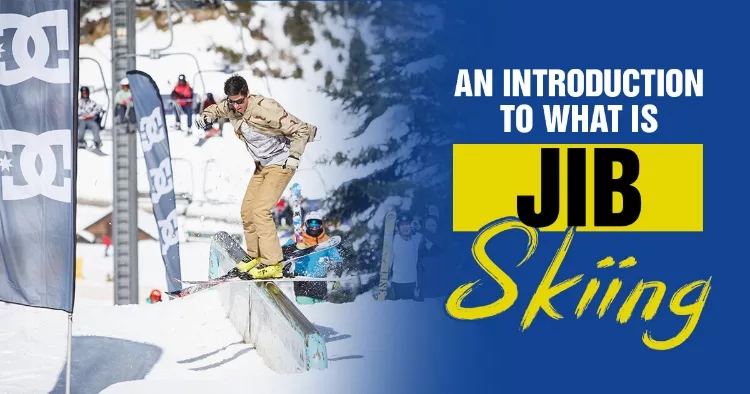
The vocabulary around jib skiing can feel impenetrable at first — people throw around words like "pressing," "boardslide," "down-rail," and "bonk" as if they're obvious. They're not, at least not until someone breaks them down for you. Understanding the lingo helps you communicate with other skiers in the park, watch ski videos with context, and figure out where you want to take your own skiing.
This guide walks through everything a beginner needs: where jib skiing came from, what the features look like, how to approach your first park session, and what gear actually helps. No prior park experience needed to follow along.
Contents
What Is Jib Skiing? Origins of the Term
Where the Word "Jib" Came From
The word "jib" didn't start on snow. It came out of skateboarding, where skaters used it to describe grinding or sliding across ledges, curbs, handrails, and other street obstacles. The move itself was the point — not speed, not distance, but the technical act of balancing on a hard surface that wasn't designed for skating.
When snowboarding took off in the late 1980s and early 1990s, riders started mimicking skate-style tricks on snow. They built makeshift rails from plumbing pipe, dragged wooden pallets into snowy fields, and filmed each other hitting whatever they could find. The vocabulary traveled with the culture. By the mid-1990s, "jibbing" was firmly embedded in snowboard language, and skiers who followed the same path picked it up without hesitation.
According to Wikipedia's overview of freestyle skiing, slopestyle — the Olympic competition format most associated with jib skiing — was officially added to the Winter Games in 2014, cementing what was once underground park culture as a legitimate international discipline.
From Backyards to Terrain Parks
Before purpose-built terrain parks existed, jibbers made do with whatever they could find. Picnic benches, old scaffolding pipes, and scavenged timber were dragged into snowy backyards or empty parking lots. Entire video segments were filmed in these DIY setups, and that raw, self-built spirit became part of what defined the culture.
Resort operators eventually recognized the demand. Purpose-built terrain parks started appearing at major ski destinations across North America and Europe through the late 1990s and early 2000s. Today, nearly every mid-size or larger resort has at least one graded park — beginner, intermediate, and advanced — with professionally maintained features designed specifically for jib skiing and other freestyle disciplines.
What Jib Skiing Looks Like on the Mountain
Common Terrain Park Features
Walking through a terrain park for the first time can feel like reading a menu in a foreign language. Every obstacle has a name, and jibbers use those names constantly. Here's what you'll typically encounter:
- Rails — The signature feature of jib skiing. Metal bars set at various angles: flat rails, down-rails (angled downward), and kinked rails (bent midway). Narrower and less forgiving than boxes.
- Boxes — Wide, flat obstacles made of plastic or capped wood. Much more forgiving than rails and the standard starting point for beginners.
- Tubes — Round pipes set at an angle, offering a smaller, rounder surface than a box.
- Bonks — Smaller, irregular objects — stumps, rubber bumpers, or barrels — that you tap briefly rather than slide across.
- Wall rides — Angled walls that let you ride briefly in a near-vertical position before popping back off the surface.
Pro tip: Always start with the widest, flattest box you can find — it gives you the most room for error while you adjust to how balance changes the moment you leave snow and hit a rigid surface.
Street-Style Jibbing
Not all jibbing happens inside a resort park. A dedicated subset of skiers — often called "street skiers" — hikes urban environments in winter looking for natural features. Stair sets, loading dock ledges, parking blocks, and rooftops have all made appearances in professional ski films. Street jibbing demands serious commitment: you hike in cold conditions to hit a feature that might only be skiable for a few days before conditions change or security shows up.
For most people just learning what is jib skiing, resort terrain parks are the obvious and practical starting point. You get a prepared run-in, consistent features, and other skiers nearby to learn from. Street jibbing, if it ever appeals to you, comes much later.
How to Get Started With Jib Skiing
What You Need Before You Try
You don't need to be an expert skier to enter a terrain park, but you do need a working foundation. Before you drop into any feature, you should be able to do all of the following without thinking too hard about it:
- Stop reliably on both flat and moderate terrain
- Control your speed without relying on a sudden snowplow
- Ski switch (backwards) for at least short distances — switch riding matters for a lot of jib tricks
- Fall without panicking — understanding how to fall on skis without hurting yourself is genuinely important when you're hitting hard park features
Terrain park etiquette is just as important as physical skill. Only one person on a feature at a time. Call your run loudly before you drop in. Clear the landing area quickly so the next rider has a clean approach. These rules prevent collisions, and ignoring them marks you as a hazard to everyone around you.
Your First Steps on a Feature
Follow this progression when you're ready to try your first feature. Patience here pays off — skipping steps is where most beginners get hurt or develop bad habits that are hard to undo later.
- Walk up to the feature first. Look at it from the side. Check the run-in slope, the height of the obstacle, and where the landing zone ends. Never hit something you haven't visually assessed first.
- Start with a wide, flat box. Approach it straight and at a controlled speed. Hop lightly onto the surface with an ollie (a small jump), flatten your skis, and ride off the end. Don't try to spin or grab anything on your first attempt.
- Repeat until it's boring. Confidence on a box comes from repetition. Do it ten times before you change anything. You want your balance on the feature to feel automatic.
- Add a 90-degree turn onto the feature. A boardslide — turning sideways so the feature runs perpendicular to your skis — is one of the foundational jib tricks. Practice it on the box before anything narrower.
- Move to a rail only when you trust your balance completely. Rails punish hesitation and off-axis weight. If you're not sure, wait.
Safety note: A helmet is non-negotiable in any terrain park — wrist guards and padded shorts are worth adding too, since a fall onto a metal rail feels very different from falling on a groomed run.
Gear That Makes a Difference
Twin-Tip Skis
The most important gear change for jib skiing is the ski itself. Twin-tip skis — skis with an upturned tip at both the front and the back — are the standard for park and jib skiing. The upturned tail means you can ride switch or land backwards without catching an edge and sending yourself face-first into the snow.
Park-specific twin-tips are also softer (more flexible) than all-mountain or race skis. That flex lets you "press" — applying weight to bend the ski across a feature — and absorb off-axis impacts without the ski fighting back. If you're coming from a background of carving groomers, reading about what frontside skis are gives you a useful frame of reference for how different jib-specific skis feel by comparison.
Bindings and Boots
Park skiing puts unusual stress on bindings because forces arrive from strange angles — sideways hits, off-axis landings, and impacts from below. Choosing the right setup matters. Here's how jib-specific gear compares to a standard alpine setup:
| Feature | Traditional Alpine Setup | Jib Skiing Setup |
|---|---|---|
| Ski type | Cambered, directional | Twin-tip, rocker or flat |
| Ski flex | Stiff to medium | Soft to medium |
| DIN setting | Higher for aggressive skiing | Lower — allows release on impact |
| Boot flex index | 90–130 | 70–100 (more forgiving) |
| Boot sole | Very stiff | Medium — more feel through the ski |
| Edge tune | Sharp tip to tail | Detuned tips and tails |
A softer boot gives you more feel through the ski, which matters when balancing on a two-inch-wide rail. Your DIN setting should also be dialed appropriately — too tight, and a sideways slam won't release the binding, putting serious stress on your knees. Many jib skiers ask a shop to help them avoid ski injuries by reviewing their release settings before the season starts.
Is Jib Skiing Right for You?
The Benefits
Jib skiing offers something different from a day of carving groomers, and that difference is exactly what draws people to it.
- Creative expression — Every run through a terrain park is a series of choices. You pick your features, your approach angle, your tricks, your style.
- Skill development — Jibbing builds body awareness, edge feel, and balance in ways that groomer skiing rarely demands.
- Community — Terrain parks have a real culture. People cheer each other on, share tips, and film each other's runs. It's social in a way that solo groomer laps often aren't.
- Year-round relevance — Skills transfer to trampolines, foam pits, and water ramps, making off-season training genuinely useful for park progression.
The Drawbacks
It's worth being honest about the downsides before you invest time and money into a new discipline.
- The learning curve involves falls on hard surfaces. Protective gear helps, but impact is unavoidable when you're starting out.
- Park-specific twin-tips don't perform as well on steep, aggressive groomers or in deep powder. If you only own one pair of skis, there's a trade-off.
- Terrain parks can be crowded on weekends, slowing down practice repetitions and increasing the risk of collision.
- Visible progression in jib skiing requires consistent park time — occasional day trips won't move the needle quickly.
Jib Skiing Myths Worth Clearing Up
Myth: Jib Skiing Is Only for Teenagers
The most visible jib skiers in competition and video content tend to be young — that's true. But terrain parks don't have age requirements, and the core skills involved aren't locked behind youth or physical flexibility. Adult beginners take up jib skiing at all ages, and many find that patience and deliberate, methodical practice compensate for anything they feel they're lacking. Starting small on a beginner park box isn't embarrassing. It's smart, and it's what experienced park skiers actually recommend regardless of age.
Myth: You Have to Be an Expert Skier Before You Enter a Terrain Park
Terrain parks are graded by difficulty, exactly like ski runs. A beginner park with low boxes and short, wide features is genuinely accessible to intermediate skiers. You don't need to know how to do a backflip before you try a flat box. What you do need is the ability to stop when you want to, control your speed, and read the terrain in front of you. That's an intermediate skill set, not an expert one. The idea that parks are off-limits unless you're already highly skilled keeps a lot of people from ever trying — and it's simply not accurate for beginner-level features.
Keeping Your Jib Setup in Good Shape
Edge and Base Care
Jib skiing is harder on equipment than regular alpine skiing. Every time your base contacts a metal rail or plastic box, you're creating friction, picking up burrs, and potentially gouging the base material. After a heavy park session, inspect your skis before you pack them away.
- Use a P-tex candle (a plastic repair stick, melted and dripped into the gouge) to fill small base damage before it widens
- Deburr your edges with a gummy stone after rail sessions — metal leaves burrs that can catch unexpectedly on your next run
- Wax your bases more frequently than you would for groomer skiing — park features strip wax faster than snow does
Many jib skiers also deliberately detune the tips and tails of their skis — dulling the edges in those areas — to prevent edge catches when pressing the nose or tail of the ski across a feature. A ski shop can do this in a few minutes, or you can learn to do it yourself with a flat file and a detuning guide.
Storage Between Seasons
At season's end, clean your bases thoroughly, apply a thick coat of storage wax (leave it on — don't scrape it), and store your skis horizontally in a dry, temperature-stable space. Don't lean them against a wall under tension for months — that position can permanently alter the camber profile of a soft park ski. A ski bag protects the bases from scratches during transit and storage. Basic end-of-season habits extend the life of a good jib setup by years and save money on repairs down the line.
Frequently Asked Questions
What is the difference between jib skiing and freestyle skiing?
Freestyle skiing is a broad category that includes aerials, moguls, halfpipe, slopestyle, and big air events. Jib skiing refers specifically to riding non-snow obstacles — rails, boxes, and similar features. It's one element within the freestyle category, not synonymous with it.
Do I need special skis to start jib skiing?
Twin-tip skis are strongly recommended because the upturned tail lets you ride switch and land backwards without catching an edge. You can attempt a flat box on regular skis, but you'll hit limitations fast. Renting park-specific twin-tips for a few sessions is a low-cost way to test whether jibbing suits you before you buy.
Is jib skiing dangerous?
Like any skiing discipline, jibbing carries risk. Falls on metal rails and plastic boxes can be more jarring than falls on snow. Wearing a helmet, starting on beginner features, and learning proper fall technique significantly lowers your injury risk. Most park injuries happen when skiers attempt features that exceed their current skill level.
Can you jib ski at any resort?
You need a terrain park, and not every resort has one. Most mid-size to large mountains have at least a beginner park. Smaller hills may not. Check the resort's trail map or website before you travel if access to a terrain park is a priority for your trip.
The fastest way to understand what is jib skiing is to walk up to the smallest box in your nearest terrain park and give it one honest try — everything else, the lingo, the gear, the culture, makes a lot more sense once you've felt it for yourself.
 |
 |
 |
 |

About Frank V. Persall
Frank Persall is a lifelong skier originally from the United Kingdom who has spent years pursuing the sport across premier resorts in Europe, North America, and beyond. His passion for skiing has taken him from the Alps to the Rocky Mountains, giving him a broad perspective on resort terrain, snow conditions, gear performance across price points, and the practical realities of ski travel with a family. At SnowGaper, he covers ski resort guides, gear reviews, and skiing technique and travel resources for enthusiasts of every level.
You can get FREE Gifts. Or latest free skiing books here.
Disable Ad block to reveal all the info. Once done, hit a button below
|
|
|
|