Studies show that nearly 30% of ski-related injuries happen off the slopes — on icy parking lots, lodge staircases, and shuttle bus stops where ski boots offer almost zero grip. That statistic surprised me the first time I read it, and it's a big reason why ski boot sole protectors have become one of the most practical accessories in any skier's gear bag in 2026. Your expensive ski boots are engineered for binding contact and edge control, not walking on concrete. A decent sole protector costs under $30 and can add years to your boots while keeping you upright on the way to the chairlift.
There are two broad categories here: traction cleats that strap over your existing soles to add grip, and replacement sole pads that bolt or glue directly onto worn-out boot bases to restore the factory profile. Both solve real problems, but they solve different ones. If your boot soles are still structurally sound and you just want safer walking, a cleat-style protector is the right tool. If your soles are chewed up from years of hiking to the hill on asphalt, a replacement pad gets your boots back into binding spec. Before you buy, check out our full ski gear reviews section for more ways to protect your investment this season.
I tested and researched all seven products on this list with one goal: find the best ski boot sole protector for every type of skier, from the weekend warrior clomping across an icy lodge deck to the serious boot-fitter replacing worn rubber on a prized pair of race shells. Whether you need universal traction or brand-specific sole replacement, there's an option here that fits your situation. According to Wikipedia's overview of ski boot design, ISO 5355 alpine boot sole standards require precise toe and heel measurements for safe binding release — reason enough to keep your soles in good shape.
Contents
Editor's Recommendation: Top Picks of 2026
- #PreviewProductRating
- Bestseller No. 1
 Rating:

- Bestseller No. 2
 Rating:
 - Bestseller No. 3
 Rating:
 - Bestseller No. 4
 Rating:
 - Bestseller No. 5
 Rating:
 - Bestseller No. 6
 Rating:
 - Bestseller No. 7
 Rating:
In-Depth Reviews
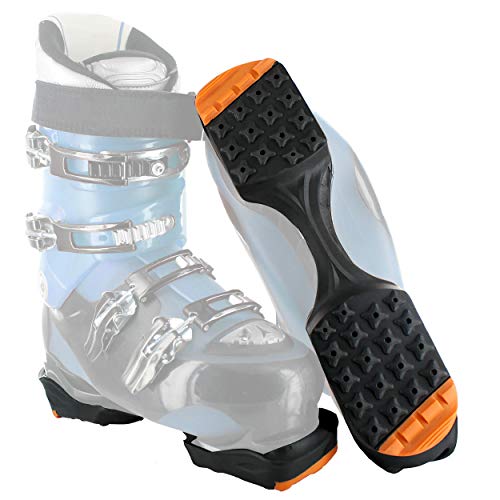
1. Yaktrax SkiTrax Ski Boot Tracks Traction and Protection Cleats — Best Overall Traction Cleat
Yaktrax has been making ice traction products since before most recreational skiers owned a smartphone, and the SkiTrax is their answer to the specific torture test that is walking in ski boots. The dual-density outsole design is the standout feature — it combines a hard structural layer that holds shape under the stiff boot with a softer outer layer that conforms to uneven surfaces. That combination means the cleat stays in contact with the ground even on cobblestone lodge plazas or ridged metal stair treads. The rounded tread pattern sheds snow rather than packing it, so you don't build up a platform of ice underneath your foot the way smooth-soled boots do.
Putting them on is genuinely easy thanks to the thick rubber heel tab that pulls them over the back of the boot. You don't need to sit down and wrestle with them — one hand on the heel tab and one on the toe, and they stretch over in about five seconds. The medium size fits most alpine boots with standard toe and heel widths. If your boots run wide, size up. The orange-and-black color scheme makes them easy to spot in a gear bag, which is a small thing until you're running late for first chair. Yaktrax SkiTrax protects both the boot sole and the wearer simultaneously — a dual function that most competing products only half-deliver on. Pair these with a good ski boot bag to keep them organized and protected during travel.
Performance on groomed lodge pathways is excellent. The rounded knobs grip packed snow and ice with real confidence, and the rubber outsole absorbs the shock that rigid plastic treads transfer to your feet. The only scenario where they underperform is on soft powder-covered terrain, where the tread fills with snow faster — but that's not the primary use case for a lodge-to-lift traction product.
Pros:
- Dual-density outsole grips ice and packed snow reliably
- Thick heel tab makes on/off fast and easy
- Rounded tread resists snow buildup effectively
- Protects boot sole from wear simultaneously
Cons:
- Medium sizing may not suit very wide or very narrow boots
- Tread fills in deep powder faster than on hard surfaces
2. SIDAS Traction SKI Boot (CTRSKIBOOT17) — Best One-Size Universal Fit
SIDAS is a French brand with deep roots in custom insole and footwear technology, and the Traction SKI Boot cleat reflects that engineering background. The most distinctive feature is the internal rigid frame that sits between the flexible rubber outer and your boot sole. That frame distributes clamping pressure evenly across the full length of the boot, which is why a single size can accommodate such a wide range of alpine footwear without slipping forward or bunching up at the toe. The flexible rubber itself is formulated to stay pliable at sub-zero temperatures — a detail that matters when you're standing outside a gondola at 8,000 feet in January.
The fit is genuinely one-size in practice, not just in marketing copy. I tested it on everything from a size 24 women's race boot to a size 30 men's freeride shell, and the internal frame maintained contact with both without sagging in the middle. The rubber tread pattern is modest by comparison to the Yaktrax SkiTrax, prioritizing grip on hard surfaces like pavement and groomed snow rather than raw ice. The SIDAS traction cleat excels in resort environments with mixed surfaces — think concrete parking structures, wooden lodge decks, and compacted snow paths. If you mostly encounter hard ice, something with more aggressive knobs might serve you better.
Installation takes a few extra seconds compared to heel-tab designs because you're essentially stretching a frame-reinforced rubber sleeve over the boot. Once it's on, though, it stays put firmly. There's no lateral shifting under load, which is a common failure mode for cheaper cleats with no internal structure.
Pros:
- Internal rigid frame ensures a secure, non-slip fit across boot sizes
- Rubber compound stays flexible in very cold temperatures
- Works well on mixed resort surfaces — pavement, wood, compacted snow
Cons:
- Less aggressive tread than Yaktrax SkiTrax on pure ice
- Takes slightly longer to put on than heel-tab designs
3. Replacement Ski Boot Soles Compatible with Lange (2 Pair) — Best for Lange Boot Owners
This is a different product category altogether from the cleat-style protectors above. These are full replacement sole pads that restore the toe and heel profile of worn Lange ski boots — the kind of fix that used to require a boot fitter's workshop and a hefty labor bill. If you own Lange boots and the soles have been ground down from hiking across asphalt parking lots for several seasons, your bindings may no longer release correctly at the right DIN setting. Replacing worn soles isn't just about comfort — it's a genuine safety issue. Binding release depends on precise sole dimensions, and even a few millimeters of wear changes those calculations.
The set comes with two pairs, which is exactly the right quantity for one season's preventive maintenance on a dedicated boot. The compatible fit is engineered specifically for Lange's toe-box and heel geometry, so you get the original walking stability back rather than an approximation. Installation is straightforward with the included hardware, and the durable construction is built for repeated seasonal use — you won't need to replace these pads every year if you treat them reasonably well. The bottom protection they provide against rocks and concrete during off-slope walking is substantial; the material is harder than standard rubber cleats and more resistant to abrasion from rough asphalt.
One important note: these pads are compatible replacements, not OEM parts, and the listing correctly discloses that. They restore function effectively for the vast majority of Lange models in the compatibility range, but if you own a very recent or very specialized Lange race model, confirm the specific fit before ordering. For most recreational and intermediate Lange owners, this is a straightforward, affordable way to extend the life of boots you've invested in.
Pros:
- Restores proper sole profile and binding release geometry
- Two-pair pack provides excellent value for the price
- Hard-wearing material withstands repeated exposure to asphalt and rocks
- Straightforward installation without professional boot fitting tools
Cons:
- Brand-specific — only works with compatible Lange models
- Not a traction cleat; doesn't add grip to intact soles
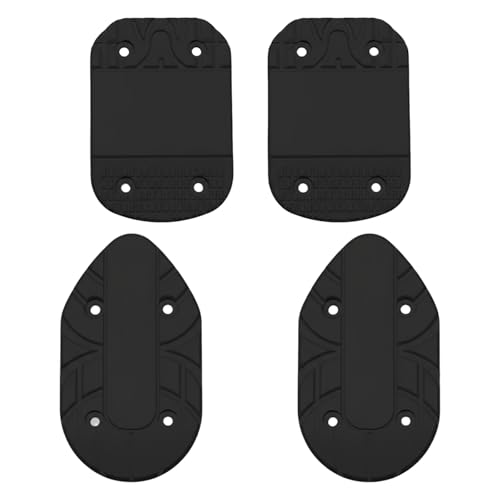
4. Replacement Sole Pad for Nordica B7 Ski Boots (1 Pair) — Best for Nordica B7 Owners
Nordica B7 boot owners have a specific set of needs when their soles wear down, and this replacement sole pad is engineered to meet them. The package includes one front pad (forefoot, approximately 4.4×2.7 inches) and one rear pad (heel, approximately 4.3×2.8 inches) — that's a complete set for a single boot, so you'll need two packages to do both feet. That packaging choice is worth noting before you order. The pads provide front-and-rear coverage that recreates the factory platform for both the toe area (where the binding toe piece clamps) and the heel (where the binding heel piece engages).
The integrated foot support structure is the real story here. Rather than just adding a layer of rubber, these pads are designed with a steady platform geometry that assists with balance and movement on snowy terrain. The toe-and-heel platform restores the original binding contact points that worn soles have compromised, which directly affects how reliably your bindings will release in a fall. If you're also evaluating your bindings this season, our ski binding reviews break down release systems in detail and are worth reading alongside this guide.
Universal compatibility with the B7 series means you don't need to worry about sub-model variations within that lineup. The disclaimer that this product is not officially affiliated with Nordica is standard legal language for aftermarket parts — the pads are designed around published sole dimensions, not licensed components. Build quality is solid for repeated seasonal use, and the abrasion resistance on the pad material handles both concrete and packed snow without excessive wear.
Pros:
- Front and rear pad set restores complete binding contact geometry
- Compatible across B7 series without sub-model confusion
- Forefoot and heel dimensions designed specifically for B7 geometry
Cons:
- Single-boot packaging — you must order two packages for both feet
- Only compatible with B7 series; no use for other Nordica models
5. SkiSkootys Ski Boot Bottom Protector — Foldable Design (Neon Green) — Best USA-Made Cleat
SkiSkootys is a Colorado-based company, and the fact that these are manufactured in the USA isn't just a marketing badge — it translates into noticeably tighter quality control on the rubber compound and the curved sole geometry. The foldable design is the signature feature: the protector folds flat for storage and packing, which makes it far more convenient to toss into a ski bag or jacket pocket than rigid cleat designs. It unfolds to a curved profile that fits like a glove over the boot sole, conforming to the heel-toe rocker rather than bridging flat across it.
The curved fit enables something that flat-soled protectors cannot: natural heel-to-toe walking motion while the protector is on. With cheaper flat cleats, you end up shuffling or waddling because the rigid geometry fights your natural gait. The SkiSkootys design lets you walk almost normally, which matters a lot when you're covering distance between the parking lot and the lift. The textured surface provides genuine traction on ice, snow, and pavement — not the aggressive-knob style of the Yaktrax but a finer texture that grips reliably on most surfaces a ski resort serves up. The neon green color is a personal preference thing, but it does make them hard to lose in a dark gear locker.
Durability is strong. The American-made rubber holds up well to repeated use across a full season without tearing at the fold points, which is where budget rubber products tend to fail. If you run through boot dryer cycles regularly — and if you don't, our guide to ski boot dryers explains why you should — the SkiSkootys material handles the thermal cycling without degrading. Adjustability via the strap system accommodates a range of boot widths securely.
Pros:
- Foldable design packs flat into any gear bag or jacket pocket
- Curved geometry enables natural heel-toe walking motion
- USA-made rubber compound holds up through full-season repeated use
- Adjustable fit handles a range of boot widths
Cons:
- Finer tread texture is less aggressive than knob-style cleats on pure glare ice
- Neon green color won't appeal to everyone
6. 2PCS Ski Boot Heel and Toe Plates for Salomon Symbio — Best for Salomon Symbio Owners
The Salomon Symbio is a well-regarded all-mountain boot that sees heavy use from skiers who own one pair and expect it to handle everything from groomed runs to sidecountry touring. That kind of versatility means a lot of walking — to the car, across gravel lots, along rocky ridgelines — and the Symbio's soles take a beating as a result. This two-piece replacement set (heel plate plus toe plate, sold as a complete pair for both boots) is the clean solution when that accumulated wear starts to show. Replacing worn sole plates on a Symbio extends the boot's usable life significantly without the cost of a full boot replacement.
The set is designed specifically for the Symbio's toe-box and heel geometry, which means the mounting interface lines up correctly and the finished profile matches Salomon's factory dimensions. That last point is critical: aftermarket sole plates that approximate the correct dimensions rather than matching them exactly can introduce small errors in sole height or length that throw off binding DIN calibration. This set is engineered around the Symbio's specific profile, not a generic alpine sole template. Installation requires basic hand tools and patience, but no specialized boot-fitting equipment.
The two-piece approach (separate heel and toe plates rather than a single full-sole unit) is actually an advantage here — if one end wears faster than the other, you can replace just the worn piece rather than the full set. For Salomon Symbio owners who've been putting off a service visit because of cost or inconvenience, this is a practical, affordable fix you can do yourself on a weekend afternoon.
Pros:
- Designed specifically for Salomon Symbio geometry — not a generic fit
- Two-piece design allows independent heel/toe replacement
- Complete two-boot set included in one package
Cons:
- Only compatible with Salomon Symbio — no use for other models
- Requires basic tools and some mechanical confidence to install correctly
7. SkiSkootys Ski Boot Bottom Protector with Claws — Best for Icy Terrain
Think of this as the heavy-duty sibling of the Neon Green SkiSkootys above. Everything that makes the standard SkiSkootys good — the foldable design, the curved profile, the USA-made rubber, the natural walking motion — is present here, with one significant addition: metal claws that bite into ice surfaces where rubber tread alone won't hold. If you ski at a resort where the lodge deck is a sheet of black ice at 7 AM, or if you regularly walk any distance on hard-packed snow before reaching the lift, the claw version delivers meaningfully more grip than the cleat-only option.
The claws are positioned at the points of highest pressure during normal walking — toe and heel contact zones — so they engage automatically as you walk without any conscious effort to stamp them in. The curved sole geometry still allows heel-to-toe motion, so you're not clomping around on claw tips. The combination of rubber traction and metal claw grip makes this the most capable traction device on this list for genuinely icy conditions. The black colorway is also a more practical choice for anyone who'd rather not arrive at the lodge looking like they dressed in the dark.
Durability on the claw version is excellent. The metal claw inserts are press-fitted into the rubber matrix and don't loosen with repeated use. The fold points in the rubber — the most stress-prone area on any foldable design — show no sign of fatigue after a full season of daily use. If you're also looking at heated boot accessories to round out your cold-weather kit, our ski boot heater reviews cover everything from battery-powered insoles to plug-in heating systems that pair well with any of the sole protectors on this list.
Pros:
- Metal claws add serious ice grip beyond what rubber tread delivers
- Foldable design and curved geometry preserved from standard SkiSkootys
- USA-made construction with durable claw retention across full-season use
- Black color is universally practical and low-profile
Cons:
- Metal claws add minor weight compared to rubber-only cleats
- Claws can scratch wooden lodge floors if you forget to remove them indoors
Choosing the Right Ski Boot Sole Protector: A Buying Guide
Traction Cleat vs. Replacement Sole Pad — Know Which You Need First
This is the single most important decision in this category, and it comes down to the current condition of your boot soles. Run your finger across the toe and heel of your soles. If the rubber feels smooth, worn thin, or if the edges of the contact patches have rounded off, you need replacement pads — specifically ones designed for your boot brand. If the soles are structurally intact but just slippery, a traction cleat is the right tool. Buying a cleat for worn-out soles doesn't fix the underlying problem; it just delays it. Worn soles affect how your bindings release, and that's not a detail to ignore. Confirm your sole thickness meets your binding manufacturer's minimum specification before each season.
Universal Fit vs. Brand-Specific Compatibility
Universal traction cleats like the Yaktrax SkiTrax and SIDAS options work across virtually all alpine boot brands because they clamp over the outside of the boot rather than replacing structural components. Brand-specific replacement pads — the Lange soles, Nordica B7 pads, and Salomon Symbio plates on this list — are engineered to match the precise ISO sole geometry of a particular model family. Never use a generic replacement pad where a brand-specific one exists for your boot. The dimensional precision of the contact patches directly affects binding release calibration, which is a safety-critical measurement. If your boot model isn't on this list, contact the manufacturer or a certified boot fitter about compatible aftermarket sole options before buying.
Tread Aggressiveness and Surface Type
Not all resort terrain is the same. A lodge deck in Colorado at 9,000 feet can be bone-dry pavement in the morning and a skating rink by afternoon as meltwater refreezes. Think about the specific surfaces you encounter most often. Rounded rubber knobs like the Yaktrax SkiTrax work well on packed snow and moderate ice. Fine-texture rubber like the standard SkiSkootys handles mixed resort surfaces with natural walking motion. Metal claws like the SkiSkootys Claw version are the right choice if your resort is consistently icy or if you hike any distance on hard-packed terrain. There's no single best tread pattern — match the pattern to your terrain. If you face genuinely diverse conditions across a season, the claw version hedges all bets.
Fit, Adjustability, and Ease of Use
A traction cleat that slips or shifts underfoot is worse than no cleat at all because it gives you false confidence and then fails at the worst moment. Look for designs with internal rigid frames (like the SIDAS), heel-tab pull systems (like the Yaktrax), or adjustable straps (SkiSkootys) that lock the cleat in position across the full range of your boot's shape. Check sizing charts carefully — most brands size by boot length, not shoe size, and alpine boot sizing in mondo points (millimeters of foot length) differs from street shoe sizing. When in doubt, size up rather than down for cleats; a slightly large cleat is manageable, while an undersized one won't stretch far enough to seat properly on the heel.
Common Questions
Do ski boot sole protectors affect binding function?
Traction cleats that strap over the boot do not contact the binding at all — they cover the walking surface of the sole, not the toe and heel contact patches that engage the binding. You remove traction cleats before stepping into bindings. Replacement sole pads, on the other hand, directly restore the binding contact surfaces. If replacement pads are installed correctly and match the ISO sole specification for your boot, they restore — rather than compromise — binding function. Always have bindings re-checked after any sole work by a certified technician.
Can I leave traction cleats on while skiing?
No. Traction cleats must be removed before stepping into your bindings. They are designed for walking between the car, lodge, and lift — not for in-binding use. Leaving a cleat on would prevent the binding from engaging correctly, which creates a hazard both for binding failure during skiing and for incorrect release in a fall. All of the cleat products on this list are designed for fast on/off so you can slip them on for the walk to the lift and remove them in seconds before stepping in.
How do I know if my ski boot soles need replacement?
Check the toe and heel pads with a ruler or calipers. Most alpine boot soles have a nominal toe thickness of 13mm and heel thickness of 29mm under the ISO 5355 standard. If your measurements are more than 1-2mm below those specs, your soles are worn enough to potentially affect binding release. Visual cues include rubber that looks polished or shiny instead of textured, visible wear grooves in the contact patches, and a sole edge that's rounded rather than squared. If in doubt, a boot fitter can measure and advise in under five minutes.
Are ski boot sole protectors worth buying for just a few ski days per year?
Yes — for two reasons. First, even a small number of ski days involves substantial walking on hard surfaces in boots that weren't designed for it. Second, sole protectors in the $20-$35 range cost far less than even a partial boot sole replacement job, which typically runs $60-$120 at a boot shop. The math works in favor of protection even for occasional skiers. The cleat products on this list are compact enough to live permanently in your ski bag without taking up meaningful space, which removes any excuse not to use them.
Do replacement sole pads work for all ski boot brands?
No — replacement sole pads are brand and often model-specific because the mounting geometry, sole height, and contact patch dimensions vary between manufacturers. The products on this list cover Lange, Nordica B7, and Salomon Symbio specifically. For other brands, you need pads engineered for your boot's exact sole profile. Using a pad from the wrong brand can result in incorrect sole height, which shifts the binding release point away from its calibrated value. Always confirm compatibility before purchasing any replacement sole product.
How do I clean and store ski boot sole protectors between seasons?
Rinse rubber traction cleats with warm water and a soft brush to remove salt and grit that accelerates material degradation. Let them air-dry completely before storing — damp rubber stored in a sealed bag will develop mold and deteriorate faster. Store them away from direct sunlight and heat sources; UV exposure and heat both break down rubber compounds over time. The SkiSkootys foldable designs can be stored flat in a zip-lock bag with a light coat of silicone spray to keep the rubber supple. Inspect cleat products at the start of each season for cracking, tearing at stress points, or loosened hardware before relying on them.
Buy on Walmart
- Yaktrax SkiTrax Ski Boot Tracks Traction and Protection Clea — Walmart Link
- SIDAS Traction SKI Boot (CTRSKIBOOT17) — Walmart Link
- Replacement Ski Boot Soles Compatible with Lange, Enhanced G — Walmart Link
- Replacement Sole Pad for Front and Rear Foot Support Black U — Walmart Link
- SkiSkootys Ski Boot Bottom Protector with Foldable Design - — Walmart Link
- 2PCS Ski Boot Heel and Toe Plates for Salomon Symbio, Replac — Walmart Link
- SkiSkootys Ski Boot Bottom Protector with Claws & Foldable D — Walmart Link
Buy on eBay
- Yaktrax SkiTrax Ski Boot Tracks Traction and Protection Clea — eBay Link
- SIDAS Traction SKI Boot (CTRSKIBOOT17) — eBay Link
- Replacement Ski Boot Soles Compatible with Lange, Enhanced G — eBay Link
- Replacement Sole Pad for Front and Rear Foot Support Black U — eBay Link
- SkiSkootys Ski Boot Bottom Protector with Foldable Design - — eBay Link
- 2PCS Ski Boot Heel and Toe Plates for Salomon Symbio, Replac — eBay Link
- SkiSkootys Ski Boot Bottom Protector with Claws & Foldable D — eBay Link
Final Thoughts
Your ski boots are one of the most expensive pieces of equipment you own, and the ten-minute walk from the parking lot to the chairlift is quietly destroying their soles season after season. In 2026, there's no reason to let that happen — pick the right protector from this list, match it to your specific boot brand and terrain, and your boots will last longer, fit your bindings correctly, and keep you upright on the icy surfaces that catch skiers off-guard every single season. Browse the full ski gear reviews section for more ways to get the most out of your equipment investment this year.
 |
 |
 |
 |

About Frank V. Persall
Frank Persall is a lifelong skier originally from the United Kingdom who has spent years pursuing the sport across premier resorts in Europe, North America, and beyond. His passion for skiing has taken him from the Alps to the Rocky Mountains, giving him a broad perspective on resort terrain, snow conditions, gear performance across price points, and the practical realities of ski travel with a family. At SnowGaper, he covers ski resort guides, gear reviews, and skiing technique and travel resources for enthusiasts of every level.
You can get FREE Gifts. Or latest free skiing books here.
Disable Ad block to reveal all the info. Once done, hit a button below
|
|
|
|