The Dakine HELI PRO 20L is the best snowboard backpack you can buy right now — it carries your board vertically or horizontally, sheds moisture fast, and gets out of your way so you can focus on the mountain. But it's not right for everyone, and the other six packs on this list cover backcountry safety, women-specific fit, and serious volume in ways the Heli Pro simply doesn't.
Choosing a snowboard backpack in 2026 is harder than it looks. The market is flooded with options that all claim to do everything, but the differences between a 20-liter resort pack and a 35-liter backcountry setup are enormous. The wrong pack will bounce on your back, sweat through its padding, or leave you without the safety gear you need the moment things go sideways in the backcountry. Getting this right matters. Whether you're lapping groomers at a resort, skinning into the sidecountry, or deep in avalanche terrain, there's a pack built for exactly what you're doing — and we've tested and reviewed the best of them here.
This guide covers seven top-rated snowboard backpacks across every riding style and budget. You'll find full reviews, a practical buying guide, and straight answers to the questions most riders ask before pulling the trigger. If you're also gearing up for the season, check out our ski gear reviews for everything from bindings to base layers. And if you want to know what pairs well with a great pack for long mountain days, our roundup of the best headphones for skiing is worth a read.
Contents
- Editor's Recommendation: Top Picks of 2026
- Full Product Breakdowns
- Dakine HELI PRO 20L — Best Overall
- Burton Annex 2.0 28L — Best for Daily Riders
- Osprey Kamber 20L — Best for Backcountry Safety
- Deuter Freerider 22L SL — Best for Women
- Mammut Nirvana 35L — Best for Big Mountain Days
- Ortovox Ascent 30 Avabag — Best Avalanche Airbag Pack
- Dakine Mission Pro 25L Jill Perkins — Best Pro-Designed Pack
- How to Pick the Best Snowboard Backpack
- Common Questions
- Final Thoughts
Editor's Recommendation: Top Picks of 2026
- #PreviewProductRating
- Bestseller No. 1
 Rating:

- Bestseller No. 2
 Rating:
 - Bestseller No. 3
 Rating:
 - Bestseller No. 4
 Rating:
 - Bestseller No. 5
 Rating:
 - Bestseller No. 6
 Rating:
 - Bestseller No. 7
 Rating:
Full Product Breakdowns
1. Dakine HELI PRO BACKPACK 20L — Best Overall
Dakine has been building mountain-specific packs for decades, and the HELI PRO 20L is the result of everything they've learned. At 20 liters, it hits the sweet spot for resort and sidecountry riders who want enough room to carry the essentials without lugging a pack that feels like a second board strapped to your back. The standout feature is its dual carry system: you get both vertical and horizontal snowboard carry options, plus diagonal and A-frame ski and splitboard carry. That's not standard at this price point. Most 20-liter packs force you into one carry style; the Heli Pro gives you all of them.
The quick-dry mesh padded back panel is genuinely one of the best in this category. If you've ever finished a hard run with a soaked back from a standard foam panel, you'll immediately appreciate how much better this design handles sweat and moisture. The panel pulls heat and moisture away from your back throughout the day, which means you're more comfortable and your layers stay drier longer. The overall build is exactly what you expect from Dakine — tight stitching, quality hardware, and zippers that open smoothly even with gloves on.
At 20 liters, storage is intentionally lean. You'll carry your water, snacks, first aid kit, and a layer — and that's about it. For most resort days that's enough, but if you're planning an all-day backcountry mission with a full avy kit, you need a bigger pack. The Heli Pro is purpose-built for riders who want a low-profile, high-function pack that doesn't slow them down on the hill.
Pros:
- Vertical and horizontal snowboard carry, plus ski and splitboard compatibility
- Quick-dry mesh back panel keeps you comfortable all day
- Lightweight and low-profile for resort and sidecountry riding
- Reliable Dakine build quality with glove-friendly zippers
Cons:
- 20L is tight if you're packing a full day of backcountry gear
- No dedicated avalanche safety compartment
2. Burton Annex 2.0 28L Backpack — Best for Daily Riders
Burton makes gear for people who live and breathe snowboarding, and the Annex 2.0 is a perfect example of their philosophy: build something that performs on the mountain and works just as well when you're heading to the office or the airport after. At 28 liters, this pack gives you significantly more storage than a typical 20-liter resort pack, and Burton fills that space intelligently. The 305D polyester Cordura oxford fabric with PFC-free DWR and PU backing repels water without relying on the harmful chemicals that older DWR coatings used — a meaningful upgrade for anyone who cares about both performance and the environment.
The organizational layout is one of the strongest arguments for this pack. You get an external and internally accessible laptop compartment that fits up to an 18-inch machine — that's large enough for most work laptops — plus a dedicated tablet sleeve. The adjustable webbing lets you strap a jacket or yoga mat to the outside, which is a small feature that makes a big practical difference on days when you're layering up and stripping down. The ergonomic shoulder straps and adjustable sternum strap distribute the load cleanly, and at just 1.5 lbs the pack itself barely adds to your carry weight.
Where the Annex 2.0 shines is in versatility. It transitions seamlessly from mountain to daily life, which means you're buying one quality pack instead of two mediocre ones. The sharkskin colorway looks sharp and resists showing dirt after a muddy chairlift walk. The dimensions — 20 x 11 x 7 inches — are carry-on friendly, making this pack a strong choice for riders who travel to destinations across the season.
Pros:
- Generous 28L capacity with smart internal organization
- Large laptop compartment fits up to 18-inch machines
- PFC-free DWR water-repellent fabric
- Lightweight at 1.5 lbs with comfortable ergonomic straps
- Works equally well as a daily bag and mountain pack
Cons:
- No dedicated avalanche safety compartment
- Not purpose-built for heavy backcountry use
3. Osprey Kamber 20L — Best for Backcountry Safety
When you're heading into the backcountry, your pack is safety equipment, not just storage. The Osprey Kamber 20L was designed with that premise at its core. The dedicated avalanche safety kit storage with separate shovel handle and probe sleeves keeps your most critical emergency tools organized and instantly accessible. If you've ever fumbled through a disorganized bag while someone else is buried, you understand exactly why this separation matters. With the Kamber, your avy gear has a specific home and you know exactly where it is every time.
The hydration system integration is executed better here than on most competitors. The internal reservoir pocket accommodates a standard bladder, and the zippered insulated hose sleeve is a detail that proves Osprey actually thought about cold-weather use. Uninsulated hose ports let your drinking tube freeze within an hour at low temperatures — the insulated sleeve prevents that. The large front panel J-zip gives you quick access to a food and small gear pocket with proper internal organization, so you're not digging through loose snacks to find your lip balm or spare goggle lens.
Osprey's fit and suspension systems are among the best in the pack industry, and the Kamber is no exception. The harness holds the pack tight against your back without shifting when you're moving aggressively through technical terrain. At 20 liters, it's still compact enough to stay out of your way on the descent. The Alpine Blue colorway is clean and visible, which has practical value in poor-visibility conditions. If you're serious about backcountry safety, read more about the best ski and snowboard masks to complete your backcountry kit.
Pros:
- Dedicated avalanche safety compartment with organized shovel and probe sleeves
- Insulated hydration hose sleeve prevents freezing
- Osprey's best-in-class suspension and harness system
- Quick-access front panel J-zip for food and small gear
Cons:
- 20L is limiting for multi-day or very gear-heavy missions
- Premium price compared to non-backcountry-specific packs
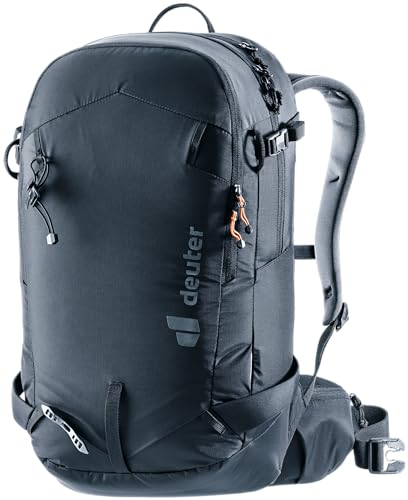
4. Deuter Women's Freerider 22L SL — Best for Women
Most "women's" packs are just men's packs with different colors and a slightly slimmer cut. The Deuter Freerider 22L SL is a genuine women-specific design, built from the ground up around how women's bodies actually move. The SL (Slimline) carrying system features a shorter torso cut, narrower shoulder straps, and conically shaped hip fins that allow the pack to flex with your hips naturally as you move. If you've ever worn a men's pack that sat wrong on your hips and torqued your lower back by early afternoon, you'll feel the difference immediately when you put this one on.
The LiteSnow back system is the other engineering highlight here. Snow-repellent Spandex-covered EVA foam panels handle moisture management better than standard foam, which means the pack sheds snow that falls on your back during a run rather than absorbing it and turning into a wet, cold weight. For high-output ski touring, where you're working hard and generating heat, keeping your back panel dry is critical for temperature regulation. The pack stays lightweight despite its smart engineering — a key factor when you're skinning uphill and every gram matters.
Fast access is built into the design at multiple points. The U-shaped clamshell rear opening lets you reach the main compartment quickly without removing your skis or board — a real advantage when you're on a exposed ridge and need something fast. The dedicated avalanche safety compartment sits separately with immediate access, keeping your emergency gear always ready. At 22 liters, the Freerider SL carries a full day's kit without excess bulk. If you pair this with the right socks for long tour days, check out our guide to the best ski socks for recommendations that match this pack's performance level.
Pros:
- Genuine women-specific SL fit with shorter torso and narrower straps
- LiteSnow snow-repellent EVA back panels for moisture management
- U-shaped clamshell opening for fast main compartment access
- Dedicated avalanche safety compartment
- Ultralight build ideal for high-output touring
Cons:
- 22L is purpose-specific — not a versatile daily bag
- Color options are limited in the current lineup
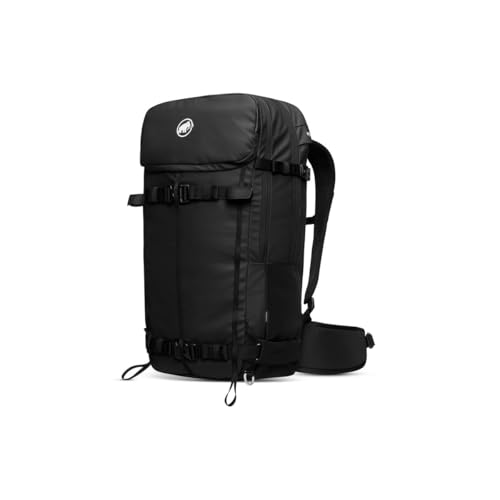
5. Mammut Nirvana 35L Snow Pack — Best for Big Mountain Days
When you're going big — long backcountry missions, multi-sport days, or expeditions where you need capacity for everything — the Mammut Nirvana 35L is the pack to reach for. Mammut is a Swiss brand with a deep heritage in alpine and avalanche safety equipment, and the Nirvana reflects that pedigree in its construction and feature set. At 35 liters, this is the largest pack on this list, and it's designed to handle that volume efficiently without becoming unwieldy on technical terrain.
The sustainability story here is worth noting. The Nirvana is built from 300D recycled polyester as part of Mammut's Responsible Collection initiative, which means choosing this pack is a conscious decision for riders who care about the environmental footprint of their gear. The material doesn't just check an ethical box — 300D recycled poly is durable, weather-resistant, and performs well under sustained use. It handles the abrasion from strapping a board to the outside without showing wear quickly, which matters when you're using the pack every week through a full season.
35 liters of organized capacity lets you carry a complete avy kit, a full hydration setup, extra layers, food for a full day, a camera, and gear for whatever conditions you might encounter. This is the pack for riders who hate having to leave things behind or make compromises on what they bring into the field. Mammut's reputation for quality construction means the pack will hold up over multiple seasons of hard use, making the investment worthwhile for serious riders who count on their gear to perform without fail.
Pros:
- 35L capacity handles the most demanding full-day missions
- Built from recycled polyester with durable 300D construction
- Mammut's alpine-tested engineering and reliability
- Part of a responsible, sustainable product collection
Cons:
- 35L is overkill for resort and casual sidecountry riding
- Larger volume adds bulk and weight on fast descents
6. Ortovox Men's Ascent 30 Avabag Kit — Best Avalanche Airbag Pack
If you're regularly riding in avalanche terrain, the Ortovox Ascent 30 Avabag Kit is the most important piece of safety equipment you can carry. An avalanche airbag significantly increases your chance of survival in an avalanche by creating additional volume that helps keep you near the surface of the debris flow — according to avalanche airbag research, airbag deployment has been shown to reduce burial depth substantially in real incidents. The Ortovox Avabag system uses a compressed gas canister that inflates instantly when you pull the trigger handle, giving you that critical extra volume when it matters most.
Beyond the airbag system, this is a well-organized 30-liter backcountry pack. The snowboard and D-skifix mounting system lets you carry your board or skis cleanly while keeping the pack balanced and manageable on the uphill. The 30-liter capacity hits the sweet spot between the compactness of a 20L resort pack and the full capacity of a 35L big-mountain pack — enough space for a complete avy kit, layers, food, hydration, and emergency supplies without the bulk of a larger bag. The black anthracite colorway is understated but looks sharp, and the overall build reflects Ortovox's focus on alpine performance rather than casual aesthetics.
The Avabag system is the reason you buy this pack, and Ortovox executes it as well as anyone in the industry. The trigger handle is ergonomically positioned for quick one-handed deployment, even with thick gloves on. The canister is user-refillable in many markets, which reduces the long-term operational cost of owning an airbag pack. If you're pushing into serious avalanche terrain in 2026, owning and knowing how to use a pack like this is non-negotiable.
Pros:
- Integrated Avabag avalanche airbag system for critical safety in slide terrain
- 30L is a versatile, mission-appropriate capacity
- Snowboard and ski/splitboard carry compatibility
- Ergonomic trigger handle for quick, gloved deployment
Cons:
- Significantly higher price due to airbag system
- Airbag canisters require periodic replacement or refilling
- More weight than non-airbag packs of similar volume
7. Dakine Women's Team Mission Pro 25L Jill Perkins — Best Pro-Designed Pack
Most pro-signature products are marketing exercises with a name slapped on an existing design. The Dakine Team Mission Pro 25L is different. Jill Perkins — multiple Rider of the Year and Video Part of the Year recipient — had direct input on this pack, designing and testing it for the kind of all-day, every-session use that her career demands. The result is a 25-liter pack that's built tighter, rides closer to your body, and handles the abuse of professional-level riding without complaining. If your riding approach is anything like Jill's, this pack will keep up with you.
The materials choice reflects Dakine's commitment to sustainability in their professional line: the entire bag is constructed from 100% recycled nylon, which achieves the same durability and weather resistance as virgin nylon without the environmental cost. At 25 liters, you get genuine storage for a full day — layers, snacks, hydration, safety gear, and personal items — without the pack growing so large that it interferes with your riding. Both horizontal and vertical snowboard carry options are included, giving you flexibility for different conditions and board types.
The fleece-lined goggle pocket is a standout detail that proves this pack was designed by someone who actually wears goggles every day. Scratched lenses happen when you toss goggles into a standard pocket — the fleece lining eliminates that problem entirely. The tight, supportive fit and DK Impact Spine protection compatibility (spine protector sold separately) round out a pack that's ready for the most demanding riding days of the 2026 season. Durable YKK-style zippers perform reliably with gloves on, which is exactly what you need when you're in the cold.
Pros:
- Pro-designed by Jill Perkins with real riding-specific input
- 100% recycled nylon construction
- Fleece-lined goggle pocket prevents lens scratching
- Compatible with DK Impact Spine protection
- Horizontal and vertical snowboard carry options
Cons:
- Spine protector not included — sold separately
- No dedicated avalanche safety compartment
How to Pick the Best Snowboard Backpack
Volume: Match the Pack to the Mission
Volume is the first and most important decision you'll make when choosing a snowboard backpack. Get it wrong and everything else is irrelevant. A 20-liter pack is right for resort days where you're carrying water, snacks, a spare layer, and maybe a first aid kit. You'll lap efficiently, the pack sits tight against your back, and you'll barely notice it on the chairlift. Step into the sidecountry or a full backcountry mission and 20 liters runs out fast once you add avy gear, extra clothing, and enough food and water for a long day.
25 to 30 liters is the sweet spot for most serious riders who venture beyond the resort boundary. You get room for a complete avy kit — shovel, probe, beacon, and the dedicated compartments to carry them organized and accessible — plus everything else you need for a full day. 35 liters and above is for riders who are going big: multi-sport days, long tours, or situations where you simply cannot afford to leave anything behind. Don't buy more volume than you need; a half-empty 35-liter pack rides terribly and bounces constantly.
Board and Ski Carry Systems
How the pack carries your snowboard matters more than most buyers realize until they've spent a day with a poor carry system. Vertical carry — where the board stands upright on a spine along the back of the pack — works well on hardpack and groomed runs where the board doesn't catch wind or drag through snow. Horizontal carry wraps the board across the back of the pack at waist level and is better for low-angle skinning where the upright board would act like a sail. The best packs offer both options, plus A-frame and diagonal carry for skis and splitboards.
Look for straps that cinch tight and hold the board firmly without constant readjustment. Loose board carry shifts your center of gravity on every turn and becomes exhausting over a long day. Compression straps that hold the board flat against the pack body are far better than straps that let the board angle away from your back.
Avalanche Safety Features
If you're riding beyond controlled resort boundaries at all — even just into the sidecountry adjacent to a resort — avalanche safety needs to be part of your pack conversation. At minimum, look for a pack with a dedicated avy compartment that separates your shovel and probe from your regular gear. This keeps your emergency equipment organized and instantly accessible without digging through a main compartment stuffed with food and clothing. The time it takes to find your shovel in an unorganized pack could be the difference between a rescue and a tragedy.
For riders who regularly push into serious avalanche terrain, an airbag pack like the Ortovox Ascent 30 Avabag is a direct investment in survival odds. Airbag technology has advanced significantly, and the weight and cost premium over a standard pack has come down substantially over the past few years. If this kind of riding is a regular part of your season, it's worth the upgrade. Make sure you practice deploying the system before you need it in the field.
Fit, Comfort, and Back Panel Design
A pack that doesn't fit correctly will wear you out faster than the terrain will. Adjustable sternum straps and hip belts distribute weight across your torso rather than loading everything onto your shoulders — essential for packs above 25 liters where weight starts to add up. Women-specific designs with shorter torso cuts and narrower shoulder straps aren't just marketing: they genuinely change how the pack loads your body and how it moves with you on the mountain.
Back panel ventilation is a real quality-of-life factor on high-output days. Quick-dry mesh panels pull moisture away from your back, keeping you drier and more comfortable. Standard foam panels absorb sweat and hold it against your back, which makes layering management harder and can lead to chilling as soon as you stop moving. For touring and any ride that involves significant uphill effort, invest in a pack with a proper ventilated or moisture-wicking back panel.
Common Questions
What size snowboard backpack do I need for a resort day?
For a typical resort day, 20 to 25 liters is all you need. You'll carry water, snacks, a spare mid-layer, sunscreen, goggles, and a small first aid kit without issue. Going larger just adds unnecessary weight and bulk. If you're planning to ski or ride both morning and afternoon and want to carry lunch, aim for the upper end of that range at around 22 to 25 liters.
Do I need an avalanche safety compartment in my backpack?
If you ride in any terrain outside of controlled resort boundaries, yes. A dedicated avy compartment keeps your shovel, probe, and beacon organized and accessible without digging through your main pack. In a real emergency, the seconds lost searching for your shovel are seconds someone else is buried. Backcountry-specific packs like the Osprey Kamber and Deuter Freerider are designed with this in mind from the ground up.
What is a snowboard airbag backpack and is it worth the cost?
An avalanche airbag backpack deploys an inflatable balloon from the pack when you trigger it during an avalanche. The added volume helps keep you near the surface of the snow debris flow, which dramatically increases survival odds. The Ortovox Ascent 30 Avabag is the example on this list. Yes, airbag packs cost significantly more than standard packs, but for riders who regularly access serious avalanche terrain, that investment is justified. Practice deploying it before you need it — the mechanism is intuitive, but muscle memory under stress makes a difference.
Can I use a snowboard backpack as a daily bag?
Yes, and many riders do. The Burton Annex 2.0 28L is the clearest example here — it has a laptop compartment, tablet sleeve, and organizational features that make it a legitimate daily bag in addition to a solid mountain pack. Purpose-built backcountry packs like the Osprey Kamber are less suitable for daily use because the avy-specific compartments take up space that would otherwise go toward daily organizational features. If versatility matters to you, choose a pack designed with both uses in mind.
What should I look for in a women's snowboard backpack?
Look for a genuine women-specific design, not just a recolored men's pack. Real women's packs — like the Deuter Freerider 22L SL and the Dakine Mission Pro 25L Jill Perkins — feature shorter torso cuts, narrower shoulder straps, and hip belt shapes that match female anatomy. The difference in how these packs load your body over a long day is significant. Women-specific packs also tend to address small-but-important details like goggle pockets and sternum strap placement that standard packs often get wrong for women's proportions.
How do I carry a snowboard on a backpack?
Most snowboard-specific packs offer two methods: vertical carry, where the board stands upright along the pack's spine using top and bottom straps, and horizontal carry, where the board wraps across the back of the pack at waist height using side straps. Vertical carry works best on open terrain where the board won't catch excessive wind. Horizontal carry is better for skinning uphill or hiking through trees where an upright board would be unwieldy. Some packs also offer diagonal or A-frame carry, which is useful for skis and splitboards.
Buy on Walmart
- Dakine HELI PRO BACKPACK 20L - SPICE — Walmart Link
- Burton Annex 2.0 28L Backpack, Sharkskin — Walmart Link
- Osprey Kamber 20L Men's Backcountry Ski and Snowboard Backpa — Walmart Link
- Deuter Women’s Freerider 22L SL, Lightweight Ski Touring Bac — Walmart Link
- Mammut Nirvana 35L Snow Pack, Black, 2560-00270-0001-1035 — Walmart Link
- Ortovox Men's Ascent 30 Avabag Kit Black Anthracite 30 Liter — Walmart Link
- Dakine Womens Team Mission Pro 25L Jill Perkins - Black, One — Walmart Link
Buy on eBay
- Dakine HELI PRO BACKPACK 20L - SPICE — eBay Link
- Burton Annex 2.0 28L Backpack, Sharkskin — eBay Link
- Osprey Kamber 20L Men's Backcountry Ski and Snowboard Backpa — eBay Link
- Deuter Women’s Freerider 22L SL, Lightweight Ski Touring Bac — eBay Link
- Mammut Nirvana 35L Snow Pack, Black, 2560-00270-0001-1035 — eBay Link
- Ortovox Men's Ascent 30 Avabag Kit Black Anthracite 30 Liter — eBay Link
- Dakine Womens Team Mission Pro 25L Jill Perkins - Black, One — eBay Link
Final Thoughts
The right snowboard backpack for the 2026 season is the one that matches your riding style and terrain — start with the Dakine HELI PRO 20L if you're a resort rider who wants the best all-around option, step up to the Osprey Kamber or Ortovox Avabag if you're pushing into the backcountry, or go with the Deuter Freerider or Dakine Mission Pro if fit and women-specific design are your priority. Pick the pack that fits your actual riding, click through to Amazon to check the latest pricing, and get out on the mountain with gear you can trust.
 |
 |
 |
 |

About Frank V. Persall
Frank Persall is a lifelong skier originally from the United Kingdom who has spent years pursuing the sport across premier resorts in Europe, North America, and beyond. His passion for skiing has taken him from the Alps to the Rocky Mountains, giving him a broad perspective on resort terrain, snow conditions, gear performance across price points, and the practical realities of ski travel with a family. At SnowGaper, he covers ski resort guides, gear reviews, and skiing technique and travel resources for enthusiasts of every level.
You can get FREE Gifts. Or latest free skiing books here.
Disable Ad block to reveal all the info. Once done, hit a button below
|
|
|
|