What's the single most important piece of gear that keeps snow out of your pants and off your back on a hard charging run? If you guessed a great snowboard bib, you're right. But with so many options flooding the market in 2026, figuring out which one actually delivers can feel overwhelming. The good news: the Burton [ak] Cyclic GORE-TEX 2L Bib Pants earn the top spot in this roundup, and you'll see exactly why below.
A quality snowboard bib does more than just keep you dry. It seals the gap between your jacket and pants, eliminates cold air sneaking in during falls, and gives you freedom of movement when you're pushing hard on the mountain. Whether you ride resort groomers all day or venture into the backcountry, the right bib changes the entire experience. We've dug deep into the specs, rider feedback, and real-world performance of seven of the best options available right now.
From budget-friendly shells to premium 3-layer GORE-TEX bibs built for serious conditions, this guide covers every tier. We'll also walk you through a buying guide so you know exactly what to look for before spending your money. If you're gearing up for a full kit refresh, don't miss our picks for the best snowboard backpacks and the best ski socks to pair with your new bib. And for a broader look at what the top brands are doing across outerwear right now, check out our best ski clothing brands roundup.
Contents
- Editor's Recommendation: Top Picks of 2026
- Full Product Breakdowns
- Burton [ak] Cyclic GORE-TEX 2L Bib Pants
- Burton Men's Reserve GORE-TEX 2L Bib Pants
- Volcom Men's Rain Gore-Tex Snowboard Bib Overall
- The North Face Men's Freedom Bib
- Mountain Hardwear Boundary Ridge GTX 3L Bib Pant
- Dakine Men's Stoker GORE-TEX 3L Snow Bib
- Backcountry Cardiac GORE-TEX 3L Bib Pant (Women's)
- Choosing the Right Snowboard Bib
- Frequently Asked Questions
- Final Thoughts
Editor's Recommendation: Top Picks of 2026
- #PreviewProductRating
- Bestseller No. 1
 Rating:

- Bestseller No. 2
 Rating:
 - Bestseller No. 3
 Rating:
 - Bestseller No. 4
 Rating:
 - Bestseller No. 5
 Rating:
 - Bestseller No. 6
 Rating:
 - Bestseller No. 7
 Rating:
Full Product Breakdowns
1. Burton [ak] Cyclic GORE-TEX 2L Bib Pants — Best Overall for Advanced Riders
Burton's [ak] line is their pro-tier outerwear, and the Cyclic Bib lives up to that reputation. Built with 2-layer GORE-TEX fabric, this bib delivers the waterproof and breathable protection serious riders demand. The regular fit strikes a balance between freedom of movement and a clean silhouette — not so baggy it catches wind, not so trim it restricts your riding stance. Burton engineered this bib for all-day performance on the mountain, and the materials hold up under sustained wet weather without soaking through or clamping down on breathability.
The pocket layout is practical rather than flashy. You get two hand pockets, two back pockets, and one cargo pocket — enough storage for a phone, wallet, snacks, and lift pass without the bib looking cluttered. The bib rise is designed to integrate cleanly with Burton's [ak] jacket line, but it pairs well with any technical shell. If you ride hard, ride often, and refuse to compromise on waterproofing, this is your bib for 2026.
It's priced at the premium end, so this isn't the pick for casual weekend riders. But if you're serious about your time on snow, the Cyclic earns every dollar with genuine performance credentials and Burton's long track record in technical outerwear.
Pros:
- 2L GORE-TEX delivers proven waterproof, breathable performance
- Regular fit works well across a wide range of body types and riding styles
- Five-pocket layout covers real-world storage needs without excess bulk
- Trusted Burton [ak] build quality with strong long-term durability
Cons:
- Premium price point puts it out of reach for casual or budget-conscious riders
- Pocket count is solid but lacks dedicated internal organization
2. Burton Men's Reserve GORE-TEX 2L Bib Pants — Best Value GORE-TEX Bib
The Burton Reserve Bib brings GORE-TEX waterproofing into a slightly more accessible package without gutting the technical features that matter. The 2-layer GORE-TEX fabric is windproof, waterproof, and breathable — and Burton backs it with their "Guaranteed to Keep You Dry" promise, which carries real weight. The nylon taffeta lining adds a touch of warmth and a comfortable feel against base layers, making this bib comfortable to wear through full resort days in a range of temperatures.
Fully-taped seams are the critical detail here. Taped seams (where waterproof tape is bonded over every stitch line) mean water can't sneak through needle holes — a feature you absolutely need if you're riding in wet spring snow or Pacific Northwest conditions. The regular fit sits between trim and relaxed, which translates to easy layering without a sloppy look. The Prism Violet/True Black colorway is a sharp choice for riders who want something distinctive rather than the default all-black bib.
If you want genuine GORE-TEX performance at a lower price than the [ak] line, the Reserve Bib is your answer. It's a workhorse bib with no gimmicks — just solid waterproofing and a comfortable fit for everyday riders.
Pros:
- GORE-TEX 2L with fully-taped seams provides reliable all-weather protection
- Nylon taffeta lining adds comfort and a bit of warmth
- "Guaranteed to Keep You Dry" backing gives you real peace of mind
- More affordable entry point into Burton's GORE-TEX lineup
Cons:
- Not as feature-rich as the [ak] Cyclic at a similar price tier
- Limited colorway options compared to competitors
3. Volcom Men's Rain Gore-Tex Snowboard Bib Overall — Best Relaxed Fit Bib
Volcom's Rain Bib is built for riders who want a laid-back fit without sacrificing real technical performance. The recycled 2-layer nylon shell with PFCEC-free DWR treatment (DWR stands for Durable Water Repellent, a coating that makes water bead off the outer fabric) keeps things eco-conscious while delivering GORE-TEX's "Guaranteed to Keep You Dry" standard. The V-Science breathable lining manages moisture effectively so you don't end up clammy on high-output laps.
What separates this bib from the field is its smart functional feature set. The Zip Tech pant-to-jacket interface lets you zip the bib directly to compatible Volcom jackets for a unified seal — a big deal in storm conditions where gaps let cold air and snow inside. YKK AquaGuard zippers (waterproof zippers that resist water infiltration even when submerged) are featured throughout, and the mesh-lined zippered vents on the thighs let you dump heat fast when you're hiking or lapping a steep jump line. Adjustable elastic suspenders and neoprene side panels give you a customizable fit whether you're a bean pole or built for power.
If you're a snowboarder who prioritizes comfort and mobility over a trim technical cut, the Volcom Rain Bib delivers. The relaxed medium-rise fit is also great if you layer aggressively underneath.
Pros:
- Relaxed fit with adjustable elastic suspenders and neoprene side panels for comfort
- Zip Tech interface seals jacket-to-bib gap in nasty weather
- YKK AquaGuard zippers resist water infiltration on every closure
- Mesh-lined thigh vents dump heat efficiently during active laps
- Recycled materials and PFCEC-free waterproofing for eco-conscious riders
Cons:
- Relaxed cut may not appeal to riders who prefer a trimmer technical silhouette
- Zip Tech feature only activates with compatible Volcom jackets
4. The North Face Men's Freedom Bib — Best All-Mountain Value
The North Face Freedom Bib hits a sweet spot that many riders are looking for: serious all-mountain performance without the luxury-tier price tag. This is a non-insulated shell bib, which means you control warmth through your layering system — a smart approach for active riders who overheat quickly. The waterproof and breathable construction handles typical resort conditions without complaint, and the adjustable suspenders keep it in place all day.
The fit is a moderate taper from the hip and thigh, narrowing through the leg — closer to a ski-inspired cut than the baggier snowboard-specific options on this list. That works in your favor for resort skiing and lift-served snowboarding where you want clean lines. The mesh venting system lets you regulate temperature on warmer days or when you're hiking a ridge. Inseam sizing across Short, Regular, and Long takes the guesswork out of fit for taller or shorter riders.
You're not getting GORE-TEX here — TNF uses their own proprietary waterproof technology — but it's a proven performer for resort use. If your riding is mostly on-piste and you want a respected brand name on your bib without overspending, the Freedom Bib delivers exactly what you need for the 2026 season.
Pros:
- Strong all-mountain performance at a mid-range price point
- Non-insulated shell design works well with a versatile layering system
- Multiple inseam lengths (S/R/L) ensure a proper fit for most body types
- Mesh venting system handles temperature regulation on warm or active days
- Trusted North Face build quality and brand reliability
Cons:
- No GORE-TEX — proprietary waterproofing may underperform in extended heavy storms
- Tapered cut is more ski-oriented; some snowboarders prefer a more relaxed fit
5. Mountain Hardwear Boundary Ridge GTX 3L Bib Pant — Best Premium Backcountry Bib
When conditions get serious — think overnight storm cycles, steep backcountry lines, or multi-day resort missions in harsh alpine environments — the Mountain Hardwear Boundary Ridge Bib is the piece you want protecting your lower half. The GORE-TEX ePE 3-layer construction (3-layer means the outer shell, GORE-TEX membrane, and inner backer are laminated together as a single unit — the most durable and waterproof configuration available) is the gold standard for hardshell outerwear. There's no inner lining to trap moisture or bunch up; just clean, direct performance.
The brushed interior backing on the Boundary Ridge is a thoughtful addition. It manages moisture off your base layers and adds a touch of warmth without the weight of insulation — important on long skintrack approaches (hiking uphill on skis or a splitboard) where you generate massive body heat but then need warmth at the summit. The bib is purpose-built for resort and backcountry skiing, so it's a natural fit for riders who split their time between groomed runs and off-piste exploration.
This is the most technically capable bib on this list. The price reflects that. If you're a serious backcountry rider or someone who takes extended trips to high-alpine resorts, the Boundary Ridge justifies the investment with unmatched durability and protection in its class.
Pros:
- GORE-TEX ePE 3L construction offers the highest level of waterproof, breathable protection available
- Brushed interior backing manages moisture and adds light warmth without bulk
- Designed for both resort and demanding backcountry use
- Hardshell durability stands up to abrasion from ice, rocks, and brush
Cons:
- Top-tier price point; most expensive bib in this roundup
- Non-insulated — requires careful layering in very cold conditions
- More ski-oriented fit may feel less natural for freestyle snowboarders
6. Dakine Men's Stoker GORE-TEX 3L Snow Bib — Best for Eco-Conscious Riders
Dakine has been building rider-tested outerwear since 1979, and the Stoker Bib channels that heritage into a modern 3-layer GORE-TEX package that doesn't compromise on sustainability. The fabric uses bluesign-approved recycled materials with PFAS-free waterproofing (PFAS are a class of synthetic chemicals used in traditional DWR coatings that have raised environmental and health concerns — PFAS-free versions deliver the same performance without the harmful byproducts). If you care about what your gear is made of and how it's made, the Stoker is the standout choice on this list.
Performance-wise, the 3-layer GORE-TEX construction delivers the same class-leading waterproofing and breathability you'd expect, backed by fully taped seams and a quick-drying shell that keeps you dry and comfortable in sustained precipitation. The integrated RECCO technology (a passive reflector system sewn into the fabric that enables search-and-rescue teams to locate you under snow in avalanche scenarios) is a subtle but meaningful safety feature for riders who venture into serious terrain. Machine washability is a practical bonus — keeping outerwear clean maintains its DWR performance, and a machine-washable shell makes that maintenance effortless.
The Schrund Blue colorway is bold and distinctive. If you want a bib that performs at the 3-layer level, respects the environment, includes safety technology, and stands out visually, the Stoker Bib delivers across all four fronts.
Pros:
- 3L GORE-TEX with PFAS-free waterproofing for top-tier eco-conscious performance
- Bluesign-approved recycled materials reduce environmental impact
- RECCO technology adds passive avalanche rescue capability
- Machine washable shell simplifies maintenance and preserves DWR function
- Fully taped seams seal out water in all weather conditions
Cons:
- Premium 3L pricing puts it above mid-range budgets
- Bold colorway won't appeal to riders who prefer understated outerwear
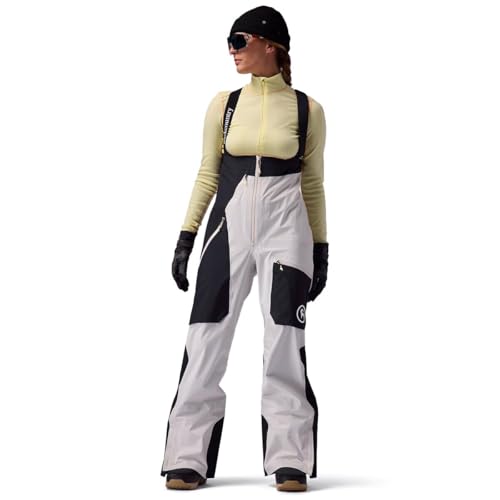
7. Backcountry Cardiac GORE-TEX 3L Bib Pant (Women's) — Best Women's Snowboard Bib
The Backcountry Cardiac Bib is purpose-built for women who push hard on the mountain and refuse to ride in gear that wasn't designed for them. The 3-layer GORE-TEX ePE laminate places this bib at the pinnacle of waterproof and breathable performance — the same laminate technology that mountain guides and professional snowboarders trust in the most demanding conditions. DWR treatment and fully sealed seams create a complete barrier against moisture ingress from every angle.
Where the Cardiac earns its reputation is in the combination of technical performance and women-specific fit. The cut is designed around female body geometry rather than adapted from a men's pattern, which translates to better articulation through the hips and a bib rise that sits correctly without gapping or bunching. For women riders who have tolerated ill-fitting outerwear for too long, this is a revelation. The clean Egret (off-white) colorway is fresh and versatile, pairing cleanly with a wide range of jacket colors.
Backcountry's descriptor — "for avid rippers and riders" — isn't marketing fluff. This bib is built for riders who take their craft seriously, log significant days on snow, and demand that their gear keeps pace with their ambitions. If you fit that description, the Cardiac Bib earns its place at the top of the women's category in 2026.
Pros:
- 3L GORE-TEX ePE laminate delivers the highest tier of waterproof, breathable protection
- Women-specific fit engineered around female body geometry — not a resized men's pattern
- DWR treatment and fully sealed seams create a complete moisture barrier
- Clean Egret colorway pairs well across a range of jacket options
Cons:
- Premium price tier — a significant investment for recreational riders
- Non-insulated shell requires careful layering in very cold temperatures
- Limited colorway selection for the 2026 season
Choosing the Right Snowboard Bib: A Buying Guide
The snowboard bib market has never been more developed than it is in 2026. More layers, more eco-friendly materials, more features. But buying the right bib isn't about buying the most expensive one — it's about matching the bib to your riding style, conditions, and budget. Here's what actually matters.
Waterproofing Technology: 2L vs. 3L GORE-TEX
This is the most important spec decision you'll make. GORE-TEX is the industry benchmark for waterproof-breathable membranes, but not all GORE-TEX construction is equal.
- 2-Layer (2L) GORE-TEX: The GORE-TEX membrane is bonded to the outer shell fabric, with a loose inner hanging lining. More flexible and comfortable against the body. Great for resort riding. Slightly heavier and less packable than 3L.
- 3-Layer (3L) GORE-TEX: The outer shell, membrane, and inner backer are all laminated together as one unit. No inner lining to bunch or trap moisture. More durable, more packable, and the top choice for backcountry and demanding conditions. Carries a higher price tag.
- GORE-TEX ePE: An expanded polyethylene version of the membrane that avoids fluoropolymers (a class of chemicals linked to environmental concerns). Same performance, cleaner chemistry.
For most resort riders, 2L GORE-TEX is entirely sufficient. If you're heading into the backcountry or riding in sustained heavy precipitation, step up to 3L. Also make sure any bib you buy has fully taped seams — critical seams (or ideally all seams) must be sealed with waterproof tape to prevent water infiltration through stitch holes.
Fit: How a Bib Should Feel
A bib that fits correctly is transformative. One that doesn't fit makes every run a battle. Here's what to look for:
- Bib rise: Should reach mid-chest when you're standing upright. Too short and you lose the coverage advantage of a bib over regular pants.
- Suspenders: Adjustable suspenders are essential. Look for wide, padded suspenders if you ride long days — narrow straps cut into your shoulders after a few hours. Clip-style releases on the front make bathroom breaks much easier.
- Seat and thigh: You need room to crouch into a deep riding stance. Test this before you buy — squat down fully and make sure the fabric isn't pulling tight across the back of your knees.
- Inseam length: Many bibs now offer short/regular/long inseam options. Getting this right eliminates bunching at the boot cuff and keeps the bib sitting correctly on the hip.
- Snowboard vs. ski cut: Snowboard-specific bibs tend to have a more relaxed fit through the hip and seat to accommodate the wider stance and rotational movement of snowboarding. Ski-oriented cuts are trimmer.
For a related fit tip, don't forget that what you wear underneath matters too — check out our ski gear reviews for comprehensive coverage of base layers and accessories that pair with your new bib.
Features That Actually Matter
Manufacturers pile on features to justify pricing. Some genuinely improve your day on the mountain. Others are marketing noise. Here's the honest breakdown:
- Powder gaiters (internal cuffs): Fabric sleeves inside the leg opening that seal around your boot to keep snow out during deep powder days or falls. A must-have if you ride off-piste.
- Jacket-to-pant interface: A zip or snap system that connects your bib to a compatible jacket. Eliminates the gap where cold air and snow enter during falls. High value if you fall frequently or ride in storms.
- Thigh vents: Zippered openings on the thighs that let you exhaust heat during high-output riding. Essential for backcountry riders; nice-to-have for resort riders on warm days.
- Pockets: Two hand pockets minimum. A dedicated phone pocket with a pass window is useful. Cargo pockets add storage for snacks and small tools. More pockets add weight — don't carry storage you won't use.
- RECCO reflectors: A passive rescue technology embedded in the fabric. No battery required. If you ride any terrain with avalanche risk, this is a free safety layer worth having.
Budget: What You Actually Need to Spend
You don't need to spend top dollar to stay dry. Here's how to think about budget tiers in 2026:
- Entry-level ($150–$250): Proprietary waterproof membranes, basic taped seams, minimal features. Fine for occasional resort riders in mild conditions. Won't hold up in extended storms or hard use.
- Mid-range ($250–$450): 2L GORE-TEX or equivalent quality membranes, fully taped seams, solid feature sets. The sweet spot for most dedicated resort riders. The North Face Freedom Bib and Burton Reserve Bib live here.
- Premium ($450+): 3L GORE-TEX, advanced construction, maximum durability. Worth it if you ride 30+ days per season, travel to multiple resorts, or venture into the backcountry. The Mountain Hardwear Boundary Ridge, Dakine Stoker, and Backcountry Cardiac occupy this tier.
One last tip: pair the right bib with the right socks and you'll be surprised how much more comfortable your riding becomes. Our guide to the best ski socks for 2026 covers the thermal and fit considerations that complement your outerwear layering system perfectly.
Frequently Asked Questions
What is the difference between a snowboard bib and regular snow pants?
A snowboard bib extends up the torso with a front panel and suspenders, like overalls. This eliminates the gap between your jacket and pants where snow and cold air can enter during falls or when you're bending and reaching. Regular snow pants sit at the waist and rely on your jacket's hem and any built-in jacket-to-pant interface to seal that gap. For snowboarders who fall frequently or ride in deep powder, a bib provides meaningfully better coverage and warmth retention.
Are bibs warmer than regular snow pants?
Bibs themselves don't necessarily add more insulation, but they eliminate the cold gap at your midsection that regular pants leave exposed. That coverage translates to a noticeable warmth improvement in cold, windy conditions. Whether a bib feels warmer also depends on whether it's insulated or a shell design — most of the bibs in this roundup are non-insulated shells intended to be worn over your layering system, so warmth is primarily driven by your base and mid layers.
Do I need GORE-TEX in a snowboard bib?
GORE-TEX is the most proven waterproof-breathable membrane technology on the market, but it's not the only viable option. Several reputable brands use proprietary membranes that perform well in typical resort conditions. However, if you ride in sustained heavy precipitation, spring wet snow, or all-day storm cycles, GORE-TEX's consistent performance and "Guaranteed to Keep You Dry" backing provides reliability that proprietary alternatives can't always match. For serious or frequent riders, GORE-TEX is worth the price premium.
How do I know if a snowboard bib fits correctly?
A properly fitting bib should sit mid-chest when you stand upright with the suspenders adjusted. When you crouch into a riding stance, the fabric should move with you without pulling tight across the back of the knees or seat. The leg opening should sit flush over your boot without excessive bunching. The suspenders should feel comfortable over your shoulders without cutting in — if they do, look for a bib with wider padded suspenders. Always check the inseam length against your measurements before ordering online.
Can I wear a snowboard bib for skiing?
Absolutely. A snowboard bib functions equally well for skiing. The main difference to be aware of is fit — snowboard-specific bibs often have a more relaxed cut through the hip and seat to accommodate the wider stance and rotational movement of snowboarding, while ski-oriented bibs tend to have a trimmer taper through the leg. Either style works for either sport; it comes down to personal preference for fit and freedom of movement.
How do I maintain the waterproofing on my snowboard bib?
The DWR (Durable Water Repellent) coating on your bib degrades over time from dirt, body oils, and washing. To maintain waterproof performance, wash your bib regularly with a technical outerwear cleaner (not standard laundry detergent, which strips DWR). After washing, tumble dry on low heat or iron on low heat with a damp cloth — heat reactivates the DWR coating. When the DWR no longer beads water effectively even after washing and drying, apply a spray-on DWR product to restore the coating. This maintenance routine significantly extends the useful life of any waterproof outerwear.
Buy on Walmart
- Burton [ak] Cyclic GORE-TEX 2L Bib Pants — Walmart Link
- Burton Men's Reserve GORE-TEX 2L Bib Pants – Prism Violet/Tr — Walmart Link
- Volcom Men's Rain Gore-Tex Snowboard Bib Overall – Waterproo — Walmart Link
- The North Face Men's Freedom Bib - Waterproof Ski & Snowboar — Walmart Link
- Mountain Hardwear, Boundary Ridge GTX 3L Bib Pant - Men's, R — Walmart Link
- Dakine Men's Stoker GORE-TEX 3L Snow Bib – Waterproof with R — Walmart Link
- Backcountry, Cardiac GORE-TEX 3L Bib Pant - Women's, Egret, — Walmart Link
Buy on eBay
- Burton [ak] Cyclic GORE-TEX 2L Bib Pants — eBay Link
- Burton Men's Reserve GORE-TEX 2L Bib Pants – Prism Violet/Tr — eBay Link
- Volcom Men's Rain Gore-Tex Snowboard Bib Overall – Waterproo — eBay Link
- The North Face Men's Freedom Bib - Waterproof Ski & Snowboar — eBay Link
- Mountain Hardwear, Boundary Ridge GTX 3L Bib Pant - Men's, R — eBay Link
- Dakine Men's Stoker GORE-TEX 3L Snow Bib – Waterproof with R — eBay Link
- Backcountry, Cardiac GORE-TEX 3L Bib Pant - Women's, Egret, — eBay Link
Final Thoughts
The right snowboard bib makes every run more comfortable, every storm day more manageable, and every season more enjoyable. Whether you go with the top-tier Burton [ak] Cyclic for technical all-mountain performance, the eco-forward Dakine Stoker for sustainable 3-layer protection, or the women's-specific Backcountry Cardiac for a precision fit that actually moves with you, there's a clear best choice for your riding style and budget in 2026 — pick it, invest in it, and get back out on the snow where you belong.
 |
 |
 |
 |

About Frank V. Persall
Frank Persall is a lifelong skier originally from the United Kingdom who has spent years pursuing the sport across premier resorts in Europe, North America, and beyond. His passion for skiing has taken him from the Alps to the Rocky Mountains, giving him a broad perspective on resort terrain, snow conditions, gear performance across price points, and the practical realities of ski travel with a family. At SnowGaper, he covers ski resort guides, gear reviews, and skiing technique and travel resources for enthusiasts of every level.
You can get FREE Gifts. Or latest free skiing books here.
Disable Ad block to reveal all the info. Once done, hit a button below
|
|
|
|