Which women's ski jacket actually delivers when temperatures drop and the snow starts flying? That's the question every skier faces before the season kicks off — and the answer isn't always obvious when you're staring at dozens of options online. After testing and researching the top picks for 2026, the Columbia Women's Whirlibird IV Interchange Jacket stands out as the best overall value, but it's far from the only worthy option on this list.
A great ski jacket does more than keep you warm. It has to handle moisture, allow freedom of movement, pack down for travel, and ideally pull double duty off the mountain. The difference between a frustrating day on the slopes and a perfect one often comes down to what you're wearing. Whether you're a weekend recreational skier or someone pushing hard lines in the backcountry, the jacket you choose shapes your entire experience. You can explore more top-rated options across all your ski gear needs in our ski gear reviews section.
This guide breaks down the seven best women's ski jackets available in 2026, with honest reviews, clear comparisons, and a buying guide to help you match the right jacket to your riding style and budget. From budget-friendly options to technical hardshells built for severe mountain conditions, there's a pick here for every skier.

Contents
Standout Models in 2026
- #PreviewProductRating
- Bestseller No. 1
 Rating:

- Bestseller No. 2
 Rating:
 - Bestseller No. 3
 Rating:
 - Bestseller No. 4
 Rating:
 - Bestseller No. 5
 Rating:
 - Bestseller No. 6
 Rating:
 - Bestseller No. 7
 Rating:
In-Depth Reviews
1. Columbia Women's Whirlibird IV Interchange Jacket — Best Overall Value
The Columbia Whirlibird IV is a reliable, well-engineered interchange jacket that delivers serious protection without the serious price tag. The OMNI-TECH waterproof-breathable shell keeps wind-driven snow and rain out while allowing moisture vapor to escape, which means you stay dry from both sides of the equation. Pair that with OMNI-HEAT thermal reflective lining — the silver metallic dot pattern you've probably seen before — and you get a jacket that actively bounces your body heat back to you instead of letting it escape into the cold.
The interchange system lets you zip out the insulated liner and wear it as a standalone mid-layer, or wear the shell alone on wet spring days. Three usable configurations from one jacket is a smart value play. The Dusty Pink Geoglacial print is a standout aesthetic, too — this is one of the sharper-looking jackets on this list. For colder days, the combined system is warm enough for most groomed-run skiing, though committed powder hounds in extreme conditions may want to look at a heavier setup.
For recreational skiers hitting resorts two to four times a season, this jacket covers everything you need at a price that doesn't sting. Fit runs true to size and the Small fits as expected with room for a light mid-layer underneath.
Pros:
- OMNI-TECH shell is genuinely waterproof with solid breathability for active skiing
- OMNI-HEAT lining adds meaningful warmth without adding bulk
- Three-way interchange system maximizes versatility across weather conditions
- Great price-to-performance ratio compared to premium alternatives
- Attractive print design — looks good on and off the mountain
Cons:
- Insulation level won't satisfy skiers in sub-zero conditions
- Liner and shell zip connection can be fiddly in cold gloves
2. The North Face Women's ThermoBall Eco Snow Triclimate Jacket — Best 3-in-1 for Versatility
The North Face ThermoBall Eco Snow Triclimate is a 3-in-1 jacket built for skiers who need flexibility across a wide temperature range. The outer shell uses 100% recycled DryVent fabric — fully seam-sealed and waterproof — while the inner jacket is insulated with ThermoBall Eco synthetic fill that retains heat even when wet. That combination makes this one of the most adaptable ski jackets in its class for 2026.
What sets this apart is the two different insulation layers working together. The shell uses Heatseeker Eco post-consumer recycled insulation, while the inner jacket carries the ThermoBall loft. Wear both for maximum warmth on bitter days, use the inner jacket alone for cold but clear conditions, or run just the shell when it's warm and wet. That's three genuinely distinct use cases from one purchase. The TNF Black colorway looks clean and pairs with almost any pant color in your kit.
The eco credentials matter to a growing segment of skiers — and North Face doesn't cut corners to get there. The recycled materials perform at the same level as the conventional versions. Sizing in X-Large is accurate and the length covers your hips well when you're in a forward ski stance. This jacket also transitions well from resort skiing to après ski without looking out of place.
Pros:
- DryVent fully seam-sealed shell delivers reliable waterproof performance
- ThermoBall Eco inner jacket retains warmth in wet conditions (unlike down)
- Three configurations handle a wide range of mountain conditions
- 100% recycled materials throughout — strong sustainability story
- Clean silhouette works well for ski-to-town transitions
Cons:
- Heavier than a dedicated hardshell when worn fully assembled
- ThermoBall inner jacket alone may feel thin for truly cold days
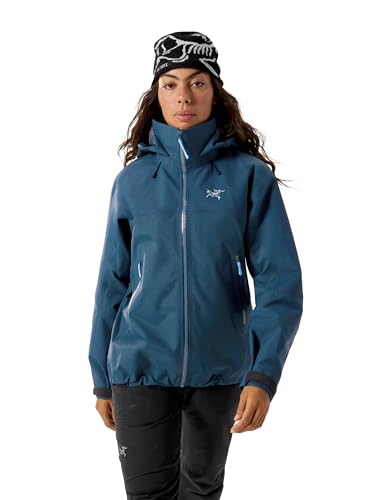
3. Arc'teryx Beta AR Jacket Women's — Best Hardshell for Serious Skiers
If you ski hard in severe mountain conditions and you're tired of jackets that fail at the seams when it actually matters, the Arc'teryx Beta AR is the jacket you've been waiting for. Built with Gore-Tex, this is a true hardshell — no insulation layer, maximum weather protection, maximum breathability. The AR (All Round) designation isn't marketing. This jacket handles everything from in-bounds resort days to exposed alpine terrain without skipping a beat.
The Gore-Tex construction provides waterproof, windproof, and breathable protection that genuinely outperforms most competitors' proprietary membranes. Arc'teryx's construction quality is the best in the industry — the seam taping, zipper quality, and overall fabric durability on the Beta AR are a class above what you'll find on jackets at half the price. The Nightscape/Glacial colorway is subtle and handsome on the mountain. The Medium fits athletic cuts with room for a quality mid-layer baselayer system underneath.
Be honest with yourself about what you need here. This is a performance hardshell, not a standalone warm jacket. You pair it with a quality insulating mid-layer when temperatures drop. If you already own good base layers and a fleece or down mid-layer, the Beta AR completes the system perfectly. For skiers who understand layering and want the best shell money can buy, this is a definitive choice for 2026. The price reflects the engineering investment, and it's worth it.
Pros:
- Gore-Tex construction delivers industry-leading waterproof-breathable performance
- Arc'teryx build quality is the best in class — this jacket lasts years
- Designed for severe conditions: wind, heavy snow, rain, mixed precipitation
- Versatile hardshell works with your existing layering system
- Trim athletic fit moves with you on technical terrain
Cons:
- Premium price — significant investment over midrange alternatives
- No built-in insulation means you need a proper mid-layer system
4. Obermeyer Womens Glade Ski Jacket — Best for Freedom of Movement
The Obermeyer Glade is the jacket for skiers who prioritize mobility without sacrificing protection. Built with 4-way stretch construction — 85% nylon/15% elastane shell with 87% polyester/13% elastane lining — this jacket flexes with every movement rather than fighting against your body on aggressive turns. The 20K mm waterproof rating is serious waterproofing, well above what most resort skiers will ever stress-test in a single season.
PrimaLoft Black Eco insulation fills the jacket with premium synthetic warmth that doesn't compress flat over time the way budget fills do. PrimaLoft Black is the benchmark for synthetic insulation performance — it's warm, lightweight, compressible, and keeps insulating even when damp. Obermeyer adds CZV Control Zone Ventilation for dump-heat moments when you're working hard on the ascent. Full-motion articulation in the cut means the jacket moves with you through dynamic skiing positions.
The Blue Bali colorway is a stand-out on the mountain — you'll be easy to spot in the lift line, which matters if you're skiing with partners. Pair this jacket with a good pair of insulated ski pants and check out our guide to the best women's insulated skirts for skiing if you're considering a more flexible bottom layer option. Size 8 fits true to standard women's sizing with ample stretch in all directions.
Pros:
- 4-way stretch construction removes mobility restrictions on aggressive terrain
- 20K mm waterproofing exceeds what most resort conditions will throw at you
- PrimaLoft Black Eco insulation offers superior warmth-to-weight ratio
- CZV ventilation prevents overheating during high-output skiing
- Full-motion articulation works with athletic skiing positions
Cons:
- Higher price point than Columbia or MOERDENG alternatives
- Limited color options compared to some competitors
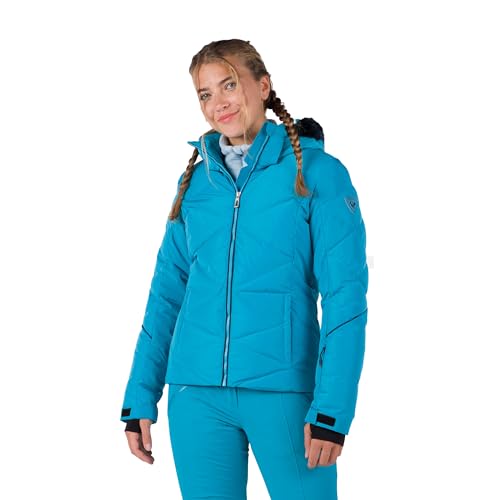
5. Rossignol Staci Pearly Jacket — Best Tailored Style with Real Performance
The Rossignol Staci Pearly is built for skiers who want sport ski aesthetics alongside genuine mountain protection. The classic fit is flattering and intentional — inspired by traditional ski-race silhouettes that emphasize a tailored cut without restricting movement. The 10,000/10,000 waterproof-breathable membrane rating keeps you dry in sustained heavy snow or rain, putting this firmly in the capable midrange protection bracket.
What stands out is the insulation approach. Rossignol uses 100% recycled Polydown microfiber — a synthetic insulation engineered to mimic the loft, feel, and warmth of natural down without the wet-weather performance penalty that real down suffers from. In real skiing conditions, that means you get down-like comfort and warmth even if you take a spill in wet snow or ski through a brief rain shower. The sustainability angle is a genuine plus as well, not just a marketing checkbox.
The Pearly finish gives this jacket a slightly elevated, fashion-forward look that stands out among technical ski jackets that tend toward purely utilitarian aesthetics. If you care about looking polished from first chair to the lodge lunch break, this is your jacket. Performance-wise, 10K waterproofing handles most resort skiing conditions well — serious all-day blizzard skiing in extreme conditions would push it, but for typical resort use it delivers consistently.
Pros:
- Flattering tailored cut inspired by sport ski style
- Recycled Polydown microfiber delivers down-like warmth even when wet
- 10,000/10,000 membrane handles consistent resort skiing conditions
- Distinctive Pearly finish stands out from utilitarian alternatives
- 100% recycled insulation — strong sustainability credentials
Cons:
- 10K waterproofing is adequate but not exceptional for heavy extended exposure
- Fashion-forward silhouette may not suit skiers preferring a relaxed fit
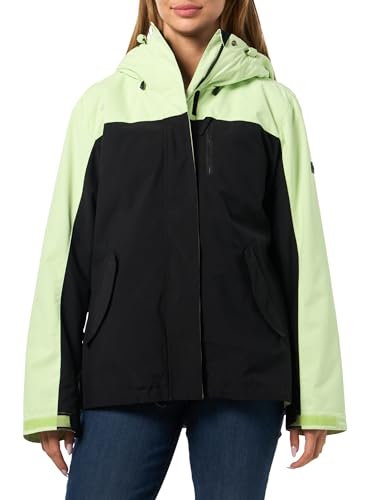
6. Roxy Women's Jetty 3-in-1 Snow Jacket — Best PFAS-Free Option
The Roxy Jetty 3-in-1 is the pick for skiers who want versatility, weather protection, and a commitment to cleaner chemistry. PFAS-free fabric is a meaningful differentiator in 2026 as more skiers pay attention to what their gear is treated with. PFAS (per- and polyfluoroalkyl substances) have historically been used in DWR treatments for ski jackets, but the Roxy Jetty eliminates them entirely without sacrificing the 10K waterproof protection you need on the mountain. Critically taped seams seal out moisture at every stress point.
The 3-in-1 system gives you three distinct wearing configurations: shell alone for wet warm days, insulated inner layer for cold dry conditions, or both combined for maximum cold-weather protection. The Butterfly colorway is a bold, confident choice that looks good without being overwhelming. The large sizing fits true and the drop-hem back provides extra coverage when you're bent forward in ski stance — a detail that matters after a long day of runs.
For the environmentally conscious skier, the Jetty is the most compelling option on this list. It doesn't compromise on the performance side to get the environmental story right. If you're also thinking about what goes on your feet during those long mountain days, pair this jacket with a good set of ski socks for complete comfort from head to toe.
Pros:
- PFAS-free fabric — cleaner chemistry without sacrificing waterproofing
- Critically taped seams provide reliable moisture exclusion at every seam
- 3-in-1 system handles variable mountain weather across the season
- Drop-hem back provides better coverage in ski stance
- Bold Butterfly colorway stands out from the sea of black and navy
Cons:
- 10K waterproofing is entry-level for serious mountain use
- Insulated inner layer adds some bulk to the overall package
7. MOERDENG Women's Waterproof Snow Ski Jacket — Best Budget Pick
The MOERDENG Women's Ski Jacket is the practical choice for skiers who want solid mountain protection without breaking the budget. It's waterproof, windproof, and insulated — the three boxes every ski jacket needs to check — and it checks them at a price point that makes it accessible to occasional skiers who can't justify spending on a premium brand. The softshell construction keeps the weight down while maintaining a comfortable range of motion for all resort skiing activities.
The detachable hood is a thoughtful feature — some days you want the hood, some days it gets in the way under a helmet, and having the option to remove it cleanly is more useful than a fixed hood you can't adjust. Zipper pockets are practical and secure, which matters when you're carrying a phone or lift pass in unpredictable mountain conditions. The jacket adapts well to skiing, snowboarding, and general winter hiking without feeling out of place in any of those contexts.
Be realistic about what you're getting here. The MOERDENG isn't in the same category as the Arc'teryx or Obermeyer above. The waterproofing will handle moderate snow and cold, not sustained blizzard exposure. For skiers who get out five or fewer days per season and need something functional, warm, and well-priced, this jacket delivers strong value. It also makes an excellent gift-level option for someone just getting into skiing in 2026.
Pros:
- Affordable price point makes quality ski protection accessible
- Detachable hood adapts to helmet use or hood-up conditions
- Softshell construction keeps weight low and mobility high
- Multiple secure zipper pockets for essentials on the mountain
- Versatile enough for skiing, snowboarding, and winter hiking
Cons:
- Waterproofing won't hold up to extended heavy precipitation exposure
- Insulation level is modest — requires layering in cold conditions
- Build quality doesn't match premium brands at the same category level
Choosing the Right Women's Ski Jacket: A Buying Guide
Before you pick a jacket off this list, spend a few minutes thinking through what you actually need. The best women's ski jacket for a weekend resort skier in Colorado is a completely different animal from the right jacket for someone tackling backcountry lines in the Pacific Northwest. Here's what to evaluate before you buy.
Waterproofing and Breathability Ratings
Waterproofing is measured in millimeters (mm) — the higher the number, the more water pressure the fabric resists before leaking. Breathability is measured in grams per square meter per 24 hours (g/m²/24h), indicating how much moisture vapor escapes. Here's a practical breakdown:
- 10K/10K: Handles moderate snow and light rain — suitable for most resort skiing days
- 15K–20K: Serious waterproofing that handles sustained wet conditions and heavy snowfall without compromise
- Gore-Tex / PTFE membranes: Premium seam-sealed waterproofing with best-in-class breathability for active, hard-skiing use
If you ski primarily at well-groomed resorts on average winter days, 10K is workable. If you push hard, spend long days on the mountain, or ski in wet maritime climates like the Pacific Northwest, go 15K and above. The Obermeyer Glade's 20K rating and the Arc'teryx Gore-Tex construction represent the top tier on this list. According to Wikipedia's overview of Gore-Tex technology, the expanded PTFE membrane provides a permanent waterproof-breathable barrier that doesn't degrade with washing the way DWR coatings can.
Insulation Type: Synthetic vs. Down vs. Shell
The insulation inside your ski jacket determines warmth, weight, and wet-weather performance. Each approach has a clear use case:
- Synthetic insulation (PrimaLoft, ThermoBall Eco, Polydown): Retains insulating properties when wet. Best for variable mountain weather where you might take a fall in wet snow or ski through rain. Every jacket on this list uses synthetic insulation or no insulation — the right call for skiing.
- Hardshell (no insulation): Maximum breathability and weather protection. Pair with your own layering system. Best for aggressive skiers with an existing mid-layer setup. The Arc'teryx Beta AR is the only hardshell on this list.
- 3-in-1 interchange systems: Outer shell plus removable insulated liner. Best for skiers who want one jacket to handle multiple temperature ranges across a full season. Columbia Whirlibird IV, North Face ThermoBall, and Roxy Jetty all use this system.
Fit, Cut, and Mobility
Ski jacket fit matters more than most people realize. You'll be bending, twisting, reaching, and rotating your shoulders thousands of times per day on the mountain. A jacket that restricts movement in any of those directions will exhaust you faster and limit your skiing. Key considerations:
- Helmet-compatible hood: If you wear a ski helmet — and you should — verify the hood fits over it. Most technical ski jackets account for this, but check before you buy.
- Drop-hem or longer back: Keeps lower back covered when you're in forward ski stance. Critical for all-day comfort in the cold.
- 4-way stretch construction: Like the Obermeyer Glade, stretch panels remove movement restrictions. Especially valuable for aggressive or athletic skiers.
- Articulated elbows and shoulders: Look for cut-and-sew construction that anticipates ski body positions, not just standing-around positions.
Don't forget that your entire ski kit works together. If you're looking for a complete apparel setup, check out our roundup of the best ski mittens to complete your layering system with hand protection that matches your jacket's performance level.
Features Worth Paying For
Some jacket features sound nice but rarely get used. Others are genuinely valuable on the mountain every single day. Here's the practical breakdown:
- Worth it: Powder skirt (keeps snow from sneaking in when you fall), lift-pass pocket on the sleeve, pit zips for ventilation, internal goggle pocket, adjustable wrist cuffs, YKK zippers (they last longer)
- Nice to have: RFID lift-pass window, key clip, phone-specific pocket with headphone port
- Often overstated: Excessive pocket count (you usually use 2-3 at most), removable fur trim on hoods (adds weight, rarely necessary)
The jackets higher on this list tend to nail the essential features without cluttering the design with gimmicks. When you're ready to shop, timing your purchase can also make a significant difference — our guide on when is the best time to buy ski equipment breaks down the optimal windows throughout the year when prices drop across all major brands.
Common Questions
What waterproofing rating do I need for a ski jacket in 2026?
For most resort skiing, a 10K–15K mm waterproof rating is sufficient. If you ski in wet climates like the Pacific Northwest, Utah, or Colorado on storm days, aim for 15K–20K. Serious backcountry skiers in severe conditions should consider a Gore-Tex hardshell like the Arc'teryx Beta AR. The breathability rating matters equally — look for matched breathability numbers to avoid sweating out on the inside while staying dry on the outside.
Is a 3-in-1 jacket better than a dedicated insulated ski jacket?
It depends on how you ski. A 3-in-1 interchange jacket gives you more configurations for one price — shell alone, insulated liner alone, or both together. That versatility is valuable if you ski in varying conditions or across multiple seasons. A dedicated insulated jacket is simpler, usually lighter, and purpose-built for specific temperature ranges. If you ski in one climate consistently, a single-purpose insulated jacket often performs better in its target conditions.
Can I use a ski jacket for everyday winter wear?
Yes, and several jackets on this list do it well. The Columbia Whirlibird IV, North Face ThermoBall, and Rossignol Staci Pearly all have styling that works off the mountain. Technical hardshells like the Arc'teryx Beta AR are more purpose-specific in their appearance but function well as everyday outerwear in harsh winter weather. The key limitation for everyday wear is the longer cut of many ski jackets, which doesn't always pair naturally with everyday bottom layers.
How do I keep my ski jacket waterproofing working season after season?
DWR (Durable Water Repellency) coatings on the outer face fabric degrade with washing, abrasion, and use. Restore them by washing your jacket on a gentle cycle with a technical cleaner (Nikwax Tech Wash, not regular detergent), then tumble dry on low heat or iron on low — heat reactivates the DWR coating. If water starts beading less effectively, apply a spray-on DWR treatment like Nikwax TX.Direct. PFAS-free DWR options are increasingly available and perform well in normal skiing conditions.
What's the difference between a softshell and a hardshell ski jacket?
A hardshell is a weather-resistant outer layer using a waterproof-breathable membrane (like Gore-Tex) bonded to the face fabric. It provides maximum waterproofing and breathability but offers no insulation on its own. A softshell is a more flexible, stretch-oriented fabric construction that prioritizes movement and breathability, typically with lower waterproofing ratings — better suited for high-aerobic activity or drier conditions. Most insulated ski jackets on the market use a hardshell outer layer bonded to an insulated inner construction, combining protection with warmth.
How should a women's ski jacket fit over a mid-layer?
A ski jacket should fit comfortably over a mid-layer (fleece, down sweater, or insulated hoodie) without pulling at the shoulders or restricting arm movement when raised above your head. Check the fit with your arms extended forward at shoulder height — the jacket shouldn't ride up and expose your lower back. The collar should sit close to your neck without chafing when zipped all the way up. If you're between sizes, size up to accommodate mid-layer bulk rather than buying a size down that restricts your layering options.
Buy on Walmart
- Columbia Women's Whirlibird IV Interchange Jacket, Dusty Pin — Walmart Link
- The North Face Women's ThermoBall Eco Snow Triclimate Jacket — Walmart Link
- Arc'teryx Beta AR Jacket Women's | Durable Hardshell for Sev — Walmart Link
- Obermeyer Womens Glade Ski Jacket, 20K mm Waterproof Breatha — Walmart Link
- Rossignol Staci Pearly Jacket - Insulated Ski Jacket - Water — Walmart Link
- Roxy Women's Jetty 3-in-1 Snow Jacket – 10K Waterproof, Insu — Walmart Link
- MOERDENG Women's Waterproof Snow Ski Jacket Warm Winter Coat — Walmart Link
Buy on eBay
- Columbia Women's Whirlibird IV Interchange Jacket, Dusty Pin — eBay Link
- The North Face Women's ThermoBall Eco Snow Triclimate Jacket — eBay Link
- Arc'teryx Beta AR Jacket Women's | Durable Hardshell for Sev — eBay Link
- Obermeyer Womens Glade Ski Jacket, 20K mm Waterproof Breatha — eBay Link
- Rossignol Staci Pearly Jacket - Insulated Ski Jacket - Water — eBay Link
- Roxy Women's Jetty 3-in-1 Snow Jacket – 10K Waterproof, Insu — eBay Link
- MOERDENG Women's Waterproof Snow Ski Jacket Warm Winter Coat — eBay Link
Next Steps
- Check current prices on Amazon for the Columbia Whirlibird IV and Arc'teryx Beta AR — prices shift seasonally and deals appear frequently in early and late season windows.
- Cross-reference your riding style against the buying guide above — confirm whether you need a hardshell, 3-in-1, or dedicated insulated jacket before committing to a purchase.
- Read the full reviews for your top two picks and compare the waterproof ratings, insulation type, and fit notes to your specific climate and skiing frequency.
- Complete your ski apparel kit — pair your new jacket with quality ski mittens and moisture-wicking base layers so your whole system works together on cold days.
- Time your purchase strategically — review our guide on when to buy ski equipment to find out when brands typically discount previous-season inventory for the best price on any jacket on this list.
 |
 |
 |
 |

About Frank V. Persall
Frank Persall is a lifelong skier originally from the United Kingdom who has spent years pursuing the sport across premier resorts in Europe, North America, and beyond. His passion for skiing has taken him from the Alps to the Rocky Mountains, giving him a broad perspective on resort terrain, snow conditions, gear performance across price points, and the practical realities of ski travel with a family. At SnowGaper, he covers ski resort guides, gear reviews, and skiing technique and travel resources for enthusiasts of every level.
You can get FREE Gifts. Or latest free skiing books here.
Disable Ad block to reveal all the info. Once done, hit a button below
|
|
|
|