Ski jumping is scored through a combination of distance points and style points, with wind and gate compensation adjustments applied to produce a final total in every sanctioned event. Understanding how is ski jumping scored requires familiarity with both pillars of the system: the objective measurement of distance relative to a reference marker on the hill, and the assessment of flight form and landing technique by a five-person judging panel. Enthusiasts who follow the broader skiing community will find that ski jumping's scoring methodology is among the most precisely structured in all of winter sport.

The sport's scoring framework has evolved considerably since the earliest days of organized competitive skiing, when distance alone determined the winner. Today's system rewards both athletic power and refined technical elegance, balancing objective measurement against subjective judging in a manner that reflects the multifaceted demands of elite competition. Each component of the score — from meter markings along the landing slope to the numerical paddles raised by judges — contributes to a cumulative tally that separates world-class athletes from the rest of the field.
For spectators new to the discipline and for experienced enthusiasts seeking a deeper understanding, parsing the scoreboard can initially appear complex, given the interplay of compensation factors, hill classifications, and style deductions. This guide examines every component of the ski jumping scoring system in precise detail, providing a comprehensive reference applicable to Olympic events, FIS World Cup competition, and all other sanctioned meets.
Contents
- How Is Ski Jumping Scored at Major Competitions
- When Points Are Awarded and When They Are Deducted
- The Equipment and Infrastructure Behind Ski Jumping Scoring
- Common Misconceptions About Ski Jumping Scoring
- Key Scoring Insights Every Spectator Should Know
- Clarifying Confusing Aspects of the Ski Jumping Score System
- Frequently Asked Questions
- Next Steps
How Is Ski Jumping Scored at Major Competitions
The question of how is ski jumping scored carries particular weight at the highest levels of competition, where fractions of a point can separate a gold medalist from a competitor who finishes off the podium. The International Ski and Snowboard Federation (FIS) administers the scoring rules applied uniformly across the Olympic Winter Games, the FIS Ski Jumping World Cup, the Four Hills Tournament, and all other sanctioned events worldwide.
The Olympic Scoring Framework
At the Olympic Games, ski jumping events are conducted across two hill sizes — the normal hill (K-90) and the large hill (K-120) — as well as individual and team formats. Scoring in every Olympic ski jumping competition follows a standardized structure:
- Distance points calculated relative to the K-point of the specific hill in use
- Style points awarded by five judges, with the highest and lowest individual scores discarded before summing
- Wind and gate compensation points added or subtracted based on measurable environmental conditions at the moment of each jump
- Each athlete completes two rounds, and the combined score across both rounds determines the final placement
The FIS publishes the complete technical rules for Olympic ski jumping through its official competition guidelines, and a useful overview is also available through the Wikipedia article on ski jumping for readers seeking a general introduction to the sport's history and structure.
FIS World Cup Scoring Structure
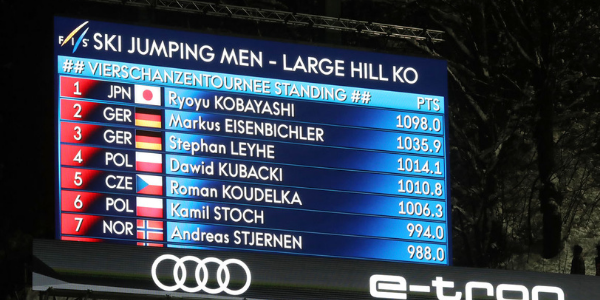
In the FIS Ski Jumping World Cup, the identical per-jump scoring methodology applies, but athletes accumulate World Cup points based on their final placement at each individual event. The season standings use a points-to-placement table in which first place earns 100 World Cup points, with diminishing amounts awarded down through the standings to thirtieth place. Crucially, spectators must distinguish between an athlete's per-jump score — the tally used to determine placement at a single event — and the World Cup season standing, which represents cumulative placement points earned across all events in the circuit.
When Points Are Awarded and When They Are Deducted
Points are not added uniformly in ski jumping; the system awards certain components automatically through measurement while allowing judges to exercise informed discretion on others. Deductions are equally structured, ensuring that penalties reflect genuine performance deficiencies rather than arbitrary assessments from event to event.
Distance Points and the K-Point System
The K-point serves as the reference marker on every FIS-certified ski jumping hill, and it forms the baseline from which all distance points are calculated. Landing exactly at the K-point yields a base score of 60 distance points. From that baseline, the following adjustments apply in both directions:
- Each meter beyond the K-point adds 1.8 points on a large hill (K-120 or larger) and 2.0 points on a normal hill (K-90)
- Each meter short of the K-point subtracts the corresponding amount based on the same per-meter multiplier
- The hill record point (the farthest landing deemed safe by course engineers) marks an outer boundary; exceeding it may necessitate a jump re-do or disqualification for safety reasons
The physics of flight trajectory are directly relevant here. As examined in the analysis of why heavier skiers travel faster on slopes, body mass relative to aerodynamic drag influences how athletes move through air and over snow — a principle that elite jumpers and their coaches factor into inrun gate selection and body positioning during each jump.
Pro Insight: A single additional meter on a large hill generates only 1.8 distance points, making style scores an equally decisive factor — athletes who sacrifice technical form for raw distance frequently gain less than they lose through style deductions.
Style Points and Judges' Assessment Criteria
Five judges independently evaluate the quality of each jump, scoring on a scale from 0 to 20 in increments of 0.5. The highest and lowest individual scores are discarded, and the remaining three are summed for a maximum combined style total of 60 points per jump. Judges assess the following specific elements:
- Flight position — the V-style formation of the skis, arm placement close to the body, and the forward lean angle relative to the ski plane
- In-flight stability — absence of wobbling, ski-crossing, or asymmetry during the airborne phase
- Telemark landing — one foot placed forward with both knees bent at the moment of snow contact, which is required for full style credit
- Outrun control — balance and composure immediately after landing through the deceleration zone
A fall upon landing results in a substantial deduction across all five judges' individual scores, typically reducing the style component by ten points or more. Mastery of proper ski stance fundamentals directly underpins the landing mechanics that judges assess, making technical ski training relevant even to athletes competing at the elite level of jumping.
The Equipment and Infrastructure Behind Ski Jumping Scoring
The accuracy of ski jumping scoring depends not only on human judgment but also on the physical infrastructure of the hill and the technology deployed to measure distance and environmental conditions with precision throughout competition.
Hill Classifications and Their Scoring Implications
Hills are classified by their K-point designation, and each classification carries a specific point-per-meter multiplier that directly determines how dramatically distance variations translate into score differences between competitors:
| Hill Type | Hill Size (HS) | Base Distance Points (at K) | Points per Meter Beyond K | Points per Meter Short of K |
|---|---|---|---|---|
| Small Hill | Under 85 m | 60 | 2.0 | −2.0 |
| Normal Hill | 85 m – 109 m | 60 | 2.0 | −2.0 |
| Large Hill | 110 m – 184 m | 60 | 1.8 | −1.8 |
| Ski Flying Hill | 185 m and above | 60 | 1.2 | −1.2 |
Athletes competing at high-altitude venues encounter an additional variable, as reduced air density at elevation affects aerodynamic lift during the flight phase, potentially shifting landing distances away from expectations established at sea-level facilities. Event officials account for this phenomenon primarily through gate adjustments rather than modifications to the scoring formula itself.
Measurement Technology on the Hill
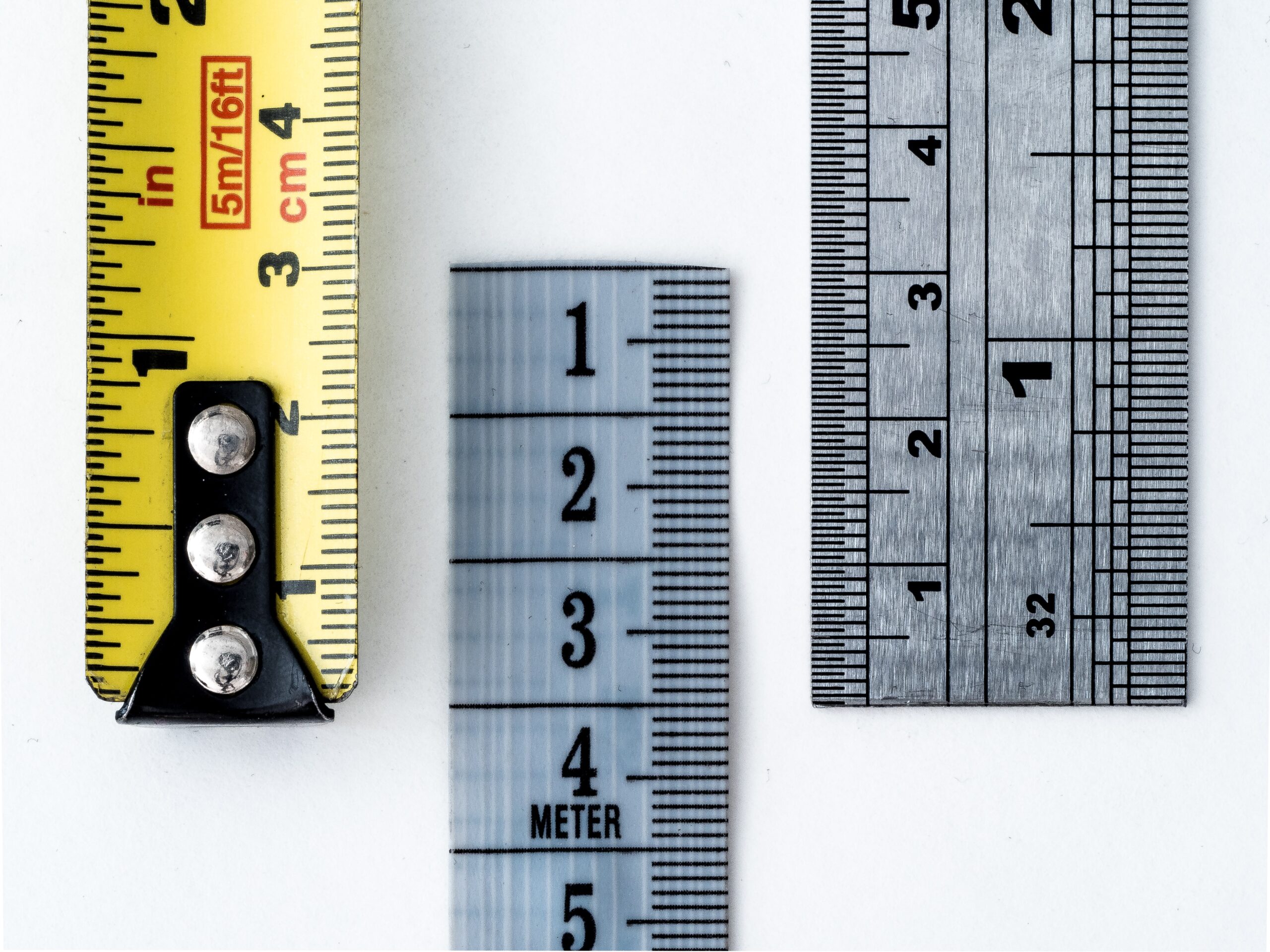
Modern ski jumping facilities use graduated meter markings painted or embedded directly into the landing slope at regular intervals. Distance is measured from the takeoff table to the nearest foot's point of contact with the snow, as determined by judges observing from an elevated vantage position alongside the hill. Wind measurement devices — typically anemometers positioned at multiple points along the inrun and landing zones — feed real-time data to the technical delegate, who applies FIS compensation tables to determine point adjustments for each individual jump based on conditions recorded precisely at the moment of takeoff.
Common Misconceptions About Ski Jumping Scoring
Several persistent misunderstandings circulate among casual observers of ski jumping competitions, and correcting them leads to a substantially more accurate interpretation of what the scoreboard actually reflects during a live event or broadcast.
The K-Point Is Not the Target Distance
A widespread misconception holds that athletes attempt to land precisely at the K-point. In reality, the K-point is not a target; it is the mathematical baseline from which scoring calculations begin. Elite athletes consistently strive to exceed the K-point substantially, as every additional meter beyond it generates positive distance points. The K-point's significance lies in its role as a computational anchor rather than as an aspirational landing zone for competitors.
Similarly, spectators sometimes assume that the longest jump in a round always produces the highest score. A jump that lands considerably beyond the K-point but is executed with poor form — crossed skis, an unstable V-position, or a fall at landing — will see its distance advantage partially or entirely erased by style deductions. Athletes who sustain common ski injuries that compromise their lower body mechanics may experience exactly this outcome under competition pressure.
Style Scoring Is Not Purely Subjective
Because human judges assign style points, many observers conclude that the style component is inherently arbitrary and inconsistent. This characterization is inaccurate. FIS judging guidelines specify precise, codified criteria that judges are trained and tested to apply consistently, including the mandatory Telemark landing requirement, the required V-style flight formation, and enumerated deductions for specific errors such as touching the snow with hands, crossing skis mid-flight, or failing to maintain balance through the outrun zone. Inter-judge variance does exist in practice, which is precisely why the highest and lowest individual scores are discarded — a deliberate statistical safeguard against outlier assessments influencing the final result.
Warning: Observers who dismiss style scores as merely artistic overlook the fact that a fall on landing alone can reduce the style total by ten points or more, effectively negating several meters of additional distance in a single error of technique.
Athletes who have experienced skiing accidents during training may develop compensatory movement patterns that ultimately manifest in their landing form under the stress of competition, making consistent technique rehearsal essential for producing stable style scores across events.
Key Scoring Insights Every Spectator Should Know
Several practical insights allow spectators and aspiring judges to interpret ski jumping scores with considerably greater confidence, moving beyond the raw numbers to appreciate the full context of each individual performance within a competition round.
Wind and Gate Compensation Points
Wind conditions and inrun gate position introduce variables that are entirely beyond individual athletes' control during competition, and the FIS compensation system exists specifically to neutralize these environmental inequities. The governing principles are as follows:
- A tailwind assists the jumper aerodynamically and therefore results in negative compensation — points are subtracted from the total to offset the unfair advantage
- A headwind impedes the jumper and results in positive compensation — points are added to offset the disadvantage imposed by conditions
- When the inrun gate is raised (starting higher on the ramp), the athlete gains additional speed; if this position is more advantageous than the reference gate, negative gate compensation is applied to the score
- When the gate is lowered relative to the reference position, positive compensation rewards the athlete for the speed disadvantage absorbed
Gate compensation was formalized in FIS rules during the 1990s to prevent situations in which athletes jumping under favorable wind conditions could accumulate an insurmountable advantage purely through timing and environmental luck rather than athletic performance. Wind compensation values are derived from empirical tables developed specifically for each individual hill, reflecting the aerodynamic characteristics of that particular facility and its terrain.
Reading the Competition Scoreboard Effectively
A standard ski jumping scoreboard displays, for each jump, the distance in meters, the calculated distance points, the five individual style scores with the highest and lowest identified, the three retained style scores summed together, and the wind and gate compensation values presented as separate line items. The final total is the arithmetic sum of all valid components. When following a two-round individual competition:
- Round one scores are preserved in full and added directly to round two scores to produce the final placement standing
- In some competition formats, only the top performers from round one advance to participate in round two
- In team events, all team members' scores from both rounds are aggregated into a single team total
Clarifying Confusing Aspects of the Ski Jumping Score System
Even well-informed spectators occasionally encounter moments of confusion when scores appear inconsistent with what they observed visually during a jump. Understanding the structural reasons behind these apparent discrepancies resolves the majority of the confusion that arises during competition viewing.
Why Scores Vary Across Different Hills
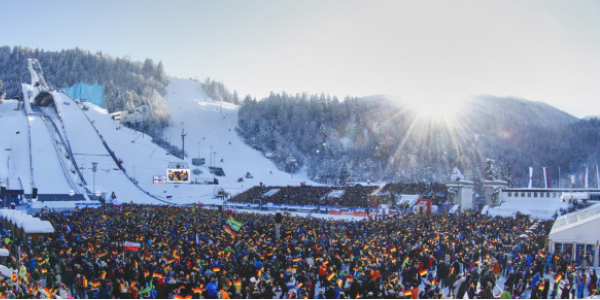
A jump that produces a score of 130 points on a normal hill will not generate an equivalent score at a ski flying hill, because the point-per-meter multiplier differs substantially between hill types. This mathematical reality explains why scores cannot be meaningfully compared across hills of different classifications without accounting for the multiplier in use at each facility. The FIS explicitly cautions against such direct cross-hill score comparisons in its official competition guidelines. Spectators who notice that season-best scores at ski flying hills are numerically higher than those recorded on normal hills are observing the multiplier difference in action, rather than a proportionally greater absolute performance by the athletes involved.
Individual Versus Team Event Scoring Differences
In individual competition, each athlete's two-round total determines placement directly through a straightforward summation. In team events, four athletes per nation each complete two jumps, and all eight individual jump scores are aggregated into a single team total that determines placement. The identical per-jump scoring methodology — distance points, style points, wind and gate compensation — applies to every jump regardless of whether it occurs in an individual or team context. However, a single poorly executed jump by one team member affects the entire squad's standing, introducing a strategic and psychological dimension that is largely absent from the individual competition format. The mixed gender team format, which was incorporated into the Olympic program in recent Games, applies the same scoring rules with male and female athletes contributing equally weighted scores to the aggregate team total.
Those interested in the equipment calibration that underlies ski sport performance more broadly may find useful reference in the guide to adjusting ski bindings using a DIN calculator, which explains how release value settings are determined for different disciplines and body parameters — a consideration relevant to understanding the technical specifications that govern competitive equipment selection across disciplines.
Frequently Asked Questions
What is the maximum possible score in a single ski jump?
The theoretical maximum for a single jump under standard FIS rules combines 60 base distance points (for landing exactly at the K-point) with 60 style points (three judges each awarding the maximum 20 out of 20) plus any positive wind or gate compensation applicable to conditions. In practice, elite athletes on large hills land considerably beyond the K-point, accumulating distance point totals well in excess of 60, so combined per-jump scores frequently exceed 130 to 140 points in top-level World Cup and Olympic competition.
How many judges score style in ski jumping?
Five judges independently assess each jump, assigning a style score between 0 and 20 in increments of 0.5 points. The single highest and single lowest scores among the five are discarded, and the three remaining scores are summed to produce the final style total, which carries a maximum value of 60 points per jump under this system.
What exactly is the K-point in ski jumping?
The K-point, derived from the German term Konstruktionspunkt, is the engineering reference marker embedded in the landing slope of every FIS-certified ski jumping hill. Landing at the K-point produces a base distance score of exactly 60 points. Every meter beyond or short of the K-point adds or subtracts a fixed amount determined by the hill's classification, making the K-point the mathematical anchor from which all distance calculations in ski jumping scoring are derived.
How does wind affect a ski jumping score?
Wind compensation adjustments are applied based on wind speed and direction measured at the moment of each jump. A headwind, which impedes the athlete's flight, results in positive compensation — additional points are added to offset the disadvantage imposed by conditions. A tailwind, which provides aerodynamic assistance, results in negative compensation — points are subtracted to prevent an unfair scoring advantage. The specific compensation values for a given wind measurement are drawn from empirical tables calculated individually for each FIS-certified hill.
What is the Telemark landing and why does it matter for scoring?
The Telemark landing is a specific technique in which the athlete places one foot forward and bends both knees upon initial contact with the slope, replicating the classic Nordic telemark skiing position. It is a required element for full style credit under FIS judging guidelines. Failure to execute a clean Telemark — arriving with both feet parallel, touching the snow with the hands, or falling — results in deductions from all five judges' individual scores, which can substantially reduce the combined style total and erode the advantage gained through distance.
How is ski jumping scored differently in the team format?
In team events, four athletes per nation each complete two individual jumps using the identical per-jump scoring system applied in all individual competition. All eight jump scores for the team are summed to produce the team's aggregate total, and the team with the highest combined score wins. The same distance point, style point, wind compensation, and gate compensation rules apply in full; the only structural difference is that individual performances contribute to a collective result rather than producing separate individual placements in the standings.
Next Steps
- Review the current FIS Ski Jumping Rules document, available through the FIS official website, to confirm the precise K-point multipliers and wind compensation tables applied in sanctioned competition before analyzing live events or broadcast results.
- Watch at least two complete rounds of a recorded FIS World Cup ski jumping broadcast while tracking the scoreboard components — distance meters, distance points, individual style scores, discarded scores, and compensation adjustments — simultaneously for each jump to build familiarity with the scoring flow.
- Study Telemark landing technique in slow-motion video replays of elite athletes, developing the ability to anticipate the likely style score range before the judges' numerical displays appear on screen.
- Cross-reference the hill classification and point-per-meter multiplier whenever comparing scores across different venues, to avoid misinterpreting performance differences that are attributable to scoring structure rather than athletic output.
- Explore the full arc of competitive ski sport through the history of skiing to understand how the current two-component scoring system evolved from earlier formats in which distance alone determined the winner, providing essential context for interpreting how judging criteria have developed over time.
 |
 |
 |
 |

About Frank V. Persall
Frank Persall is a lifelong skier originally from the United Kingdom who has spent years pursuing the sport across premier resorts in Europe, North America, and beyond. His passion for skiing has taken him from the Alps to the Rocky Mountains, giving him a broad perspective on resort terrain, snow conditions, gear performance across price points, and the practical realities of ski travel with a family. At SnowGaper, he covers ski resort guides, gear reviews, and skiing technique and travel resources for enthusiasts of every level.
You can get FREE Gifts. Or latest free skiing books here.
Disable Ad block to reveal all the info. Once done, hit a button below
|
|
|
|