More than 90 percent of alpine skiers carry poles onto the mountain every single run — yet most rely on them for a single purpose and miss out on five or six other functions that directly affect speed, control, and confidence on the snow. What are ski poles for, really? If you've been treating yours like optional accessories, you're leaving real performance on the table. Whether you're brand new to the sport or already comfortable carving turns, our skiing resource hub has everything you need to dig deeper into technique and gear.
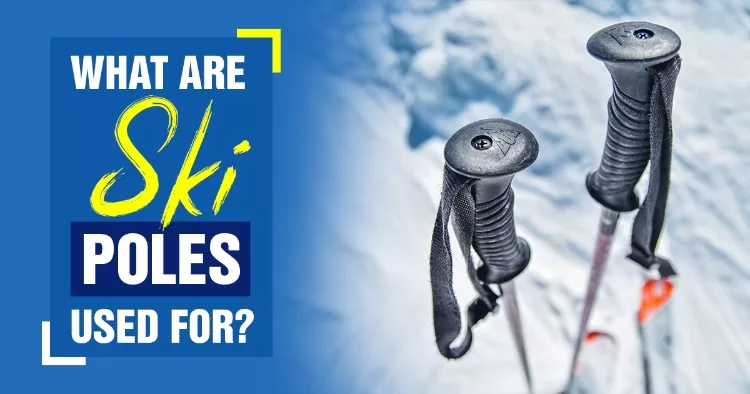
Ski poles have been part of alpine skiing since at least the 1930s. The basic shape has barely changed — a grip at the top, a basket near the bottom, a tip at the end — but the materials and the understanding of how to use them have evolved significantly. Today's poles can be aluminum, carbon fiber, or composite, and they range from beginner-simple to racing-specific in design.
This guide covers everything: the real functions poles serve on the mountain, how to use them correctly, how to maintain them, what they cost, and which common beliefs about poles are simply wrong. Work through each section and you'll have a clear, practical understanding of this piece of gear that most skiers take for granted.
Contents
What Are Ski Poles For? Core Functions and How to Use Them Right
Poles do six things on the mountain. Balance is the obvious one — you instinctively reach out when you feel yourself tipping, and the pole catches you. But the remaining five functions are just as important, and ignoring them explains why so many skiers plateau at the intermediate level without knowing why.
The full list of what ski poles are for:
- Maintaining balance during and between turns
- Setting rhythm and tempo, especially on steep terrain and moguls (the rounded bumps carved by repeated skier turns)
- Triggering turn initiation through the pole plant
- Propelling yourself across flat runouts and gentle traverses
- Supporting your weight when getting up after a fall
- Probing snow depth and assessing conditions in the backcountry
If you plan to take your skiing beyond groomed resort runs, understanding all six of these becomes essential. Take ski touring, for example — in that context, poles shift from balance tools to propulsion engines entirely. Our beginner's guide to ski touring covers exactly how that transition works and what to expect when poles become your primary means of crossing flat terrain.
Balance, Rhythm, and Turn Initiation
On groomed runs, a good skier has a visible beat — a regular rhythm of pole plants that coordinates the whole body. Plant, turn, plant, turn. That rhythm isn't just aesthetic. It synchronizes your upper and lower body, stops your shoulders from rotating toward the hill (which kills edge grip), and sets a tempo that lets you plan turns ahead instead of reacting to them.
The pole plant also triggers your weight transfer. The moment your pole tip touches snow, your body takes it as a signal to shift weight to the downhill ski and initiate the turn. Once that reflex is trained, it fires automatically — which is exactly what you need on steep pitches where conscious thinking is too slow.
- Poles give you a physical anchor point during turn entry
- They stop your upper body from over-rotating (a major cause of edge release)
- They create consistent tempo, which is critical on moguls and variable terrain
Proper Grip and Strap Technique
Most recreational skiers hold their poles incorrectly. The strap — that loop at the top of the grip — is not just a safety leash. It is a load-bearing connection between your palm and the pole. Thread your hand up through the loop from below, then close your grip so the strap sits across your palm. This lets you push force through the strap rather than squeezing it out through your fingers.
Common grip mistakes to break right now:
- Threading the strap from the top — prevents you from applying downward pressure through it
- Gripping the handle too tightly — creates forearm fatigue and blocks natural wrist rotation
- Holding the pole mid-shaft instead of at the handle — destroys your balance point
- Not using the strap at all — you lose the pole in a fall and strain your arm holding all the weight manually
Fix your strap technique once, and you'll feel the difference on your very next run. It's the fastest free upgrade in skiing.
The Pole Plant: Timing Is Everything
A pole plant is a wrist flick — not a full arm swing. Your elbow stays roughly in place, the wrist rotates forward, the tip touches snow just outside your downhill ski, and that contact triggers the turn. The motion is small and quick. Force is not the point. Timing is.
Pro tip: Point your pole tip toward the fall line before you plant — not straight down the slope. This drives your momentum forward into the turn instead of letting it stall sideways.
On gentle terrain, loose pole plants are fine. On steep pitches, every plant needs to be deliberate — hesitating even half a second throws off your turn timing and compounds into real problems before you reach the bottom. On moguls, plant at the top of each bump, which gives you a solid pivot point for each turn.
Keeping Your Ski Poles in Peak Condition
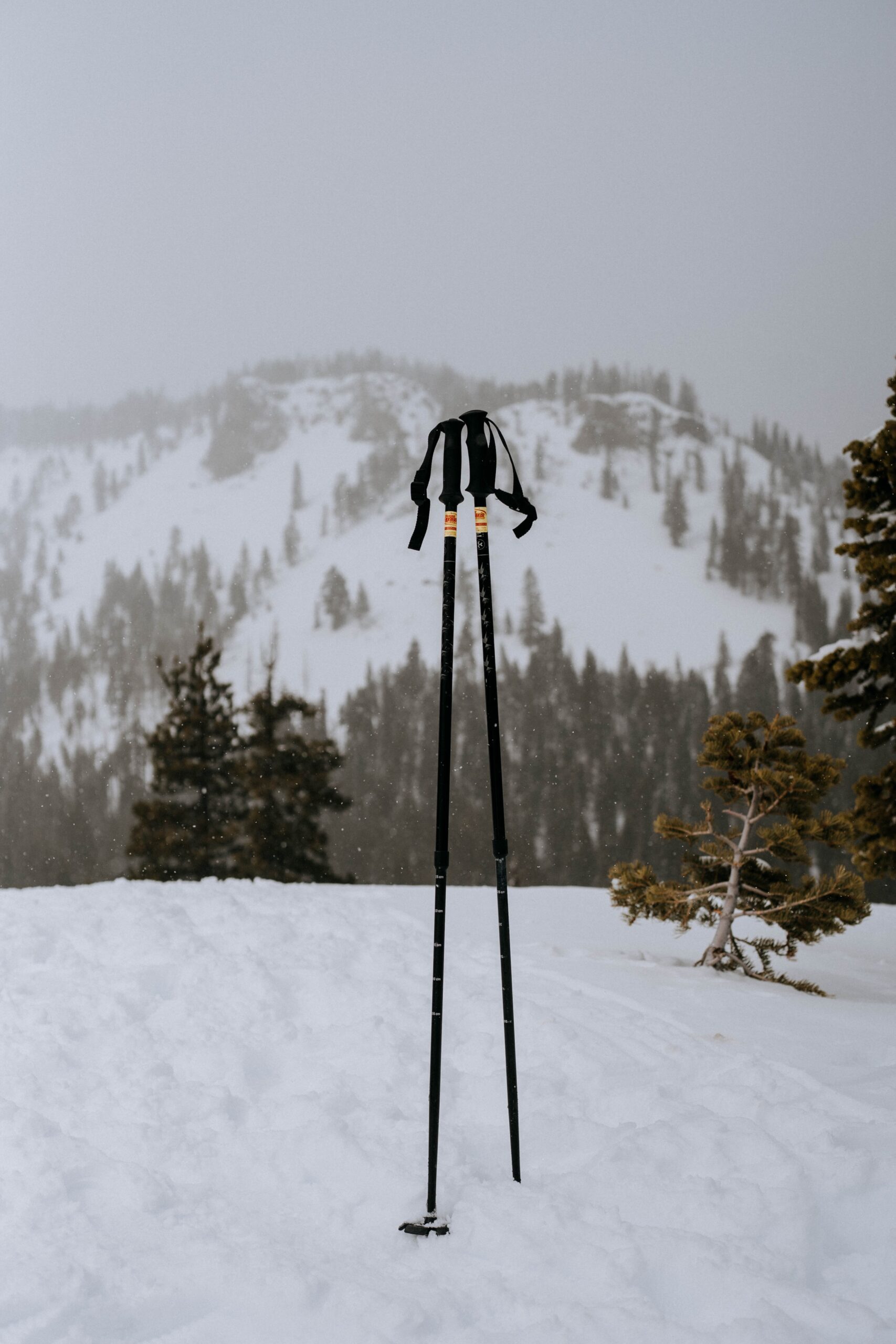
Ski poles take more abuse than most skiers notice. They get stepped on in lift lines, scraped against ice, dropped on hard-packed groomed runs, and stored in warm cars during road trips. None of that damage is dramatic in the moment, but it accumulates. A cracked shaft or a broken basket becomes a real problem mid-run, and it is completely preventable with a small amount of regular attention.
After Every Day on the Slopes
End-of-day care takes five minutes and prevents most damage:
- Wipe the shaft dry, especially around the basket and tip where snow and moisture pack in
- Inspect the basket (the plastic disc that stops the pole from sinking in soft snow) for cracks or missing chunks — a broken basket significantly reduces pole function in powder or corn snow
- Check the tip for bending — a bent tip won't plant cleanly on hard ice
- Loosen any adjustable locking mechanisms before storing so they don't seize in cold temperatures
Never store poles in a warm car after skiing. Repeated temperature cycling — cold slope to warm car and back — loosens grip adhesives on aluminum poles and can cause micro-cracking in carbon fiber shafts over a season.
Off-Season Storage and Inspection
Before putting your poles away, do a full inspection so you're not discovering problems on your first run next season:
- Hold each pole at arm's length and look straight down the shaft for bends — even a subtle curve affects planting accuracy over a full ski day
- Twist the grip on the shaft; if it rotates freely, re-bond it with contact cement before storing
- Replace worn or cracked baskets now — they cost a few dollars and snap on in seconds
- Store poles vertically or lying flat — hanging them by the strap for months stretches and weakens the loop
Carbon fiber poles need a bit more care than aluminum ones. Keep them away from heavy objects that could crush or nick the shaft, and avoid direct sunlight for extended storage periods, as UV exposure degrades carbon resin over time.
What You Should Expect to Pay for Ski Poles
Ski poles span a wide price range — from basic aluminum options under twenty dollars to ultralight carbon racing poles that exceed two hundred. That gap is real, not just branding. Material, weight, and adjustability all change meaningfully across the price spectrum. Knowing which tier fits your skiing style helps you spend wisely without overpaying or under-buying.
Breaking Down the Price Tiers
| Tier | Price Range | Material | Best For |
|---|---|---|---|
| Budget | $15–$40 | Aluminum | Beginners, occasional resort skiers |
| Mid-Range | $40–$100 | Aluminum or composite | Intermediate skiers, regular mountain visits |
| Performance | $100–$180 | Carbon fiber blend | Advanced skiers, high-frequency use |
| Racing / Pro | $180–$300+ | Ultra-light carbon | Competitive racers, professional instructors |
What More Money Actually Buys You
Weight is the biggest real-world difference between budget and premium poles. A standard aluminum pole weighs around 450–550 grams. A premium carbon pole comes in under 200 grams. That weight difference accumulates across thousands of pole plants in a single ski day — by afternoon, heavier poles create genuine fatigue in your shoulders and forearms that lighter poles avoid entirely.
Beyond weight, higher-priced poles offer:
- Better vibration damping — less sting transmitted to your wrist when planting on icy hard-pack
- More ergonomic grips, often cork or molded rubber, with improved strap systems
- Adjustable length locks that stay secure under hard use (cheap mechanisms slip under real pressure)
- Swappable baskets — wider powder baskets for deep snow, smaller racing baskets for groomed runs
For most recreational skiers who get out a handful of days a season, a solid mid-range aluminum pole delivers everything you need. The carbon upgrade pays off only once you're skiing frequently enough that arm fatigue actually becomes a limiting factor in your day.
Smart Pole Habits That Sharpen Your Skiing
Once you understand what ski poles are for at a foundational level, small adjustments in how you use them pay off immediately. These aren't advanced drills reserved for expert skiers — they are practical habits that work at every ability level and start delivering results the first time you apply them on the mountain.
Matching Your Pole Use to the Terrain
Different slopes call for different pole strategies. Here's how to adapt:
- Groomed intermediate and advanced runs: Regular, rhythmic pole plants every turn. Maintain a consistent beat and your turns will naturally stay consistent too.
- Mogul fields: Plant at the top of each bump, just ahead of your ski tips. The mogul acts as a pivot point and your pole plant becomes the anchor for each turn.
- Steep pitches: Make every plant aggressive and decisive. Committing fully to the plant commits you to the turn — hesitation lets speed accumulate and control disappear.
- Flat runouts and cat tracks: Double-pole push, both arms swinging forward together like a cross-country skier. This is one of the most under-used pole techniques among resort skiers.
- Icy conditions: Grip slightly lower on the handle to lower your center of mass. A shorter effective pole length equals more stability on hard surfaces.
Different skiing disciplines also call for different pole specifications entirely. Our overview of skiing disciplines breaks down how freeride, park, and backcountry skiing each change what you need from your poles — useful reading if you're thinking about expanding beyond groomed resort terrain.
Getting Your Pole Length Right
Here's the standard sizing check: flip the pole upside down, grip it just below the basket, and rest the handle on the floor. Your elbow should form a 90-degree angle. Straighter than that means the pole is too long. More bent means it's too short.
Remember: Adjustable-length poles let you extend for long groomed cruises and shorten for steep, tight terrain — a small but tangible edge that fixed-length poles simply cannot offer.
Most adult poles range from 105 cm to 130 cm. Get measured at a ski shop — it takes two minutes and costs nothing. Rental poles are almost never set to the correct length for you, which is one reason skiing on rentals feels different from properly fitted personal gear. If you own your poles and haven't checked the fit recently, do it before your next trip out.
Ski Pole Misconceptions Worth Clearing Up
A surprising amount of bad ski advice centers on poles. Some of it comes from well-meaning beginners sharing what worked in a single lesson. Some of it gets passed down for decades without anyone questioning whether it's accurate. These two misconceptions come up constantly — and both cost skiers real progress.
Myth: Beginners Don't Need Poles
Some ski instructors introduce beginners to the mountain without poles during the first hour of a lesson, and that is a valid controlled teaching technique in that specific context. But the broader idea that beginners shouldn't use ski poles is simply wrong. Poles teach you where your weight should be, give your hands a defined job, and prevent the arms-out flailing that becomes an extremely difficult habit to break at the intermediate level.
According to the history of ski poles on Wikipedia, poles have been integral to alpine skiing technique since the 1930s. There is a reason every intermediate and advanced skier uses them without question. You don't reach a skill level where you suddenly need poles — you grow into using them correctly, and the sooner you start, the faster that development happens.
Myth: Pole Length Doesn't Really Matter
It matters more than almost any other equipment fit. A pole that's two or three centimeters too long forces your elbow up and out, which rotates your shoulders toward the uphill side — a direct cause of edge release and unexpected falls on harder snow. A pole that's too short makes you hunch forward, collapsing your athletic stance and pushing weight onto the tails of your skis.
Most skiers never check their pole fit. Rental poles especially are set to a rough estimate and left there. If your turns feel forced or your balance seems off even on familiar terrain, check your pole length before assuming the problem is technique. It's the most under-checked variable in recreational skiing — and the fix is completely free.
Final Thoughts
Ski poles do far more than keep you upright — they coordinate your turns, maintain your rhythm on every pitch, move you across flat terrain, and connect your upper and lower body into one efficient unit. Now that you have a clear picture of what ski poles are for, pick one specific thing from this guide — your strap grip, your pole plant timing, or your length fit — and focus on it during your next session. One deliberate change at a time is all it takes to start feeling a real difference on the mountain.
 |
 |
 |
 |

About Frank V. Persall
Frank Persall is a lifelong skier originally from the United Kingdom who has spent years pursuing the sport across premier resorts in Europe, North America, and beyond. His passion for skiing has taken him from the Alps to the Rocky Mountains, giving him a broad perspective on resort terrain, snow conditions, gear performance across price points, and the practical realities of ski travel with a family. At SnowGaper, he covers ski resort guides, gear reviews, and skiing technique and travel resources for enthusiasts of every level.
You can get FREE Gifts. Or latest free skiing books here.
Disable Ad block to reveal all the info. Once done, hit a button below
|
|
|
|