The first trip was supposed to be just a weekend thing. One run turned into five. By Sunday afternoon, the drive home felt like punishment. That familiar pull — the one that keeps skiers coming back despite sore legs and shrinking bank accounts — is one of the clearest signs you're addicted to skiing. The skiing lifestyle has a way of pulling people in fast. What begins as a casual winter weekend can quietly take over budgets, schedules, and entire personalities.
Ski addiction isn't a formal medical diagnosis. But skiing, as a sport and lifestyle, has drawn devoted participants for centuries — and the behavioral patterns around obsessive skiing are very real. The combination of physical thrill, flow states, and mountain scenery creates a feedback loop that keeps people coming back season after season.
Whether someone is a weekend warrior or a seasoned mountain regular, the telltale signs tend to look the same. Some are funny. Some are worth thinking about seriously. All of them will feel instantly recognizable to anyone who has truly caught the ski bug.
Contents
The Clearest Signs You're Addicted to Skiing
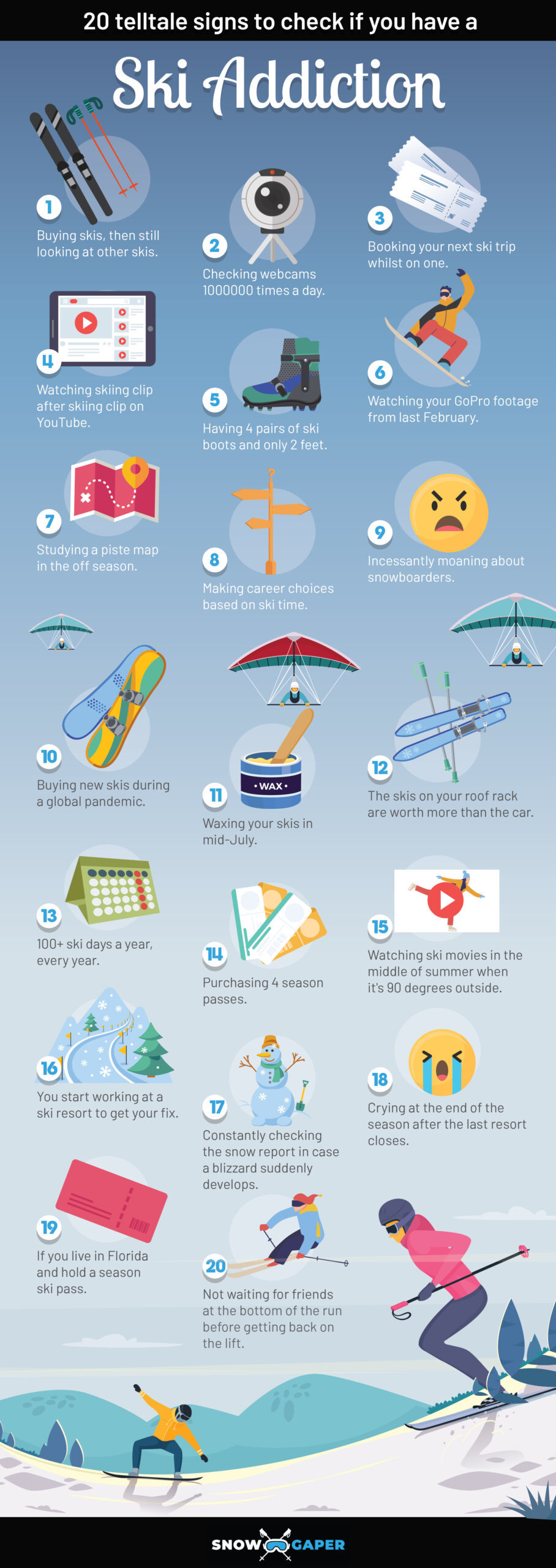
The signs you're addicted to skiing often sneak up gradually. One season it's a fun trip. The next, it's the centerpiece of the entire year. Here are the most common behavioral signals devoted skiers recognize in themselves:
- Checking snow forecasts in October — months before any resort opens
- Dreaming about specific runs at favorite mountains
- Feeling genuine sadness when a ski trip gets cancelled
- Judging new acquaintances by whether they ski
- Experiencing restlessness on warm, sunny winter days
- Following multiple ski resorts on social media "just to stay informed"
- Measuring time in seasons rather than months
- Referring to a home mountain in conversation — constantly
Sports psychology research points to flow states (the feeling of being fully "in the zone") as highly addictive experiences. Skiing delivers that sensation reliably, which helps explain why the habit is so difficult to shake.
The Mental Side of the Obsession
Ski addiction isn't just about the sport itself — it's about identity. Devoted skiers often describe the mountain as the one place where everything else falls away. Stress disappears at the top of a chairlift. That psychological pull is one of the most overlooked signs in the entire pattern, and it runs deeper than any gear collection or season pass.
The Seasonal Planning Spiral
True ski addicts don't wait for snow. They plan year-round. The seasonal planning spiral is one of the most recognizable patterns in the mountain community — and one of the most telling signs that skiing has become more than a hobby.
Season Passes and Pre-Season Research
Season passes go on sale in spring, and devoted skiers buy immediately. They compare resorts, dig into historical snowfall data, and map out potential powder days months in advance. Planning a ski trip stops being a quick decision and becomes a weeks-long research project.
- Bookmarking ten or more resort websites by March
- Setting calendar reminders for Ikon and Epic pass sale dates
- Pulling snowfall records from previous seasons to rank destinations
- Comparing trail maps the way other people compare vacation brochures
- Tracking early-season snowpack reports starting in autumn
Off-Season Habits That Give It Away
Summer doesn't slow down a true ski addict. The off-season still revolves around snow:
- Rewatching ski films and competition footage on repeat
- Following professional skiers on every available platform
- Doing ski-specific workouts — squats, lateral drills, balance training
- Visiting mountain towns "just to hike" while quietly scoping the terrain
- Attending outdoor gear expos specifically for the ski booths
Pro tip: Off-season training focused on quads, glutes, and core pays off enormously on the first runs of the season — most ski injuries occur early in the year when muscles aren't yet conditioned.
The Gear Obsession Is Real
Gear is one of the most visible signs you're addicted to skiing. The gear corner of a devoted skier's garage — or bedroom, or hallway — eventually becomes a shrine to the sport.
Skis and Bindings
Most casual skiers own one pair of skis, or none at all. Addicts own several. Groomer skis for hardpack days. Powder skis for deep days. Maybe a park setup tucked in the corner. Having strong opinions about flex ratings, sidecut radius, and rocker profiles is a dead giveaway that skiing has stopped being recreational and started being a lifestyle.
- Owning two or more pairs of skis for different conditions
- Researching next season's models before the current season ends
- Knowing ski tech specs by heart without looking them up
- Visiting demo days not for fun, but for serious evaluation
Clothing and Layers
The closet tells the full story. Ski jackets in multiple weights. Shell pants for variable conditions. Base layers sorted by temperature range. Gloves organized by warmth level. A dedicated ski wardrobe that rivals everyday clothing in volume is one of the clearest signs that things have gone beyond casual.
- Separate storage bin just for boot liners and wool socks
- Three or more pairs of goggles with interchangeable lenses
- Gear organized by activity level or mountain type

What Ski Addiction Actually Costs
Skiing is one of the more expensive recreational habits a person can develop. The annual total tends to shock people who have never added it all up. Here's a realistic side-by-side breakdown of what casual skiers spend versus what devoted ski addicts typically spend:
| Expense Category | Casual Skier (est.) | Addicted Skier (est.) |
|---|---|---|
| Season Pass / Lift Tickets | $300–$600 | $700–$1,200+ |
| Skis, Boots, Bindings | Rentals ($30–$60/day) | $1,500–$4,000 owned |
| Clothing and Accessories | $200–$400 | $800–$2,500+ |
| Travel and Lodging | 1–2 trips per season | 5–15+ days on snow |
| Lessons and Clinics | Rarely | At least once per season |
| Estimated Annual Total | $800–$1,500 | $4,000–$10,000+ |
Most ski addicts avoid calculating the annual total — because knowing might cause a rethink. Budget-conscious skiers find ways to manage costs: buying used gear, booking trips mid-week, timing purchases during end-of-season sales, and carpooling to the mountain.
Making the Most of the Obsession
If skiing has become a defining part of life, leaning into it with intention makes the entire experience richer. Here's how devoted skiers get the most out of every season.
Skill Building on the Mountain
Improvement is one of the most satisfying parts of long-term ski commitment. Addicted skiers rarely plateau because there's always a steeper line to chase, deeper powder to navigate, or a technique gap to close.
- Take a skills clinic at least once per season — even experienced skiers benefit
- Film runs from behind and review footage to catch technical errors
- Ski with partners who are slightly more advanced
- Spend time drilling specific skills on intermediate terrain before applying to expert runs
- Focus one day per trip entirely on weak areas rather than favorite terrain
Finding a Ski Community
Skiing is significantly better with people who understand it. Finding a community — whether a local ski club, an online forum, or a group of regulars at a home mountain — amplifies the experience and keeps the obsession socially sustainable.
Worth knowing: Joining a ski club often unlocks group discounts on passes, rentals, and lodging — a practical benefit that offsets some of the hobby's considerable costs.
Mistakes Even Devoted Skiers Make
Passion can create blind spots. Even experienced, dedicated skiers fall into patterns that limit progress or create unnecessary risk. These are the most common ones:
- Skipping warm-up runs. Jumping straight to challenging terrain without easing into the day is a leading cause of early-session injuries. The body needs time to adjust to cold and altitude.
- Ignoring fatigue signals. Most ski accidents happen in the afternoon when legs are spent. Calling it a day earlier than planned is always the smarter choice.
- Neglecting proper boot fit. Ill-fitting boots cause pain, reduce control, and hurt overall performance more than almost any other single factor.
- Overestimating surface conditions. Fresh snow looks inviting. Hidden ice, rocks, and terrain traps underneath don't advertise themselves.
- Undervaluing protective gear. Helmets and wrist guards significantly reduce injury risk, especially in terrain parks and on groomed runs shared with less experienced skiers.
- Skipping rest days. The urge to maximize every trip leads many addicted skiers to push through fatigue — which compounds both injury risk and recovery time.
Learning how to avoid ski injuries is one of the most valuable investments any serious skier can make. More seasons on the mountain require protecting the body that gets there.
When to Chase Powder — and When to Hold Off
Part of being a devoted skier is learning to read the full picture — conditions, physical readiness, and the body's signals. Among the signs you're addicted to skiing, ignoring clear warning signs is one of the most problematic.
Days Worth Rearranging Life For
Some conditions are genuinely rare enough to justify flexible schedules and long drives:
- Twelve or more inches of overnight fresh powder at a home mountain
- A rare bluebird day at a bucket-list resort
- Opening day of the season after a long off-season wait
- A once-in-a-winter storm cycle hitting a usually crowded resort midweek
When Holding Off Is the Right Call
Knowing when not to ski is equally important to knowing when to go:
- When significant muscle soreness or fatigue carries over from the day before
- During high avalanche risk warnings in backcountry or sidecountry terrain
- When visibility is near zero and icy conditions make control unreliable
- After a recent injury that hasn't fully healed — even a minor one
- When mental or emotional burnout is affecting focus and decision-making on the mountain
Rest days protect future ski days. The obsession is sustainable only when the body is cared for across a long season. That's a lesson every long-term ski addict eventually learns — ideally before an injury forces the lesson home.
Frequently Asked Questions
What are the most obvious signs you're addicted to skiing?
The clearest signs include checking snow forecasts year-round, planning vacations entirely around ski resorts, owning multiple pairs of skis for different conditions, and feeling genuine distress when a ski trip gets cancelled. Most devoted skiers recognize several of these patterns without any prompting.
Is ski addiction a recognized condition?
It isn't a clinically recognized diagnosis, but the behavioral patterns are well documented in sports psychology research. The combination of physical exhilaration, flow states, and community belonging makes skiing highly compelling for certain personality types. Researchers study this kind of recreational absorption across multiple sports.
How much does a serious ski habit cost per year?
A dedicated skier can easily spend $4,000 to $10,000 or more per season when factoring in passes, owned gear, clothing, travel, and lodging. Casual skiers typically spend $800 to $1,500 annually. The gap between the two widens considerably as the obsession deepens and gear collections grow.
Can skiing too frequently lead to injuries?
Yes. Fatigue-related accidents, overuse strain, and pushing beyond current skill level are all meaningful risk factors. Most ski injuries occur in the afternoon when leg muscles are exhausted, or early in the season when the body hasn't yet adapted to the demands of the sport. Adequate rest between ski days reduces risk significantly.
What gear do addicted skiers typically accumulate?
Multiple pairs of skis tuned for different snow conditions, several goggle setups with interchangeable lenses, dedicated base layers and shell outerwear, multiple glove options sorted by temperature, and a full custom boot setup are common. The owned-gear investment alone frequently runs into thousands of dollars for serious enthusiasts.
How do devoted skiers stay connected to the sport during the off-season?
Common strategies include ski-specific fitness training focused on quads and core, rewatching competition footage and ski films, following resort snowpack updates from the first autumn storms, attending gear demo events, and planning the following season's trip calendar. Many also participate in ski clubs that host year-round social gatherings.
Final Thoughts
The signs you're addicted to skiing are worth embracing — this is one obsession that pays off in fitness, friendships, and memories that last a lifetime. Anyone who recognized themselves in this list should stop second-guessing the habit, lock in that season pass, and start planning the next trip to the mountain before the snow melts.
 |
 |
 |
 |

About Frank V. Persall
Frank Persall is a lifelong skier originally from the United Kingdom who has spent years pursuing the sport across premier resorts in Europe, North America, and beyond. His passion for skiing has taken him from the Alps to the Rocky Mountains, giving him a broad perspective on resort terrain, snow conditions, gear performance across price points, and the practical realities of ski travel with a family. At SnowGaper, he covers ski resort guides, gear reviews, and skiing technique and travel resources for enthusiasts of every level.
You can get FREE Gifts. Or latest free skiing books here.
Disable Ad block to reveal all the info. Once done, hit a button below
|
|
|
|