If you've been wondering what is Uber Ski service and how it fits into your next mountain trip, here's the plain answer: it's a rideshare option built directly into the standard Uber app that connects you with drivers near ski resorts who are prepared to handle ski equipment, snowy roads, and resort drop-offs. No separate app download required. Just open Uber at a participating mountain destination, select the Ski category, and request a ride designed around the realities of ski travel — gear space, cold-weather conditions, and resort-area routes.

Transportation is one of the most underplanned parts of any ski trip. Resort parking fills up before 9 a.m. on busy days, shuttle schedules don't always line up with your plans, and taxis in mountain towns are often scarce or expensive. Uber Ski launched as a targeted solution for exactly this problem — giving skiers an on-demand option that understands mountain travel in a way that standard city rideshare doesn't. The service began as a pilot program at select U.S. resorts and has grown steadily since, attracting attention from ski travelers at every experience level.
This guide walks you through everything you need to know about the service — how it works, how to book it, who benefits most, and what to do when something goes sideways. If you're already browsing your skiing options and building out your trip plan, this is one of the most practical pieces of logistics information you can read before you go.
Contents
- Uber Ski in Action: What a Real Mountain Ride Looks Like
- Keeping Your Uber App and Account Ready Between Trips
- The Real Benefits and Drawbacks of Uber Ski
- How to Use the Uber Ski Service: A Step-by-Step Guide
- Smart Tips for Getting the Most From Your Uber Ski Ride
- What You Need Before You Open the App
- Uber Ski for New Skiers vs. Frequent Resort Visitors
- When Things Go Wrong: Solving Common Uber Ski Problems
- Five Myths About Uber Ski That Need Clearing Up
- Frequently Asked Questions
- Next Steps
Uber Ski in Action: What a Real Mountain Ride Looks Like
The best way to understand Uber Ski is to picture it within an actual ski day — from the moment you wake up to the moment you collapse back at your rental. Transportation sits inside that day in two predictable spots: the morning run up to the mountain and the afternoon run back down. That's exactly where Uber Ski slots in, and it changes both of those moments in meaningful ways.
A Morning Drop-Off at the Base Lodge
Picture yourself staying in a ski town three miles from the mountain. By the time you've had coffee, layered up, and gathered your gear, the best parking spots are gone. With Uber Ski, you request a ride from your lodging and a driver — often in an SUV or truck with a roof rack — picks you up and delivers you directly to the base lodge or a resort-designated rideshare drop zone. Drivers working the mountain circuit in active ski areas tend to know the roads well, which matters more than you might expect on an icy winter morning.
The morning pickup is where Uber Ski proves its value most clearly. You don't have to time a shuttle. You don't have to circle the lot. You show up at the mountain fresh, geared up, and ready to ski.
The End-of-Day Pickup After Your Last Run
The afternoon pickup is a different picture. You're tired, your legs are done, and you're juggling skis, poles, a helmet, and whatever else came down the mountain with you. Resort shuttles at this hour can be packed. With Uber Ski, you request a pickup from the base area and wait inside the lodge rather than standing in a line in the cold. Your driver meets you at the rideshare zone, helps load the gear, and you're on your way.
This end-of-day use case is especially common among skiers who've been on the snow since early morning and aren't in the mood to drive back. It also lines up naturally with après-ski plans — if you've ever looked into where après-ski culture actually takes place, the overlap with resort rideshare demand makes a lot of sense. You can extend the evening without worrying about getting back.
Keeping Your Uber App and Account Ready Between Trips
Uber Ski works best when your account is sorted before you need it. A little maintenance before your trip departs removes friction at the exact moments you can't afford it — the early morning rush, a last-minute plan change, or a powder day when everyone is trying to get to the mountain at once.
Updating Your Settings Before You Go
Start by confirming your Uber app is running the latest version. Uber Ski may not appear as a category option if your app is outdated, and the feature set for resort regions can differ from what you see in a city. Update through your app store a few days before departure — not the morning of. Once you've entered a pickup and drop-off location within an Uber Ski service area, the Ski option will appear in the ride-type selector if it's available at your destination.
Saving your lodging address as a frequent destination is worth doing too. On a cold morning in ski boots, not having to type out your full address is a small but real convenience. You can also pre-set driver notes — useful for flagging the number of skis or bags you'll be bringing.
Managing Payment Methods and Preferences
Check that your linked payment method is current before you travel. A declined card at 7 a.m. on a powder day is not the way you want to start your morning. If you have multiple cards saved to your account, confirm that the one you want to use is set as the default. Also, enable arrival notifications — mountain pickup zones can be spread out, and knowing your driver is two minutes away lets you move to the right spot without rushing through a lodge with skis over your shoulder.
Uber's in-app help section (Account > Help) covers all account settings, including trip preferences and special driver instructions. Five minutes of review before you leave home is worth it.
The Real Benefits and Drawbacks of Uber Ski
Like any service, Uber Ski has genuine strengths and real limitations. Knowing both helps you decide when to use it and when a different option might serve you better.
Where the Service Works Well
The biggest advantage is flexibility. You're not locked into a shuttle timetable or dependent on a friend's car. You request a ride when you're ready — not when the schedule decides you should be. For solo travelers or small groups, this freedom is significant. Drivers working the Ski category in mountain towns also tend to be more prepared for ski-specific logistics than a standard city driver. Many arrive with roof racks or generous cargo space, and they understand that loading skis takes more time than tossing a bag in the trunk.
Uber Ski also integrates naturally into trip planning. If you're sorting out your itinerary while reading through ski vacation planning ideas, factoring in rideshare costs from the start gives you a more accurate budget than assuming you'll figure out local transportation when you get there.
Where It Falls Short
Uber Ski isn't available everywhere. At smaller or more remote resorts, the driver pool may be too thin for the service to function reliably. Surge pricing is a legitimate concern during peak windows — first lift and last chair are the two busiest demand periods, and rates can jump noticeably. And while many drivers are gear-friendly, not every vehicle has the cargo room to comfortably fit a full group's worth of skis, poles, and duffel bags.
| Factor | Uber Ski Advantage | Potential Limitation |
|---|---|---|
| Availability | Works reliably at major resort destinations | Limited or absent at smaller, remote mountains |
| Convenience | On-demand — no shuttle schedule to manage | Wait times vary, especially during peak hours |
| Gear handling | Many drivers have racks or cargo space | Not guaranteed — depends on vehicle type |
| Cost | Competitive with resort shuttles for short trips | Surge pricing during high-demand windows |
| Ease of use | Same app you already use — no new account | Ski option may not show in all regions |
How to Use the Uber Ski Service: A Step-by-Step Guide
Booking an Uber Ski ride follows the same core flow as any Uber request, with a few adjustments that are worth knowing upfront. The process is straightforward once you've done it once.
Before You Request Your Ride
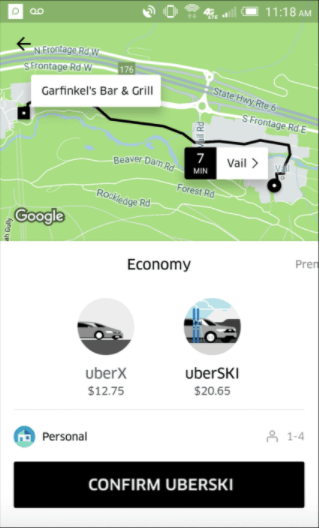
Open the Uber app and enter your destination — either the resort base lodge or your lodging address, depending on which direction you're going. Once the destination is set, scroll through the available ride categories. In mountain areas where Uber Ski is active, you'll see a dedicated Ski option in the category list. Select it, review the fare estimate, and confirm your pickup time. If you're heading up to the slopes in the morning, you can also schedule the ride the evening before. Pre-scheduling removes the uncertainty of whether a driver will be available during the pre-opening rush, which can get competitive on busy days.
Knowing what your ski pass covers — including what time lifts begin running — helps you determine the exact pickup time you need so you're not paying for a ride that drops you off 45 minutes before the mountain opens.
At Pickup and During the Ride
When your driver arrives, meet them at the designated pickup point — usually a specific area of your lodging's lot or a resort-marked rideshare zone at the base. Be ready to load your gear efficiently. Most drivers who work the Ski category will confirm they have rack space or cargo room, but it's still worth noting your gear load in the driver notes when booking. During the ride, the app shows the same real-time GPS tracking as any Uber trip. The full process — from opening the app to arriving at the mountain — takes as little as 15 minutes in well-serviced resort areas.
Smart Tips for Getting the Most From Your Uber Ski Ride
Using Uber Ski well is partly about knowing the service and partly about adapting your habits to how mountain transportation actually works. A few adjustments make a real difference.
Timing Your Pickup Strategically
The two busiest windows are 7–9 a.m. (everyone heading to the mountain) and 3–5 p.m. (everyone heading back). If you have flexibility, shifting your pickup by 30 minutes outside those windows cuts both your wait time and your fare. A 6:30 a.m. ride beats the morning surge. A post-ski drink at the lodge before calling your afternoon ride avoids the peak pricing window. Either adjustment works in your favor without requiring a major schedule change.
Pro tip: Schedule your morning Uber Ski ride the night before when demand is predictable — morning pickups sell out quickly on busy resort days, and pre-scheduling often locks in a lower rate.
Getting Gear Space Right
Don't assume your driver has unlimited cargo capacity. If you're traveling with a group and multiple pairs of skis, use the driver notes section when booking to describe what you're bringing. Some drivers have dedicated roof-mounted ski carriers; others work from a large cargo area in the back. Confirming gear capacity before you leave prevents the awkward scenario of a driver arriving in a compact car to pick up four sets of skis and poles.
The split-fare feature is also useful if you're sharing the ride with friends. It keeps costs visible and avoids the post-trip math conversation. For broader trip preparation habits, the beginner skier tips guide covers a range of logistics that pair well with rideshare planning.
What You Need Before You Open the App
Uber Ski doesn't require any special gear or software beyond what most skiers already have. But making sure everything is in order before you arrive at a mountain resort prevents problems you won't want to deal with in the field.
App and Account Basics
You need a smartphone with the current version of the Uber app, a valid payment method linked to your account, and cell service or Wi-Fi access to request and track rides. In resort towns and at base lodges, signal is generally adequate. It can thin out at higher elevations, so if your lodging is on the mountain itself, check connectivity before assuming your phone will connect reliably when you need it most.
An account in good standing is also necessary. Any payment issues or prior flags on the account tend to surface at the worst possible moment. Logging in to verify everything looks clean before your trip is a five-minute habit that has real payoff. For broader context on how ridesharing services have developed and what they offer, Wikipedia's overview of ridesharing companies provides helpful background.
Packing Smart for a Rideshare Trip
Consider how you're packing your ski gear when you know you'll be using rideshare. Ski bags protect your equipment and make loading into a vehicle much smoother — many drivers prefer bagged skis because they're less likely to scratch interior surfaces. Keeping your boots in a dedicated boot bag rather than dangling from a pack also speeds up the loading process. Well-organized gear takes up less space and makes the whole ride more comfortable for everyone involved. Understanding what alpine skiing involves in terms of equipment can also help you pack the right gear for the right conditions rather than over-packing and struggling to fit everything in the vehicle.
Uber Ski for New Skiers vs. Frequent Resort Visitors
Your skiing experience level doesn't change how the app functions, but it does change what you'll get most out of the service. Both groups benefit — just in different ways.
If You're Heading to the Mountain for the First Time
As a beginner, your plate is already full. Equipment rental, lesson scheduling, figuring out how to navigate a resort — these decisions take mental energy. Adding parking and shuttle logistics to that list is an unnecessary burden. Uber Ski removes one variable from an already complex day. You can focus on getting to the mountain, not on navigating an unfamiliar parking structure with skis over your shoulder and boots that don't quite fit yet.
New skiers also tend to have more unpredictable schedules. Lessons run over, rental adjustments take longer than planned, or you simply want to leave early because your legs gave out at noon. On-demand rideshare adapts to that variability in a way that fixed shuttle schedules simply don't. When your day doesn't go according to plan, your transportation can still work around you.
If You're a Repeat Visitor Who Knows the Resort
Experienced skiers tend to use Uber Ski more strategically. You might already know that a specific resort parking area is completely unusable on weekend mornings, or that the shuttle doesn't begin running until 8 a.m. but you want to be in the lift line at 7:45. With Uber Ski, you build your own schedule instead of working around someone else's. You also carry more specialized gear over time, which means identifying in advance which Ski-category vehicles in your area have roof racks becomes a useful habit worth developing.
If you're weighing the sport itself at any point — particularly in terms of how it compares to snowboarding — the skiing vs. snowboarding breakdown is a useful read before you commit to a full gear load for your next trip.
When Things Go Wrong: Solving Common Uber Ski Problems
No transportation service works perfectly every time, and Uber Ski is no exception. Knowing what can go wrong — and how to respond — keeps a rough moment from becoming a ruined morning on the mountain.
Driver Cancellations and Surge Pricing
Driver cancellations happen more often in mountain resort areas than in cities, partly because road conditions affect driver availability and partly because the overall driver pool is smaller. If your driver cancels, the app automatically searches for the next available option. During peak demand windows, that search can take longer than expected. The best safeguard is to request your ride earlier than you think you need to — especially on high-traffic resort days when everyone in the area is trying to reach the mountain at the same time.
Warning: Surge pricing on Uber Ski can spike significantly during powder days and holiday weekends — always check the fare estimate before confirming, and use scheduled rides in advance to lock in a more stable rate.
Gear Doesn't Fit and Other Last-Minute Surprises
If a driver arrives without enough cargo space for your equipment, you have options. You can cancel the ride (though repeated cancellations can affect your account standing), contact Uber support through the in-app Help menu, or ask the driver whether your gear can fit if rear seats fold flat — this works more often than you'd expect in larger vehicles. Always communicate gear details upfront using the notes field when booking. It's the single most effective way to reduce a mismatch before the driver pulls up. On a related equipment note, if you're also unsure whether your gear is ready for the season, checking whether your skis need waxing before your trip is worth doing at the same time you're sorting out your transportation plan.
Five Myths About Uber Ski That Need Clearing Up
There's genuine confusion online about what Uber Ski actually is, what it costs, and who it's designed for. A few of the most persistent myths are worth addressing head-on.
The App and Availability Myths
Myth 1: Uber Ski is a separate app you have to download. It isn't. Uber Ski is a ride category inside the standard Uber app. You won't find it in any app store as a standalone product — it appears in the ride-type selector when you're in a participating resort region and the feature is active in that area.
Myth 2: The service is only for skiers, not snowboarders. The "Ski" in the name refers to the mountain environment, not the specific sport. Snowboarders use the service just as frequently as skiers do, and drivers make no distinction between the two when it comes to loading boards versus skis.
Myth 3: Uber Ski drivers have special mountain driving certifications. Not true. Drivers working resort areas generally have experience with mountain road conditions, but there's no formal specialized certification required beyond standard Uber driver qualifications. Checking driver ratings and vehicle type before confirming your request is still your responsibility.
The Pricing and Safety Myths
Myth 4: Uber Ski always costs more than a resort shuttle. This isn't consistently true. Multi-day shuttle passes at resorts can add up quickly, and for early-morning trips before shuttles begin running, Uber Ski can actually be cost-competitive. Run both estimates before your trip and compare them against your actual schedule — the answer varies by resort and by how many days you're riding.
Myth 5: Uber Ski isn't safe on icy mountain roads. Road safety on winter mountain routes depends on conditions, timing, and driver experience — the same variables that apply to any vehicle. Uber provides driver ratings, real-time GPS tracking, and emergency contact features that add accountability you don't get with informal arrangements. Checking road conditions before you travel is always smart regardless of your transportation method.
Frequently Asked Questions
Is Uber Ski available at all ski resorts?
No. Uber Ski is available at select major ski resort destinations where there is a sufficient driver base to support on-demand mountain transportation. Smaller or more remote resorts may not have the service at all, or availability may be limited during off-peak periods. Check the Uber app at your destination to see whether the Ski category appears before you rely on it as your primary transportation option.
How do I know if Uber Ski is available at my resort?
Open the Uber app, enter the resort address or the nearby town as your destination, and look at the ride category options that appear. If Uber Ski is active in that area, a Ski category will be visible in the ride selector. If it doesn't appear, the service isn't currently available at that location and you'll need to use a standard Uber ride or another transportation option.
Can I bring snowboards and ski gear in an Uber Ski vehicle?
Yes. Despite the name, Uber Ski accommodates snowboards just as readily as skis. The name reflects the mountain environment rather than a specific snow sport. That said, the amount of gear that fits depends on the vehicle. Always note what you're bringing in the driver notes field when booking — especially if you're traveling with a board bag, multiple boards, or a large group.
Is Uber Ski more expensive than a regular Uber ride?
Base fares for Uber Ski are generally in the same range as a standard Uber ride for the same distance. The cost difference comes from surge pricing during peak demand windows — first lift and last chair — when rates can increase significantly. Scheduling rides in advance or traveling slightly outside peak hours is the most reliable way to manage costs. Always review the fare estimate before confirming.
Can I schedule an Uber Ski ride in advance?
Yes. Uber's scheduled ride feature works with Uber Ski in participating areas. You can book a ride up to 30 days ahead of time, and the app will match you with a driver within a short window of your scheduled pickup time. Pre-scheduling is especially useful for early morning resort runs when demand spikes and driver availability can be unpredictable.
What happens if my Uber Ski driver cancels?
The app automatically searches for the next available driver after a cancellation. In urban areas this process is usually fast, but in mountain resort regions the search may take several minutes longer depending on how many drivers are active. To reduce the risk of a cancellation creating real problems, request your ride earlier than you need it — particularly on high-traffic resort days — so any delay in finding a replacement driver doesn't cost you first chair.
Do I need a special account or membership to use Uber Ski?
No. Uber Ski uses your existing Uber account — there's no separate registration, membership tier, or fee required to access the Ski category. As long as your account is in good standing with a valid payment method, you can select Uber Ski whenever it's available at your location. No upgrades, no separate subscriptions, and no additional sign-up steps needed.
Is Uber Ski available outside the United States?
Uber Ski has primarily been available at U.S. ski resorts since its launch, but Uber has piloted mountain-oriented ride options in other winter sports markets as well. Availability outside the U.S. varies by region and season. If you're planning a trip to an international ski destination, check the Uber app at that location to see what ride categories are offered — the feature set can differ significantly from what's available domestically.
Next Steps
- Open the Uber app now and enter the address of your next ski resort to confirm whether the Uber Ski category appears at your destination before you finalize your trip logistics.
- Update the Uber app to the latest version and verify your payment method is current — do this at home, not the morning of your trip.
- Schedule your first mountain pickup 12–24 hours in advance to avoid surge pricing and driver scarcity during the pre-opening rush.
- Add your gear details — number of skis, boards, or bags — to the driver notes field when booking so your driver arrives in a vehicle that can actually fit everything.
- Compare the Uber Ski fare estimate against your resort's shuttle pass price for your specific trip length so you choose the option that genuinely saves you money.
 |
 |
 |
 |

About Frank V. Persall
Frank Persall is a lifelong skier originally from the United Kingdom who has spent years pursuing the sport across premier resorts in Europe, North America, and beyond. His passion for skiing has taken him from the Alps to the Rocky Mountains, giving him a broad perspective on resort terrain, snow conditions, gear performance across price points, and the practical realities of ski travel with a family. At SnowGaper, he covers ski resort guides, gear reviews, and skiing technique and travel resources for enthusiasts of every level.
You can get FREE Gifts. Or latest free skiing books here.
Disable Ad block to reveal all the info. Once done, hit a button below
|
|
|
|