Stuntman Rick Sylvester was paid $30,000 to ski off a sheer Arctic cliff and freefall roughly 3,000 feet before deploying a parachute — and the footage became one of cinema's most replayed sequences ever. The Spy Who Loved Me ski jump, filmed on Baffin Island in the Canadian Arctic, permanently shifted what audiences expected from action films. Our team has spent considerable time studying this legendary stunt, and the deeper we dug, the more genuine connections emerged to real skiing culture, extreme mountain technique, and the line between calculated risk and recklessness. For anyone passionate about ski resorts and steep terrain, this story carries real weight.

Released as the tenth James Bond film, The Spy Who Loved Me opens with a breathtaking ski chase that ends with Bond launching off a massive cliff face into silence — then a Union Jack parachute unfurls and the crowd erupts. Roger Moore played Bond, but the real architect of that moment was Sylvester, a professional skier and climber who trained specifically for a shot that could never be repeated.
Our research confirmed that the entire jump was captured in a single take. No second chance, no backup plan, no CGI safety net. The preparation, precision, and nerve behind that moment offer lessons that extend well beyond the silver screen — into how serious skiers approach extreme terrain today.
Contents
- The History Behind the Spy Who Loved Me Ski Jump
- How the Jump Was Planned and Executed
- What Made It a Cinematic Milestone
- The Risks and Rewards of Extreme Ski Stunts
- Spy Who Loved Me vs. Other Iconic Ski Film Stunts
- When This Stunt Inspires vs. When It Misleads
- Frequently Asked Questions
- Key Takeaways
The History Behind the Spy Who Loved Me Ski Jump
Choosing Mount Asgard
The production team, led by second unit director John Glen, spent months scouting locations before landing on Mount Asgard on Baffin Island, Canada. The mountain's twin flat-topped peaks rise from a glacier with a sheer vertical drop unlike anything found at a conventional ski resort. That combination of height, visual drama, and relative Arctic accessibility made it the only viable choice.

Key location facts:
- Mount Asgard sits inside Auyuittuq National Park on Baffin Island, Nunavut, Canada
- Summit elevation reaches approximately 2,015 meters (6,611 feet)
- The cliff face used for the jump drops roughly 900 meters — close to 3,000 feet of vertical
- Access required helicopter transport; hiking the approach took days
- Weather delays pushed the shoot back by several weeks, compressing the already narrow Arctic summer window
Who Was Rick Sylvester?
Rick Sylvester was already a respected name in extreme skiing and mountaineering before the Bond producers tracked him down. An unauthorized ski jump off El Capitan in Yosemite — filmed for a Canadian magazine — put him on the production team's radar. That background meant Sylvester understood not just ski mechanics but the freefall physics involved in a jump of this scale.
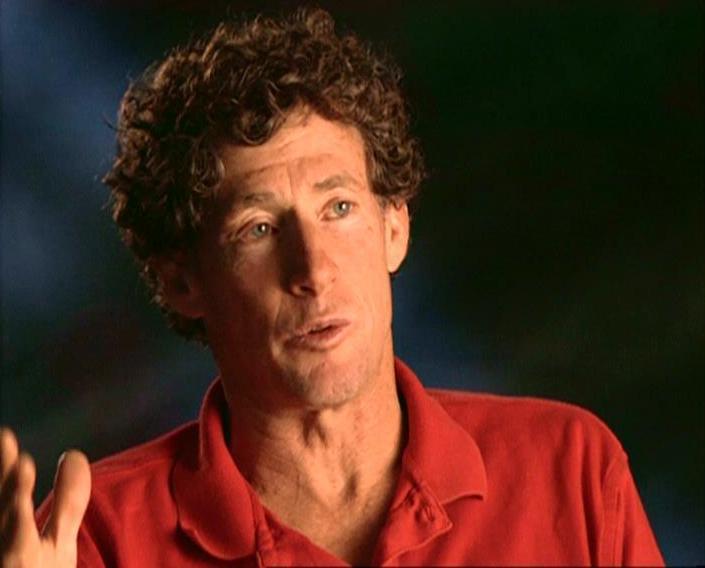
- Background: Professional skier, climber, and BASE-style stuntman
- Prior credential: El Capitan ski jump, filmed and published independently
- Payment: $30,000 for the Bond stunt — substantial for the era
- Preparation: Multiple practice runs on the approach slope; parachute deployment rehearsed in controlled settings beforehand
Our team considers Sylvester an underappreciated figure in skiing history. Professionals who pursue careers in competitive skiing today owe something to the stuntmen who made extreme mountain athleticism visible to mainstream audiences decades before social media existed.
How the Jump Was Planned and Executed
Logistics of a Once-in-a-Career Shot
Planning for the Spy Who Loved Me ski jump took approximately six weeks of on-location preparation. The crew moved equipment to the summit repeatedly by helicopter and on foot. Every variable — wind speed, snow condition, approach angle, and camera positions — had to align in the same narrow window.
The production sequence looked like this:
- Scout the summit and map the exact ski line from the approach run to the cliff lip
- Establish six camera positions, including a dedicated helicopter unit for aerial coverage
- Assess snow surface conditions on the approach slope daily
- Rehearse Sylvester's launch body position to optimize freefall stability
- Coordinate parachute deployment timing with the aerial camera crew
- Wait for a weather window — clear sky, controlled wind — that may or may not arrive
Why There Was Only One Take
The parachute used was custom-printed with the Union Jack design. One parachute. If anything went wrong — a mistimed deployment, an off-angle launch, a camera position failure — the sequence was gone. Everything had to execute correctly on the first attempt.
Our team's consistent takeaway from studying this production: extreme skiing stunts demand the same methodical pre-planning as any serious expedition. Conditions, equipment, and contingencies must be assessed before a single ski tip crosses the fall line.
This single-take reality separates cinematic stunt skiing from recreational extreme skiing in an important way. Even among the fastest racers — and downhill competitors regularly exceed 80 mph — the difference between a clean line and disaster is almost always preparation, not courage alone.
What Made It a Cinematic Milestone
Cultural and Technical Impact
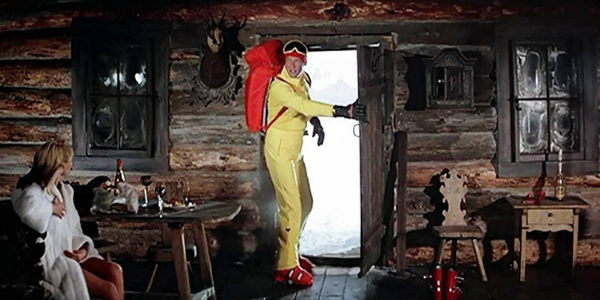
The sequence was shot on 35mm film with multiple simultaneous cameras — technically demanding for the era. The choice to let the freefall play in near-silence before the parachute opens was a deliberate editorial decision that amplified the tension without a musical shortcut.
What made it land culturally:
- Entirely practical — no CGI, no wires, no compositing tricks
- The scale was undeniable; audiences could sense the genuine height and speed intuitively
- The Union Jack parachute added an instantly recognizable patriotic flourish
- Roger Moore's composed expression, filmed separately on a studio slope, cut seamlessly into the sequence
- The extended silence during freefall was unlike anything mainstream action cinema had done before
How It Shaped Ski Culture
The Bond sequence arrived as extreme skiing was beginning to emerge as a recognized discipline. Films like The Man Who Skied Down Everest (1975) had shown what was possible, but the Bond ski jump reached a vastly larger audience and embedded extreme skiing permanently into popular culture.
Our team found that multiple professional skiers who emerged in the 1980s and 1990s cited Bond films as early inspiration. The Spy Who Loved Me in particular produced a generation of skiers who arrived at the mountain with ambition that outpaced their skill level. That gap is a core reason why first-time skiers benefit from realistic early guidance — cinematic images are powerful, but they compress years of progression into a single unforgettable frame.
The Risks and Rewards of Extreme Ski Stunts
What Goes Right
When extreme ski stunts are executed with proper planning, the benefits extend beyond entertainment:
- Advances safety knowledge: Stunt productions document failure modes and conditions that feed back into professional skiing and mountain rescue training
- Demonstrates human performance limits, motivating competitive athletes to push their own benchmarks
- Drives equipment development — harnesses, bindings, helmets, and cold-weather clothing all improve under extreme-use pressure
- Raises skiing's public profile, which historically drives investment in resort infrastructure and training programs
What Can Go Wrong
The darker side of extreme stunt skiing is well-documented. The pattern our team found consistently: the gap between planned and actual conditions is where disasters occur.
- Wind shifts during freefall can redirect a jumper well outside the safe landing zone
- Minor snow surface inconsistencies on the approach can alter launch angle by critical degrees
- Equipment performs differently under extreme cold than at typical resort temperatures
- Overconfidence following prior successful stunts leads to reduced pre-jump verification
Our coverage of celebrity skiing deaths and serious accidents shows the same pattern repeatedly — even highly skilled, experienced skiers are not immune to catastrophic outcomes when terrain demands exceed preparation.
Spy Who Loved Me vs. Other Iconic Ski Film Stunts
Side-by-Side Comparison
Our team assembled a comparison of the most referenced ski stunts in film history. The Spy Who Loved Me ski jump holds up against every benchmark worth measuring:
| Film / Stunt | Year | Location | Stuntman | Practical or CGI | Takes | Approx. Height |
|---|---|---|---|---|---|---|
| The Spy Who Loved Me — cliff jump | 1977 | Mount Asgard, Baffin Island, Canada | Rick Sylvester | Fully practical | 1 | ~3,000 ft |
| The Living Daylights — cello case chase | 1987 | Tirol slopes, Austria | B.J. Worth | Fully practical | Multiple | Moderate |
| For Your Eyes Only — downhill chase | 1981 | Cortina d'Ampezzo, Italy | Various | Fully practical | Multiple | Low to moderate |
| Cliffhanger — ski launch sequence | 1993 | Cortina d'Ampezzo, Italy | Simon Crane | Mostly practical | 2 | ~500 ft |
| XXX — avalanche base jump | 2002 | British Columbia, Canada | Multiple | Mixed with CGI | Multiple | Variable |
No other entry matches the combination of genuine height, single-take execution, and fully practical filmmaking that defines the 1977 Bond sequence. Later productions with larger budgets leaned increasingly on CGI augmentation — which effectively removes the authentic human risk that made the original so compelling to audiences who sensed it was real.
When This Stunt Inspires vs. When It Misleads
When Extreme Skiing Imagery Works in Our Favor
Our team believes the Spy Who Loved Me ski jump is a genuinely useful reference point when applied correctly:
- As a case study in meticulous preparation before attempting difficult or committing terrain
- As evidence that skiing rewards athletes who combine physical ability with technical planning and risk management
- As inspiration for skiers already operating at an advanced level who are considering progression into steeper lines
- As a cultural touchstone that keeps skiing aspirational and visible for generations who might otherwise never discover the mountain

When It Sets Unrealistic Expectations
The same imagery becomes a liability in specific contexts:
- New skiers who mistake cinematic composure for real-world competence on steep terrain
- Recreational skiers who attempt off-piste routes without avalanche training, a beacon, or rescue equipment
- Anyone who interprets filmed stunts as evidence that a technique transfers safely without professional support infrastructure
Our team notes this dynamic appears in broader skiing debates as well. The skiing vs. snowboarding conversation often circles back to film culture — both communities have absorbed imagery that sometimes outpaces what the actual skill progression supports. The critical distinction is always the same: Rick Sylvester was a specialist with years of targeted preparation. The jump looked effortless because of everything that happened before the cameras rolled, not despite it.
For anyone planning a serious mountain trip, grounding expectations in practical preparation resources rather than cinematic impressions is the consistent recommendation from our team. A realistic read on what steep terrain actually demands is the foundation of both a safe and satisfying experience. Those considering a first expedition would benefit from reviewing documented accounts of how accidents happen alongside the inspiration.
Frequently Asked Questions
Who performed the ski jump in The Spy Who Loved Me?
Rick Sylvester, a professional skier and climber, performed the jump. He was selected after the Bond production team discovered his unauthorized ski jump off El Capitan in Yosemite, which demonstrated both the technical skill and temperament the stunt required.
Where was the Spy Who Loved Me ski jump filmed?
The jump was filmed on Mount Asgard, located inside Auyuittuq National Park on Baffin Island, Canada. The location was chosen for its sheer vertical cliff face, dramatic visual presence, and the unique topography of the twin-peaked summit.
How much was Rick Sylvester paid for the Bond stunt?
Rick Sylvester received $30,000 for performing the jump. That was a notable figure for a stunt at the time, reflecting both the extreme difficulty and the single-take constraint that eliminated any safety margin from a second attempt.
Was the ski jump completed in one take?
Yes. Only one Union Jack parachute was available for the stunt, making a second attempt impossible. Every element — approach speed, launch angle, body position, parachute deployment, and camera coordination — had to work correctly the first and only time.
How high was the freefall in The Spy Who Loved Me?
The freefall covered approximately 3,000 feet (around 900 meters) before Sylvester deployed his parachute. The sheer cliff face of Mount Asgard's twin peaks provided the necessary vertical drop, which remains one of the most extreme in practical stunt history.
Did Roger Moore actually ski in The Spy Who Loved Me?
Roger Moore performed some basic skiing for close-up shots on more accessible terrain. The extreme portions of the sequence — including the cliff jump and freefall — were performed entirely by Rick Sylvester, with Moore's reaction shots edited seamlessly into the final cut.
What lasting impact did the Spy Who Loved Me ski jump have on skiing culture?
The stunt mainstreamed extreme skiing as a concept and inspired a generation of athletes who pushed into steeper, more technical terrain through the 1980s and beyond. It also demonstrated that mountain environments could be approached on a scale far beyond conventional resort bounds, permanently expanding the sport's cultural ambition.
Key Takeaways
- The Spy Who Loved Me ski jump was performed in a single take by Rick Sylvester on the 3,000-foot cliff face of Mount Asgard, Baffin Island — one of the most demanding practical stunts ever put on film.
- Six weeks of on-location preparation, precise environmental assessment, and coordinated multi-camera planning were required to execute a sequence that lasts under 90 seconds on screen.
- The stunt shaped skiing's mainstream cultural image and inspired generations of athletes, while also creating cinematic expectations that don't always translate safely to recreational mountain terrain without equivalent preparation.
- Studying how this jump was planned and executed offers a legitimate framework for thinking about risk management, preparation discipline, and the gap between inspiration and execution in any serious skiing context.
 |
 |
 |
 |

About Frank V. Persall
Frank Persall is a lifelong skier originally from the United Kingdom who has spent years pursuing the sport across premier resorts in Europe, North America, and beyond. His passion for skiing has taken him from the Alps to the Rocky Mountains, giving him a broad perspective on resort terrain, snow conditions, gear performance across price points, and the practical realities of ski travel with a family. At SnowGaper, he covers ski resort guides, gear reviews, and skiing technique and travel resources for enthusiasts of every level.
You can get FREE Gifts. Or latest free skiing books here.
Disable Ad block to reveal all the info. Once done, hit a button below
|
|
|
|