Here's a number that might surprise you: snowboarding participation among kids under 17 has grown by nearly 40% over the last decade, according to the National Ski Areas Association. More kids than ever are hitting the slopes, and getting them on the right board from the start makes all the difference between a lifelong passion and a frustrating first season. The wrong board — too stiff, too long, wrong shape — can turn a weekend of fun into a wobbly nightmare. The right one? It practically teaches them to ride on its own.
Picking a kids' snowboard isn't just about grabbing the smallest board on the rack. You're looking at rocker profiles (the bend shape of the board), flex ratings, core materials, and whether the board is beginner-friendly or built for a kid who's already throwing tricks in the terrain park. If any of those terms feel unfamiliar right now, don't worry — we'll break them all down. This guide covers everything: the best boards on the market for 2026, a detailed buying guide to help you match your child to the right setup, and answers to the most common questions parents ask before hitting the mountain. And once you've got the board sorted, you'll want to check out our guide to the best snowboard bibs to keep your little shredder warm and dry all day.
We've reviewed seven of the top kids' snowboards available right now — from tiny 90cm learner boards to 130cm all-mountain rippers — covering brands like Burton, Rossignol, Salomon, Roxy, CAPiTA, and K2. Whether your child is a first-timer who needs maximum forgiveness or an intermediate rider ready to level up, there's a board on this list that fits. Let's get into it.

Contents
- Editor's Recommendation: Top Picks of 2026
- Detailed Product Reviews
- Burton Kids' Mini Grom Rocker Snowboard, 90cm — Best for Tiny Beginners
- Rossignol Scan Kid Snowboard — Best All-Mountain Learner
- Salomon Grace Youth Snowboard 2025 — Best for Young Girls
- Roxy Poppy Girls Snowboard Package, 128cm — Best Complete Package
- Kids' Burton Grom Snowboard, 130cm — Best for Intermediate Riders
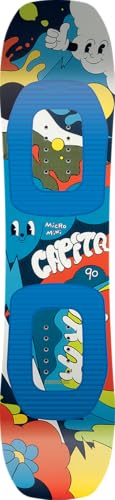
- CAPiTA Micro Mini Youth Snowboard (2026, 90cm) — Best for Park Enthusiasts
- K2 Mini Turbo Youth Snowboard, 100cm — Best Value Pick
- Choosing the Right Kids' Snowboard
- What People Ask
- Final Thoughts
Editor's Recommendation: Top Picks of 2026
- #PreviewProductRating
- Bestseller No. 1
 Rating:

- Bestseller No. 2
 Rating:
 - Bestseller No. 3
 Rating:
 - Bestseller No. 4
 Rating:
 - Bestseller No. 5
 Rating:
 - Bestseller No. 6
 Rating:
 - Bestseller No. 7
 Rating:
Detailed Product Reviews
1. Burton Kids' Mini Grom Rocker Snowboard, 90cm — Best for Tiny Beginners
If you've got a young child just getting started — we're talking 3 to 6 years old, typically around 60–80 lbs — the Burton Mini Grom Rocker is the gold standard for first boards. At 90cm, it's short enough for tiny riders to control, and every design decision on this board is built around making snowboarding feel easy and safe. The Twin Shape means it's perfectly symmetrical from tip to tail, so your kid rides the same whether they're going forward (regular) or backward (switch) — they won't even notice the difference, which matters when they're still figuring out their footing.
The Flat Top Bend (a flat rocker profile that keeps the board relatively level underfoot) delivers excellent stability for riders who are still finding their balance. What's really smart about this board is the Easy Bevel edge design: the edges are lifted slightly off the snow, which makes it nearly impossible to catch an edge (that sudden jerky fall caused when an edge grabs the snow unexpectedly). For a child learning to link their first turns, this is a massive confidence booster. The Fly Core wood core keeps the board light without sacrificing feel — your kid can actually maneuver it without wrestling it.
Burton is the most trusted name in snowboarding for a reason, and the Mini Grom shows why. It's compatible with Burton's binding systems and sized for their youngest lineup, making it easy to pair up your gear. If you're planning a first trip to somewhere like the best Lake Tahoe ski resorts for beginners and families, this board gives young kids the best possible start on the bunny slopes.
Pros:
- Easy Bevel edge design virtually eliminates edge-catching falls
- Flat Top profile provides exceptional stability for beginners
- Lightweight Fly Core keeps it manageable for small kids
- True twin shape works equally well regular or switch
Cons:
- Very beginner-specific — kids will outgrow it quickly as skills develop
- Limited to the smallest size range; not available for older/bigger kids
2. Rossignol Scan Kid Snowboard — Best All-Mountain Learner
The Rossignol Scan is the board you choose when your child is past the absolute beginner stage but isn't quite an intermediate rider yet. What sets it apart is the AmpTek Auto Turn rocker system, which blends 70% rocker (a curved-up profile that helps initiate turns) with 30% camber (a slight arch underfoot that adds edge grip and pop). That combination is genuinely brilliant for kids transitioning from the bunny slope to real runs. The rocker handles the easy parts — starting turns, floating over uneven snow — while the camber underfoot gives just enough stability so they don't feel like they're sliding around on a banana.
The flex profile here is soft in the waist (the narrow midsection of the board) with a bit more stiffness underfoot, which means your kid gets easy control through the turns without sacrificing the balance and stability they need when they start picking up speed. This is exactly what a board designed for beginner-to-intermediate all-mountain riding should feel like. The vertically laminated wood core delivers a light, lively flex that kids can actually respond to — it's not the dead, sluggish feel you sometimes get from cheaper boards with foam or injected cores.
Rossignol has been making quality snow gear for decades, and the Scan reflects that heritage. It's built to handle groomed runs, some powder days, and the occasional detour into softer off-piste snow. If your child is progressing quickly and you want a board that grows with their skills through a full season or two, the Scan is a smart investment.
Pros:
- 70/30 rocker-camber blend makes turning intuitive without sacrificing edge grip
- Wood core delivers genuine flex and feel rather than a dead, lifeless ride
- Soft waist flex with underfoot stiffness — ideal transitional flex for developing riders
- All-mountain capable; handles varied terrain well
Cons:
- Less forgiving than a pure rocker board for absolute first-timers
- May be overkill (and more expensive) than needed for one-day-a-year resort visits
3. Salomon Grace Youth Snowboard 2025 — Best for Young Girls
The Salomon Grace is specifically designed for young female riders, and the thoughtful engineering behind it shows. The FSC-certified Aspen wood core (FSC stands for Forest Stewardship Council — it's a sustainability certification for responsibly harvested wood) is light and responsive, giving young riders the feedback they need without requiring a ton of physical strength to flex and steer. High-density birchwood strips in the binding area add stiffness exactly where you need it — underfoot — while keeping the tip and tail soft and forgiving for easier turn initiation.
The extruded base on the Grace is worth talking about because it's actually a smart choice for kids. Extruded bases (where the base material is pressed into shape) are more durable and require less maintenance than sintered bases (which are more porous and need regular waxing to perform). For a parent who doesn't want to haul out a ski wax iron after every trip, the Grace's base is genuinely low-maintenance and glides well without constant attention. The 2x4 insert pattern (the grid of screw holes where bindings attach) is the industry standard, so you'll have no trouble finding compatible bindings.
Salomon built this board for girls who are learning to explore the whole mountain — not just the groomers. It's forgiving enough for beginners but has enough character to stay relevant as skills develop. The sizing options make it accessible across a wide age range, and Salomon's build quality means it'll survive the bumps and drops that are part of learning to ride.
Pros:
- Lightweight Aspen core with birchwood inserts for balanced flex and durability
- Extruded base is low-maintenance and glides well without frequent waxing
- Designed specifically for young female riders' weight and riding style
- Standard 2x4 insert pattern for universal binding compatibility
Cons:
- Feature set is relatively minimal compared to more premium youth options
- Extruded base won't perform as fast as sintered options in powder conditions
4. Roxy Poppy Girls Snowboard Package, 128cm — Best Complete Package
If you want to skip the guesswork of matching a board to compatible bindings, the Roxy Poppy Package takes care of everything in one shot. It comes with bindings already mounted, which is genuinely convenient — you're saving real money compared to buying separately, and you're not spending an afternoon on a forum trying to figure out which binding fits which board. The bindings feature comfy adjustable straps that can be dialed in to fit a range of boot sizes, which matters because kids' feet grow fast and you don't want to buy new bindings every season.
The board itself has a soft flex and a radial sidecut (a smooth, consistent arc along the edge of the board that makes the turn feel predictable and controlled). The catch-free design — similar in spirit to Burton's Easy Bevel — lifts the edges slightly to reduce that dreaded edge-catching phenomenon that causes so many early falls. At 128cm, this is a board for older or taller kids, typically in the 9–13 age range, who are either learning to ride or in their first couple of solid seasons. Roxy brings great style to their boards too, so if your daughter is motivated by having gear that looks as good as it rides, this one delivers.
The convenience factor here is real. Buying a complete snowboard setup can get complicated fast — board, bindings, mounting hardware, sizing compatibility — and the Poppy Package eliminates all of that friction. For a parent who just wants to show up at the mountain with everything sorted, this package is the hassle-free choice. Once you've got the board and bindings handled, round out her setup with a look at our picks for the best snowboard backpacks for carrying snacks, layers, and extra gear on the slopes.
Pros:
- Complete board-and-bindings package saves money and setup headaches
- Adjustable bindings grow with boot size changes over multiple seasons
- Catch-free radial sidecut makes learning turns easier and safer
- Great aesthetics — Roxy's colorways are consistently popular with young girls
Cons:
- Bindings are mid-range quality — dedicated riders may want to upgrade eventually
- Soft flex limits performance as riders advance to steeper terrain
5. Kids' Burton Grom Snowboard, 130cm, Purple/Teal — Best for Intermediate Riders
The Burton Grom at 130cm is the step-up board for kids who've already got the basics down and are starting to carve confidently, explore more terrain, and maybe eyeing the terrain park. It shares the core DNA of the Mini Grom — Flat Top Bend for stability, Easy Bevel to reduce edge catches, Twin Shape and Twin Flex for a symmetrical ride — but adds the Biax Fiberglass layup that the smaller version doesn't have. Biax fiberglass (a two-directional weave of glass fibers) gives the board a softer, more torsional (twisting) flex that makes it feel alive and responsive underfoot without being stiff or demanding.
The Fly Core wood construction runs tip to tail, keeping the board light while preserving pop (that snappy energy you feel when you ollie or land a jump) and strength. At 130cm, this board is built for kids around 8–12 years old who are ready to ride the whole mountain — groomers, easy off-piste, small jumps, and jib features (rails and boxes in the park). The twin shape means your kid can ride switch just as comfortably as regular, which is an important skill to develop as they progress.
Burton's build quality at this price point is genuinely hard to beat. This isn't a toy or a budget knockoff — it's a real performance snowboard scaled for kids, built with the same attention to detail Burton puts into their adult lineup. The Purple/Teal colorway looks sharp on the snow, and if your kid's the type who gets extra motivated when their gear looks cool, that matters too.
Pros:
- Biax Fiberglass adds lively flex and pop that beginner boards lack
- Flat Top stability combined with Easy Bevel forgiveness — best of both worlds
- Twin shape and flex develop switch-riding skills naturally
- Burton's build quality and brand support are class-leading
Cons:
- More board than a total first-timer needs — better suited to riders with some experience
- Premium brand pricing; budget-conscious buyers can find cheaper alternatives
6. CAPiTA Micro Mini Youth Snowboard (2026, 90cm) — Best for Park Enthusiasts
CAPiTA makes boards that serious snowboarders love, and the Micro Mini brings that same design philosophy to the tiniest riders. This is a 2026 model board — completely fresh, built with CAPiTA's latest construction methods. The True Twin shape is as pure as it gets: perfectly symmetrical, with the stance centered exactly in the middle, so riding switch feels exactly like riding regular. For young riders who want to develop freestyle skills — spinning, pressing the nose or tail, hitting small features in the park — a true twin is the correct foundation.
The Radial sidecut gives this board a consistent, predictable turn radius that makes it easy to control on groomers but fun when you start carving harder. It's rated as a Park/Resort board, meaning it's designed for the full mountain experience with an emphasis on the terrain park. At 90cm, it's for small kids — similar sizing territory to the Burton Mini Grom — but CAPiTA's park-focused pedigree makes it the better choice if your child is already showing interest in tricks and jibbing (sliding and grinding on park features).
CAPiTA has built a strong reputation in the snowboard community for quality construction and performance-oriented design, and the Micro Mini carries that reputation down to the youth market. If you've got a kid who watches snowboard videos and wants to do what the pros are doing, start here. The 2026 update means you're getting the most current materials and construction — no clearance-rack compromises.
Pros:
- True Twin shape is ideal for developing freestyle and switch-riding skills
- Fresh 2026 model with CAPiTA's latest construction technology
- Park/Resort designation means it's built for both fun groomed runs and terrain park use
- Radial sidecut provides predictable, controllable turns
Cons:
- Park-focused profile is less forgiving than rocker boards for absolute beginners
- CAPiTA's premium brand positioning means a higher price point
7. K2 Mini Turbo Youth Snowboard, 100cm — Best Value Pick
K2 has been a major player in winter sports for decades, and the Mini Turbo is their answer to the question: what's the best kids' board for families who don't want to spend a fortune but still want real quality? The Noodle Construction uses an injected core that flexes easily underfoot — this is one of the most forgiving constructions available, making it almost effortless for small riders to initiate turns and maintain control. At 100cm, it sits between the 90cm beginner boards and the larger intermediate options, covering a useful middle ground.
The Biax Glass (fiberglass intersecting at 90-degree angles) gives the board the right amount of torsional flexibility without making it feel floppy or unstable. But the real standout feature is K2's Catch-Free Tune: a 2-degree bevel on the edges with factory-detuned tip and tail. This means the board is set up out of the box to be as forgiving as possible — the tip and tail edges are deliberately softened so they won't grab snow unexpectedly, which directly reduces falls for kids who are learning to link their turns. That's real engineering that you feel immediately on snow, not just a marketing line.
For parents who need a high-quality board at a more accessible price point, the K2 Mini Turbo delivers without compromise. It's not the flashiest option on this list, but it covers all the fundamentals, and K2's build quality means it'll hold up through multiple seasons of learning. Once your kid is riding confidently, you'll want to think about maintaining their gear — our guide to the best ski and snowboard tuning vises is a great next resource for keeping edges sharp and bases clean.
Pros:
- Catch-Free Tune with detuned tip and tail reduces edge catches dramatically
- Noodle Construction makes flexing and turning easy for small, developing riders
- Biax Glass provides the right torsional flex without feeling unstable
- Excellent value — K2 quality at an accessible price
Cons:
- Injected core won't match the liveliness and pop of a wood core board
- Better suited to beginners than intermediate riders looking for more performance
Choosing the Right Kids' Snowboard: A Buying Guide
Before you add anything to your cart, take five minutes to read through these key factors. Matching your child to the right board isn't complicated once you know what to look for — but getting it wrong is an expensive mistake. Here's what actually matters in 2026.
Board Length and Sizing
The most common sizing method is to stand the board next to your child and check where it hits on their body. A beginner board should reach somewhere between the chin and nose. Advanced riders often go a little longer for more stability at speed. You can also use weight as a guide — most manufacturers publish weight charts for their boards, and these are usually more reliable than height alone since kids vary so much in build.
The boards in this guide range from 90cm (for small kids typically 3–7 years old, under 70 lbs) up to 130cm (for older kids around 9–13, 80–130 lbs). Getting the length right is critical: a board that's too long is hard to control and turns slowly, while a board that's too short feels unstable at speed. When in doubt, go slightly shorter for a beginner — easier control beats theoretical stability every time.
Rocker Profile: How the Board Bends
This is one of the most important specs, and it's worth understanding clearly. A rocker profile (also called reverse camber) means the board curves upward at the tips and is relatively flat or bent upward in the middle — like a banana. This makes the board forgiving, helps it float in powder, and makes turn initiation easy. Perfect for beginners. A camber profile means the board arches upward in the middle when unloaded — when you press your weight on it, it flattens and stores energy. This gives edge grip and pop, ideal for more advanced riding. Most kids' boards use a rocker-dominant or flat profile, and several on this list (like the Rossignol Scan) blend both for the best of each approach.
Flex Rating
Flex describes how easily the board bends. Ratings typically run from 1 (super soft) to 10 (super stiff), though manufacturers don't always use the same scale. For kids, you almost always want a soft flex — usually a 1–3. Soft boards are easier to bend and steer, more forgiving of imperfect technique, and gentler on developing legs and ankles. Stiff boards are faster and more precise but demand real technique to ride well. As your child progresses to intermediate and advanced levels, they can step up to a medium flex. But for the first few seasons, go soft.
Core Material and Construction
The core is the heart of the board — it determines weight, flex feel, and durability. Wood cores are generally better than foam or injected cores: they're lighter, more lively under your feet, and provide better feedback. The best woods for youth boards are Aspen (light and flexy) and Poplar (slightly heavier but very durable). Some budget boards use injected polyurethane cores — these are heavier and feel more dead underfoot, but they're still a serviceable choice for casual riders who aren't on snow more than a few days a season. If your kid is serious about snowboarding, prioritize a wood core. You'll also find references to fiberglass layups (like Biax Glass) — these affect how the board twists and flexes, with softer layups being more forgiving for beginners. For a complete look at all the ski and snowboard gear your family needs, browse our full ski gear reviews section.
What People Ask
What size snowboard does my child need?
The simplest method is to stand the board next to your child — for beginners, the board should reach between the chin and nose. For more precise sizing, use the manufacturer's weight chart since kids vary a lot in build for their age. A 90cm board typically suits kids under 70 lbs, 100–110cm fits roughly 60–90 lbs, 120–130cm suits kids in the 80–120 lb range. When in doubt, size down slightly for beginners — a shorter board is far easier to control while learning.
What age can kids start snowboarding?
Most kids can start learning to snowboard around age 4 or 5, though some resorts offer lessons starting at 3. That said, many instructors and experienced parents find it easier to start kids on skis first and transition to snowboarding around age 7–9 when coordination and balance are more developed. There's no wrong answer — both work. The key is matching the board length and flex to your child's current size and strength, not their age alone.
Should I buy a snowboard package (board + bindings) or separate components?
For beginners, a package like the Roxy Poppy is a convenient and cost-effective choice — the components are matched to work together, and you skip the compatibility research. For more serious or rapidly progressing riders, buying board and bindings separately lets you optimize each component. The main advantage of separate purchases is that when your child outgrows the board, you can often keep the bindings and just replace the board, saving money long-term.
How stiff should a kids' snowboard be?
For kids at the beginner or beginner-to-intermediate level — which covers most young riders — you want a soft flex, typically rated 1–3 on a 10-point scale. Soft boards are easier to bend and steer, more forgiving of mistakes, and easier on developing muscles and joints. A stiff board demands precise technique to ride well and will frustrate a beginner. As skills and strength develop, usually after 2–3 solid seasons, you can move toward a medium flex for more performance and speed stability.
How do I maintain my child's snowboard between seasons?
At the end of the season, clean the base with a dry cloth, apply a coat of warm wax and leave it on (don't scrape it until you're ready to ride again — it protects the base during storage), and check the edges for rust with a light touch. Store the board horizontally or hanging flat in a cool, dry place — not standing on its tail, which can warp the core over time. Sharpen dull edges with an edge tool or tuning kit before the next season. For more on maintenance tools, check out our guide to ski and snowboard tuning equipment.
Is it better to rent or buy a snowboard for a young child?
If you're only going to the mountain 1–2 times a season, renting is almost certainly the smarter financial choice — especially for young kids who grow fast and will outgrow a board in 1–2 seasons. Rentals are also serviced and sized by professionals on-site. If your family goes 4+ times a season, buying makes sense: the cost per outing drops quickly, and your child will perform better on their own gear as they learn how it handles. Buy used gear in good condition to minimize the investment risk for fast-growing kids.
Buy on Walmart
- Burton Kids' Mini Grom Rocker Snowboard, 90cm — Walmart Link
- Rossignol Scan - Kid Snowboard — Walmart Link
- Salomon Grace Youth Snowboard 2025 — Walmart Link
- Roxy Poppy Girls Snowboard Package, 128cm, Medium Bindings — Walmart Link
- Kids' Burton Grom Snowboard, 130cm, Purple/Teal — Walmart Link
- CAPiTA Micro Mini Youth Snowboard (2026, 90cm) — Walmart Link
- K2 Mini Turbo Youth Snowboard, 100cm — Walmart Link
Buy on eBay
- Burton Kids' Mini Grom Rocker Snowboard, 90cm — eBay Link
- Rossignol Scan - Kid Snowboard — eBay Link
- Salomon Grace Youth Snowboard 2025 — eBay Link
- Roxy Poppy Girls Snowboard Package, 128cm, Medium Bindings — eBay Link
- Kids' Burton Grom Snowboard, 130cm, Purple/Teal — eBay Link
- CAPiTA Micro Mini Youth Snowboard (2026, 90cm) — eBay Link
- K2 Mini Turbo Youth Snowboard, 100cm — eBay Link
Final Thoughts
Getting your child on the right snowboard in 2026 doesn't have to be overwhelming — now that you know what to look for, the choice comes down to your kid's size, skill level, and how serious they are about riding. Head over to our full ski gear reviews section for everything else you need to complete their setup, pick the board that fits their current level, and get them on the mountain. The sooner they're on the right gear, the sooner they'll be hooked for life.
 |
 |
 |
 |

About Frank V. Persall
Frank Persall is a lifelong skier originally from the United Kingdom who has spent years pursuing the sport across premier resorts in Europe, North America, and beyond. His passion for skiing has taken him from the Alps to the Rocky Mountains, giving him a broad perspective on resort terrain, snow conditions, gear performance across price points, and the practical realities of ski travel with a family. At SnowGaper, he covers ski resort guides, gear reviews, and skiing technique and travel resources for enthusiasts of every level.
You can get FREE Gifts. Or latest free skiing books here.
Disable Ad block to reveal all the info. Once done, hit a button below
|
|
|
|